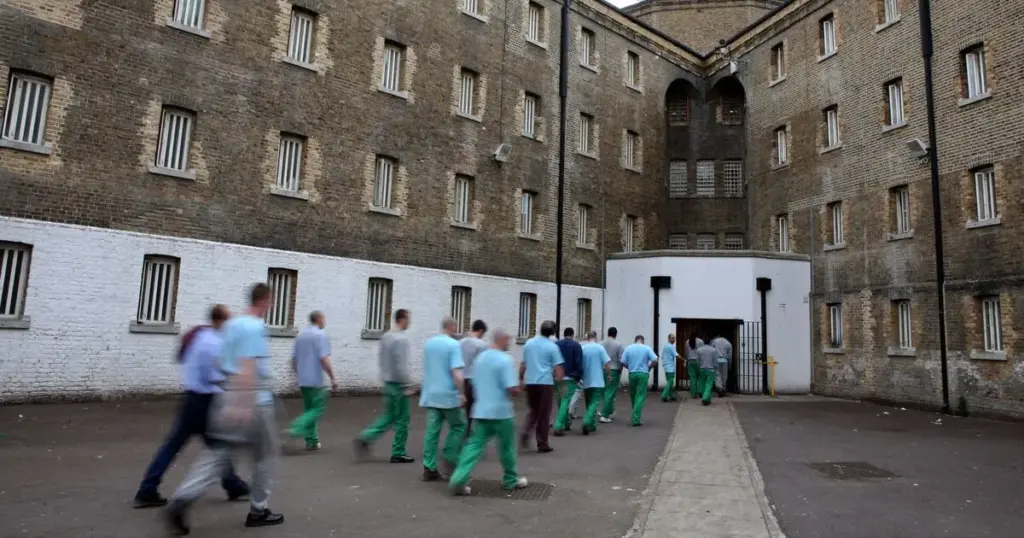
LONDON — A high-profile, multi-million-pound agreement intended to deport hundreds of dangerous foreign criminals from the United Kingdom and alleviate severe overcrowding in British prisons has fallen dramatically short of its targets. Three years after an initial £8 million pact was struck with Albania, only 13 serious offenders have been successfully transferred back to their home country.
The initiative, designed to target serious offenders serving sentences of four years or more across England and Wales, was hailed as a cornerstone policy for cutting prison populations, easing the financial strain on taxpayers, and ridding British communities of high-risk foreign offenders. Instead, the program has become bogged down by administrative bottlenecks, legal complexities, and documentation hurdles, leaving critics questioning the efficacy of international prisoner transfer agreements.
Executive Overview
In 2023, the British government announced a flagship partnership with Tirana aimed at tackling a persistent crisis within the UK justice system: an expanding foreign national offender (FNO) population straining an already at-capacity prison estate. The core of the agreement involved the UK providing £8 million to upgrade and refurbish Albania’s prison infrastructure, creating a secure environment capable of housing transferred inmates who would serve out the remainder of their sentences in their home nation.
The initial target was ambitious: to remove approximately 200 high-risk Albanian prisoners serving long-term sentences of four years or more. However, internal figures and disclosures from the Albanian Ministry of Justice reveal a stark reality. Three years into the agreement, a mere 13 prisoners have made the journey back to Albania.
With thousands of Albanian nationals currently occupying space within the UK prison system—accounting for roughly 10% of the total foreign prisoner demographic and representing the single largest nationality block among foreign offenders—the slow trickle of returns highlights a systemic failure to execute large-scale deportations efficiently. The shortfall has intensified pressure on the government to demonstrate results amid a broader national conversation regarding prison capacity, judicial sentencing, and public safety.
Detailed Chronology: From 2023 Deal to Present Day Stagnation
The Genesis of the Pact (2023)
The agreement was forged during a period of acute strain for the UK correctional system. British prisons were hurtling toward critical capacity thresholds, driven by tougher judicial sentencing guidelines, courts clearing backlogs, and an institutional shortage of cells.
Recognizing that foreign nationals formed a disproportionately large percentage of the prison population—costing British taxpayers tens of thousands of pounds per inmate annually—officials turned to bilateral diplomacy. The UK government agreed to inject £8 million into Albania’s penal infrastructure. The financial injection was explicitly earmarked to modernize facilities and build the institutional capacity required to accept inmates repatriated from British institutions.
Early Hurdles and Administrative Gridlock (2024)
Almost immediately after the ink dried, the initiative encountered friction. While the physical infrastructure upgrades in Albania progressed, the legal pipeline for moving inmates stalled.
Unlike standard foreign national deportations handled at the end of a sentence via standard immigration removal routes, formal Prisoner Transfer Agreements (PTAs) require intricate bi-lateral cooperation. They mandate specific legal frameworks, prisoner consent clauses (in some jurisdictions), and—crucially—verified national identification documents to establish citizenship and secure travel permits.
Because a significant majority of the targeted Albanian prisoners had entered the UK illegally or under false pretenses, establishing a verified paper trail proved arduous. Consular cooperation faced delays, and a bureaucratic backlog quickly accumulated in Tirana as case files filtered through judicial review.

The Current Reality (2026)
By mid-2026, the discrepancy between the projected targets and actual outcomes became impossible to ignore. According to sources within the Albanian Ministry of Justice who spoke to the Daily Mail, the ambitious target of 200 transfers has yielded only 13 completed cases.
Despite millions of pounds changing hands and high-level political commitments, the vast majority of the targeted high-risk offenders remain locked inside British institutions. The delay has turned what was marketed as a swift fix for prison overcrowding into a cautionary tale about the complexities of international penal diplomacy.
Supporting Context & Metrics: The Scale of the Crisis
To fully understand why the stalled Albanian prisoner deal has sparked intense debate, one must examine the broader metrics governing foreign national offenders in the UK.
The Demographic Footprint
Ministry of Justice data highlights the sheer scale of the challenge posed by foreign criminals in the UK. Albanian nationals consistently represent the largest single group of foreign prisoners in British custody, numbering between 1,200 and 1,500 individuals at any given time. This cohort accounts for roughly 10% of the entire foreign prisoner population across England and Wales.
The crimes committed by these individuals span a wide spectrum, ranging from organized drug trafficking networks and modern slavery operations to violent offenses, sexual assaults, and homicide.
Financial Burden on the British Taxpayer
Keeping an inmate locked up in the UK is extraordinarily expensive. Official estimates place the average cost of holding a prisoner in England and Wales at approximately £56,000 per year.
For long-term offenders, the financial implications are staggering. For instance, Albanian nationals convicted of severe crimes such as murder, and handed sentences stretching to 35 years or more, cost British taxpayers a minimum of £2 million per individual over the course of their incarceration.
When multiplied across hundreds of high-risk foreign offenders, the total cost runs into the hundreds of millions of pounds annually. This financial reality formed a cornerstone of the justification for the £8 million investment in Albanian prisons: spending a comparatively modest sum upfront to facilitate long-term repatriations was meant to yield massive long-term savings for the public purse.
Official Statements and Political Fallout
The glacial pace of the deportations has drawn sharp criticism from opposition politicians and prison reform advocates alike, prompting swift defensive maneuvers from government spokespeople eager to reframe the narrative around overall removal statistics.
A government spokeswoman defended the administration’s broader record on foreign national removals, emphasizing that the Albania PTA is just one tool in a multi-faceted strategy:

"Under this Government, returns and deportations are at their highest level in nearly a decade. Prisoner Transfer Agreements are only one way in which we get foreign criminals out of our jails."
Furthermore, officials pointed to recent legislative adjustments designed to streamline the removal process:
"We have changed the law so they can now be deported earlier than ever before, and over 11,700 have been removed since July 2024."
However, critics argue that conflating general immigration removals with the specific, highly targeted objective of clearing dangerous long-term prisoners via the £8 million Albanian agreement obscures the specific failure of that initiative. While general deportation flights may have increased, the targeted reduction of the high-risk Albanian prison bloc has fallen drastically short of its stated milestones.
Legal experts and human rights watchdogs have also pointed out the inherent tensions within PTAs. International law and human rights obligations require that receiving nations meet certain humanitarian and security standards before inmates can be transferred. While the £8 million was intended to resolve these infrastructure deficits, the ongoing bottleneck suggests that the legal and administrative friction between British and Albanian bureaucracies remains deep-seated.
Future Outlook: Where Do We Go From Here?
As the UK prison population hovers near crisis levels—with capacity constraints forcing emergency measures and early-release schemes—the pressure to find viable solutions for foreign national offenders has never been greater.
The future of the UK-Albania prisoner transfer scheme hangs in the balance. Several key questions remain unanswered:
- Will the Targets Be Reset? Given that only 13 out of 200 prisoners have been transferred in three years, officials in both London and Tirana will need to renegotiate or drastically overhaul the operational framework if the remaining 187 targeted individuals are ever to be moved.
- Overcoming Documentation Barriers: Unless both governments establish a faster, more streamlined mechanism for verifying identity and issuing emergency travel documents for individuals who entered the UK clandestinely, the backlog is likely to persist.
- Alternative Repatriation Routes: With public tolerance for prison overcrowding wearing thin, the government may face mounting pressure to explore alternative legal avenues—such as compulsory transfer treaties that bypass individual consent hurdles or unilateral deportation mechanisms backed by enhanced diplomatic leverage.
Ultimately, the £8 million Albanian prisoner deal serves as a stark reminder of the gap between political aspiration and bureaucratic execution. Until the structural roadblocks impeding these transfers are systematically dismantled, British taxpayers will continue to foot a multi-million-pound bill to house foreign criminals whose home countries are technically willing—in theory, if not yet in practice—to take them back.