Executive Overview
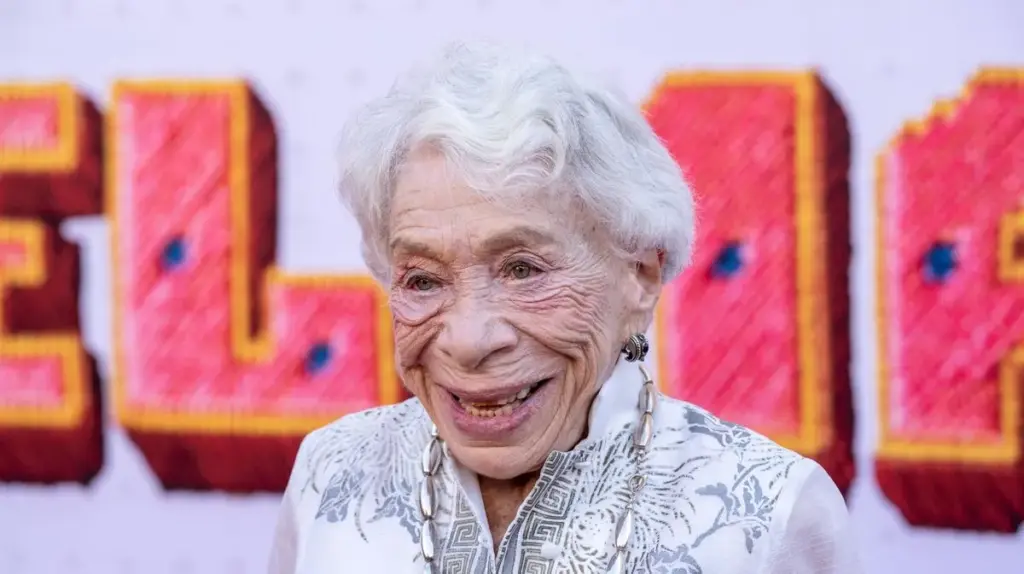
The entertainment world is mourning the loss of Bunny Levine, a character actress whose life story serves as a testament to the fact that it is never too late to pursue a lifelong dream. Best known to modern audiences for her memorable turns in the beloved television series Gilmore Girls and the Academy Award-winning musical feature film La La Land, Levine passed away peacefully in her sleep at the age of 97.
According to representatives and local authorities, Levine died on Thursday, August 20, 2026, at her residence in the Tarzana neighborhood of Los Angeles. While officers from the Los Angeles Police Department (LAPD) initially responded to the home following a report of an unresponsive person, officials confirmed that her passing was due to natural causes.
Levine’s journey to the screen was as unconventional as it was inspiring. Long before she shared screen space with Hollywood heavyweights or walked onto major studio backlots, Levine spent more than two decades working quietly as a school librarian. She fostered a love of literature and learning in young minds, a chapter of her life that preceded her professional transition into the dramatic arts in her late fifties.
Over a career spanning nearly four decades, Levine built an impressive resume that defied traditional age-related casting constraints. She carved out a distinctive niche for herself in the bustling Los Angeles casting ecosystem, appearing in a wide array of hit television comedies, dramas, and high-profile feature films. Her story remains a beacon of hope and inspiration for aspiring artists who refuse to let chronological age dictate their creative potential.
Detailed Chronology: From the East Coast to Hollywood Stages
Early Life and Decades Among the Books
Bunny Levine was born on December 22, 1928, in East Orange, New Jersey. Growing up in the era preceding the golden age of television and the height of the studio system, Levine’s early life was far removed from the glitz and glamour of Hollywood.
Details of her formative years reflect a woman dedicated to intellectual pursuits and community service. Before ever setting foot on a soundstage, Levine dedicated more than twenty years of her life to education. Working as a school librarian, she spent her days surrounded by stacks of classic literature, history texts, and children’s adventures. For decades, this was her world—guiding students through research projects, fostering a passion for reading, and serving as a quiet, steady presence in the academic community.
Yet, beneath the quiet exterior of a dedicated educator lay a dormant passion for performance. While many individuals spend their later years winding down their professional endeavors, Levine was preparing for an entirely second act—one that would take her across the country and place her under the bright lights of the entertainment industry.
The 1988 Breakthrough: Entering the Fray
Levine’s official transition into professional acting began in her late fifties, a point in life when many performers are considering retirement. Her first professional screen credit came in the 1988 cult horror-comedy film Slime City. Directed by Gregory Lamberson, the low-budget indie feature provided Levine with her baptism by fire in the competitive world of movie production.
Though Slime City was an unconventional starting point for a former school librarian, it proved that Levine possessed the versatility, thick skin, and willingness to embrace eccentric material that independent and character casting directors desperately needed. It marked the official turning point of her life, signaling the end of her library career and the beginning of a vibrant new chapter in Los Angeles.
The 2000s: Steady Work in Television and Film
As the calendar turned to the new millennium, Levine’s career gathered significant momentum. Having relocated to the epicenter of the entertainment industry, she began booking increasingly prominent roles in mainstream television and film.
In 2004, Levine guest-starred in an episode of the massively popular CBS sitcom Everybody Loves Raymond, holding her own alongside series leads Ray Romano and Patricia Heaton. That same year marked a major milestone for her television career when she was cast as Mrs. Thompson in the Warner Bros. hit series Gilmore Girls. Her appearance in the witty, fast-talking fictional town of Stars Hollow introduced her to a generation of television viewers who fell in love with her distinct charm and comedic timing.
Throughout the mid-to-late 2000s, Levine became a reliable and sought-after face on the television landscape. Her guest-starring credits accumulated rapidly, including memorable turns on ABC’s hit fashion-comedy Ugly Betty, the medical drama spin-off Private Practice, and the late-night medical soap opera General Hospital: Night Shift. Each role showcased her ability to step seamlessly into established ensemble casts, delivering crisp performances that left lasting impressions on audiences and casting directors alike.
The 2016 Pinnacle: The Mindy Project and La La Land
By the time she reached her late eighties, Levine showed no signs of slowing down. In 2016, she appeared in an episode of The Mindy Project, showcasing her ongoing relevance in contemporary television alongside creator and star Mindy Kaling.
That very same year, Levine secured a small yet instantly recognizable role in Damien Chazelle’s romantic musical masterwork, La La Land. Starring Emma Stone and Ryan Gosling, the film became a global cultural phenomenon, receiving critical acclaim and winning six Academy Awards, including Best Director and Best Actress. Levine played a movie theater cashier—a brief interaction in the film, but one that cemented her presence in a cinematic masterpiece that will be studied and celebrated for generations to come. To have a defining role in a multi-Oscar-winning picture in her late eighties was a remarkable capstone to an already extraordinary career.

Supporting Context & Metrics: The Reality of Character Actors in Hollywood
To fully appreciate Bunny Levine’s journey, one must understand the unique ecosystem of Hollywood character actors—the performers who rarely anchor a poster, yet hold television shows and feature films together with their authenticity, reliability, and precision.
The Economics of Late-Stage Career Pivots
The transition from a stable career like education to the precarious world of acting is daunting at any age; doing so in one’s fifties is exceptionally rare. Industry analysts and talent agents often point out that the entertainment landscape is historically slanted toward youth, particularly for women. Yet, a robust sub-market exists for mature and senior actors.
Data from the Screen Actors Guild-American Federation of Television and Radio Artists (SAG-AFTRA) indicates that while senior actors make up a smaller percentage of total union membership, they experience high demand in specific genres, particularly procedural dramas, sitcoms, and prestige independent cinema where directors seek authentic representation of elderly populations. Levine capitalized on this exact market gap. Her decades of life experience gave her a natural gravitas that younger actors spend decades trying to imitate.
longevity in the Industry: A Statistical Rarity
Reaching the age of 97 while maintaining an active connection to the entertainment community is an extraordinary milestone. Out of tens of thousands of registered SAG-AFTRA members, only a fraction continue to work into their eighth and ninth decades of life. Levine’s 28-year professional acting career (spanning from 1988 to her final years) proves that dedication, resilience, and adaptability can sustain a performer long after traditional retirement age.
Furthermore, her ability to transition seamlessly from low-budget independent horror (Slime City) to network sitcoms (Everybody Loves Raymond), serialized network dramas (Private Practice), and high-end cinematic features (La La Land) demonstrates a rare professional elasticity.
Official Statements and Tributes
The news of Bunny Levine’s passing prompted an outpouring of reflections from representatives, colleagues, and fans who admired her unique trajectory.
Mike Eisenstadt, Levine’s representative, confirmed the details of her passing to the press, noting that she slipped away peacefully in her sleep at her Tarzana home on Thursday, August 20, 2026. Representatives emphasized that despite her advanced age, Levine maintained a sharp mind, a keen wit, and a deep appreciation for the creative community that embraced her later in life.
The Los Angeles Police Department released a brief statement regarding their response to the scene, noting that officers were dispatched following a call reporting an unresponsive person. Following standard protocol for elderly individuals passing away at home, authorities conducted an investigation and confirmed that there were no suspicious circumstances, officially ruling that her death was the result of natural causes.
Fans and entertainment historians took to social media and industry forums to share their favorite moments of Levine’s career. From her quiet dignity as Mrs. Thompson in Gilmore Girls to her charming cinematic presence in La La Land, tributes poured in celebrating a woman who proved that passion has no expiration date.
Future Outlook: The Legacy of Bunny Levine
As the entertainment industry continues to evolve, the narrative surrounding aging in Hollywood is undergoing a much-needed transformation. Creators, casting directors, and audiences are increasingly demanding authentic, multi-dimensional portrayals of senior citizens on screen. In this context, pathfinders like Bunny Levine loom larger than ever.
Levine’s legacy extends far beyond the specific character names she portrayed on television or the credits listed on her IMDb profile. Her life offers a blueprint for creative fearlessness. By walking away from the security of a 20-year career as a school librarian and stepping onto the unpredictable stages of Los Angeles, she demonstrated the profound courage required to chase an artistic calling.
Educational institutions and community theater groups alike can look to Levine as an emblem of lifelong learning and reinvention. Her story challenges the societal pressure to slow down with age, proving instead that the human spirit can thrive, expand, and conquer new frontiers at any stage of life.
Though Bunny Levine’s physical presence has left the stage, the recorded moments of her talent—preserved in the celluloid of Oscar-winning cinema and the syndication loops of classic television—will continue to entertain, comfort, and inspire audiences for generations to come.