Executive Overview
Taking a trip down beauty memory lane is a deeply polarizing experience. For many, reflecting on the distinct aesthetic choices of the past—such as the ubiquitous ombré hair trends of 2012 or the heavy silver smokey eyes of 2016—elicits a visceral mix of nostalgic endearment and secondhand embarrassment. These were hyper-specific cultural moments defined by distinct socio-technical ecosystems, and while few would wish to completely replicate those exact looks today, they served as crucial stepping stones in the broader trajectory of contemporary personal style.
However, when examining the landscape of modern aesthetics, one specific category stands out as having undergone a remarkably sophisticated evolution without losing its foundational identity: manicures.

The journey of nail art and polish formulation over the past few decades reads like an anthropological study of consumer culture. From the early days of scouring drugstore aisles—such as CVS—to unearth cult-favorite shades like Essie’s Mint Candy Apple for amateur kitchen-table nail experiments, to the current era of high-tech salon treatments and viral social media aesthetics, the industry has experienced a seismic shift. Thick, textured glitter polishes have matured into ultra-reflective, liquid-metal chrome finishes; DIY water-marble attempts have been refined by professional technicians into high-fashion graphic statements; and the foundational techniques of decades past are enjoying a massive, highly curated renaissance.
Today’s consumers are not merely repeating the trends of their adolescence; they are reinterpreting them through a lens of sophisticated minimalism and technical mastery. This comprehensive report explores the cyclical nature of nail trends, examining how iconic manicures from different beauty eras have been elevated for the modern consumer, and what these revivals reveal about our collective desire for comfort, nostalgia, and innovation in personal grooming.

Detailed Chronology: Tracing the Decadal Shifts in Nail Art
To understand why yesterday’s nail trends are making such a triumphant return, one must first trace the chronological evolution of nail culture from the late 1990s through the digital-heavy aesthetic landscape of the early 2010s.
The Late 1990s and Early 2000s: The Genesis of Bold Textures and Deep Tips
At the turn of the millennium, nail art began breaking away from the strict uniformity of traditional red and French manicures. This era was defined by two major movements: extreme textural experimentation and the introduction of pronounced graphic lines.

- Thick French Tips ("Deep French"): Long before ultra-thin "micro-French" manicures dominated Instagram feeds, the late ’90s and early aughts favored a much heavier hand. Characterized by a thick, bold white tip spanning a significant portion of the nail bed—often paired with a sheer pink or neutral base—the deep French manicure was a staple of pop culture icons and everyday fashionistas alike.
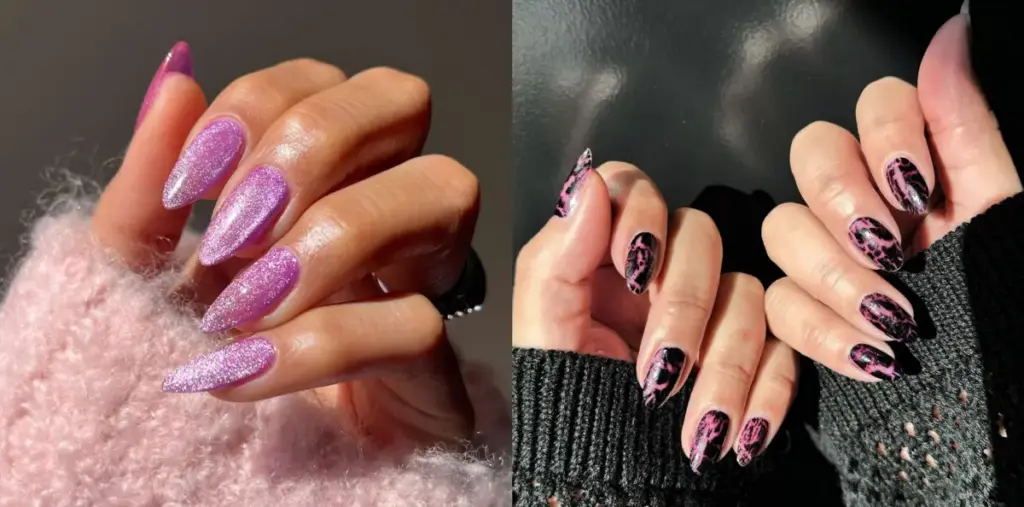
- The Glitter Explosion: The Y2K aesthetic could not exist without high-impact, nearly blinding glitter polishes. From dense holographic formulas to chunky multi-colored flakes, sparkling fingers were a non-negotiable accessory. These formulations were often gritty and difficult to remove, requiring layers of topcoat to achieve a smooth finish, yet they represented an era of unapologetic maximalism.
The 2010s: The DIY Tumblr Era and Novelty Finishes
As social media platforms like Tumblr, Pinterest, and early Instagram gained prominence, nail art transformed from a luxury salon service into an accessible, highly democratic DIY movement. Consumers became creators, experimenting with specialized tools and drugstore novelties.
- Marble Nails and Water Marbling: The sixth-grade kitchen table experiment of dropping different colored polishes into a disposable cup of water, swirling them with a toothpick, and dipping the finger to create a chaotic, abstract pattern was a universal rite of passage during this period. While these early attempts often resulted in messy cuticles and uneven thickness, they laid the groundwork for complex, fluid-art designs.
- Crackle Polish: Perhaps no product defines the 2012 beauty zeitgeist quite like the crackle topcoat. Brought back into the spotlight by brands like Sally Hansen, this formula was applied over a contrasting base color, instantly fracturing as it dried to reveal a distressed, edgy texture. It was the ultimate expression of the indie-sleaze and grunge-pop aesthetics of the early 2010s.
- Colorblocking and Accent Nails: This era also popularized the "ring finger accent nail"—often featuring a starkly contrasting color, a tropical floral airbrushed design, or a heavy coat of glitter—alongside geometric colorblocking that utilized striping tape to create sharp, graphic lines.
Supporting Context & Metrics: The Science and Economics of the Modern Nail Industry
The resurgence of these nostalgic nail trends is not merely a nostalgic whim; it is backed by significant shifts in cosmetic chemistry, consumer behavior, and market economics.

Formulation Advancements: From Drugstore Novelties to Salon-Grade Science
The primary reason vintage trends feel so fresh today lies in the radical transformation of polish formulation and application techniques. What was once thick, goopy, and prone to chipping within 48 hours has been re-engineered using advanced polymer technology.
| Era | Primary Formulation Technology | Common Consumer Pain Points | Modern Counterpart/Evolution |
|---|---|---|---|
| 2010 Crackle | High-solvent, rapid-evaporation lacquers | Brittle finish, quick peeling, chalky texture | Elevated abstract art, gel-infused negative space designs |
| Early 2000s Glitter | Large suspended plastic particles in standard base | Difficult removal, abrasive texture, dulling | Soft chrome finishes, fine micro-glitters, encapsulated gel glitter |
| 2012 Water Marbling | Standard lacquer viscosity reacting unpredictably in water | Messy application, skin staining, lack of precision | Professional airbrushing, hand-painted blooming gels |
According to industry analysts, the global nail care market has experienced exponential growth, driven largely by the "lipstick effect"—where consumers indulge in smaller, high-satisfaction beauty purchases during periods of economic uncertainty. Nail art has transitioned from a basic hygiene task to an essential pillar of personal branding and self-expression.

Consumer Demographics and the Psychology of Nostalgia
Psychologists note that cultural nostalgia typically operates on a 15-to-20-year cycle, corresponding directly to the time it takes for children and teenagers who experienced a trend to reach adulthood with disposable income. Millennials and older Gen Z consumers, who grew up experimenting with CVS polish racks and DIY YouTube tutorials, now possess the purchasing power to revisit those memories—but with a refined, elevated execution.
This psychological craving for comfort and familiarity has driven massive engagement across social platforms. Content tagged with nostalgic beauty terms consistently outperforms standard beauty content, as consumers seek emotional connection alongside aesthetic pleasure.

Official Statements and Expert Perspectives
Industry leaders, celebrity manicurists, and beauty editors have weighed in on why looking backward is currently the most forward-thinking move in nail care.
Jasmine Hyman, Assistant Beauty Editor at Cosmopolitan, notes the duality of revisiting these past eras:

"Taking a trip down beauty memory lane is equal parts cringe and endearing. While looking back on my ombré hair of 2012 and silver smokey eye of 2016 might send a shiver down my spine today, they were simply moments in time you had to be there for. If you’re feeling a nostalgic yearning for the good old days, you can actually try many of these designs again without fully reverting to your middle-school self."
Celebrity nail artists who pioneered early trends are now redesigning them for high-fashion runways and red carpets. Master manicurists emphasize that the secret to modernizing vintage nail art is restraint. Where a 2012 manicure might have featured every finger decorated with a different crackle pattern or neon colorblock, the 2026 approach favors targeted placement, balanced negative space, and luxurious finishes.

Industry formulation experts also highlight how professional brands are quietly reformulating classic effects. For instance, major companies—including OPI with lines like Infinite Shine and professional gel innovators like Apres Nail—have reintroduced sparkle and shimmer technologies that mimic the blinding brilliance of early-2000s glitter without compromising the health and integrity of the natural nail bed.
Future Outlook: Where Nail Trends Are Heading Next
As we look toward the future of nail artistry, it is clear that the cyclical relationship between past and present will continue to shape upcoming innovations. The boundary between DIY culture and high-end salon technology is increasingly blurred, driven by several key developments:

1. The Intersection of AI and Custom Nail Design
Consumers can now use augmented reality (AR) and artificial intelligence apps to test complex, multi-layered nostalgic designs—such as updated water-marble patterns or custom colorblocked palettes—before stepping into a salon. This reduces consumer friction and encourages experimentation with bolder, retro-inspired looks.
2. Sustainable Formulations and Clean Beauty
The heavy, solvent-heavy lacquers of the 2010s are rapidly being replaced by 10-free, breathable, and plant-based formulas. Future iterations of classic trends like glitter and crackle will prioritize non-toxic ingredients, biodegradable shimmer particles (such as cellulose-based glitters), and easy-peel technology that protects the nail plate.

3. The Refinement of Maximalism
Maximalism is officially back, but it is smarter and sleeker. Expect to see the return of heavy embellishments, dimensional chrome overlays on top of classic glitter bases, and architectural French tips that play with geometry and transparency. The clumsy execution of the past is being replaced by architectural precision, proving that great design—much like great style—always comes full circle.
In conclusion, revisiting the nail trends of our youth is no longer an embarrassing exercise in regret; it is a celebration of beauty evolution. By combining the emotional warmth of nostalgia with the technical sophistication of modern formulation, today’s manicures offer the best of both worlds: the fun of the past, elevated for the future.