Executive Overview
Milan Fashion Week for the Spring collections has drawn to a close, leaving behind a clear industry-wide narrative: the theatricality that once defined the Italian fashion capital is taking a pragmatic back seat to commercial viability, experiential retail innovation, and hyper-targeted relationship management with ultra-high-net-worth consumers. Rather than relying solely on abstract runway spectacles, major luxury houses used the week to present tangible, actionable reasons for consumers to return to familiar brands.
From Gucci constructing an immersive, full-scale architectural preview of its upcoming storefronts directly onto the runway, to Prada rolling out exclusive, $20,000-plus private client experiences, the message from Milan was unequivocal. Legacy brands are doubling down on retail mechanics, wearable wardrobe versatility, and high-margin product extensions.
Retail buyers from top-tier global department stores—including Harrods and Bloomingdale’s—signaled enthusiastic support for this pivot, noting that the season delivered robust commercial propositions over transient shock value. Concurrently, digital metrics underscored the immense gravitational pull of celebrity-driven earned media value (EMV) and high-profile magazine covers, proving that while retail grounding is happening on the ground in Milan, consumer conversion is heavily orchestrated across global digital ecosystems.
Detailed Chronology: How Milan’s Major Houses Re-Engineered the Runway
The strategic shifts executed by Milan’s premier design houses demonstrated a coordinated effort to merge creative direction with bottom-line retail execution. Across the board, brands prioritized iterative updates to proven best-sellers and calculated physical expansions over wild stylistic departures.
Gucci: Architectural Immersion and the Demna Effect
Gucci made the strategic connection between its high-level creative direction and brick-and-mortar retail reality unusually explicit. Staging its September 25 presentation inside a meticulous mock-boutique, the brand previewed creative director Demna’s radically revamped store concept. This physical retail blueprint is slated for its official commercial debut at the newly renovated Avenue Montaigne location in Paris in late October, before cascading across the global store network.
Runway models wove through physical product displays of recent collections, seamlessly merging the performance of the show with the reality of the sales floor. On the garments themselves, the iconic horsebit hardware migrated organically across collars, pockets, and closures, unifying diverse categories under a singular, highly recognizable house signature.
For retail buyers, the collection signaled a calculated recalibration. Marissa Galante Frank, fashion director of accessories and beauty at Bloomingdale’s, noted that the infusion of equestrian prep-school energy successfully balanced out the more exaggerated, hyper-sensual aesthetics traditionally associated with Demna. This calculated tempering allows Gucci to court a broader, more diverse demographic across both men’s and women’s segments without alienating its core luxury consumer base.
Prada: Private Access, Ultra-Exclusive Pricing, and Transformative Tailoring
While Gucci courted broader architectural integration, Prada leaned aggressively into the ultra-luxury tier. The house brought more than 100 of its highest-spending global clients to Milan for an immersive, multi-day program that included private cultural excursions and intimate high-dining experiences.
The highlight of this private-client push occurred the day after the main show, when a select group of VIPs was given exclusive access to a collection of crocodile handbags featuring onyx-detailed clasps inspired by archival 1920s designs. Priced at just over $20,000, these pieces were completely shielded from the public eye until presented in private appointments. Furthermore, Prada activated its newly renovated Galleria complex for bespoke private shopping sessions, on-site tailoring, and curated fine jewelry viewings.
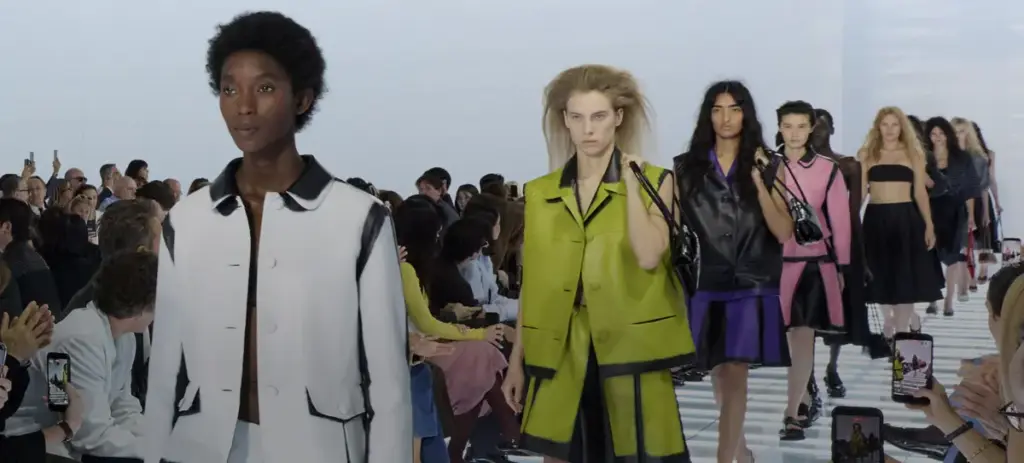
For the mass-market runway audience, Prada focused its ready-to-wear narrative on an unexpected staple: the skirt. Offering extreme wardrobe flexibility, the skirts featured crystal-embroidered Velcro fastenings, allowing the wearer to dynamically adjust silhouettes, reveal or conceal structural embellishments, and manipulate the garment’s fall. The material experimentation was broad and sophisticated—Re-Nylon was meticulously pleated, standard cotton was chemically treated to mimic the tactile richness of supple leather or suede, and rigid crinoline was pulled to the surface as a standalone outer layer.
Simon Longland, fashion director at Harrods, summarized the mood succinctly: "No contest: a pleated and bejeweled Prada skirt." Longland emphasized that skirts and separates delivered a far more cohesive and compelling message than dresses this season, establishing an overarching silhouette that rippled across competing presentations throughout the week.
Fendi and Loro Piana: Expanding the Accessory Lexicon
At Fendi, the perennial Baguette bag received yet another evolutionary push. Alongside artistic updates incorporating heavy embroidery, intricate buckle closures, and novelty fabrication, the house introduced a downsized version engineered precisely to accommodate a standard modern smartphone. This functional downscaling provided an accessible, novelty entry point for loyalists seeking a fresh interpretation of an established icon. Bloomingdale’s Galante Frank highlighted these offerings, stating that her clientele continuously seeks out investments that blend timeless architectural silhouettes with high-personality, embellished accessories.
Similarly, Loro Piana expanded its accessory footprint by rolling out fresh sizing iterations for the Loom bag, alongside the introduction of the Bale Softy and an Extra Softy Backpack. Rather than relying solely on formalwear, Loro Piana’s collection catered directly to specialized lifestyle activities, presenting high-end technical executions like a dedicated golf bomber and ultra-lightweight luxury beach pajamas.
Adding an experiential dimension to its presentation, Longland praised Loro Piana’s immersive installation at the Biblioteca Nazionale Braidense within the Palazzo di Brera—a historic site he had never visited in three decades of attending Milan Fashion Week. The venue allowed guests to closely inspect raw textiles, garment-finishing techniques, and screen-printing demonstrations, embedding the physical space directly into the consumer’s understanding of product value.
Supporting Context & Metrics: Digital Dominance and Market Realities
While the physical presentations focused heavily on tactile craftsmanship and private-client cultivation, the digital ripple effect of Milan Fashion Week proved that social media capitalization remains the engine driving top-of-funnel brand awareness.
According to performance data compiled by Lefty x Karla Otto, Milan Fashion Week generated a staggering $311 million in Instagram Earned Media Value (EMV), marking a robust 27% increase year-over-year. Prada dominated the digital landscape, pulling in $61.2 million in EMV (a 34% surge), closely followed by Ferragamo with $56.3 million, and Gucci with $47.9 million (a massive 51% jump).
A significant driver of this digital valuation was strategic celebrity positioning. For instance, Ferragamo’s digital footprint was heavily catalyzed by Thai actress Faye Peraya, whose appearance and subsequent social media amplification accounted for $43.4 million in EMV alone. While advertising-equivalent exposure metrics like EMV do not directly equate to immediate sales conversions, they vividly illustrate where consumer attention is concentrated.
This digital attention economy extends directly into print and editorial platforms. Data shared with Glossy by influencer marketing and analytics platform Traackr revealed that September magazine covers served as massive conversion catalysts for luxury brands in August. A single social post by Kylie Jenner featuring her Who What Wear cover—in which she wore Gucci—generated a remarkable 23% of Gucci’s entire monthly Brand Vitality Score. Similarly, two posts tied to Rihanna’s Elle September cover contributed 29% of Dior’s total brand score. Among 148 tracked luxury brands, Gucci and Dior ranked first and third, respectively, proving that traditional editorial placements continue to fuel modern digital performance.
Official Statements and Industry Insights
Despite the dazzling digital metrics and high-stakes runway productions, retail leadership emphasized that the core work of a fashion director happens long before the runway lights are switched on.
Reflecting on the overarching tone of the season, Harrods’ Simon Longland observed a distinct shift in atmospheric energy: "We saw beautiful collections, but less drama and anticipation than in recent seasons." This quieter, more grounded approach reflects a broader normalization within the luxury sector, where stability and wearable execution supersede viral stunts.
Echoing this sentiment, Bloomingdale’s Marissa Galante Frank explained the complex interplay between runway presentation and retail buying strategy:
"As a Fashion Director, I’m responsible for communicating trend direction to my merchant team well ahead of Fashion Month. Seeing those trends on the runway can validate that work and sometimes influence us to go deeper in key items, add another colorway or buy further into a trend."
Frank also noted the necessary translation that occurs between an editorial runway show and a commercial showroom. Runway lighting, hyper-stylized staging, and dramatic presentation formats can occasionally obscure the true fabrication, color accuracy, and structural weight of a garment. Furthermore, logistical adjustments occur before production lines start; for instance, heavy statement earrings showcased on the runway are frequently engineered in lightweight alternative materials to ensure long-term comfort for the retail consumer.
Significantly, neither Harrods nor Bloomingdale’s reported an expansion in overall buying budgets for the season. Instead, their strategic endorsements were highly selective, targeted entirely toward products and categories they are confident their customer bases are prepared to invest in.
Future Outlook: The Practical Road Ahead
As the dust settles on Milan Fashion Week, the immediate future of the luxury sector is defined by practical execution rather than speculative expansion. The divergence in strategy between major houses highlights two distinct pathways for capturing consumer wallets:
- Mass-Market Retail Realignment: Gucci’s architectural store previews and iterative adjustments to recognizable motifs (such as the ubiquitous horsebit) point toward a strategy aimed at stabilizing and expanding its broad demographic footprint through clear, consistent retail environments.
- Ultra-Luxury Isolation: Prada’s hyper-exclusive, five-figure private client offerings and bespoke appointments demonstrate that the pinnacle of the luxury market will continue to insulate itself, prioritizing ultra-high-net-worth individuals through closed-door commerce and rare material sourcing.
For retail buyers, the immediate mandate involves meticulous data analysis, market showroom appointments, and localized assortment planning. As merchants determine which iterations of a pleated skirt or a scaled-down Baguette bag deserve prime floor space, the ultimate success of Milan’s Spring collections will not be measured by the applause inside the tent, but by the velocity of sell-through rates when these pieces officially hit the global sales floor.