Executive Overview
In the hyper-connected ecosystem of modern social media, absolute transparency has long been the gold standard. Beauty and lifestyle influencers meticulously document every facet of their daily existence—from expansive home renovations down to the precise grams of protein in their breakfast bowls. Yet, a conspicuous blind spot persists within this digital panopticon: the signature scent.
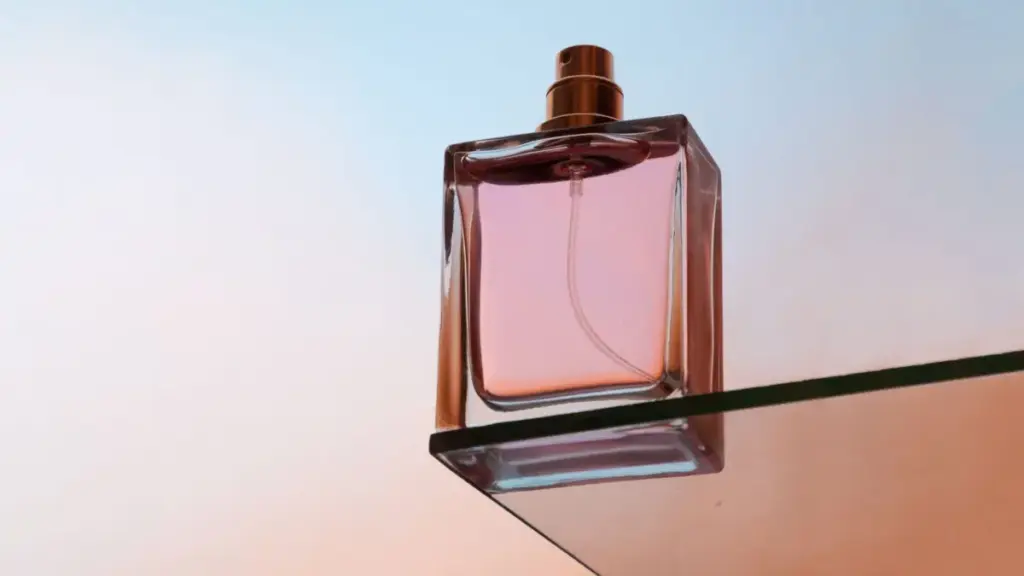
Across TikTok, Instagram, and YouTube, creators spray themselves with unlabeled, minimalist bottles during "Get Ready With Me" (GRWM) segments, sparking digital stampedes in the comments section. Hundreds of thousands—sometimes millions—of viewers clamor to identify the mysterious aromas, only to be met with silence or playful evasion. This phenomenon has been christened "perfume gatekeeping."
With the hashtag #gatekeepingmyperfume commanding over 33 million views on TikTok, the practice has evolved from a harmless internet quirk into a broader cultural debate. Critics dismiss it as immature, elitist, and unnecessarily exclusionary. Conversely, perfumers, psychologists, and creators argue that a signature scent remains one of the last bastions of true personal identity in a homogenized digital landscape. This investigative feature explores the psychology behind fragrance gatekeeping, the shifting definition of exclusivity, the rise of scent customization, and the complex economics of luxury perfumes versus affordable dupes.
Detailed Chronology: The Rise of the Fragrance Mystery
The obsession with unmasking secret scents is not entirely new, but its amplification is intrinsically tied to the mechanics of modern short-form video platforms.
Phase 1: The Anonymous Spritz (2021–2022)
As aesthetic-driven GRWM videos gained dominance on TikTok, creators began incorporating perfume application as a sensory climax to their routines. However, commercial partnerships often dictated that sponsored products were clearly displayed, while personal favorites were left deliberately ambiguous. Creators realized that withholding brand names generated significantly higher engagement. Comment sections transformed into battlegrounds of curiosity, with followers demanding answers and accusing creators of deliberate concealment.
Phase 2: Viral Catalysts and the "Missing Person" Phenomenon
The tension between mass-market accessibility and intimate exclusivity reached a boiling point with viral sensations like Phlur’s Missing Person and Maison Francis Kurkdjian’s Baccarat Rouge 540. When Missing Person launched, it was marketed around the concept of nostalgia and physical yearning, capturing the scent of a loved one. As users posted videos of themselves weeping upon first sniff, the fragrance transcended simple cosmetics to become an emotional artifact.
Simultaneously, Baccarat Rouge 540 transitioned from an exclusive niche fragrance to an ubiquitous cultural phenomenon. Its distinct profile of bitter almond, saffron, and jasmine became so widespread that wearers began experiencing olfactory fatigue—hearing complaints that everyone in the subway, gym, and office smelled identical.
Phase 3: The Mainstream Backlash and the Coining of "Gatekeeping"
As hyper-popular scents saturated public spaces, wearers grew defensive. The term "gatekeeping"—originally rooted in sociological studies regarding institutional access and marginalized communities—was repurposed by internet culture to describe the act of withholding consumer knowledge to prevent mainstream adoption. Today, fragrance enthusiasts openly admit to withholding brand names to preserve the uniqueness of their olfactory footprint, transforming a simple beauty secret into a contentious social statement.
Supporting Context & Metrics: Decoding the Scent Economy
To understand why perfume elicits such protective behavior, one must examine the unique psychological weight attached to our sense of smell. Unlike sight or sound, olfactory processing bypasses the thalamus and routes directly to the amygdala and hippocampus—the brain’s centers for emotion and memory.
The Psychology of Ownership
According to consumer psychology metrics, fragrance is viewed less as a disposable accessory and more as an extension of the physical self.
- Identity Communication: A 2023 fragrantica community survey revealed that nearly 68% of dedicated fragrance collectors view their signature scent as a non-verbal introduction.
- The "Twin Outfit" Anxiety: In qualitative focus groups, fragrance wearers frequently compared smelling like someone else to showing up to a high-profile event wearing the exact same outfit as another guest. The resultant embarrassment drives the desire for proprietary discovery.
- The Financial Taboo: Investigations into consumer spending habits indicate that up to 45% of luxury perfume buyers conceal product names out of fear of socioeconomic judgment. Admitting to spending a quarter of one’s monthly rent on a 50ml bottle of niche extrait de parfum invites accusations of fiscal irresponsibility in an era marked by rising living costs.
The Dupe Dilemma: Democratization vs. Plagiarism
The counterweight to luxury gatekeeping is the booming market for "dupes"—affordable alternatives that mimic high-end formulations. Retail giants like Aldi (via their Lacura line) and Zara have capitalized on inflation by offering formulations eerily similar to Tom Ford, Byredo, and Le Labo at a fraction of the cost.
While beauty advocates praise dupes for democratizing luxury, industry purists argue they devalue master perfumers’ intellectual property. This economic polarization forces consumers into two distinct camps: those who gatekeep elite formulations to protect their investment, and those who proudly champion budget-friendly alternatives.
Official Statements & Industry Perspectives
Industry leaders offer nuanced views on whether withholding a fragrance name constitutes toxic gatekeeping or a healthy preservation of personal boundaries.
"As a perfumery founder, perhaps I should advocate for everyone loudly broadcasting what they wear," notes Pia Long, co-founder of Olfiction Limited. "However, I totally respect that not everyone wants to disclose their personal fragrance choice—whether online or in person. A chosen scent is deeply personal. It serves as a facet of one’s personality, a way to communicate non-verbally in a world saturated by fleeting trends."
This sentiment is echoed by Eudora Nwasike of The Fragrance Foundation, who emphasizes the primal human urge for distinction.
"Imitation may be the highest form of flattery, but in the realm of personal presentation, nobody wants a carbon copy of their aura. Exclusivity remains the ultimate luxury."
Meanwhile, Marina Barcenilla, founder of AromAtom, suggests that absolute exclusivity is ultimately an illusion.
"Whether you purchase a mass-market blockbuster or an ultra-rare indie formulation, hundreds or thousands of others are wearing that exact chemical composition. True uniqueness does not stem from the liquid in the bottle, but from the subjective body chemistry and emotional narrative of the wearer."
Future Outlook: The Shift Toward Hyper-Personalization
As we look toward the future of the fragrance market, the tension between gatekeeping and sharing is driving massive innovation within the industry. Rather than fighting over mass-produced bottles, consumers are increasingly seeking bespoke solutions that render gatekeeping entirely obsolete.
1. Fragrance Profiling and Speed-Dating
Legacy houses and modern disruptors alike are investing heavily in personalized diagnostic tools. Brands like Penhaligon’s utilize algorithmic "fragrance profiling," matching users to micro-batches based on psychological and sensory preferences rather than generic marketing categories.
2. In-Store Alchemical Labs
Experiences such as Ex Nihilo’s The Osmologue and various independent blending workshops allow consumers to mix custom ratios on-site. By creating a formula unique to an individual’s exact specifications, the need to gatekeep evaporates—because no one else on earth owns the exact same blend.
3. The Rise of Advanced Layering
Consumers are increasingly moving away from single-note reliance. By mastering the art of "fragrance layering"—combining body oils, clean musks, and contrasting woody or floral extracts—wearers create dynamic, shifting profiles that cannot be easily replicated or identified by a casual passerby.
Conclusion
Ultimately, the debate over perfume gatekeeping exposes a deeper truth about modern digital life: our desperate struggle to retain a shred of mystery in a world that demands total exposure.
While refusing to name a favorite fragrance can certainly read as snobbish or exclusionary, it also represents a reclaiming of personal space. Whether you choose to share your signature scent freely, mix your own bespoke concoctions, or lock your favorite bottle away like a state secret, one immutable biological fact remains: human skin chemistry ensures that no two people ever smell quite the same. In the end, fragrance is deeply intimate—and in matters of scent and self-expression, discretion remains entirely up to the wearer.