Executive Overview
Two decades after principal photography ground to a sudden and violent halt, the tumultuous history surrounding the unreleased 2005 British independent film Breakin’ the Cycle has finally stepped out of the shadows. Long before its rough cuts were confiscated by the Metropolitan Police and its raw digital assets were presumed lost to corrupt hardware, the project’s production was an unprecedented collision of high-stakes criminality and raw artistic expression.
Conceived by Colin Browne—the charismatic leader of the notorious Hackney-based "Love of Money" drug syndicate—the film was intended as a vehicle for redemption. Written behind bars while Browne was serving a sentence for cocaine smuggling, the project sought to translate the brutal realities of East London estate life into a cinematic critique of gang warfare. To bring his vision to life, Browne enlisted a diverse cast of professional musicians seeking crossover legitimacy, including Bradley McIntosh of pop phenomenon S Club 7 and members of the hip-hop group Big Brovaz, alongside a green, ambitious film editor named Lewis Albrow.
Yet, as detailed in a new BBC Radio 4 podcast series, Shadow World: Breakin’ the Cycle, the line between the film’s fictional narrative and its creators’ real lives was terrifyingly thin. While Browne and his right-hand man, known simply as "D," purported to be leaving the criminal underworld behind, they were simultaneously running their drug operations out of production offices. Navigating real-world turf wars, hostility from an insular and elitist British film establishment, and internal betrayals, the production was a high-wire act of comedic chaos and tragic peril.
Today, thanks to the miraculous recovery of degraded hard drives by data specialists and two decades of reflection by its surviving participants, the story of Breakin’ the Cycle is no longer just a ghost story of British independent cinema. It stands as a profound, cautionary tale of art, ambition, and the nearly insurmountable friction of attempting to escape a life carved in stone.
Detailed Chronology: From Prison Cell to Police Seizure
The Genesis Behind Bars (2003–2004)
The genesis of Breakin’ the Cycle began in the high-security environment of a British correctional facility. Colin Browne, recognized by law enforcement as the head of the formidable Hackney narcotics network "Love of Money," sat behind bars serving time for cocaine smuggling. Rather than succumbing to the institutional monotony, Browne applied his razor-sharp entrepreneurial instincts to a new frontier: screenwriting.
Browne possessed a distinct philosophy regarding the criminal landscape. To him, the underworld was not merely a theater of hyper-masculine bravado, but a desperate, systemic trap driven by individuals attempting to outrun their circumstances. He envisioned a film that would lay bare these psychological mechanics. Upon his release, Browne wasted no time mobilizing his network, transforming criminal capital into film capital with a singular, driving mandate: to forge a legitimate legacy and prove that he could author something of enduring value.
Entering the Fray: The Production Starts Rolling (2005)
By 2005, production was underway across the gritty estates of East and West London. Lewis Albrow, a young and inexperienced assistant editor trying to break into the industry, responded to an online classified advertisement looking for editorial assistance on a low-budget feature. What he stepped into bore little resemblance to a standard film set.
"Because I was so green, I didn’t quite know what to expect either," Albrow recalls. "I knew it was low budget, so everything’s kind of scrappy. For instance, the sound was all over the place and some of it was unusable, but that got better as they got better."
At the same time, casting directors had successfully pulled in recognizable faces from the British pop and urban music scenes. Bradley McIntosh, fresh off the stratospheric success of the tween pop group S Club 7, was eager to shed his clean-cut image. Seeking credibility in the R&B and dramatic acting spaces, McIntosh signed on to play a drug dealer—a role that hit closer to home than his public pop persona suggested.
"Growing up around certain people, I was familiar with certain lifestyles," McIntosh notes. "You see drug dealers and people that are gang members and stuff like that… I don’t think it actually clicked until maybe halfway through filming that it was based on [their] true story."
Turf Wars and Real-World Menace
The production’s blending of fiction and reality frequently threatened to rupture the set entirely. During a location shoot on a notoriously volatile East London housing estate—featuring cast members J-Rock and Randy from the hip-hop group Big Brovaz—the crew faced immediate hostility from local youths who mistakenly believed a rival gang was encroaching on their territory or filming unauthorized music videos.
"They were like: ‘They can’t come round here. You got to move, otherwise we’re gonna start petrol bombing the cars,’" McIntosh remembers.
While Browne was unaccustomed to showing weakness in his daily life, his pragmatic instincts as a first-time director ultimately prevailed over criminal bravado. De-escalating the immediate tension, he promised the locals that the crew would clear out, only to return with a reinforced entourage and security backup to complete the day’s schedule.
The Dual Life and the Industry’s Glass Ceiling
Compounding the logistical hazards on set was a quiet, high-stakes deception. Neither Albrow nor McIntosh had any inkling that Browne and D were actively continuing their narcotics operations while managing the film’s daily calls, budgets, and creative direction.
"They did a good job of keeping it from us. I think that’s called good professionalism," McIntosh reflects with wry irony. "I guess it’s a weird one, right, calling it professionalism?"
This unorthodox approach extended to how the production interacted with the broader British film and television industry. Encountering bureaucratic resistance and elitist gatekeeping from established equipment rental houses—who refused to lease high-end cinema cameras to an untested, working-class independent outfit—Browne simply bypassed the system. Operating with the uncompromising liquidity of underworld entrepreneurs, the producers bypassed the rental gatekeepers entirely and purchased the required cinematic gear outright.
When the film’s original music-video director walked away a third of the way through production, Browne stepped into the director’s chair himself. Under his guidance, the project shifted tone, moving away from conventional, posturing gangster tropes and evolving into a deeply heartfelt, tender exploration of loyalty, friendship, and the agonizing bonds holding men to their pasts.
The Tragic Unraveling (Late 2005)
The fragile architecture of Breakin’ the Cycle collapsed in a wave of sudden tragedy. Colin Browne’s life was cut short at the age of 38 when he was fatally shot and stabbed after intervening in a street dispute.

With their visionary leader gone, the cast and crew attempted to preserve the project in his honor. However, the fragile ecosystem dissolved entirely when D was arrested on renewed drug-trafficking charges and subsequently sentenced to a lengthy prison term. Amidst the legal fallout, the Metropolitan Police seized the production’s rough cuts and raw assets, consigning the film to the annals of lost British cinema.
"It’s not about the film any more—someone’s lost their life," McIntosh reflects. "It’s about someone, a dad, a brother. But, in hindsight, it would have been nice if we had got that movie out."
Supporting Context & Metrics
To properly contextualize Breakin’ the Cycle, one must examine the socio-economic landscape of mid-2000s urban Britain. The era was defined by a burgeoning wave of gritty, low-budget urban crime dramas attempting to capture the changing pulse of inner-city life. Films such as Menhaj Huda’s Bullet Boy (2004) and Julian Gilbey’s Rollin’ with the Nines (2005) found critical and commercial pathways into mainstream cinemas, establishing a brief golden window for British street-level realism.
Breakin’ the Cycle operated within this exact cultural zeitgeist, yet its production metrics set it apart as an authentic sociological artifact rather than a manufactured Hollywood pastiche:
- Production Era: Mid-2005, coinciding with the peak of the UK garage and early grime crossover movements.
- Key Cast Integration: Bridging pop culture and street credibility, featuring Bradley McIntosh (S Club 7), Lethal Bizzle, J-Rock, and Randy (Big Brovaz).
- Creative Shift: Transitioned from a style-heavy, music-video-inspired gangster flick into a character-driven study of redemption following Colin Browne’s assumption of the directorial reins.
- Digital Recovery (2024–2025): Following decades of presumed loss on degraded media storage, advanced digital forensic specialists successfully recovered the contents of the original production hard drives, restoring hours of unseen footage.
Official Statements and Perspectives
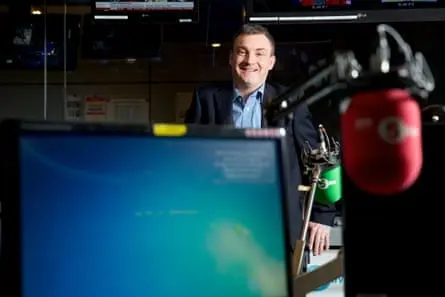
The release of the BBC Radio 4 podcast Shadow World: Breakin’ the Cycle, produced by Lewis Albrow, has brought the primary stakeholders back into the public eye to reflect on the legacy of the project and the complex psychology of its creators.
Lewis Albrow, Editor and Podcast Host:
"Over the last 20 years, I stayed in touch with D, Browne’s right-hand man who was also involved in the film… Occasionally, he would contact me and say: ‘One day we’ll finish this film, honour Colin’s legacy.’
When D came out of prison, he came out a changed man. The time was right to go back and ask him questions — was he really truthful about wanting to get out of it? How does he feel about the damage he did? How did he pursue a new future? I think his answers to all of those questions are deep, truthful and fascinating. He really is the central voice in the podcast."
Albrow also reflects on the stark cultural divide between his own middle-class upbringing in Hounslow and Browne’s harsh reality in Hackney:
"He’s like: ‘You’re a white middle-class man walking around Hounslow, I’m a Black man who’s grown up in Hackney. We’ve had very different lives, and we see the world in a very different way.’ But he was on a trajectory. It was his first film. He comes out of prison and makes it. He went: ‘I want to do something. I’ve got to do something right.’"
Bradley McIntosh, Actor and Former S Club 7 Star:
"I thought [the film role] was a great opportunity for me to cross over… Growing up around certain people, I was familiar with certain lifestyles. You see drug dealers and people that are gang members and stuff like that… I believed they were ex-gangsters and they were out of that life. It’s not until now, 20 years later, going back and talking to D, that I understand what was going on. They were running two businesses at the same time, and getting out was not as easy as they thought."
Future Outlook: Resurrecting the Lost Masterpiece
What began as a chaotic, ill-fated experiment in 2005 has now entered an unexpected second act. For nearly two decades, Lewis Albrow operated under the assumption that the master tapes and rough edits of Breakin’ the Cycle had been permanently corrupted or lost to history following the police seizures and subsequent storage failures.
However, recent technological breakthroughs in digital data recovery breathed new life into the project. When a specialist successfully resurrected the contents of an old, degraded hard drive handed over by D prior to his imprisonment, Albrow was granted access to the complete, unedited archive of what was shot two decades ago.
For the past six months, Albrow has been in the editing suite, systematically processing the recovered footage with the technical polish and mature perspective he has accumulated over a successful career as an established film editor and director. The objective is no longer merely to piece together a curiosity of British film history, but to honor the complex, tragic vision of Colin Browne.
As Albrow notes, the core message embedded within the celluloid remains as urgent today as it was in 2005:
"It’s about changing your life, and how to break out. You’ve got to have a reckoning, and you’ve got to make amends. I think Colin was ready."
Whether Breakin’ the Cycle ultimately secures a formal commercial release or finds its home as an essential companion piece to the BBC podcast, its resurrection ensures that the ambitions, failures, and humanity of its makers will not remain buried in the East London underworld forever.