Executive Overview
In an era where fashion collaborations often lean toward the predictable—safe pairings of heritage brands with streetwear mainstays—the industry frequently hungers for true disruption. Enter the latest partnership from J.Crew: a comprehensive 27-piece collection designed in collaboration with independent darlings Zoe Latta and Mike Eckhaus of Eckhaus Latta.
Following a successful, highly targeted teaser earlier in the year centered around a reworked Rollneck Sweater, the design duo has returned for a full-scale creative takeover this fall. Under the stewardship of J.Crew’s head of womenswear and kids, Olympia Gayot, the preppy American institution has undergone a formidable 2020s renaissance. Gayot has successfully invited external creative forces—ranging from French cool-girl favorite Rouje to Christopher John Rogers and Lee—to reinterpret J.Crew’s archival codes. Yet, the inclusion of Eckhaus Latta stands out as arguably the most daring, conceptually subversive, and culturally vital partnership in the brand’s recent history.
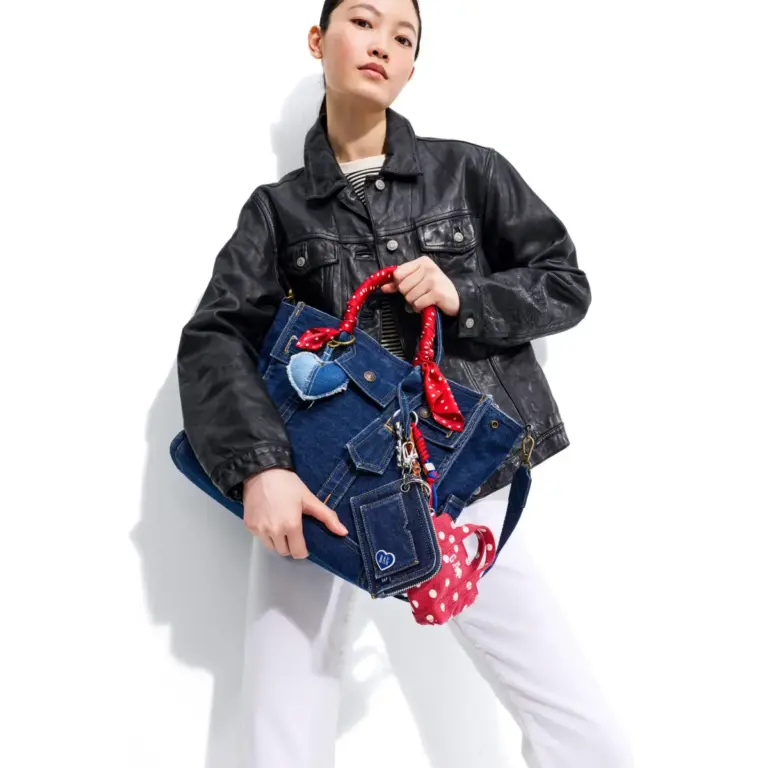
Known for pushing the boundaries of ready-to-wear through structural deconstruction, unconventional textiles, and a downtown-NYC sensibility, Eckhaus Latta brings its signature brand of charming oddity to the masses. The resulting collection—spanning mohair knits, tactile rugby shirts, cropped outerwear, and trousers—challenges traditional notions of commercial wearability. By introducing jarring color palettes, raw-edged finishes, and relaxed silhouettes, Latta and Eckhaus have proven that heritage preppiness and avant-garde art-kid aesthetics not only can coexist, but can thrive together.
Detailed Chronology: From Rollneck Teaser to Full Collection
The Genesis: Early 2026 Warm-Up
The partnership between J.Crew and Eckhaus Latta did not materialize overnight. The groundwork was laid earlier in the year when Latta and Eckhaus were tapped to reimagine J.Crew’s iconic Rollneck Sweater. That initial drop served as a crucial litmus test for both brands. For J.Crew, it signaled an ongoing commitment to unexpected design voices; for Eckhaus Latta, it offered a rare backdoor into a legacy retail machine without diluting their independent ethos.
The reworked Rollneck resonated immediately with fashion insiders and core consumers alike, demonstrating that J.Crew’s customer base was hungry for a sharper, more idiosyncratic edge. Sensing the cultural and commercial momentum generated by the initial capsule, J.Crew’s executive team quickly moved to secure the duo for a full autumn collection.
The Design Room Realization
Transitioning from a single sweater to a 27-piece capsule required a delicate balancing act. In design meetings, the conversation often hovered around tension: how to marry J.Crew’s clean-cut Americana with Eckhaus Latta’s penchant for the destabilizing and unconventional.
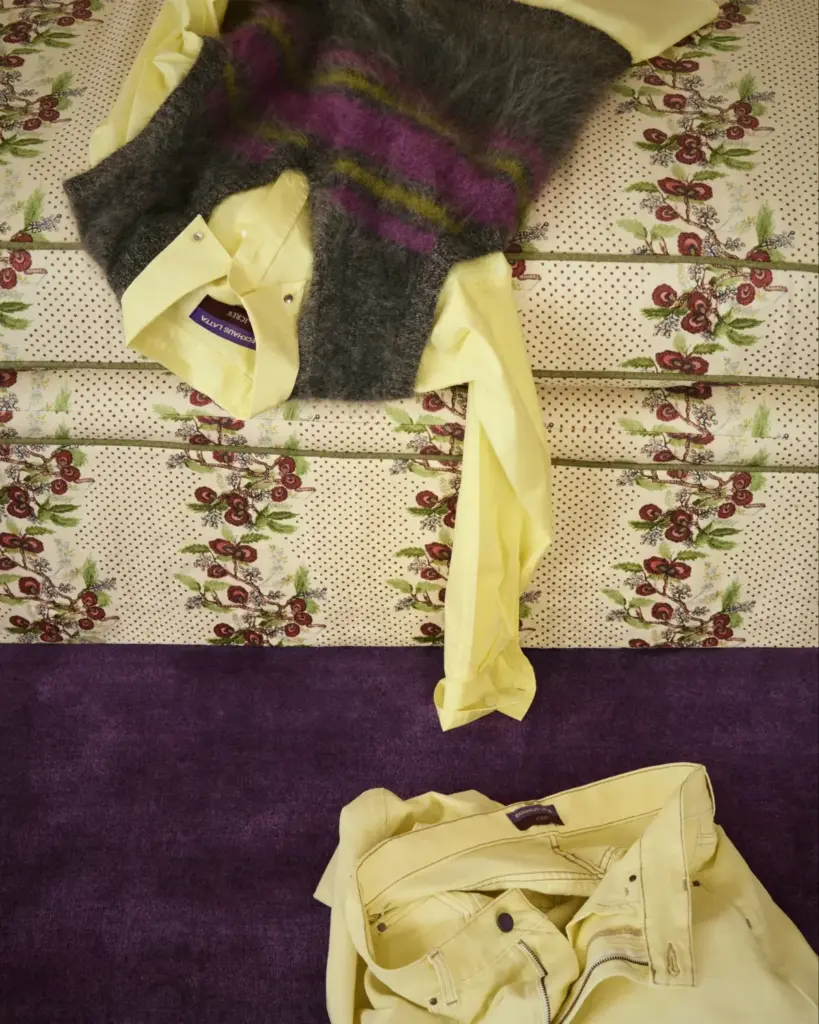
According to behind-the-scenes accounts, the color palette alone was a masterclass in calculated friction. A palette featuring what might traditionally be deemed "difficult" or even "offensive" hues—mustard yellow, dusty olive green, buttery buttercup, deep purples, and sharp scarlets—became the scaffolding of the collection. Rather than clashing uncomfortably, these shades were tempered by neutral anchors, such as heather gray and solid tan denim, achieving a visual harmony that feels both accidental and deliberate.
The Campaign Rollout and Launch Timeline
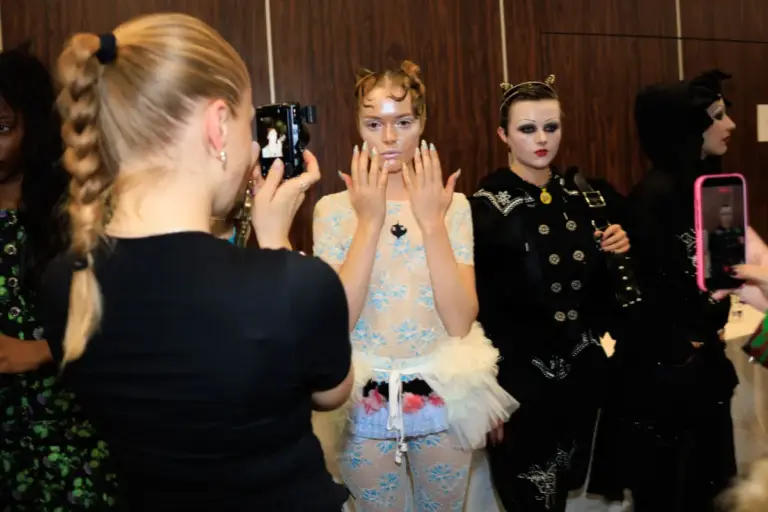
Reflecting the youth-forward, community-centric culture that Eckhaus Latta has cultivated over its 15-year history, the campaign imagery steps away from sterile studio backdrops. Instead, it captures the raw, nostalgic energy of an underground house party. Reminiscent of J.Crew’s high-profile, star-studded fashion week gatherings in New York, the campaign is set within richly textured, pattern-heavy interiors that evoke an old-school, lived-in intimacy.
The collection is scheduled to officially drop on September 15 at 10:00 a.m. ET, with an exclusive early-access window opening to email subscribers at 9:00 a.m. ET, anticipating high demand across global markets.
Supporting Context & Metrics: The Anatomy of a Modern Collaboration
To understand the weight of the Eckhaus Latta x J.Crew partnership, one must examine the broader shifts within the retail landscape, J.Crew’s brand turnaround metrics, and Eckhaus Latta’s trajectory as an independent house.
J.Crew’s Renaissance Under Olympia Gayot
Following a turbulent late 2010s marked by changing consumer habits and financial restructuring, J.Crew executed a textbook brand pivot. Central to this resurgence has been Olympia Gayot’s vision, which honors the brand’s prep-school roots while injecting a heavy dose of modern styling, elevated fabrications, and unexpected collaborations.

- The Collaborative Blueprint: Over the past several years, J.Crew has partnered with a diverse roster of designers:
- Christopher John Rogers: Brought vibrant, high-octane color blocking to classic stripes.
- Rouje (Jeanne Damas): Infused Parisian effortless chic into everyday knitwear and denim.
- Lee: Reimagined heritage denim through a modern lens.
- Market Impact: Collaborations of this caliber have consistently driven spikes in e-commerce traffic, generated significant earned media value (EMV), and successfully captured younger demographics (Gen Z and younger millennials) who previously viewed J.Crew as a destination strictly for corporate office attire.
Eckhaus Latta: 15 Years of Independent Disruption
Founded in 2011 by Rhode Island School of Design graduates Zoe Latta and Mike Eckhaus, the label has spent a decade and a half carving out a distinct niche in the global fashion consciousness. Operating fluidly between New York and Los Angeles, the brand is celebrated for its gender-fluid casting, non-traditional runway presentations, and tactile garment engineering.
- Design Signatures: Known for pieces featuring dramatic front cut-outs, continuous zippers running from the waist to the reverse, and unorthodox knit techniques, Eckhaus Latta champions human imperfection.
- The Commercial Leap: Partnering with a mass-market heritage brand like J.Crew presents a unique paradox for independent designers. However, Latta and Eckhaus have navigated this terrain by maintaining their design integrity—refusing to water down their color theory, silhouette proportions, or textural choices—thereby introducing their singular vision to an international audience without losing their downtown street cred.
Official Statements & Industry Perspectives
While formal press releases offer structured corporate narratives, the sentiment surrounding this collaboration is best understood through the lens of industry observers, design philosophies, and the creative directors themselves.
The Design Philosophy of Friction
Speaking on their approach to textiles and color, Zoe Latta and Mike Eckhaus have often emphasized that clothing should prompt an emotional response, whether that is comfort, confusion, or intrigue. In interviews surrounding their broader body of work, the duo notes that garments function best when they challenge the wearer’s posture and self-perception.
In the context of the J.Crew partnership, this philosophy translates into garments that look deceptively classic from afar, only to reveal surprising structural details upon closer inspection. A standard button-down is oversized to the point of architectural drape; a traditional rugby shirt is re-engineered with mohair textures that blur the line between formal sportswear and tactile art.
Industry Reception and the "Cool-Kid" Seal of Approval
Fashion critics have been quick to praise J.Crew for taking a calculated risk. Where previous collaborations leaned heavily on established commercial aesthetics, the Eckhaus Latta capsule offers a masterclass in bridging subculture with mainstream retail.
"It’s a bold experiment that pays off," notes one prominent downtown fashion editor. "J.Crew is giving a platform to designers who have spent fifteen years subverting American sportswear norms. By letting them loose in the J.Crew archive, the brand has created something genuinely fresh—a collection that appeals equally to the traditional prep enthusiast and the Lower East Side art crowd."
Future Outlook: What This Means for the Future of Retail Partnerships
The success and cultural resonance of the Eckhaus Latta x J.Crew collection point toward several shifting paradigms within the global fashion industry.
1. The Death of the "Safe" Collaboration
For years, brand collaborations relied on predictable formulas: swapping logos, tweaking a standard colorway, or applying a recognizable print to a basic tee. As consumers grow fatigued by superficial marketing ploys, the market increasingly rewards genuine creative friction. The J.Crew x Eckhaus Latta drop proves that mainstream heritage labels can successfully partner with avant-garde independents without alienating their core demographic—provided there is mutual respect for each other’s craft.
2. The Evolution of Accessible Avant-Garde
True avant-garde fashion has historically been restricted to high-net-worth clients shopping at high-end boutiques or specialized concept stores. By translating Eckhaus Latta’s complex design language—such as intricate mohair color-blocking, cropped heritage outerwear, and unconventional color harmony—into accessible price points and widespread distribution, this collaboration democratizes experimental design. It proves that everyday consumers are ready for challenging silhouettes, unexpected color pairings, and narrative-driven garments.
3. A Blueprint for Legacy Brand Revitalization
For legacy American brands looking to stay relevant in a fast-moving digital economy, J.Crew’s strategy under Gayot serves as the gold standard. By acting as a cultural curator rather than just a clothing manufacturer, J.Crew has transformed itself into a dynamic platform for contemporary art and design.
As the collection hits digital and physical shelves this September, the industry will undoubtedly be watching sell-through rates and social media engagement metrics. Yet, regardless of the immediate sales figures, the partnership has already achieved something far more valuable: it has redefined what a preppy American brand can look, feel, and sound like in the modern age.