Executive Overview
In the heart of Manhattan’s kinetic after-hours landscape, the exclusive Crane Club recently served as the crucible where a century of uncompromising European craftsmanship collided with the electric pulse of New York City. The occasion was Montblanc’s grand centennial celebration, marking 100 years since the venerable luxury house first expanded its legendary masterworks into the realm of fine leather goods.
Far from a conventional corporate retrospective, the high-profile gathering functioned as a vibrant cultural nexus. It brought together a cross-section of the global creative vanguard—including celebrated actors, visionary directors, avant-garde designers, internationally recognized models, and elite tastemakers. Guests stepped out of the relentless digital noise of the 21st century and into an immersive sanctuary dedicated to tactility, narrative, and the enduring power of physical design.
At the helm of this celebration was Montblanc CEO Giorgio Sarné, whose vision for the brand anchors luxury not in fleeting trends, but in human-centric, tangible rituals. With sonic direction from legendary DJ Honey Dijon injecting an unmistakable New York heartbeat into the room, the centennial gala successfully bridged Montblanc’s storied heritage from 1926 to the present day.
This comprehensive report examines the milestones of the evening, the philosophy driving Montblanc’s enduring relevance, and the cultural implications of celebrating analog artistry in an increasingly digital world.
Detailed Chronology of the Centennial Evening
Arrival and Atmosphere at the Crane Club
The evening began as twilight yielded to the Manhattan skyline, with a meticulously curated guest list arriving at the doors of the exclusive Crane Club. The venue, known for its discretion and sophisticated ambiance, underwent a dramatic transformation for the centennial. Ambient lighting cast warm glows across rich mahogany panels and velvet textures, establishing an atmosphere that felt both intimately historical and daringly contemporary.
As attendees mingled, the auditory landscape was commanded by legendary DJ Honey Dijon. Her set was a masterclass in mood-setting, weaving deep, hypnotic house grooves with classic New York club rhythms. The music provided a seamless bridge between the past and present, energizing the room and setting a tone that was sophisticated yet pulsing with creative vitality.
Immersive Installations and Interactivity
Rather than relying on static display cases, Montblanc engineered an experiential journey that invited guests to actively engage with the brand’s history and philosophy.
At the center of the main salon stood a towering, sculptural installation inspired by the iconic Montblanc Writing Traveler briefcase. This monumental piece served as a visual anchor, symbolizing the adventurous spirit and utilitarian elegance that has defined the brand’s leather goods for generations.
Guests were then guided through interactive zones designed to honor the tactile nature of creation:
- The Personalization Atelier: A dedicated station where attendees could work alongside master artisans to emboss and personalize small leather goods, transforming luxury objects into deeply personal mementos.
- The Analog Postcard Lounge: A poignant nod to pre-digital communication, this station offered custom-designed stationery and Montblanc writing instruments, encouraging guests to compose handwritten notes to be mailed on-site. In an era dominated by instantaneous digital messaging, the act of slowing down to ink a physical postcard felt radical, deliberate, and deeply resonant.
The Star-Studded Guest List
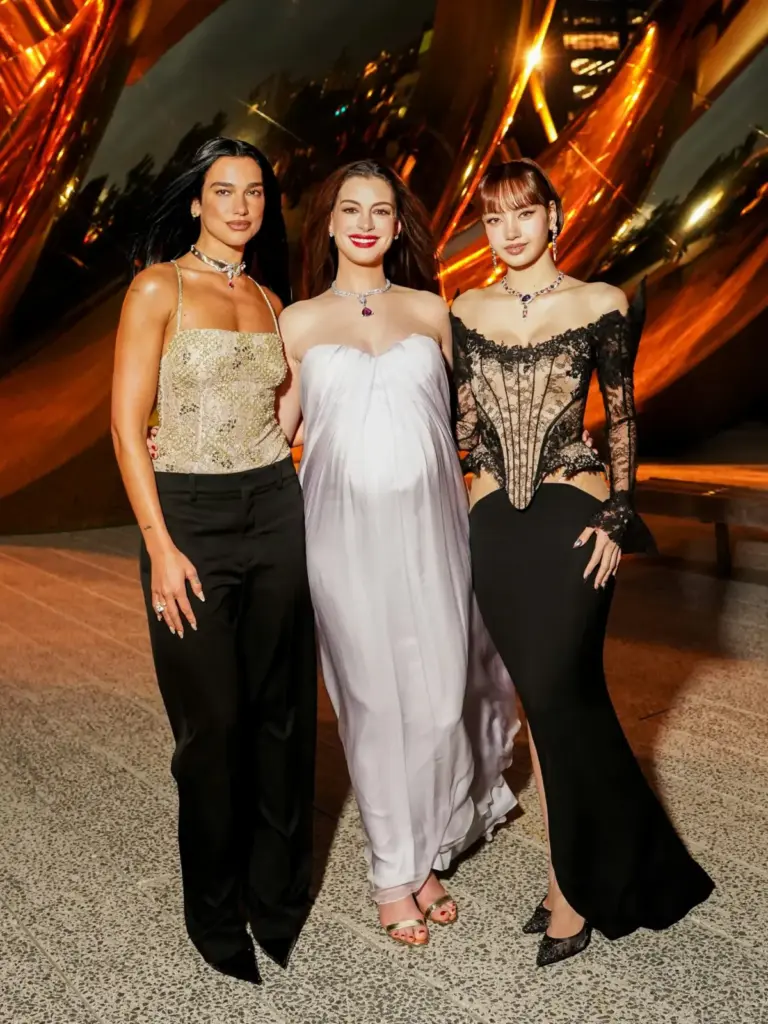
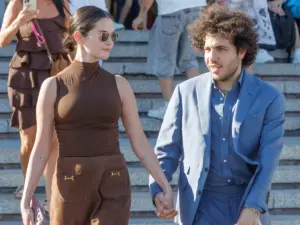
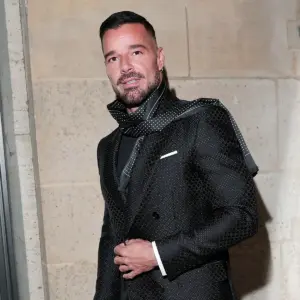
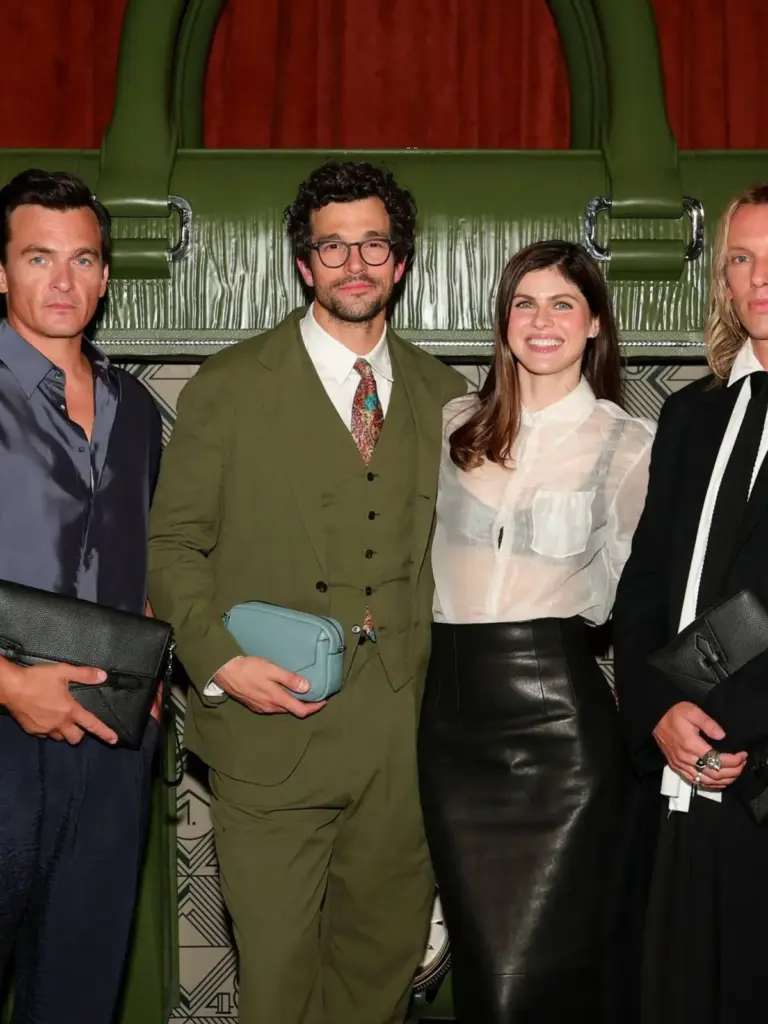
The evening’s success was further amplified by the caliber of its attendees, who represented a diverse tapestry of artistic disciplines. Notable figures moving through the Crane Club included:
- Paul Anthony Kelly, bringing contemporary cultural edge.
- Alexandra Daddario, whose cinematic presence illuminated the room.
- Princess Marie-Olympia of Greece, blending royal heritage with modern fashion sensibility.
- Will Peltz, celebrated actor and stylistic provocateur.
- Roman Coppola, visionary director bridging classic Hollywood lineage with independent innovation.
- Waris Ahluwalia, multidisciplinary designer, actor, and cultural polymath.
- Kenya Kinski-Jones, representing the vanguard of modern modeling and environmental activism.
They were joined by an international roster of Montblanc brand ambassadors, including Rupert Friend, Seo Kangjun, Kerem Bürsin, and Alfonso Herrera. Their presence underscored the global reach and cross-cultural resonance of a brand that has spent a century aligning itself with those who shape contemporary culture.
Supporting Context & Metrics: A Century of Leather and Legacy
To fully appreciate the magnitude of the Crane Club celebration, one must trace the historical trajectory of Montblanc’s leather goods division back to its origins.
The 1926 Genesis
While Montblanc was originally founded in 1906 as the Simplo Filler Pen Co. in Hamburg, Germany—quickly achieving legendary status for its masterclass fountain pens—the brand made a pivotal strategic expansion in 1926. Recognizing that the tools of creation required vessels for transport, Montblanc introduced its inaugural collection of fine leather goods.
Crafted with the same uncompromising standards applied to their writing instruments, these early leather pieces—ranging from blotters and writing cases to travel bags—were designed for the roving intellectual, the traveling diplomat, and the dedicated artist. Over the ensuing decades, this portfolio expanded, utilizing full-grain leathers sourced from premier tanneries, combining traditional saddle-stitching techniques with ergonomic modern engineering.
The Modern Luxury Landscape and the Tactile Economy
Montblanc’s centennial milestone arrives at a fascinating cultural juncture. According to recent market analysis within the luxury goods sector, consumer behavior is experiencing a profound bifurcation:
- Digital Fatigue: As daily life becomes increasingly mediated by screens, cloud storage, and algorithmic interactions, consumers are seeking out physical, analog experiences as a form of mindfulness and self-care.
- The Rise of "Quiet Luxury" and Longevity: Flashy, disposable trends are giving way to an appreciation for heritage, durability, and items that accumulate personal patina over time.
Montblanc’s leather goods and writing instruments sit squarely at the intersection of these trends. Unlike tech hardware that becomes obsolete within a few years, a well-crafted leather folio or fountain pen is designed to age gracefully, bearing the physical marks of its owner’s life journey. The centennial celebration in New York was not merely a look backward; it was a strategic validation of this philosophy, proving that tangible craftsmanship holds immense currency in the modern digital economy.
Official Statements and Leadership Philosophy
The intellectual core of the evening was articulated by Montblanc CEO Giorgio Sarné, whose remarks offered profound insight into the brand’s enduring ethos. Speaking to the assembled press and creative elite, Sarné reflected on the philosophical weight of the centenary:
"For a hundred years, Montblanc leather has lived for one purpose: to celebrate the act of writing," Sarné explained. "As the world becomes more digital, the beauty of the tangible has never felt more essential. The touch of fine leather, the weight of a fountain pen, writing on a piece of paper — these are gestures that bring us back to what is human."
This sentiment resonated deeply throughout the spaces of the Crane Club. In an era where communication is too often reduced to ephemeral pixels and data streams, the physical objects highlighted during the evening—the personalized cardholder, the inscribed leather journal, the balanced weight of a pen—served as anchors to physical reality.
Sarné’s leadership emphasizes that luxury in the 21st century is defined by intentionality. By curating an environment where guests could physically interact with raw materials, master artisans, and tactile communication tools, Montblanc successfully reinforced its position as a champion of human agency and deliberate creation.
Future Outlook: The Next Century of Craftsmanship
As the celebrations at the Crane Club drew to a close and the final beats from DJ Dijon faded into the Manhattan morning, the broader implications of Montblanc’s centennial came into sharp focus.
Innovation Rooted in Heritage
Looking ahead, Montblanc faces the challenge—and the opportunity—of navigating a rapidly accelerating technological landscape without compromising its foundational values. The brand’s roadmap for the coming decades includes:
- Sustainable Sourcing: Expanding traceability within its leather supply chain, ensuring that fine craftsmanship aligns with rigorous environmental and ethical standards.
- Hybrid Utility: Developing products that accommodate modern digital tools (such as protective sleeves for tablets and laptops) while maintaining the tactile, timeless aesthetic of traditional leatherwork.
- Fostering Creative Communities: Continuing to partner with global artists, writers, and visionaries through platforms like the Montblanc Cultural Foundation and targeted artistic collaborations.
A Timeless Presence in a Dynamic City
New York City—a metropolis defined by relentless speed, vertical ambition, and perpetual reinvention—served as the ideal backdrop for this milestone. It is a city that never stops moving, yet desperately craves moments of permanence and depth.
By throwing its chicest centennial celebration within this dynamic urban ecosystem, Montblanc delivered a powerful message: while the world around us will continue to evolve at breakneck speed, the value of human touch, thoughtful creation, and objects built to last a lifetime remains absolute.
As Montblanc steps into its second century of leather craftsmanship, the brand stands not as a relic of the past, but as a vital, breathing companion for the creators, dreamers, and writers of tomorrow.
Photography courtesy of Tyrell Hampton and Getty Images.