Executive Overview
In a milestone achievement for mammalian taxonomy and conservation biology, scientists have officially described a brand-new species of wild cat: the tilcayo tiger cat (Leopardus tilcayo). Published in the peer-reviewed journal Current Biology, this discovery marks the first time in more than a century that an entirely distinct feline species has been formally identified, expanding our understanding of South America’s rapidly dwindling carnivore biodiversity.
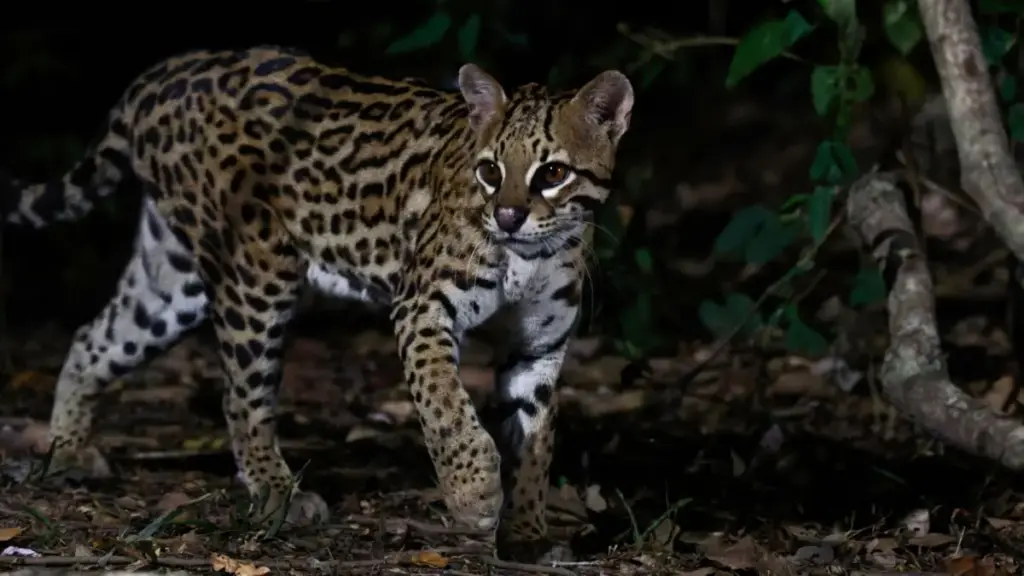
Weighing a mere three pounds and measuring roughly 18 inches in length, the tilcayo tiger cat is smaller than the average domestic house cat yet possesses the fierce, undaunted visage of an apex jungle predator. Sporting a perpetually scrunched-up facial expression, oversized rosette markings reminiscent of a jaguar, and an adaptive, feisty temperament, this diminutive carnivore is custom-built for survival in the rugged, misty terrain of the Bolivian Andes.
Yet, this remarkable biological unveiling is bittersweet. While genetic sequencing reveals that the tilcayo tiger cat’s lineage diverged from other tiger cats roughly 1.4 million years ago, its home—the fragile Yungas cloud forest—is facing unprecedented threats from deforestation, agricultural expansion, and infrastructural development. Indigenous communities in the region have quietly coexisted with these elusive creatures for generations, but modern science is only now catching up. With the formal expansion of the tiger cat genus to five distinct species, conservationists face a critical window to protect Leopardus tilcayo before human encroachment pushes the newly discovered animal toward extinction.
Detailed Chronology: From a Mysterious Bolivian Stray to a Scientific Sensation
The story of the tilcayo tiger cat does not begin in a high-tech genetics laboratory, nor does it start with an expedition of funded academics hacking through dense jungle brush. Instead, it begins humbly in 2016, with an encounter between a local Bolivian resident and an unusual stray animal.
2016: The Enigmatic Arrival at the Wildlife Center
In the rugged foothills of the Bolivian Andes, a local man came across a diminutive, wild-looking feline. Mistaking the unusual creature for a quirky, feral domestic kitten or a slightly malformed version of a known wild cat, he brought the animal to a regional wildlife rescue and rehabilitation center.
At the time, animal care professionals and local biologists noted the cat’s distinct morphology—particularly its exceptionally small stature, oversized head markings, and perpetual scowl. However, lacking immediate genetic confirmation, the cat was provisionally cataloged under the working assumption that it was an aberrant individual of a known species, most likely the Brazilian tiger cat (Leopardus tigrinus).
2016–2022: Years of Speculation and Morphological Analysis
For years, the rescued individual lived under observation while researchers pondered its anomalous traits. Its physical dimensions didn’t quite match standard parameters for any known South American small cat. National Geographic Explorer and mammalogist Paola Nogales-Ascarrunz, among others, began closely examining the animal, recognizing that its skull structure, coat patterns, and body proportions hinted at something far more profound than a simple genetic mutation.
The Turning Point: Advanced Genetic Sequencing
Morphology alone, however, is rarely enough to definitively crown a new mammalian species in the 21st century. Cryptic species—animals that look nearly identical to known relatives but are genetically isolated—frequently confound taxonomists. To crack the mystery, Nogales-Ascarrunz led a dedicated research team in extracting DNA samples for comprehensive phylogenetic analysis.
The genetic data sent shockwaves through the scientific community. Mitochondrial and nuclear DNA sequencing revealed that the mysterious Bolivian cat was not a subspecies or a variant of the Brazilian tiger cat. Instead, its evolutionary lineage had diverged from the broader tiger cat clade approximately 1.4 million years ago during the Pleistocene epoch. This profound genetic distance confirmed what Indigenous peoples of the region had known implicitly for generations: this was a distinct, standalone species, invisible to formal taxonomy until now.
Present Day: Formal Description in Current Biology
The culmination of years of tracking, captive observation, and rigorous genetic mapping materialized in the pages of Current Biology. The formal christening of Leopardus tilcayo officially closed a 100-plus-year drought in the discovery of entirely novel cat species, reminding the world of the vast, undocumented biodiversity still hidden within South America’s shrinking wilderness.
Supporting Context & Metrics: Anatomy, Habitat, and Evolution
To understand the magnitude of the tilcayo tiger cat’s discovery, one must examine the specific ecological niche it occupies, the evolutionary pressures that shaped it, and the numerical metrics that define its tiny frame.
The Anatomy of an Andean Micro-Predator
By all metrics, Leopardus tilcayo defies conventional expectations of what a wild "tiger cat" should look like.
- Weight: Approximately 3 pounds (1.3 kilograms)—significantly lighter than the common domestic cat, which typically ranges from 8 to 10 pounds.
- Length: Roughly 18 inches (45 centimeters) from nose to the base of the tail.
- Facial Morphology: The cat possesses a distinctly shortened, scrunched muzzle and heavy brow structure, giving it a perpetually stern, mildly annoyed expression.
- Coat and Markings: Unlike the fine, scattered spots of some small cats, the tilcayo features oversized, dark rosettes that mirror the camouflage patterns of much larger apex predators like jaguars and leopards. This high-contrast coat provides optimal disruptive coloration in the dappled light of the cloud forest understory.
- Behavioral Profile: Observers note that the cat carries an unmistakable "attitude"—a fierce, defensive self-reliance characterized by high alertness and a willingness to stand its ground. This behavioral tenacity is an evolutionary prerequisite for a three-pound mammal trying to survive in a predator-rich montane ecosystem.
The Yungas Cloud Forest: A Fragile Stronghold
The tilcayo tiger cat is endemic to the Yungas, a transitional forest zone running along the eastern slopes of the Andes. Characterized by permanent mist, dense vegetation, extreme vertical topography, and staggering biodiversity, the Yungas act as a biological bridge between the high-altitude Altiplano and the Amazon basin.
However, this vertical paradise is besieged on all sides. The habitat metrics paint a grim picture:
- Deforestation Rates: Andean cloud forests are disappearing at an alarming rate due to slash-and-burn agriculture, coca cultivation, and illegal timber harvesting.
- Fragmented Ranges: Because Leopardus tilcayo relies on continuous, undisturbed forest canopy and dense understory cover for hunting small rodents, birds, and reptiles, road construction and agricultural clearing severely fragment its breeding populations.
Expanding the Tiger Cat Family Tree
Prior to this discovery, the tiger cat (often referred to generically as oncillas) genus was understood to comprise four recognized species distributed across Central and South America. With the formal induction of Leopardus tilcayo, the family tree officially expands to five distinct species:
- Leopardus tigrinus (Northern tiger cat)
- Leopardus guttulus (Southern tiger cat)
- Leopardus pajeros (Pampas cat)
- Leopardus colocolo (Colocolo)
- Leopardus tilcayo (Tilcayo tiger cat) — The newest addition.
Each of these species occupies specialized niches, but none are quite as geographically isolated or structurally diminutive as the new Bolivian find.
Official Statements and Expert Perspectives
The identification of Leopardus tilcayo has elicited widespread excitement among conservation geneticists, field researchers, and indigenous advocates alike, though it is universally tempered by an urgent call to action.
Paola Nogales-Ascarrunz, a National Geographic Explorer and lead author of the study published in Current Biology, emphasized the emotional and scientific weight of laying eyes on the animal:
"Getting to see the tilcayo tiger cat up close was a profound reminder of how much of our natural world remains undocumented. When we first received the animal at the wildlife center, we knew it was unusual, but you never truly dare to dream that you are looking at an entirely new branch of the feline family tree that has remained hidden for over a million years."
Other members of the research collective underscored the vital role played by local and Indigenous communities. While Western science is only now cataloging Leopardus tilcayo, local Bolivians living in the Yungas foothills have long recognized the tiny, scowling predator as a distinct entity in local folklore and daily ecological interactions. Ethno-biologists note that science frequently lags behind Indigenous knowledge systems, and future conservation frameworks must prioritize local stewardship.
Dr. Emilia Ramos, an independent conservation geneticist not directly involved in the study, noted the broader implications for South American carnivore conservation:
"Discovering a new mammalian carnivore in the 21st century is exceptionally rare. Finding a new cat species is historic. But the clock is ticking. Because this species split 1.4 million years ago and evolved in such a hyper-specific niche, its genetic diversity may already be bottlenecked. We cannot afford to treat this as just a neat academic paper; it is an immediate conservation emergency."
Future Outlook: The Race to Save Leopardus tilcayo
The formal naming of the tilcayo tiger cat closes one scientific mystery, but it opens a daunting chapter for wildlife management and conservation policy.
The Threat of Impending Extinction Status
Currently, conservation organizations are scrambling to assess the wild population density, geographic range, and exact demographic health of Leopardus tilcayo. Given that its known habitat is strictly confined to the vulnerable Yungas cloud forest—an area undergoing rapid anthropogenic transformation—biologists warn that the species is a prime candidate for an Endangered or Critically Endangered classification under the IUCN Red List once comprehensive field surveys are completed.
Actionable Next Steps for Conservationists
To prevent the tilcayo tiger cat from vanishing before its full ecological role can be understood, the international scientific community has outlined a multi-tiered action plan:
- Targeted Field Telemetry: Launching non-invasive radio-collaring and camera-trapping initiatives across the Bolivian Andes to map precise population boundaries, home ranges, and reproductive rates.
- Habitat Corridor Protection: Working alongside the Bolivian government and local Indigenous leaders to establish legally protected reserves within the Yungas cloud forest, shielding critical habitats from agricultural expansion and road-building projects.
- Mitigating Human-Wildlife Conflict: Educating local farmers and rural communities about the ecological value of small wild cats, ensuring that retaliatory killings—often triggered by misconceptions that small cats prey on poultry—are minimized.
- Captive Breeding Safeguards: Expanding genetic banking and evaluating whether managed breeding programs are necessary to safeguard against sudden catastrophic population crashes caused by habitat loss or disease.
A Legacy Hanging in the Balance
The discovery of the tilcayo tiger cat is a testament to the enduring mystery of the natural world. It proves that even in an era of satellite mapping and ubiquitous global connectivity, Earth can still harbor secret worlds. Whether Leopardus tilcayo remains a vibrant, scowling fixture of the Bolivian mist forests or becomes a tragic footnote of extinction depends entirely on how quickly the global community acts to protect the fragile wilderness it calls home.