Decades after her tragic passing, the sartorial legacy of Diana, Princess of Wales, remains one of the most powerful, scrutinized, and continuously referenced phenomena in modern fashion history. Her style was never merely a collection of garments; it was a visual language, a tool of diplomacy, an instrument of rebellion, and an intimate diary of her personal transformation from a shy nineteen-year-old aristocrat into a globally empowered humanitarian and style icon.
From the preppy, pastel-hued "Sloane Ranger" aesthetics of her early courtship to the high-octane glamour of the 1980s, and finally into the sleek, self-assured minimalism of the 1990s, Diana’s wardrobe captured the cultural zeitgeist of her era while transcending it entirely. Her iconic outfits—ranging from the legendary Christina Stambolian "revenge dress" to the sweeping David and Elizabeth Emanuel fairytale wedding gown and John Travolta’s velvet-waltz masterpiece—have transcended their textile origins to become permanent fixtures in global pop culture.
This retrospective explores the trajectory of Diana’s fashion evolution, analyzing how her clothing choices reflected institutional constraints, personal emancipation, and a visionary understanding of the power of visual communication. By examining her wardrobe chronologically, we uncover how a royal bride weaponized couture to reclaim her narrative and cement an enduring legacy that continues to shape contemporary royal styling and global fashion trends today.
Detailed Chronology: The Evolution of a Style Icon
Phase I: The "Shy Di" and Sloane Ranger Era (Pre-1981 to Early 1980s)
Before ascending to the global stage as the fiancée of Charles, Prince of Wales, Lady Diana Spencer embodied the quintessential English upper-middle-class aesthetic of her social milieu. Known affectionately by the British press as "Shy Di," her early wardrobe was characterized by modesty, understatement, and traditional rural practicality.
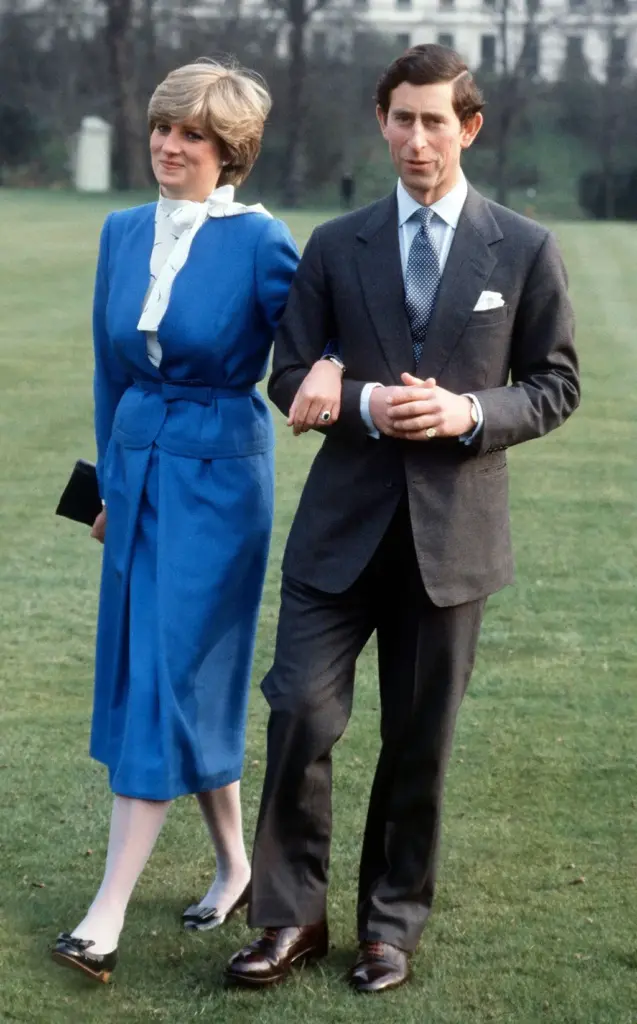
During her time sharing an apartment in Earl’s Court and working as a kindergarten assistant, Diana favored Sloane Ranger staples: tweed skirts, oversized knit sweaters, corduroy trousers, and Wellington boots. When thrust into the blinding spotlight of royal engagement, this wardrobe underwent a rapid, albeit naive, transition. Her engagement portrait outfit—a simple blue silk crepe-de-chine blouse paired with a matching skirt—was famously purchased off-the-rack at Harrods.
However, entering "The Firm" meant grappling with the formidable fashion trends of the early 1980s. Diana quickly adopted the era’s dramatic silhouettes, embracing voluminous puffed sleeves, ruffled collars, and romantic, diaphanous fabrics. Yet, even in her early twenties, she demonstrated an innate knack for making headlines with her clothes. The black velvet strapless gown designed by David and Elizabeth Emanuel, worn to her first official engagement at Goldsmiths’ Hall in March 1981, caused a minor sensation. It was a remarkably bold choice for a nineteen-year-old royal bride-to-be—both in its daring neckline and the deliberate choice of black for a formal evening event—foreshadowing a lifetime of sartorial boundary-pushing.
Phase II: High Glamour and Royal Constraints (1981–1992)
The royal wedding of July 29, 1981, at St. Paul’s Cathedral broadcast to an estimated global audience of 750 million people, cemented Diana’s status as a fairytale princess. Designed once again by David and Elizabeth Emanuel, her ivory silk taffeta and antique lace wedding gown, featuring a staggering 25-foot train, set the tone for bridal fashion for the decade.
As a senior working royal throughout the 1980s, Diana navigated strict institutional dress codes. Protocols discouraged short skirts, bare legs, excessive cleavage, and ostentatious displays of modern trends. Yet, working closely with trusted British designers such as Catherine Walker, Bruce Oldfield, and Murray Arbeid, Diana cultivated a distinctly regal aesthetic that balanced institutional propriety with theatrical glamour.
Her state dinners and international tours yielded unforgettable fashion moments. During a 1985 state visit to the White House, she famously twirled across the dance floor of the White House with John Travolta, clad in a midnight-blue off-the-shoulder velvet gown by Victor Edelstein. Similarly, during the 1988 royal tour of Australia, she dazzled society galas in shimmering Catherine Walker taffeta numbers with dramatic gathered skirts.
Statement-making evening gowns became her calling card. Whether attending a performance of The Phantom of the Opera in a strapless navy ball gown by Arbeid covered in silver stars, or sporting tailored power suits with exaggerated shoulder pads during daytime engagements, Diana projected the image of an idealized princess—even as her personal life within the marriage faced severe strain.
Phase III: Emancipation and Post-Separation Minimalism (1992–1997)
The announcement of the separation of the Prince and Princess of Wales in December 1992 marked a profound turning point in Diana’s life and style. Unshackled from the rigid expectations and internal politics of the royal household, her fashion sense underwent a revolutionary evolution.
Free from the imperative to champion exclusively British designers or adhere to conservative royal silhouettes, Diana embraced international haute couture with uninhibited confidence. She forged close relationships with visionary designers such as Gianni Versace, John Galliano at Dior, and Jacques Azagury. Her silhouettes grew sleeker, sharper, and far more daring. Hemlines rose, necklines plunged, and body-conscious tailoring replaced the voluminous frills of the previous decade.
This era produced her most legendary symbolic garments. On June 29, 1994—the very evening Prince Charles publicly confessed to his adultery in a television documentary—Diana stepped out at a Serpentine Gallery summer party wearing a daring, form-fitting off-the-shoulder black silk dress by Christina Stambolian. Instantly dubbed the "Revenge Dress," the ensemble bypassed royal mourning in favor of uncompromised power, glamour, and autonomy.
Further pushing the envelope, Diana stunned the fashion world in 1996 by attending the Met Gala in New York wearing a navy-blue, lace-trimmed silk slip dress designed by John Galliano for Dior—her very first commission for the French fashion house. That same year, she radiated self-possession in a turquoise, body-con Versace dress at the Heart Foundation Ball. This was no longer the hesitant "Shy Di" hiding behind oversized knitwear; this was a woman fully in command of her narrative, her image, and her destiny.
Supporting Context & Metrics: The Economics and Reach of Diana’s Style
The enduring fascination with Princess Diana’s wardrobe is not merely cultural; it is a measurable economic and media powerhouse. Decades after her passing, items associated with her continue to break records at high-end auction houses worldwide.
Auction Records: In January 2023, Sotheby’s auctioned a purple silk-velvet strapless evening dress designed by Victor Edelstein (worn by Diana in official portraits in 1991 and captured by Mario Testino in 1997). Estimated at £80,000 to £120,000, the gown ultimately sold for a staggering $604,800 to reality TV star and entrepreneur Kim Kardashian. Similarly, her iconic red-and-white "black sheep" sweater by Warm & Wonderful fetched $1.14 million at Sotheby’s in late 2023, far surpassing its pre-sale estimate of $50,000 to $80,000.
Global Digital Engagement: On social media platforms like TikTok and Instagram, hashtags such as #PrincessDianaStyle and #DianaFashion command billions of cumulative views. Archival fashion accounts dedicated exclusively to cataloging her outfits generate millions of daily interactions, proving that Gen Z and Millennial demographics view her as a primary style muse.
The Cultural ROI of Royal Dressing: According to luxury retail analysts, Diana pioneered the modern blueprint for "royal influence"—where a single photographed outfit can trigger immediate global sell-outs across retail platforms, a phenomenon later inherited by subsequent generations of royals.
Official Statements and Curatorial Perspectives
Fashion historians, curators, and cultural commentators have long analyzed the sociological dimensions of Diana’s sartorial choices.
Eleri Lynn, curator of the landmark 2017 exhibition Diana: Her Fashion Story at Kensington Palace, noted:
"Diana understood the silent language of clothes better than almost anyone of her generation. She used fashion as an active diplomatic tool. When she visited children’s hospitals, she deliberately wore bright, tactile, cheerful colors—like chunky knits or polka dots—because she knew they brought joy and broke down barriers. When she wanted to project authority and seriousness on state visits, she leaned into immaculate tailoring. Her clothes always told a story."
Renowned fashion designer Bruce Oldfield, who frequently collaborated with the Princess during the 1980s, reflected on her collaborative spirit:
"Working with Diana was a creative partnership. She had an extraordinary eye for proportion and knew instinctively what worked on her tall, athletic frame. As the years progressed, her confidence grew exponentially. She didn’t just wear the dress; the dress became an extension of her state of mind and her growing independence."
Future Outlook: The Eternal Muse of Modern Style
As we look toward the future, Princess Diana’s influence on global fashion shows no signs of waning. Her legacy persists on multiple fronts:
Direct Familial Homages: Current members of the British royal family, most notably Catherine, Princess of Wales, frequently pay subtle homage to Diana through their sartorial choices. Whether echoing Diana’s polka-dot dresses worn outside the Lindo Wing, utilizing her favored habit of rewearing statement pieces multiple times for sustainability, or wearing specific jewelry pieces from her personal collection, contemporary royals recognize that invoking Diana’s style connects them to a beloved historical narrative.
Contemporary Runway Inspiration: Major international design houses continue to reference 1980s leisurewear and 1990s minimalist slip dresses directly inspired by Diana’s off-duty paparazzi shots—often characterized by oversized blazers, bike shorts, collegiate sweatshirts, and baseball caps. This high-low leisure aesthetic remains a cornerstone of modern streetwear.
The Preservation of Legacy: With upcoming cinematic portrayals, museum retrospectives, and continuous archival excavations, new generations are introduced to her wardrobe annually. Diana’s fashion evolution serves as an evergreen masterclass in self-expression, proving that true style is not merely about adhering to trends, but about using garments to articulate identity, resilience, and unyielding grace under pressure.