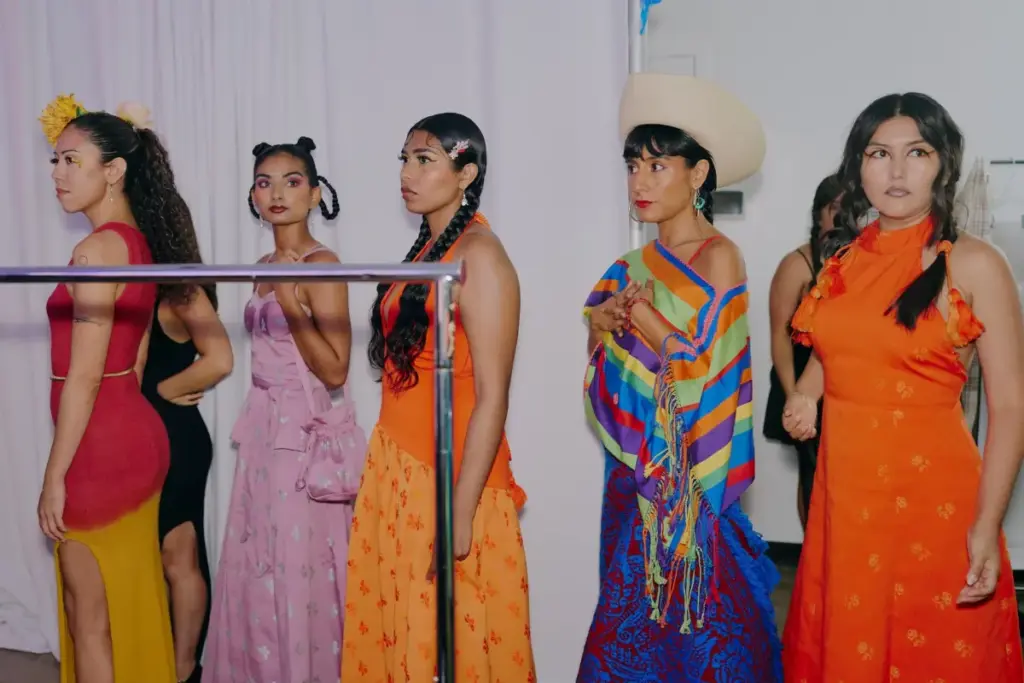
From September 11 to 13, the American Indian Community House in Manhattan’s historic Garment District played host to a cultural and stylistic renaissance. Marking its triumphant second year, Indigenous New York Fashion Week (INYFW) brought authentic Native representation to the forefront of the global fashion dialogue. Staged on Lenapehoking—the ancestral homelands of the Lenape peoples—the three-day event showcased 30 visionary designers representing North America, South America, Oceania, and Australia.
Far from being treated as relics of a historical context, these creators utilized the runway to champion "Indigenous futurism," merging ancestral traditions with cutting-edge streetwear, avant-garde upcycling, and sustainable luxury. Co-founded by fashion designer Korina Emmerich (Puyallup) and community organizer Liana Shewey (Mvskoke)—who also operate the East Village-based concept shop Relative Arts NYC—INYFW has quickly established itself as a vital antidote to decades of cultural appropriation and homogenous representation within the mainstream fashion industry.
This year’s event put a spotlight on a new wave of boundary-pushing designers. Rejecting the rigid binaries of Western fashion, these emerging talents are weaving contemporary perspectives, environmental consciousness, and personal narratives into garments that challenge the status quo. Below is an in-depth look at six standout designers who defined INYFW’s sophomore year, pushing the boundaries of what Indigenous design is, was, and can be.
Detailed Chronology of the Event
The three-day showcase was carefully curated to highlight the vast geographic and stylistic diversity of the global Indigenous diaspora, with each day offering distinct narratives through fabric, silhouette, and performance.
Day One: Grounding in Heritage and Subverting Americana
The opening day set a powerful tone, bridging the gap between historical reverence and contemporary critique. Alexandria Bijou Henry, the youngest designer in the lineup at just 23 years old, opened proceedings with her deeply personal collection, “The Seeds She Planted.” Honoring the women who preserved her Ojibway/Roseau River First Nations cultural practices, Henry’s presentation established a dialogue between past generations and modern Anishinaabe expressions.
Later in the evening, Ty LodgePole shifted the energy with his Phoenix-based streetwear brand, subverting traditional Americana through an Indigenous lens. Utilizing oversized graphic tees, distressed workwear, and nostalgic sportswear, LodgePole’s “HOME” collection forced audiences to reconsider the visual language of the United States. Day one also marked the debut of TXYZ, where Hopi/Navajo designer Tyree Honani presented "No. 1," a minimalist, ash-toned collection featuring subtle architectural nods to traditional Katsina figures.
Day Two: Avant-Garde Resilience and Global South Perspectives
The second day expanded the geographical and material scope of the runway. Nathan Jenniss, presenting under the banner Enfant_Martyr, brought a visceral, emotional weight to the showcase. The Montreal-based Wolastoqiyik Wahsipekuk (Maliseet) designer presented upcycled garments layered with bone, leather, and fish vertebrae, constructing what he described as an "armor of the heart."
The international scope of INYFW was further emphasized by SIQUICHA, a South American collective spearheaded by Jimena Muñiz-Garreta. Showcasing the diverse textile traditions of Peru—ranging from woven cotton dresses from Cajamarca to alpaca knitwear from Cusco—SIQUICHA reminded audiences of the profound human labor and sacred ecosystems embedded within every thread.
Day Three: Sustainability, Queer Identity, and the Grand Finale
The final day of showcases synthesized the overarching themes of INYFW: environmental stewardship, inclusivity, and unapologetic self-determination. Nishina Shapwaykeesic-Loft closed out portions of the event with Creator Complex, showcasing sustainable, second-hand-derived garments accessorized with faceless cornhusk masks. The inclusion of diverse models, including wheelchair users, underscored the brand’s commitment to radical accessibility and representation.
Supporting Context & Metrics: The Shift Toward Indigenous Futurism
For generations, mainstream fashion houses have mined Indigenous motifs—beadwork, geometric prints, and sacred symbols—without permission, attribution, or financial reciprocity. INYFW was born out of an urgent necessity to reclaim this narrative. By grounding the event in Lenapehoking, the organizers anchored the modern fashion presentations in historical accountability and land acknowledgement.
The economic and creative metrics of INYFW’s second year point to a rapidly expanding market for authentic Native design. With 30 global designers presenting over three days, the event demonstrated that Indigenous fashion is not a monolithic niche, but a vibrant, multi-faceted ecosystem. Key structural pillars driving this movement include:
Zero-Waste and Upcycling Initiatives: Driven by ecological accountability rooted in traditional ecological knowledge (TEK), designers like Nishina Shapwaykeesic-Loft and Nathan Jenniss rely heavily on deadstock, vintage textiles, and natural materials like deer antlers, bone, and horsehair.
Gender-Fluid and Non-Binary Silhouettes: Moving away from Western patriarchal fashion structures, contemporary Native designers are prioritizing fluid garments that honor historical, multi-gendered Indigenous societal roles.
Global Solidarity Networks: Collaborations stretching from the Arctic Circle to the Amazon Basin (such as the inclusion of the SIQUICHA collective from Peru) prove that Indigenous fashion is building an international coalition of artisans who share struggles against extractive capitalism and cultural erasure.
Official Statements and Visionary Insights
The philosophical backbone of INYFW is articulated clearly by its founders and participating creators, who view fashion as an active tool for decolonization and cultural preservation.
“Indigenous New York Fashion Week is really about Indigenous futurism, because so often we’re dragged into a historical context,”
— Korina Emmerich (Puyallup), INYFW Cofounder
Emmerich’s sentiments are echoed by fellow cofounder Liana Shewey, who emphasizes the responsiveness of modern Native design to the contemporary sociopolitical climate:
“They’re designing in fresh young ways beyond the binary. A lot of their work is their personal response to the current state of the world, and their pieces are a reflection of their perspective on the status quo and the zeitgeist in real time.”
— Liana Shewey (Mvskoke), INYFW Cofounder
Individual designers likewise view their runways as platforms for healing and reclamation. Alexandria Bijou Henry reflects on the generational continuum of her work:
“Fashion is more than creating something beautiful to wear; it’s a way of expressing who we are, where we come from, and the stories we carry with us… We are never creating alone. We are carrying the knowledge, sacrifices, creativity, and dreams of those who came before us.”
Ty LodgePole challenges audiences to re-examine national identity through fashion:
“Our ‘HOME’ collection is an interpretation of Americana through an Indigenous lens… It’s like looking at something you’ve seen your entire life and suddenly realizing you’ve only ever been shown it from one angle.”
Meanwhile, Jimena Muñiz-Garreta of SIQUICHA highlights the spiritual resonance of artisanal production:
“Each piece has its own unique story that is so alive, it feels as though it has its own heartbeat… The magic is in the process, not just the final product.”
Detailed Profiles of INYFW’s Vanguard Designers
1. Bineshii Creations (Alexandria Bijou Henry)
Heritage: Ojibway / Roseau River First Nations
Base: Manitoba, Canada
Collection:The Seeds She Planted
Overview: At 23, Henry was the youngest designer at INYFW. Her work bridges contemporary Anishinaabe aesthetics—such as vibrant ribbon skirts and meticulous beadwork—with a profound tribute to the matriarchs in her family, particularly her grandmother Kathy Boulanger. Her designs emphasize that Indigenous fashion is a living, breathing lineage of strength and femininity.
2. Ty LodgePole
Heritage: Diné (Navajo)
Base: Phoenix, Arizona
Collection:HOME
Overview: LodgePole utilizes streetwear as a vehicle for political and social commentary. By blending oversized graphic tees, workwear silhouettes, and sportswear with traditional Indigenous resilience, his brand tackles head-on the contradictions of contemporary American life. His work asks viewers to love Native people as much as they love Native culture.
3. Enfant_Martyr (Nathan Jenniss)
Heritage: Wolastoqiyik Wahsipekuk (Maliseet)
Base: Montreal, Quebec
Overview: Overcoming early-life assimilation pressures and imposter syndrome, Jenniss uses avant-garde upcycling to reclaim his heritage. Layering secondhand garments with organic elements like bone, feathers, fish vertebrae, and leather, Jenniss constructs sculptural garments that serve as psychological armor, instilling pride and confidence in the wearer.
4. SIQUICHA (Jimena Muñiz-Garreta)
Heritage: Native Costa Rican
Base: Lima, Peru / San Miguel de Pallaques
Overview: Born out of Muñiz-Garreta’s volunteer work in the Peruvian Andes, SIQUICHA operates as a collective supporting over 25 Indigenous artisans. Named after the Quechua word for "the weaver’s tether," the collective highlights the diverse textile traditions of South America, honoring the named individuals behind every loom, weave, and thread.
5. TXYZ (Tyree Honani)
Heritage: Hopi / Navajo
Base: Arizona
Collection:No. 1
Overview: Making her runway debut at INYFW, Honani presented a minimalist, ash-colored cut-and-sew collection that incorporated subtle, sacred symbols, such as Mudhead Katsina pocket designs. Drawing from her childhood split between reservation dirt roads and urban concrete, Honani’s collection defied narrow expectations of what Indigenous minimalism should entail.
6. Creator Complex (Nishina Shapwaykeesic-Loft)
Heritage: Kanien’kehà:ka (Mohawk)
Base: Brooklyn, New York
Overview: A two-spirit queer multidisciplinary artist, Shapwaykeesic-Loft champions zero-waste sustainability through upcycled materials like rabbit fur, deer antlers, denim, and horsehair. By accessorizing her runway looks with faceless cornhusk masks—inspired by traditional Haudenosaunee dolls—she invites audiences of all backgrounds to visualize themselves within the future of ethical fashion.
Future Outlook: Where Indigenous Fashion Goes From Here
As Indigenous New York Fashion Week concludes its second successful year, the momentum within the global fashion ecosystem is palpable. No longer content to remain on the margins of mainstream industry events, Indigenous designers are building autonomous institutions, retail spaces like Relative Arts NYC, and international networks that prioritize sovereignty, fair labor, and ecological sustainability.
The success of INYFW signals a permanent structural shift. By asserting control over their narratives, aesthetics, and supply chains, designers like Henry, LodgePole, Jenniss, Muñiz-Garreta, Honani, and Shapwaykeesic-Loft are not only rewriting the rules of the runway—they are authoring the future of global style. The fashion industry at large would do well to listen, learn, and follow their lead.