Executive Overview
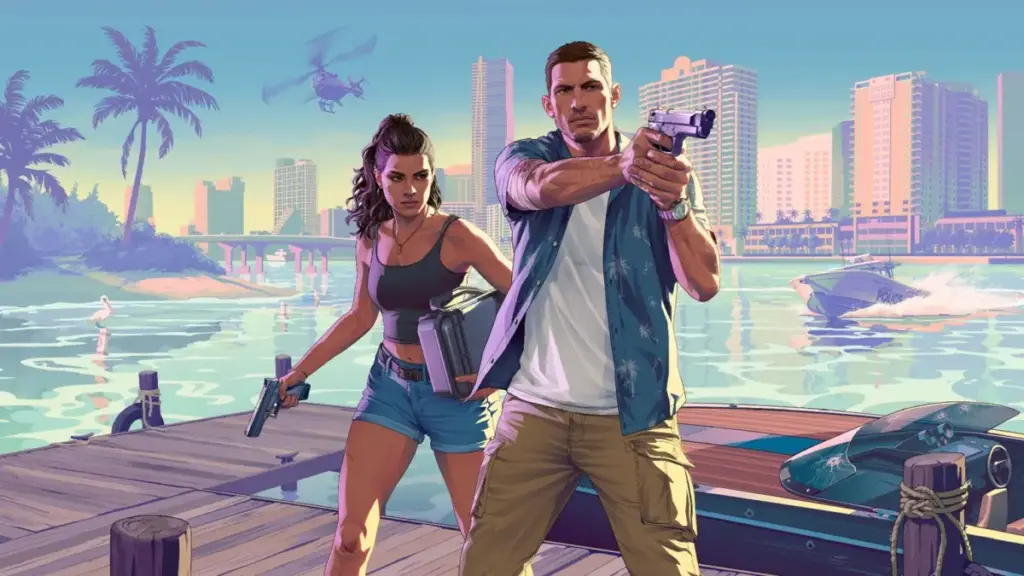
A decade ago, the premise would have been dismissed as satirical commentary—a surreal, pitch-black headline plucked straight from the archives of The Onion. Yet, reality in 2026 continues to outpace even the most biting satire. In a striking convergence of modern pop culture, military recruitment strategy, and institutional desperation, a United States Army unit based in Georgia is offering its soldiers a coveted four-day leave pass explicitly to play Grand Theft Auto VI in exchange for reenlistment commitments lasting up to six years.
The initiative, launched at Fort Stewart, represents a fascinating psychological and cultural milestone. Already, at least 20 soldiers have accepted the unorthodox terms. While military incentives are as old as organized warfare itself—historically relying on promises of financial stability, educational grants, and career advancement—the utilization of a blockbuster entertainment property to secure multi-year combat readiness contracts marks a profound evolution in how the armed forces appeal to a digitally native generation.
For Rockstar Games’ Grand Theft Auto VI, the journey to this moment has been historic. Its predecessor, Grand Theft Auto V, fundamentally reshaped the entertainment landscape when it debuted in September 2013. The interminable, thirteen-year wait for its successor has birthed an entire ecosystem of internet lore, spawning the ubiquitous "We got [X] before GTA 6" meme template across global digital platforms. Following a labyrinthine development cycle plagued by production delays, Rockstar has locked in a global release date of November 19, 2026.
Seizing upon this cultural zeitgeist, the command team at Fort Stewart has transformed what was once viewed as a simple leisure product into a high-value strategic asset. This deep-dive investigation examines the mechanics of this unprecedented recruitment drive, the broader historical context of military-gaming integration, and what this signals for the future of institutional retention in an era dominated by digital culture.
Detailed Chronology: From Concept to Combat Readiness
To understand how a video game became a bargaining chip for national defense, one must examine the precise timeline and operational framework governing the Fort Stewart initiative.
The program is currently centered within a specific, highly localized echelon of the U.S. military: the 9th Brigade Engineering Battalion, operating under the umbrella of the legendary 3rd Infantry Division at Fort Stewart, Georgia.
The Operational Timeline
- August 1, 2026: The reenlistment window officially opens. Soldiers within the 9th Brigade Engineering Battalion are informed of a newly minted incentive program designed to bridge the gap between military service and personal entertainment milestones.
- November 14, 2026: The deadline for soldiers to sign binding reenlistment contracts ranging from a minimum of two additional years to a maximum of six years.
- November 19, 2026: Grand Theft Auto VI drops worldwide. On this day, participating soldiers who successfully executed their contracts receive a guaranteed four-day leave pass.
The math of the transaction is stark: soldiers are trading a minimum of 730 days of additional military service in exchange for a 96-hour window of guaranteed liberty dedicated to exploring Rockstar’s fictional state of Leonida. While Armed Forces personnel are not legally mandated to spend their four-day leave strictly in front of a console experiencing the game, the promotional framing of the pass leaves zero ambiguity regarding its intended purpose.
An internal Army memo distributed to enlisted personnel explicitly stated that the pass is being issued to align with “the highly anticipated release of the video game Grand Theft Auto VI (GTA 6).” For the roughly 130 soldiers currently assigned to the 9th Brigade Engineering Battalion, this niche bureaucratic maneuver has transformed everyday retention efforts into a viral, real-world phenomenon.
Supporting Context & Metrics: The Intersection of the Military and Digital Media
To view the Fort Stewart initiative as an isolated stunt is to misunderstand the decades-long, systematic convergence of the Department of Defense (DoD) and the interactive entertainment industry. The military has long recognized that maintaining force readiness requires meeting potential recruits and active-duty personnel on their own turf—physically, culturally, and digitally.
A History of Modernized Incentives
Historically, military recruitment and retention strategies have anchored themselves around tangible, life-altering securities:
- The Post-9/11 GI Bill: Providing comprehensive college tuition coverage, transforming military service into a socioeconomic stepping stone.
- Enlistment and Reenlistment Cash Bonuses: Direct financial injections designed to offset inflation, debt, or immediate economic uncertainty.
- Specialized Career Training: Certifications in logistics, cyber warfare, aviation, and engineering that translate directly into lucrative private-sector employment.
- Choice Duty Station Assignments: Allowing seasoned soldiers to select geographic locations that suit their personal or familial preferences.
However, as generational demographics have shifted toward digital natives, traditional incentives have occasionally failed to capture the imagination of younger demographics. The modern soldier grew up immersed in interactive media, streaming platforms, and competitive esports. Consequently, the military’s outreach tactics have had to undergo a radical metamorphosis.
The Military’s Foray into Gaming Culture
The Army’s current romance with gaming is not an overnight development. In 2018, faced with shrinking enlistment pools and aggressive competition from the private sector for top-tier talent, the branch initiated a pivot toward pop-culture-savvy recruitment.
Recruiters were dispatched directly to major gaming conventions, comic-book expos, and esports tournaments. More boldly, the Army launched its own official esports teams to compete in high-traffic, competitive titles such as Call of Duty, Fortnite, and League of Legends. Though these public-facing initiatives occasionally courted controversy—leading to First Amendment scrutiny regarding user blocking on social media channels and targeted ad placements within gaming spaces—they underscored a fundamental institutional truth: the military views interactive entertainment as a vital recruitment funnel.
This trend extends far beyond the Army. Across the defense ecosystem, institutional media strategies increasingly mirror modern digital entertainment pipelines. For instance, the 2nd Marine Division recently collaborated with Newsweek’s YouTube series Unconventional for a branded, Jeep-sponsored video production designed to pull back the curtain on a Marine expeditionary operation.
These cross-media partnerships share a unified objective: humanizing military structures, embedding them within contemporary media consumption habits, and framing service through the lens of high-octane adventure and pop-culture relevance. The GTA VI leave pass is simply the logical, localized extension of this philosophy—taking the branding out of the digital ether and applying it directly to the barracks floor.
Official Statements and Institutional Rationale
How do commanding officers justify leveraging a sprawling, satirical, and notoriously lawless video game franchise as a tool for military retention? According to leadership at Fort Stewart, the strategy is rooted in radical empathy and an understanding of modern morale.
In a statement provided to CBS News, Lt. Col. Angel Tomko, a spokesperson for the 3rd Infantry Division, offered insight into the operational psychology behind the program:
"The idea was to have a unique incentives program that connects to what Soldiers are interested in. The command team, in conjunction with the career counselor, wanted to get soldiers excited to reenlist."
This sentiment highlights a notable shift in leadership styles within modern military units. Rather than relying solely on top-down, coercive mandates or impersonal corporate-style retention pitches, junior and mid-level commanders are increasingly empowered to experiment with decentralized, localized incentives. By tapping directly into the cultural pulse of their subordinates, leadership can foster a sense of unit cohesion and responsiveness that traditional monetary bonuses sometimes fail to achieve.
Furthermore, the psychological pull of GTA VI cannot be overstated. For a soldier enduring the rigorous, high-stress operational tempo of an engineering battalion, the promise of uninterrupted, guilt-free immersion in a cultural touchstone that has been anticipated for over a decade acts as a powerful emotional carrot. It recognizes the human need for escape, leisure, and participation in shared cultural moments—even for those sworn to defend the state.
Future Outlook: What the GTA VI Precedent Means Moving Forward
As the November 19 release date approaches and the initial cohort of 20 soldiers prepares to log onto their consoles with approved leave passes in hand, military analysts, cultural commentators, and institutional leaders are watching closely to evaluate the long-term ramifications of this pilot program.
Potential for Expansion
Presently, the initiative remains intentionally restricted. It is confined exclusively to the approximately 130 soldiers serving within Fort Stewart’s 9th Brigade Engineering Battalion. However, the scalability of the concept is virtually limitless.
If retention metrics within the battalion show a statistically significant spike during this reenlistment window, pressure will inevitably mount across the wider 3rd Infantry Division—and potentially across other major Army commands—to adopt similar programs. Department of Defense human resources strategists are notoriously data-driven; if a four-day pass tied to a piece of intellectual property proves more cost-effective and successful at retaining mid-career specialists than thousands of dollars in cash bonuses, it will be replicated.
The Horizon of Pop-Culture Incentives
Looking further ahead, the successful deployment of the GTA VI pass opens the door to an entirely new paradigm of military-entertainment synergy. One can easily envision a future where upcoming tentpole releases—whether cinematic blockbusters, next-generation hardware launches, or major gaming franchises—are systematically integrated into military retention frameworks.
Will future soldiers be offered early access passes to virtual reality simulations disguised as entertainment? Will elite tactical units begin leveraging exclusive merchandise, creator collaborations, or convention VIP access to bolster troop morale and commitment? The precedent has now been formally established.
Conclusion
A decade ago, the idea that a soldier would sign a multi-year pledge to the United States government simply to secure four days off to play a video game about carjacking, heists, and satirical Americana would have read like a surrealist joke. In 2026, it is documented military policy.
It is a testament to the inescapable gravity of modern media culture, the shifting psychology of the modern armed forces, and the lengths to which military leadership will go to maintain operational readiness in an increasingly complex world. As the virtual streets of Leonida open to millions later this year, a select few soldiers from Georgia will be patrolling them—not as part of an exercise, but as the hard-earned reward for another two to six years on the front lines. What a world we live in.