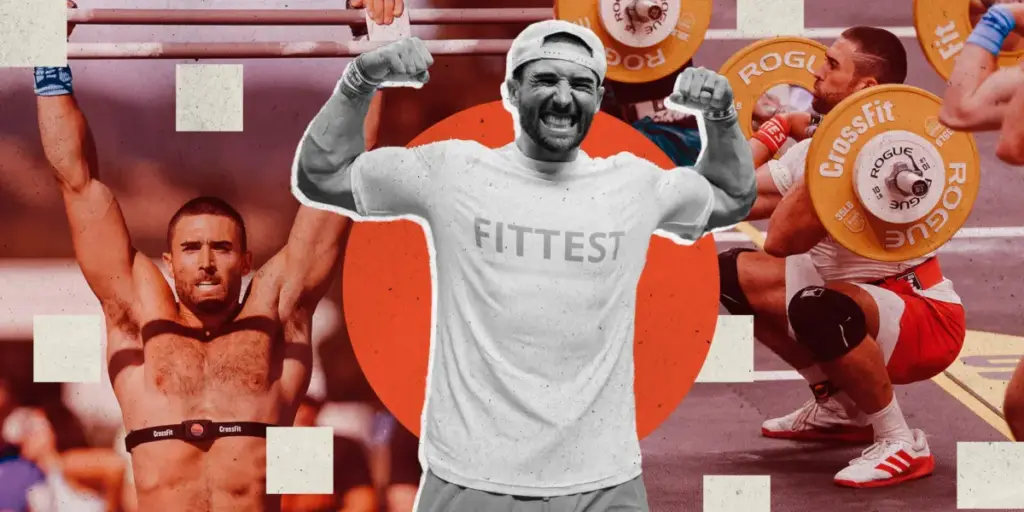
At just 24 years old, James Sprague has firmly etched his name into the annals of functional fitness history. Earning the title of Fittest Man on Earth for the second time at the 2026 CrossFit Games in San Jose, California, Sprague has cemented his status not just as a dominant competitor, but as a defining pillar of a new generation of athletes. Securing the crown with 1,318 points—holding off a relentless challenge from runner-up Dallin Pepper by a razor-thin 27-point margin—Sprague navigated the most grueling and expansive individual test in Games history: 20 grueling scored events spanning strength, endurance, gymnastics, and power.
Yet, Sprague’s journey to the summit is complex. His maiden title in 2024 was achieved under the heaviest of emotional clouds, following the tragic passing of competitor Lazar Đukić during the opening event. By contrast, his 2026 victory provided a healthy, celebratory environment—a chance to truly bask in the fruits of a lifetime dedicated to the sport.
As CrossFit celebrates its landmark 20th anniversary, the fitness landscape is shifting dramatically. With the meteoric rise of hybrid competitions like Hyrox, the surging popularity of social run clubs, and ongoing discussions regarding accessibility and cost, the sport finds itself at a critical cultural crossroads. In an exclusive interview conducted alongside Adidas, Men’s Health sat down with Sprague to unpack the physical and psychological blueprint behind his historic win, the evolution of human performance, and what the future holds for the global fitness community.
Detailed Chronology: From the Shadow of Tragedy to Definitive Triumph
The 2024 Breakthrough and the Weight of Victory
Sprague’s ascension to the top tier of CrossFit began when he first discovered the discipline at age 12, transforming a childhood struggle with being overweight and depressed into an unyielding passion. However, his breakthrough victory in 2024 will forever be intertwined with profound sorrow.
Reflecting on the stark contrast between his two world titles, Sprague opens up about the psychological toll of his first championship:
"The first time I became a champion, it was under a circumstance that I didn’t imagine becoming a champion under. We had a tragedy happen at the CrossFit Games where one of our friends and competitors passed away in an event. There wasn’t a lot to be happy about. Even though I achieved this goal that I’ve set out my entire life and wrapped my entire life around being able to achieve, it didn’t feel like I achieved it. This year, under a healthy environment, with everyone safe and the competitors enjoying themselves and the atmosphere brighter and happier, this felt like something I could celebrate and really dwell on and be proud of."
The 2026 San Jose Crucible
Moving from the hunter to the hunted fundamentally shifted Sprague’s internal calculus. Rather than watching the leaderboard and reacting to his peers, he adopted a philosophy of internal benchmarking.
The 2026 Games were an unprecedented physical gauntlet. While previous iterations typically tested athletes across 10 to 12 events, San Jose demanded 20 distinct tests of human capability. Recognizing his historic weakness—top-end strength relative to the other giants in the field—Sprague radically restructured his training regimen.
"CrossFit is a mix of strength, gymnastics and monostructural [cardio] work, so you have to be well-versed in all fields," Sprague explains. "When it comes to top-end strength, that’s where I lack compared to the other guys. Most of my training is centered around that weakness. I’ve been very adamant about attacking my strength and making that a priority: heavy lifts, a lot of muscle accessory work, a lot of hypertrophy stuff just to get bigger, stronger muscles, and then I work a lot on my Olympic lifting."
Anticipating the sheer volume of the 2026 competition, Sprague ventured far outside conventional box walls: "I amped up my volume a lot. I made sure I was getting outside the box, doing weird things. Anything that could come up, I tried to do. I ran up hills. I did a lot more swimming. I went to the track more. I tried to get creative more than I ever have for this Games season."
The strategy paid off. Entering the final stretch of the weekend, Sprague faced intense pressure from Dallin Pepper. The defining turning point arrived on Saturday night. By attacking back-to-back events (Events 16 and 17) with absolute aggression, Sprague effectively closed the door on the competition, turning Sunday’s final test into a masterclass in controlled execution. A 10th-place finish was all he needed to secure his second title.
Supporting Context & Metrics: The Anatomy of a Champion
To fully comprehend Sprague’s dominance, one must examine the metrics and philosophical shifts separating modern CrossFit elites from the pioneers of the sport’s first decade.
The Metrics of Modern Fitness
Event Count: 20 scored tests at the 2026 CrossFit Games—nearly double the historical standard.
Winning Total: 1,318 points.
Margin of Victory: 27 points over Dallin Pepper.
Age: 24 years old, establishing him as a long-term fixture at the top of the sport.
The Psychological Edge
When asked what ultimately separates the podium finishers from the rest of an exceptionally fit field, Sprague points directly to cognitive mapping and unshakeable self-belief:
"Confidence. I truly believe no one can beat me. After proving myself for a few years, I know exactly how to maximize each test and how to get there. When I look at a workout, I roadmap it out in my head. What’s the best possible time? How do I get there? Can I do that? The answer is yes. Then I just have to do it on the floor. I already did it in my head, so now I can do it on the floor."
This analytical approach represents a generational shift in how athletes train. According to Sprague, the era of "letting the wheels fall off" and blindly executing a workout with sheer grit has been replaced by hyper-calculated pacing strategies, meticulous data analysis, and targeted movement breakdown.
Official Statements & Insights
During his debrief with Men’s Health, Sprague touched heavily on the cultural ecosystem of fitness, addressing the coexistence of CrossFit with newer trends like Hyrox, specialized run clubs, and boutique hybrid racing.
On the Fitness Culture and Coexistence
While acknowledging the explosion of alternative fitness platforms, Sprague remains fiercely proud of CrossFit’s foundational lineage:
"We were the original fitness racing. The CrossFit Games was one of the most original forms of going head-to-head with someone else to test who’s fitter. All these evolutions are super niche in their own ways… Yet we can’t forget our roots. It all came from CrossFit."
On Scaling and Everyday Accessibility
A recurring critique of CrossFit has been its financial barrier to entry and the intimidating perception of elite-level training. Sprague acknowledges these hurdles candidly, suggesting that the sport’s future success depends on how well it champions the everyday gym-goer rather than just the elite podium athletes:
"What HYROX and these other races or platforms are doing is showing, ‘Hey, your 85-year-old grandma is doing the race and completing it and is stoked about it and has something to chase now.’ CrossFit does a great job highlighting elites. I think CrossFit needs to continue doing a better job highlighting the everyday person and what they’re doing… That’s what’s going to impact the masses because most people aren’t looking to compete. Most people are just looking to have better beach muscles and a summer body and be able to get off the toilet easier, quite frankly."
On Carrying the Torch
Reflecting on the legends who built the sport—such as Rich Froning, Annie Thorisdottir, Katrin Davidsdottir, Jason Khalipa, and Josh Bridges—Sprague views his generation’s role not as disruptors, but as stewards of a living legacy:
"The flame’s already been lit… and now we’re just carrying it. How do we keep the sport exciting? We keep showing up and getting fitter and continue pushing what’s possible from human performance."
Future Outlook: The Next Five Years and Beyond
As CrossFit enters its third decade, the road ahead requires careful navigation from leadership, affiliates, and athletes alike. When projecting where the sport needs to evolve over the next five years, Sprague highlights three critical imperatives:
Affiliate Health: Affiliates are the beating heart of the CrossFit ecosystem. Ensuring their growth and profitability directly correlates with the health of the competitive sport.
Financial Accessibility: Mitigating the costs associated with gym memberships ($150–$200 monthly) and specialized gear to open the doors to a broader demographic.
Predictable Season Structures: Streamlining the competitive pathway (Quarterfinals, Semifinals, and the Games) to eliminate annual format shifts and provide athletes with a stable, transparent roadmap.
What Lies Ahead for James Sprague?
At only 24 years old, with two titles securely under his belt, Sprague is far from satisfied. Far from resting on his laurels, he views his 2026 victory merely as a baseline for future evolution.
When asked what he is chasing now, his answer is characteristically systematic:
"Keep doing what I do best and just being consistent. Now that I know I can win, that’s the standard. Not winning wouldn’t mean I couldn’t still be very happy going out there and giving my 100 percent best. But I want to keep pushing the needle and bettering what I did this year. I think I can keep winning because if I beat my last-year self, I can win again. I need to analyze everything I did in this last year that worked, everything that didn’t work, and take it back to the drawing board. The 2027 vision is to let this year be a shell of who I’m going to be next year."
For James Sprague, the pursuit of human optimization is an infinite game. And as long as he continues to out-think, out-train, and out-believe the field, the Fittest Man on Earth will remain a very difficult title to take away.