In the modern landscape of fitness—where consumers are routinely bombarded by hyper-complicated routines, exorbitant gym memberships, and shelves crowded with specialized machinery—the humble kettlebell remains a masterclass in minimalist efficiency. Requiring nothing more than a single piece of cast iron, a targeted kettlebell workout delivers a potent combination of strength training, cardiovascular conditioning, and long-term skeletal support.
Designed by elite NYC-based trainer Lacee Lazoff of the Fhitting Room, this comprehensive 20-minute total-body routine strips away the noise of modern fitness culture. By utilizing dynamic, multi-planar, and functional movement patterns, this sequence challenges the entire muscular system, elevates the heart rate, and fortifies the body against the mechanical wear and tear of everyday life.
Unlike traditional dumbbells, whose weight distribution is uniform and static, the offset design of a kettlebell—featuring a handle suspended over a weighted ball—introduces a unique biomechanical challenge. Whether swung fluidly through space or held overhead with the bell facing upward, a kettlebell forces the core, stabilizer muscles, and grip to work overtime to resist involuntary rotation and shifting loads. The result is a high-yield, time-efficient protocol that maximizes muscular engagement and metabolic output in a fraction of the time required by traditional workouts.
Detailed Chronology: Anatomy of a 20-Minute Kettlebell Session
To safely and effectively extract maximum performance from a single kettlebell, a structured approach is essential. The routine is divided into two distinct phases: a dynamic, bodyweight-only mobility warmup designed to prime the nervous system, followed by a four-circuit, time-based working block that alternates between weighted functional exercises and unweighted recovery movements.
Phase 1: The Functional Warmup (Bodyweight Only)
Before introducing external resistance, the body must be systematically prepared for multi-directional movement. This 4-to-5-minute priming sequence targets joint mobility, core activation, and neuromuscular coordination.
The World’s Greatest Stretch: A premier mobility drill that simultaneously targets the thoracic spine, hip flexors, hamstrings, and ankles. By stepping into a deep lunge and rotating the torso toward the front leg, the practitioner unlocks stiffness accumulated from prolonged sitting.
Alternating Lateral Lunges: Moving away from traditional linear planes, lateral lunges prep the adductors, glutes, and quadriceps for side-to-side movements, enhancing lateral stability and ankle mobility.
Cat-Cow: Performed on hands and knees, this rhythmic spinal articulation flushes the vertebral column with synovial fluid, relieving tension in the back and priming the core musculature.
Hip Switches: A ground-based mobility movement that opens up internal and external hip rotation, ensuring the pelvis and lower back move independently and harmoniously during loaded exercise.
Phase 2: The Working Circuits (Single Kettlebell)
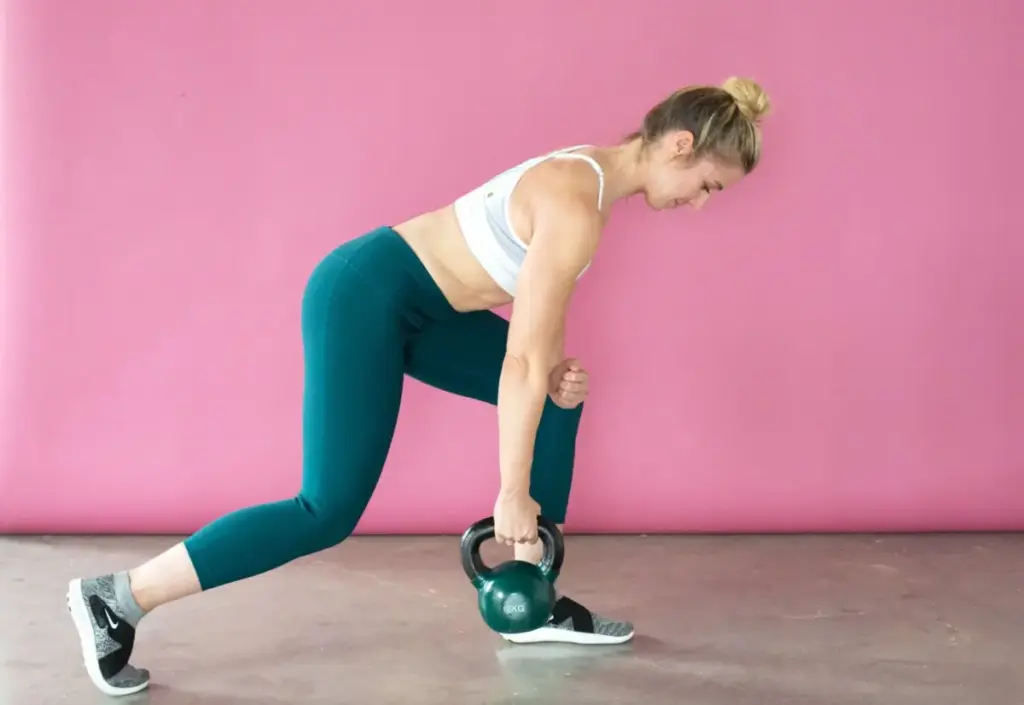
The core of the workout utilizes interval training structured by time rather than repetition count. According to Lazoff, timing the intervals removes the psychological pressure of hitting a specific number of reps, allowing the practitioner to prioritize flawless execution, structural integrity, and form over speed.
Furthermore, strategically interspersed bodyweight recovery movements give the grip, forearms, core, and shoulders a brief respite from continuous loading. Practitioners should aim for 30 seconds to 2 minutes of active recovery or rest between each of the four distinct circuits, depending on their current fitness level.
Supporting Context & Metrics: Why Kettlebells Outperform Traditional Weights
The surge in popularity of kettlebell training is not merely a passing wellness trend; it is backed by solid biomechanical and physiological principles. When analyzing why a single piece of cast iron can rival a room full of cable machines, several critical metrics and structural advantages emerge.
1. The Physics of Offset Loading
Traditional dumbbells center the weight evenly in the user’s hand. Kettlebells, conversely, project their center of gravity away from the grip. When performing presses, squats, or carries with the bell in the "rack position" (resting against the forearm and bicep with the ball up), the body must actively recruit deep core stabilizers, spinal erectors, and rotator cuffs to prevent the weight from compromising posture. This creates a functional demand that mimics real-world lifting—such as carrying a toddler, a heavy suitcase, or a bag of groceries.
2. Metabolic Conditioning Meets Hypertrophy
Because kettlebell routines frequently string ballistic movements (such as swings and cleans) together with grinding strength exercises (such as presses and squats), they elicit a dual physiological response. Research into high-intensity functional training (HIFT) indicates that such protocols significantly elevate excess post-exercise oxygen consumption (EPOC). In plain terms, your body continues to burn calories at an elevated rate long after the final circuit is completed.
3. Long-Term Skeletal Integrity and Bone Density
As individuals age, preserving bone mineral density becomes a paramount health objective. Osteoporosis and age-related bone mass degradation pose significant risks, particularly to post-menopausal women. Weight-bearing exercise is the primary non-pharmacological intervention for stimulating osteoblast activity (bone-forming cells).
The dynamic loading, impact absorption, and mechanical tension generated by kettlebell training apply safe, progressive stress to the skeletal system. Over time, this stimulates structural reinforcement of the bones in the wrists, arms, spine, hips, and legs, helping to safeguard long-term mobility and independence.
Official Statements & Expert Insights
To better understand the philosophy behind minimalist kettlebell programming, fitness authorities emphasize the importance of prioritizing movement quality over sheer loading, especially for beginners.
"Kettlebells are versatile, portable, and taxing on the entire body during most movements and movement patterns," explains Lacee Lazoff, prominent fitness instructor at the Fhitting Room in New York City. "Just holding a heavy bell at the chest is an effective way to strengthen the core, back, arms, and shoulders."
Lazoff emphasizes that the true power of the kettlebell lies in its ability to mirror everyday human biomechanics.
"This workout is focused on total-body movements in functional patterns—a.k.a. ways we move in everyday life," Lazoff notes. "I created short intervals with various movements in sequences to keep the body moving, increase heart rate, and balance upper- and lower-body work."
By refusing to isolate individual muscles—the traditional bodybuilding approach—kettlebell circuits teach the body to function as a unified kinetic chain. When upper- and lower-body musculature must communicate seamlessly across multi-joint movements, neuromuscular efficiency improves, translating to better daily posture, reduced injury rates, and heightened athletic performance.
Future Outlook: The Minimalist Fitness Revolution
As urban living spaces shrink, schedules grow increasingly compressed, and consumers experience digital and consumer fatigue, the fitness industry is undergoing a structural shift. The era of needing a sprawling commercial gym membership to achieve optimal health is giving way to minimalist, high-efficiency home gym models.
At the epicenter of this movement is portable, multi-functional equipment. The kettlebell, alongside resistance bands and suspension trainers, represents the future of sustainable home fitness. Because a single medium-to-heavy kettlebell occupies virtually zero floor space, requires zero maintenance, and can last multiple lifetimes, it embodies economic and spatial sustainability.
Furthermore, as public health initiatives increasingly pivot toward preventative medicine—focusing on metabolic health, fall prevention, functional longevity, and bone density preservation—routines like Lazoff’s 20-minute kettlebell blueprint will become the gold standard. They bridge the gap between cardiovascular health and muscular strength, proving that when it comes to physical conditioning, quality, intent, and functional intelligence will always outweigh sheer volume and complex machinery.
Whether you are a seasoned athlete looking to squeeze an efficient conditioning session into a packed workday or a beginner seeking a straightforward entry point into strength training, mastering the single kettlebell is one of the most rewarding investments you can make in your long-term physical health.



.gif)