Executive Overview
Nearly three decades after the global music community was rocked by the tragic killing of one of hip-hop’s most transcendent and influential figures, the scales of justice have finally tipped. On August 31, 2026, a Clark County District Court jury in Las Vegas, Nevada, reached a definitive and swift conclusion in a trial that many legal experts once believed would never materialize. Duane “Keefe D” Davis, a former street gang figure whose own admissions ultimately sealed his fate, was found guilty of first-degree murder with the use of a deadly weapon for his role in the 1996 drive-by shooting that claimed the life of Tupac Shakur.
The high-profile verdict marks a monumental milestone in American legal and cultural history, bringing a semblance of closure to a decades-old mystery that has spawned countless documentaries, conspiracy theories, and investigative books. Yet, amidst the profound gravity of a trial resolving a 30-year-old homicide, the case has captured public attention for an entirely unexpected reason: an eccentric, cross-pollinated pop-culture footnote linking the solemn halls of the Nevada judiciary directly to the chaotic, slapstick universe of Paramount Pictures’ Jackass franchise.
Clark County District Attorney Steve Wolfson, the seasoned prosecutor who oversaw the historic proceedings, is the father of stand-up comedian and Jackass alum Rachel Wolfson, who famously starred in Jackass Forever and Jackass: Best and Last. While this surreal trivia has added a bizarre layer of viral fascination to the news cycle, the core of the story remains a masterclass in modern prosecution—proving that even after thirty years, a mountain of public confessions, media interviews, and literary bravado can ultimately dismantle a defense.
As legal teams brace for the inevitable appellate battles, the verdict stands as a resounding statement from the state of Nevada: cold cases involving legendary cultural icons are not immune to the relentless pursuit of justice.
Detailed Chronology: From the Las Vegas Strip to a 2026 Courtroom
To understand the weight of the August 31, 2026 verdict, one must trace a timeline spanning nearly three decades of grief, evasion, police investigations, and misplaced bravado.
September 1996: The Fatal Night
On the evening of September 7, 1996, Tupac Shakur was in Las Vegas to attend the Mike Tyson vs. Bruce Seldon boxing match at the MGM Grand. Following the fight, an altercation occurred in the casino lobby involving Shakur’s entourage and Orlando Anderson, a reputed member of the Southside Crips and the nephew of Duane “Keefe D” Davis.
Later that evening, as Shakur was traveling in a car driven by Death Row Records founder Marion "Suge" Knight toward a nightclub, a white Cadillac pulled up alongside them. Gunfire erupted from the vehicle, striking Shakur multiple times. The iconic rapper succumbed to his injuries six days later, on September 13, 1996, at the age of 25. The case quickly stalled, plagued by an uncooperative code of silence on the streets and a lack of cooperative witnesses, transforming the murder into one of the most infamous unsolved mysteries in modern history.
The Decades of Silence and Self-Incrimination
For years, the investigation languished. Orlando Anderson, the primary suspect in the immediate aftermath, was killed in an unrelated gang-related shooting in 1998. However, the shadow of suspicion never left Duane Davis.
Over the ensuing years, Davis made a fatal strategic error: he began to talk. Believing he was immune from prosecution due to historical immunity agreements or simply blinded by a desire for notoriety and financial gain, Davis spoke extensively with law enforcement agencies, participated in documentary interviews, appeared on true-crime podcasts, and ultimately penned a 2019 memoir titled Compton Street Legend. In these various forums, Davis explicitly implicated himself as the shot-caller who orchestrated the acquisition of the murder weapon and handed it to the shooter inside the white Cadillac.
The 2023 Indictment and 2026 Trial
Armed with Davis’s own public admissions and renewed investigative momentum, a Clark County grand jury indicted Davis for first-degree murder with the use of a deadly weapon in September 2023. The trial commenced in mid-2026 under the watchful eye of the global media.
Despite the passage of thirty years, the prosecution presented a streamlined and aggressive case. In an astonishingly brief deliberation period lasting less than three hours on August 31, 2026, the jury returned with a guilty verdict. The swiftness of the decision stunned legal analysts, signaling that the mountain of evidence generated by Davis’s own mouth left zero room for reasonable doubt.
Supporting Context & Metrics: The Anatomy of a Cold-Case Prosecution
Prosecuting a murder case three decades after the fact is virtually unheard of in American jurisprudence, presenting a myriad of evidentiary hurdles. Witnesses pass away, memories fade, physical evidence degrades, and the legal standard of proof remains stubbornly high. Yet, the Clark County District Attorney’s office successfully navigated these obstacles through a unique combination of modern investigative leverage and the defendant’s own hubris.
| Case Metric / Detail | Fact |
|---|---|
| Date of Incident | September 7, 1996 |
| Date of Verdict | August 31, 2026 |
| Time Lapse | Nearly 30 years |
| Court Jurisdiction | Clark County District Court, Las Vegas, Nevada |
| District Attorney | Steve Wolfson |
| Chief Deputy DAs | Marc DiGiacomo and Binu Palal |
| Defendant | Duane “Keefe D” Davis |
| Charges | First-Degree Murder with a Deadly Weapon |
| Jury Deliberation Time | Under 3 hours |
The Power of Digital and Literary Evidence
What made this prosecution unprecedented was the sheer volume of self-incriminating material available in the digital age. Prosecutors Marc DiGiacomo and Binu Palal did not have to rely solely on fragile eyewitness testimony from 1996; instead, they presented a curated timeline of Davis’s own confessions captured on audio, video, and in print.
From his self-published memoir to multiple sit-down interviews with true-crime documentarians and podcasters, Davis continually courted the spotlight. In the legal arena, this strategy proved catastrophic for his defense. The jury was left to weigh a simple, brutal question: Who do you believe—the defendant’s own recorded admissions, or a desperate defense team trying to retract decades of boastful storytelling?
Official Statements and Press Conference Insights
In the wake of the historic verdict, Clark County District Attorney Steve Wolfson addressed the media during a press conference broadcast across local outlets, including KVVU. Visibly moved by the culmination of a massive team effort, Wolfson reflected on the philosophical weight of the proceedings.
“There’s a saying in the criminal justice system: justice delayed is justice denied,” Wolfson told reporters. “Well, not today. Not in this case. Yesterday, the jury delivered swift justice.”
Addressing the unexpected speed with which the jury reached its consensus, Wolfson expressed his astonishment at the efficiency of the deliberations.
“I don’t think any of you would have predicted in less than three hours,” he noted. “That sends a message… that it wasn’t a difficult decision to reach justice in this case.”
Commending the Prosecution Team
Wolfson reserved high praise for his Chief Deputy District Attorneys, Marc DiGiacomo and Binu Palal, emphasizing the immense difficulty of building a viable homicide case thirty years after the crime occurred.
“This was not an easy case,” Wolfson said. “Think about it. This was a case that was brought 30 years after the crime… Mr. DiGiacomo and Mr. Palal, in their effort and their ability, helped obtain justice.”
When dissecting the bedrock of the state’s victory, Wolfson pointed squarely back at the defendant.
“The strength of our case was Mr. Davis,” Wolfson explained. “And all of the interviews, and the book writing, and the podcasts, and his mouth. At the end of the day, I think it came down to, who do you believe?”
The Pop-Culture Intersect: From Las Vegas Courtrooms to Jackass Stunts
No discussion of this trial’s media footprint would be complete without acknowledging the surreal, internet-breaking intersection between the Nevada legal system and Hollywood slapstick comedy.
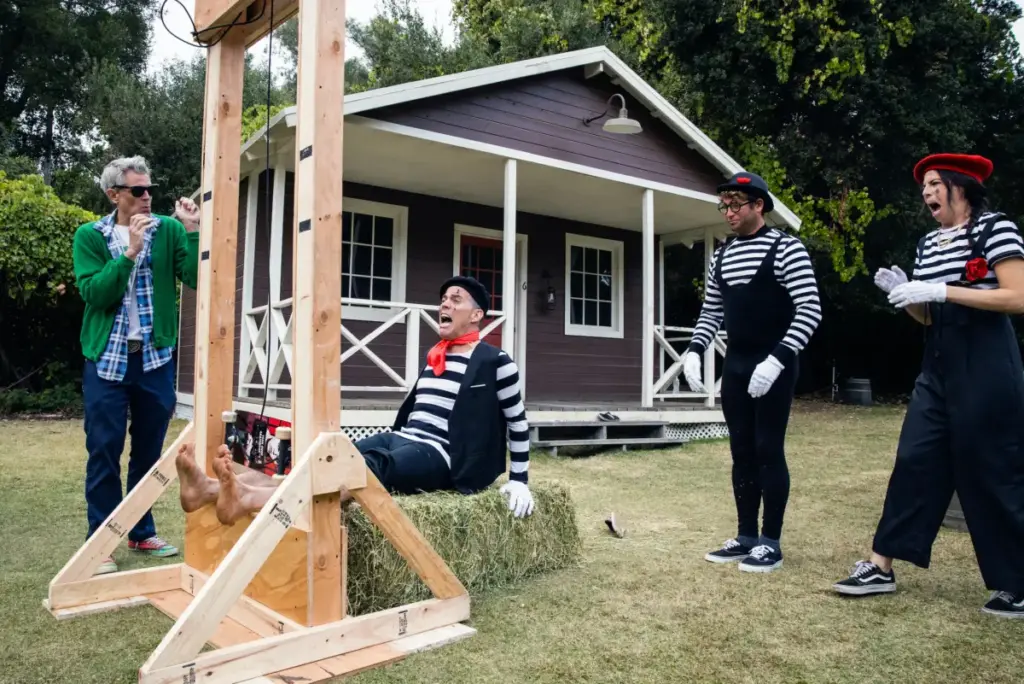
While District Attorney Steve Wolfson has spent decades building a respected reputation as a seasoned Nevada legal professional, his private family life bridges two vastly different worlds. Wolfson is the father of Rachel Wolfson, a celebrated stand-up comedian and cultural fixture who made television and cinematic history as a core cast member of Paramount Pictures’ Jackass Forever (2022) and Jackass: Best and Last. Known for enduring scorpion stings, paper-cut slices, and various high-velocity physical absurdities on the silver screen, Rachel Wolfson represents the bleeding edge of modern alternative comedy.
The juxtaposition of her father delivering stone-cold, gravitas-laden press conferences regarding the murder of Tupac Shakur—while simultaneously maintaining a familial connection to one of the most eccentric stunt troupes in entertainment history—created a bizarre narrative loop for social media users. Memes and news headlines immediately seized upon the "multiverse" aspect of the District Attorney’s lineage, providing a stark reminder of how interconnected modern media, true crime, and pop culture truly are.
Future Outlook: Appeals and the Finality of Legacy
As the dust settles on the courtroom floor, legal experts are already looking toward the horizon. A conviction of this magnitude, bearing a life-altering sentence for a first-degree murder charge with a deadly weapon, is rarely allowed to stand without a rigorous challenge.
When asked by journalists about the probability of post-trial motions and appellate challenges from Davis’s defense team, DA Wolfson remained unfazed, resolute, and supremely confident in the structural integrity of the prosecution’s case.
“We feel confident in the strength of our case,” Wolfson stated firmly. “We expect an appeal, and we will defend that appeal.”
A Lasting Cultural Echo
For millions of fans worldwide who grew up listening to Shakur’s prophetic lyricism, socio-political commentary, and timeless anthems like "California Love" and "Dear Mama," the verdict offers a rare moment of institutional closure. While no court ruling can reverse the violent tragedy of September 1996 or resurrect a generational talent taken far too soon, the legal system has finally spoken.
Duane “Keefe D” Davis will spend the remainder of his days facing the consequences of a night that changed music history forever—proven guilty not by hidden evidence or elusive secrets, but by the very words he chose to broadcast to the world.