By Tannur Anders | World News Desk
Published: August 31, 2026, 23:32 BST
Executive Overview
A routine late-afternoon commute in the heart of Manhattan descended into absolute terror on Monday, August 31, 2026, when a violent altercation in Times Square culminated in a police-involved shooting. According to the New York Police Department (NYPD), officers opened fire on an armed woman who had allegedly embarked on a frenzied knifepoint rampage, stabbing at least two innocent bystanders in one of the most densely populated tourist hubs on the planet.
The incident unfolded during peak hours at approximately 4:27 PM local time, paralyzing a bustling commercial intersection between Seventh Avenue West and West 42nd and 43rd Streets. Emergency services, including the New York City Fire Department (FDNY) and specialized medical units, flooded the scene within minutes. The suspect, wielding two knives, was shot by police after allegedly refusing repeated commands to drop her weapons. Both victims of the initial stabbing attack, as well as the suspect herself, were rushed to nearby area hospitals suffering from severe, life-threatening injuries.
The high-profile shooting immediately drew a massive emergency response, locking down multiple blocks of Midtown Manhattan, disrupting public transit arteries, and sending shockwaves through a global tourism landmark that welcomes hundreds of thousands of visitors daily. As local authorities and federal partners launch a comprehensive multi-agency investigation, this harrowing event has reignited urgent debates concerning public safety, mental health crises in urban centers, and the inherent volatility of policing America’s most high-profile public spaces.
Detailed Chronology of Events
4:26 PM – The Initial Emergency Response
Moments before the gunfire shattered the afternoon calm, the New York City Fire Department (FDNY) received urgent, staggered dispatch calls reporting a stabbing in progress. Emergency medical dispatchers immediately routed units to the intersection of Seventh Avenue and West 43rd Street. Initial indicators suggested an isolated physical altercation, but radio traffic quickly escalated as frantic callers reported a chaotic scene involving an individual armed with edged weapons indiscriminately threatening pedestrians.

4:27 PM – The Escalation and Confrontation
Within less than sixty seconds of the initial emergency alerts, NYPD patrols stationed in and around the Times Square zone converged on the location. Witnesses described a scene of immediate panic as tourists and commuters scrambled for cover beneath the glowing, towering digital billboards.
According to preliminary police briefings and local media reports citing law enforcement sources, the female suspect was brandishing two knives and aggressively advancing on civilians. Law enforcement officers confronted the woman, issuing multiple verbal warnings and commands to drop the weapons. Witnesses reported hearing sharp, authoritative police commands followed almost instantaneously by the crack of gunfire.
Officers discharged their weapons to neutralize the immediate, lethal threat posed to the surrounding crowd. The suspect collapsed to the pavement, where officers immediately secured the area, called for emergency medical backup, and initiated preliminary life-saving measures while awaiting tactical and medical support teams.
Immediate Aftermath and Area Lockdown
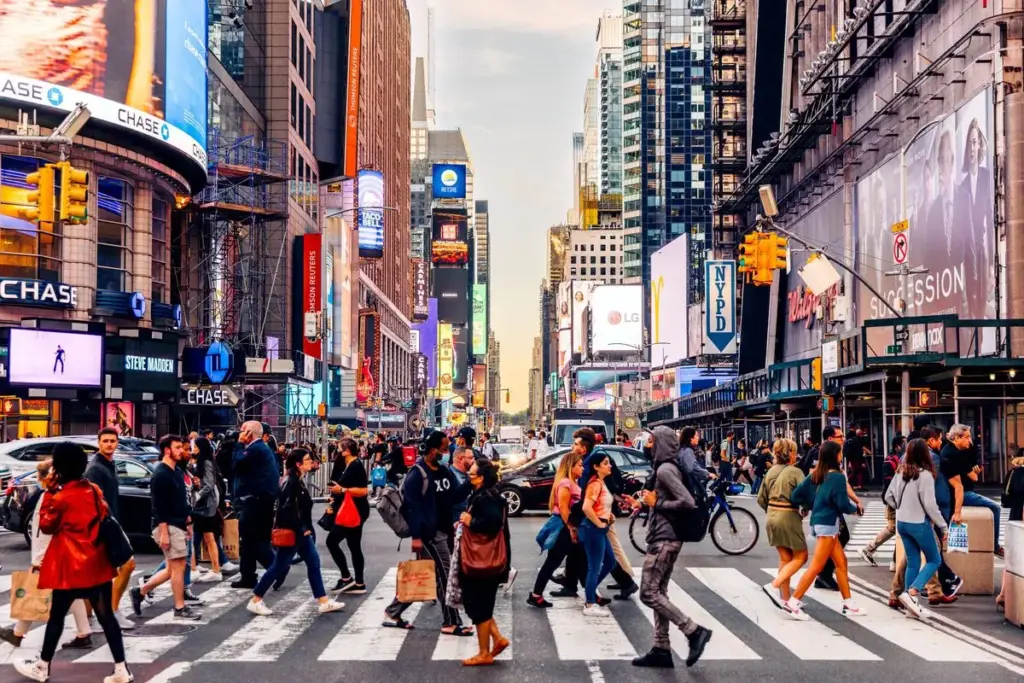
Within minutes, the epicenter of Times Square was transformed from a vibrant tourist destination into a heavily cordoned-off crime scene. Dozens of NYPD cruisers, tactical response vehicles, and FDNY ambulances blockaded the perimeter, stretching from Seventh Avenue down to surrounding cross streets.
Trauma teams from the FDNY treated the injured civilians and the wounded suspect directly on the asphalt before loading them into ambulances for emergency transit to regional trauma centers. Police established a wide sterile perimeter, halting pedestrian traffic, diverting vehicular flow, and ordering local businesses to temporarily secure their premises while crime scene technicians (CSTs) began documenting the physical evidence.

Supporting Context & Metrics: The Anatomy of Times Square Security
Times Square—frequently styled as "The Crossroads of the World"—presents a uniquely complex security and policing challenge. Understanding the gravity of Monday’s shooting requires examining the sheer scale of human traffic and the rigorous operational framework governing the district.
Geographic and Demographic Footprint
- Daily Foot Traffic: On an average weekday, approximately 330,000 pedestrians pass through the Times Square commercial intersection, swelling past 450,000 during peak tourist seasons and holidays.
- Geographic Coordinates of the Incident: The confrontation occurred precisely within the corridor of West 42nd and 43rd Streets along Seventh Avenue West—an area flanked by major Broadway theaters, multinational flagship retail stores, and major transit hubs like the Times Square–42nd Street subway station.
- Emergency Response Times: Due to the permanent deployment of the NYPD Times Square Substation and specialized Joint Terrorist Task Force (JTTF) visibility teams, average emergency response times in this specific zone are among the fastest in North America, often registering under two minutes.
The Mental Health and Urban Crime Vector
While overall violent crime rates in New York City have experienced fluctuating trends over recent years, incidents involving unprovoked attacks with edged weapons in high-density transit and commercial zones have remained a persistent anxiety for municipal leaders.
Criminologists and urban safety experts note that public spaces like Times Square serve as focal points for individuals experiencing acute psychiatric crises. The presence of tourists unfamiliar with the city’s layout, combined with the frenetic pace of Midtown Manhattan, creates an environment where volatile, rapid-onset confrontations can spiral out of control before intervention is possible. Monday’s incident underscores the thin margin for error faced by frontline patrol officers who must make split-second decisions to protect civilian lives against active, knife-wielding assailants.
Official Statements and Law Enforcement Updates
As the investigation enters its foundational phase, municipal agencies and police leadership have begun releasing preliminary details to the press while maintaining strict protocols regarding the active nature of the inquiry.
The New York Police Department (NYPD)
In official statements released late Monday evening, the NYPD confirmed that the incident was categorized as a "police-involved shooting" stemming from an active violent crime in progress.

"At approximately 1627 hours, uniformed personnel responded to a chaotic scene involving an aggressive individual armed with two edged weapons," an NYPD spokesperson stated during an impromptu media briefing near the cordon. "Preliminary findings indicate the suspect had already inflicted critical, life-threatening stab wounds on at least two civilians. Upon encountering the armed suspect, officers issued explicit commands to surrender. When those commands were refused and the threat remained active and lethal, enforcement action was taken. The suspect was struck by gunfire and secured."
Police confirmed that both civilian victims and the female suspect were transported to nearby hospitals. Medical updates regarding their exact conditions remain heavily restricted pending family notifications and surgical evaluations.
The New York City Fire Department (FDNY)
The FDNY provided crucial timelines regarding the emergency medical response. Dispatch logs indicate that medical response units were already in the vicinity due to the density of the area, allowing paramedics to arrive at the exact minute the altercation peaked.
Emergency medical technicians (EMTs) established an active triage zone amidst the chaos, treating the multi-casualty incident with high-priority trauma protocols before executing rapid transports to regional trauma centers equipped to handle catastrophic penetrating injuries.
Future Outlook: Investigations, Accountability, and Public Impact
The fallout from the Times Square shooting will reverberate across New York City’s political, legal, and law enforcement landscapes for weeks to come. Several critical pathways will shape the narrative moving forward:

1. The Multi-Agency Investigation
The NYPD’s Force Investigation Division (NYFID), alongside the office of the Manhattan District Attorney, has launched a thorough, independent review of the shooting. Under standard protocols for officer-involved firearm discharges, investigators will scrutinize:
- Body-worn camera (BWC) footage from all responding officers.
- High-definition closed-circuit television (CCTV) footage captured by commercial establishments and municipal cameras in Times Square.
- Ballistic reports, trajectory analysis, and forensic recovery of the two knives allegedly wielded by the suspect.
- Radio dispatches and witness testimony to reconstruct the exact timeline of the verbal commands and the subsequent use of force.
2. Public Safety and Transit Reassurance
City officials are expected to face renewed questioning regarding visible security measures in Midtown Manhattan. While the rapid police response undoubtedly prevented further casualties, the occurrence of a daylight mass-stabbing and subsequent shooting in the nation’s most heavily guarded tourist zone raises persistent questions about preventive intervention, particularly concerning individuals slipping through the cracks of the social safety and mental health systems.
3. Community and Tourist Advisories
In the immediate aftermath, law enforcement agencies issued strict travel and pedestrian advisories, urging residents, tourists, and theater-goers to completely avoid the corridor surrounding West 43rd Street and Seventh Avenue. While public transit lines running beneath the square remain open, surface-level gridlock is expected to persist as forensic teams meticulously sweep the pavement for evidence.
As more details emerge from medical centers regarding the conditions of the victims and the suspect, city leaders are bracing for intense public scrutiny. This tragic incident stands as a stark reminder of the unpredictable volatility that can pierce the glittering facade of modern urban life, testing the meted response of New York’s finest in the crucible of the world’s most famous intersection.