
Executive Overview
For decades, the Dallas Cowboys Cheerleaders (DCC) operated as an undisputed American pop-culture institution, synonymous with precision dance, high-kick choreography, and the glitz of the National Football League. Yet, despite their iconic status, they existed largely within the insular ecosystem of professional sports entertainment. Today, that boundary has dissolved entirely.
Driven by the explosive global success of Netflix’s docuseries America’s Sweethearts: Dallas Cowboys Cheerleaders, the squad has transcended traditional athletic sidelines to emerge as a powerhouse in the global fashion and beauty markets. The streaming phenomenon has fundamentally reshaped public perception, elevating the women from traditional cheerleaders to globally recognized athletes, cultural trendsetters, and high-value brand ambassadors.
This paradigm shift has unlocked unprecedented commercial opportunities. Major lifestyle brands—ranging from mass-market beauty giants to premier luxury and apparel labels—are aggressively investing in the DCC phenomenon. In an era where traditional advertising struggles to capture consumer attention, the cheerleaders offer an authentic, multidimensional bridge connecting sports, entertainment, fashion, and beauty.
However, this commercial goldrush raises complex questions. As corporate partnerships scale into multi-million-dollar enterprises, industry experts and former squad leaders are interrogating the true distribution of value. While partnerships with brands like Sally Beauty, Abercrombie & Fitch, and Charlotte Tilbury generate staggering revenues and brand equity for the broader franchise, the critical challenge remains: ensuring that the individual women driving this cultural engine are fairly compensated, meaningfully included, and protected as the commercial landscape evolves.
Detailed Chronology: From Gridiron Tradition to Streaming Phenomenon
To understand the current commercial renaissance of the Dallas Cowboys Cheerleaders, one must trace the deliberate evolution of their public-facing identity over recent years—a trajectory supercharged by the advent of prestige non-fiction television.
Phase One: The Pre-Netflix Reality (Pre-2024)
Before Netflix entered the picture, the DCC possessed a formidable domestic footprint. Built on decades of disciplined auditions, grueling training camps, and a rigorous local and national performance schedule, the squad was already a masterclass in brand building. However, much of their mystique was guarded behind the velvet ropes of the organization’s strict operational guidelines. While die-hard NFL fans and regional enthusiasts recognized the immense athleticism required to wear the uniform, the broader global market viewed them primarily through a stylized, singular lens: a glamorous visual accompaniment to America’s Team.
Phase Two: The Netflix Catalyst (2024–Present)
The release of America’s Sweethearts: Dallas Cowboys Cheerleaders altered this dynamic overnight. The documentary series pulled back the curtain, offering audiences an intimate, unflinching look at the physical toll, emotional resilience, and rigorous professional standards demanded of the candidates and veterans.
The metrics tell a staggering story of audience conversion. The first season of the series debuted to 2.3 million global views in its first four days alone, surging to 3.7 million views the following week. This momentum proved enduring. When Season 3 premiered in June, it immediately seized the No. 4 spot on Netflix’s global English-language TV chart, pulling in 3.2 million views in its first six days.
According to Megan McElaney, a former Dallas Cowboys Cheerleaders group leader, the impact of these viewing figures has been transformative.
"Before the show, there was already a strong level of recognition around the Cowboys Cheerleaders, but Netflix introduced the DCCs to a much larger global audience and gave people a deeper connection to the women behind the uniforms," McElaney observes. "We’ve been recognized more as athletes and have seen more brands reach out that value the work we do."
Phase Three: The Retail and Corporate Influx (2025–2026 Season)
Capitalizing on this newly unlocked global demographic, major corporate entities have moved swiftly to integrate the DCC into their core marketing strategies. The 2025–2026 NFL season marked a watershed moment for fashion and beauty integrations.
In a landmark announcement, Sally Beauty revealed its first-ever professional football partnership, designating itself as the official beauty retailer of both the Dallas Cowboys and the DCCs. Simultaneously, Abercrombie & Fitch significantly deepened its existing relationship with the franchise, expanding its product footprint, taking over athlete styling, and securing year-round brand activations.
As the lines between sport, lifestyle, and commerce continue to blur, the DCC have successfully transformed from a regional halftime attraction into a year-round economic engine.
Supporting Context & Metrics: The Economics of the Cross-Over
The financial weight of the Dallas Cowboys brand is legendary, consistently ranking the franchise among the most valuable sports properties in the world. Yet, the inclusion of the cheerleaders introduces a unique demographic advantage that traditional team sponsorships cannot replicate.
Capturing the Non-Football Consumer
While the Dallas Cowboys organization offers corporate partners immense reach among traditional sports enthusiasts, the DCC provide an entirely separate entry point. They capture demographics traditionally underserved by standard NFL marketing—specifically consumers deeply engaged in beauty, fashion, dance, and reality television who might otherwise never tune into a Sunday football broadcast.
According to Bob Heere, a University of North Texas professor specializing in sports management, the cheerleaders have long served as a vital demographic bridge. Netflix, he notes, has exponentially widened that bridge, transforming a local marketing asset into an international lifestyle channel.
Market Data and Sponsorship Growth
Industry data underscores the explosive growth of the fashion and beauty sector within professional football. Figures from SponsorUnited reveal that fashion and beauty sponsorship spending across the NFL climbed 16.9% year-over-year, reaching an impressive $58 million during the 2025–2026 season. Concurrently, the total number of deals within this category grew by 11.7%, totaling 105 active partnerships.
Within this surging market, the Dallas Cowboys stand unrivaled. Excluding venue naming-rights agreements, the Cowboys led all NFL teams in both fashion and beauty deal counts and total revenue, hauling in more than $8 million in category sponsorship spending during the 2025 season alone.
To put their digital footprint into perspective, the DCC official social media channels boast an Instagram following that outpaces the total following of at least 12 individual NFL franchises.
"The Cowboys give brands enormous reach, but the Dallas Cowboys Cheerleaders give them something different: an authentic bridge from sports into fashion, beauty, entertainment, and lifestyle," explains Peter Carton, executive director of sport industry engagement and partnerships at Southern Methodist University (SMU).
Official Statements and Industry Perspectives
The convergence of professional sports and the beauty industry represents a sophisticated strategic realignment for both retailers and sports franchises. Leaders from corporate boardrooms, retail analytics firms, and academia have weighed in on the mechanics driving this multi-million-dollar trend.
Sally Beauty’s Strategic Rebrand
For Sally Beauty, the partnership with the DCC is much more than a logo placement on a stadium jumbotron—it is a cornerstone of a sweeping customer-acquisition strategy.
Chris Kobus, chief marketing officer of Sally Beauty, explains that the collaboration is designed to shatter outdated consumer perceptions. For years, the brand has fought against a public image that pigeonholes it as a purely functional, professional-only hair-care supplier.
Neil Saunders, managing director of GlobalData Retail, validates the necessity of this strategic pivot:
"There is a lingering general perception that Sally is more of a functional retailer that majors in hair care," Saunders notes. "That’s no longer true, but to capture new shoppers, Sally must work at creating the view that it’s a place for inspiration and a destination for many beauty categories."
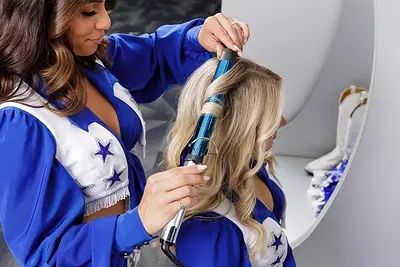
By leveraging the DCC—utilizing their content, public appearances, and step-by-step product demonstrations—Sally Beauty aims to show consumers how to recreate professional game-day hair and nail looks, while simultaneously promoting its growing men’s hair-care assortment to a broader audience.
Abercrombie & Fitch’s Immersive Retail Integration
Abercrombie & Fitch is taking a similarly immersive approach. Rather than relying solely on traditional advertising, the brand has constructed a dedicated, branded closet inside the DCC locker room at The Star in Frisco, Texas. This curated product assortment is refreshed monthly, serving as the official wardrobe for the squad’s off-field appearances and day-to-day lifestyle content.
Furthermore, the broader Abercrombie x Cowboys collection has secured massive retail distribution, reaching consumers globally via NFLShop.com and locally at AT&T Stadium through the brand’s strategic partnership with Fanatics.
Future Outlook: Moving from Sponsorship to Commerce
As the commercial ecosystem surrounding the Dallas Cowboys Cheerleaders enters its next chapter, industry analysts and former squad members agree that the true test will lie in measurable conversion.
The Shift to E-Commerce and Consumer Engagement
Signage, television visibility, and social media impressions have laid a strong foundation, but the modern sponsorship playbook demands concrete financial returns.
"The real opportunity is moving from sponsorship to commerce," states Peter Carton. "The question is no longer simply how many people saw your logo; it’s how many consumers engaged with your brand, entered your retail ecosystem, or bought something because of the relationship."
Managing multiple, high-profile partners—such as balancing Charlotte Tilbury as an official beauty partner alongside Sally Beauty as the official beauty retailer—requires meticulous strategic positioning. According to sports business experts, these relationships can thrive harmoniously only when brands are granted strictly defined product categories, distinct activation rights, and tailored consumer touchpoints.
The Human Element: Equity for the Athletes
Yet, as brand partnerships multiply and revenues scale into the tens of millions, a critical ethical and economic question looms: How much of this newfound corporate wealth flows directly to the women whose labor, talent, and images sustain the entire enterprise?
Megan McElaney is quick to point out the structural disconnect that often exists between team-level corporate agreements and individual compensation.
"A team-level partnership can create more exposure and opportunities for the cheerleaders, but that doesn’t automatically mean an individual cheerleader receives compensation from that partnership," McElaney explains.
While high-profile alliances—such as the squad’s ongoing relationship with luxury cosmetic line Charlotte Tilbury—benefit the entire organization by subsidizing expensive, mandatory game-day beauty routines, and occasionally hiring individual members for specialized content creation, the reality is far more complex. McElaney notes that not every member of the squad desires to become an influencer or construct a public-facing personal brand, making equitable compensation structures difficult to standardize.
Ultimately, as the Dallas Cowboys Cheerleaders cement their status as high fashion’s most dynamic new frontier, the definitive measure of their success will extend far beyond television ratings, merchandise sales, and corporate balance sheets. For the alumni, the dancers, and the architects of this modern cultural shift, the future of the brand rests on a fundamental standard of recognition.
As McElaney succinctly puts it:
"The most valuable partnerships would be ones where the women themselves are meaningfully included, not just used as part of the visual identity of the brand."