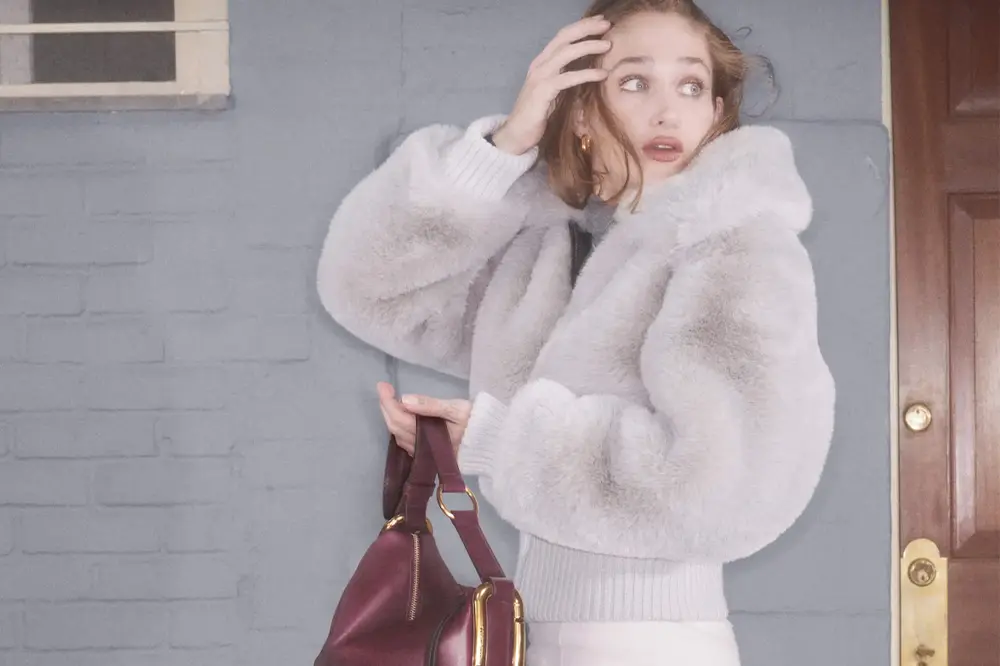
Marc Jacobs is once again blurring the volatile boundary between high fashion and cinematic storytelling with the rollout of its Fall 2026 campaign. Titled The Swap, the latest project in the brand’s ongoing Question Marc narrative series takes the traditional, static lookbook and shatters it into a fast-paced, scripted micro-drama. Starring celebrated actress and artist Jemima Kirke alongside contemporary icon Rowan Blanchard—with a special cameo by acclaimed playwright and actor Jeremy O. Harris—the project centers on an accidental handbag mix-up that sparks a whimsical, high-stakes chase across the asphalt and avenues of New York City.
The release marks a strategic evolution for the house of Marc Jacobs. As luxury brands increasingly seek out novel ways to capture the fractured attention spans of digital-native consumers, Jacobs has leaned heavily into narrative-driven marketing. The Swap serves as the direct follow-up to April’s Manhattan-centric short The Scene, which was written by and starred multi-hyphenate creator Rachel Sennott. By integrating notable literary, theatrical, and cinematic talents into its promotional infrastructure, Marc Jacobs is signaling that the future of retail is entertainment.
In this comprehensive report, we examine the mechanics of The Swap, explore the deeper intersections between fashion and narrative media, unpack Jemima Kirke’s reflections on personal style and her iconic tenure on HBO’s Girls, and analyze the broader industry shift toward episodic luxury marketing.
Detailed Chronology: From Runway Mix-Up to Manhattan Pursuit
The narrative engine of The Swap is deceptively simple yet brilliantly tailored to showcase the brand’s signature accessories. The story begins moments after the conclusion of a high-profile Marc Jacobs runway presentation. Jemima Kirke and Rowan Blanchard, seated in close proximity to one another during the show and each carrying identical iterations of the brand’s covetable Scene Bag, mistakenly exit with each other’s personal belongings.
What follows is an erratic, charming urban odyssey. As Kirke and Blanchard retrace their steps through the bustling backdrop of New York City, they begin to rifle through the contents of the mistakenly acquired purses. Through this intimate inventory search, both women embark on a psychological journey, piecing together elaborate, highly imagined versions of the bag’s true owner based solely on the mundane objects left behind.
The micro-drama unfolds in episodic installments slated to roll out across Marc Jacobs’ digital and social media channels throughout the fall season. Rather than dropping a singular, traditional ad spot, the brand has structured The Swap to mimic the pacing of modern streaming television—generating weekly anticipation, social media engagement, and sustained viewer retention.
Supporting this cinematic narrative is an all-star supporting lineup. The inclusion of Jeremy O. Harris—whose boundary-pushing theatrical work, such as Slave Play, redefined Broadway conversations—adds an extra layer of cultural cachet to the project. Harris’s cameo anchors the campaign firmly within the epicenter of New York’s creative intelligentsia, proving that Marc Jacobs is targeting an audience that consumes prestige television and avant-garde theater with the same voracious appetite reserved for luxury runway collections.
Behind the Bag: Jemima Kirke on Contents, Nostalgia, and Personal Style
At the heart of The Swap is a tactile obsession with what women carry in their bags. For Jemima Kirke, the exercise of examining a handbag’s contents strikes a deeply personal chord. Speaking with Variety about her own everyday carry, Kirke offered a candid glimpse into her relationship with practical utilitarianism versus sentimental habit.
“I’ve always carried the same things with me,” Kirke reflects. “What’s changed is that I no longer need most of this stuff. Other than lipstick and candy. There’s nothing that my phone can’t handle, but I do it anyway out of habit and ritual.”
A look inside Kirke’s real-world handbag reveals a delightfully analog collection of items: a well-worn notebook, an abundance of pens, a traditional calendar book, signature lipstick, a physical paperback book, hand cream, keys, a “massive wallet,” and an assortment of candy. In an era defined by digital minimalism and ultra-compact crossbodies, Kirke’s preference for a loaded, oversized carryall mirrors the chaotic charm of the characters she often brings to life on screen.
However, Kirke is quick to draw a hard line between her own aesthetic identity and that of her most famous television alter ego, Jessa Johansson from the HBO cultural touchstone Girls. Throughout the run of Lena Dunham’s landmark series, Jessa’s bohemian, vintage-heavy, eclectic wardrobe became an instant blueprint for 2010s indie-sleaze style. When asked if she ever took style cues from the character, Kirke’s response is delightfully unequivocal:
“No, not at all,” she says. “Jessa’s look doesn’t appeal to me personally.”

Despite her dissociation from Jessa’s sartorial choices, Kirke’s own life occasionally reads like a lost episode of Girls. During the interview, Kirke recounted a chaotic, high-fashion anecdote from her time attending a Chanel fall show in Paris circa 2014—an experience that underscores her long-standing, idiosyncratic relationship with the global fashion establishment.
“I wasn’t ‘a model’ per se, although still modeling the latest fashions as part of the performance,” Kirke recalls. “My cousin and I had gone to a party the night before and had helped ourselves to a drink from someone else’s table. Maybe more than one. The people whose table it was caught us, I guess, and we got in a fight. One of them got dirty and came at me with a broken bottle. They were only able to make a scratch, but it was significant enough to get them kicked out. Then we took their table and their booze.”
It is precisely this unapologetic, slightly chaotic edge that makes Kirke an ideal collaborator for the house of Marc Jacobs—a brand that has historically championed grunge, individuality, and downtown New York grit over sterile corporate luxury.
Supporting Context & Metrics: The Rise of Cinematic Fashion Campaigns
The debut of The Swap is not an isolated creative experiment; it represents a calculated pivot in how fashion houses allocate marketing budgets and conceptualize seasonal campaigns. For decades, the luxury fashion pipeline relied on a predictable formula: print advertising spreads in September issues of glossy magazines, billboards in major metropolitan centers, and high-production runway livestreams.
Today, those mediums compete directly with TikTok, YouTube Shorts, Instagram Reels, and streaming subscription services. To remain relevant to younger demographics—particularly Gen Z and Millennials who heavily favor brands that offer cultural alignment over mere product utility—fashion marketing must entertain before it sells.
- The Shift to Episodic Content: By breaking campaigns into episodic micro-dramas, brands like Marc Jacobs dramatically increase user engagement time. A static billboard commands attention for three seconds; a serialized short film captures viewer retention for minutes at a time, transforming passive consumers into active, invested audiences.
- The Power of Cross-Disciplinary Talent: Hiring established playwrights (Jeremy O. Harris), indie-film darlings (Rachel Sennott), and revered indie-sleaze icons (Jemima Kirke) bridges the gap between fashion and high-brow culture. It establishes an intellectual pedigree that traditional influencer marketing struggles to achieve.
- Direct-to-Checkout Integration: Campaigns like The Swap are engineered for immediate frictionless conversion. As viewers follow Kirke and Blanchard through their Manhattan pursuit, the exact accessories featured in the narrative—most notably the Marc Jacobs Scene Bag—are simultaneously made available for immediate online purchase, collapsing the traditional distance between seeing a runway look and owning it.
Official Statements and Industry Implications
The broader implications of projects like Question Marc point to a changing landscape where fashion design and narrative filmmaking are increasingly co-dependent. Industry analysts note that contemporary luxury consumers are experiencing "campaign fatigue." Standardized studio shoots featuring glossy models against seamless backdrops no longer generate the viral conversation necessary to justify multi-million-dollar marketing expenditures.
In contrast, narrative-driven shorts offer organic avenues for virality. When a project features witty scriptwriting, unexpected comedic timing, and recognizable cultural figures, viewers are far more likely to share, comment on, and discuss the content across social platforms. Furthermore, it creates a halo effect around the brand’s physical products. The Marc Jacobs Scene Bag is no longer just a leather accessory featured in a product catalog; it is an active participant in a New York City mystery, imbued with narrative history, personality, and cinematic romance.
As brands navigate an oversaturated digital marketplace, the success of The Swap is likely to inspire a wave of copycat projects across the luxury sector. However, executing this format successfully requires a delicate balance of authentic creative partnerships, self-aware humor, and a genuine understanding of urban counter-culture—qualities that Marc Jacobs has cultivated for decades.
Future Outlook
As the fall season unfolds, Marc Jacobs will continue to roll out subsequent chapters of The Swap across its digital ecosystem. Viewers and fashion enthusiasts can expect further twists in the Manhattan-based handbag chase, alongside potential surprise cameos and behind-the-scenes content detailing the making of the micro-drama.
Meanwhile, the Fall 2026 collection—featuring the viral Scene Bag and the complete ready-to-wear lineup showcased in the campaign—is currently available for purchase online through the official Marc Jacobs website.
By continuing to tear down the wall between the silver screen and the retail floor, Marc Jacobs has proven that the most effective way to sell a handbag in the 21st century isn’t to talk about its stitching or its leather grain. It is to invite the audience into a story where they are desperate to play a leading role.