Executive Overview
For decades, the name "Acme Corporation" has been synonymous with catastrophic failure, exploding catapults, and the eternal, futile pursuit of a remarkably resilient roadrunner. However, in late 2023, the Acme name acquired an entirely new, deeply cynical corporate connotation in the real world: the ultimate symbol of Hollywood write-off culture.
When Warner Bros. Discovery announced it was permanently shelving the completed, test-screened hybrid live-action/animation feature Coyote vs. Acme to secure a lucrative tax credit, it sparked a seismic wave of industry outrage, public protest, and creative rebellion. It was the third time the studio had deployed this controversial accounting maneuver, following the unceremonious burial of DC Studios’ Batgirl and an animated Scooby-Doo movie.
Yet, unlike its ill-fated predecessors, the desert-dwelling genius of Wile E. Coyote could not be silenced. In an unprecedented turn of events, fierce backlash from filmmakers, guilds, and passionate fans forced Warner Bros. to reverse course—at least partially—allowing the completed film to be shopped to rival distributors. Now, years after its anticipated demise, Coyote vs. Acme has finally detonated into theaters courtesy of Ketchup Entertainment.
Starring Will Forte, Lana Condor, John Cena, and a cavalcade of beloved Looney Tunes icons, the film is no longer just a movie; it is a cultural artifact, brilliantly marketed as the very feature that "Big Corporate" desperately tried to hide from the public. This comprehensive report explores the dramatic chronology of the film’s near-extinction, the economics of Hollywood tax write-offs, how the rescue mission succeeded, and everything audiences need to know about streaming, tickets, and what to watch while waiting for the dust to settle.
Detailed Chronology: From Greenlight to the Brink of Destruction
To understand the monumental triumph of Coyote vs. Acme’s theatrical release, one must retrace the harrowing timeline of a production that went from studio darling to corporate collateral damage, and finally, to an independent underdog champion.
The Genesis and Production
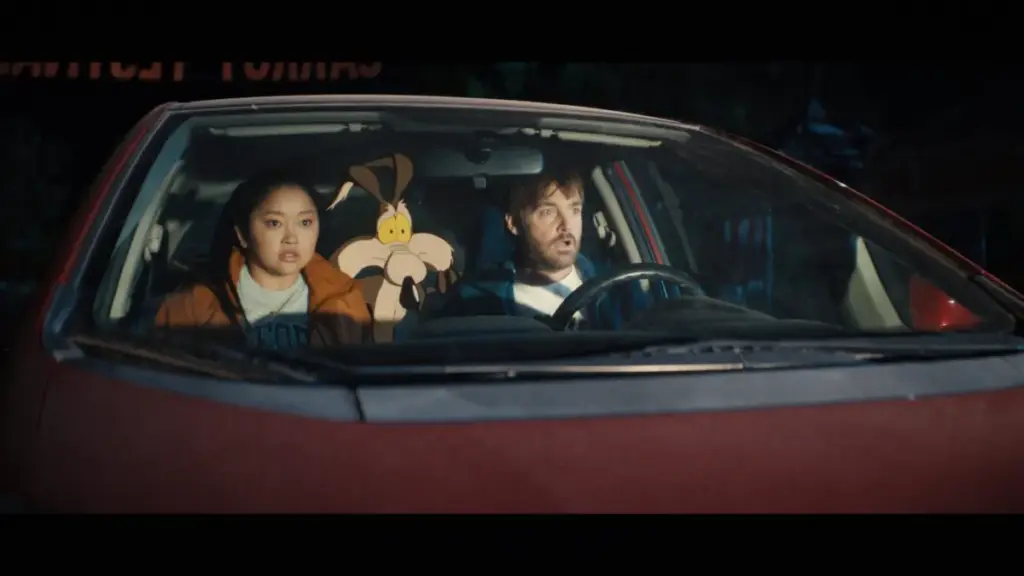
Developed as a courtroom comedy blending live-action elements with traditional animation, Coyote vs. Acme was envisioned as a fresh, clever take on the classic Chuck Jones dynamic. Directed by Dave Green from a screenplay by Samy Burch (with a story co-crafted by industry heavyweights including James Gunn), the project centered on Wile E. Coyote suing the Acme Corporation for its notoriously defective products.
Enlisting the help of a down-on-his-luck human lawyer (played by Will Forte), the cartoon icon takes on the corporate monolith, represented by a slick legal defense attorney (played by John Cena) and his formidable boss (Lana Condor). Filming wrapped, animation was finalized, and initial test screenings generated overwhelmingly positive buzz. Executives at Warner Bros. had a crowd-pleasing, highly marketable piece of intellectual property on their hands.
The November 2023 Execution Order
Despite positive test scores, the landscape of Warner Bros. Discovery under CEO David Zaslav was undergoing aggressive financial restructuring. Prioritizing immediate debt reduction and quarterly balance sheet optics over creative goodwill, the studio made the shocking announcement in November 2023 that Coyote vs. Acme would be written off as a tax loss.
The strategy was chillingly simple: by formally shelving the approximately $70 million movie and ensuring it was never released in any format—theatrical, streaming, or physical—the studio could claim a massive tax write-down, effectively valuing the completed art at zero dollars.
Hollywood’s Mutiny and the U-Turn
The industry’s reaction was swift and merciless. Directors, writers, and artists across Hollywood recognized the existential threat posed by studios treating multi-million-dollar creative works as disposable accounting slips. Filmmakers pulled their upcoming projects from Warner Bros., guilds voiced formal grievances, and social media erupted with the hashtag campaign #ReleaseCoyoteVsAcme.
Faced with mounting reputational damage and unprecedented pressure from within the creative community, Warner Bros. Discovery blinked. In a rare pivot, the studio relented, permitting the production team to shop the finished film to other distributors willing to reimburse the production costs. After months of tense negotiations and industry nail-biting, independent distributor Ketchup Entertainment stepped in to rescue the coyote, securing the distribution rights and paving the way for its eventual release.
Supporting Context & Metrics: The Anatomy of the Hollywood Write-Off
The near-destruction of Coyote vs. Acme cast a harsh, analytical light on a loophole in U.S. tax code and corporate accounting that had previously operated quietly in the shadows of major media conglomerates.
The Economics of Section 181 and Corporate Write-Offs
When a media conglomerate merges or undergoes massive restructuring, corporate leadership often looks for ways to trim excess weight and maximize free cash flow. Under specific interpretations of tax laws and corporate accounting practices, studios can choose to "abandon" an asset before distribution.
- The Cost: The studio absorbs the sunk production costs but offsets them against taxable income via write-offs.
- The Catch: To qualify for the write-off, the content must be locked away permanently—never to be monetized, broadcast, or sold, ensuring zero revenue is generated from the asset going forward.
- The Collateral Damage: Hundreds of artists, animators, technicians, and actors see their life’s work rendered legally invisible, robbing them of potential residuals, career milestones, and artistic fulfillment.
| Milestone / Event | Date / Period | Impact on Industry |
|---|---|---|
| Batgirl Shelved | August 2022 | Established precedent for canceling completed $90M features for tax purposes. |
| Scoob! Holiday Haunt Shelved | August 2022 | Sparked early internal dissent among animation guilds. |
| Coyote vs. Acme Shelved | November 2023 | Triggered unprecedented public outrage and industry-wide boycotts. |
| The U-Turn / Distribution Shift | Late 2023 – 2024 | Forced studios to reconsider the PR cost of erasing completed films. |
| Theatrical Premiere | August 28 | Proved that demand for rescued IP can translate to box office viability. |
Official Statements and Industry Reactions
The battle over Coyote vs. Acme brought unprecedented transparency to the often-opaque relationship between corporate executives and creative talent. Industry leaders did not mince words.
Directors guilds and prominent filmmakers spoke out against what they termed "creative vandalism." While Warner Bros. executives initially defended their fiscal strategy as a necessary measure for long-term corporate health, the sheer volume of backlash forced a PR retreat.
An internal industry insider noted during the height of the controversy: "When you tell an artist that their work has more value to you as a dead loss than as a living, breathing piece of entertainment shared with an audience, you break the fundamental contract of cinema."
Meanwhile, the marketing campaign orchestrated for the film’s eventual release leaned heavily into its David-versus-Goliath narrative. Bypassing traditional studio hype, promotional materials embraced the tongue-in-cheek angle that Coyote vs. Acme was the forbidden fruit—the movie that "Big Corporate" tried to erase. By framing the corporate villains of the movie (Acme) as mirrors of the real-world studio executives who tried to shelve it, the film achieved a meta-level of satirical brilliance that money simply cannot buy.
Future Outlook: Streaming, Sequels, and Cultural Legacy
Now that Coyote vs. Acme has officially hit the big screen on August 28, audiences are flocking to cinemas to support a film that refused to die. But what does the future hold for its distribution lifecycle and the broader landscape of hybrid cinema?
The Theatrical Experience
Industry analysts have urged fans to experience the film in theaters not only for the communal joy of a raucous, joke-dense comedy, but to send a clear economic message to Hollywood: completed art belongs to the audience, not the ledger. Tickets are currently available via major ticketing platforms like Fandango.
The Streaming Horizon
For those wondering when and where the movie will land for home viewing, the path forward follows a familiar independent-distribution playbook. Ketchup Entertainment previously handled the theatrical release of The Day The Earth Blew Up: A Looney Tunes Movie, which subsequently made its way to Max approximately three months after its theatrical debut.
Assuming Coyote vs. Acme adheres to this distribution trajectory, fans can anticipate a Premium Video-on-Demand (PVOD) release a few weeks after its theatrical run winds down, followed by a dedicated streaming window on Max around the end of November—just in time for the holiday season.
What to Watch While You Wait
For cinephiles looking to scratch that specific itch—the seamless blending of live-action human performance with chaotic, rule-breaking animation—there is a rich cinematic lineage to explore:
- Who Framed Roger Rabbit (1988): The undisputed gold standard of noir-infused, multi-studio animation-meets-live-action filmmaking.
- Space Jam (1996) and its modern successor: The original cinematic showcase for Michael Jordan and the Looney Tunes roster.
- Mary Poppins and Enchanted: Masterclasses in integrating physical actors with hand-drawn and CGI wonderlands.
- The Paddington Trilogy (Paddington, Paddington 2, and Paddington in Peru): While technically focused on a furry protagonist rather than 2D cartoons, these films capture the same heartwarming, impeccably crafted comedic spirit that defines the best family entertainment.
Ultimately, Coyote vs. Acme stands as a testament to resilience—both for the iconic cartoon coyote who always gets back up after the anvil falls, and for the creative community that refused to let a masterpiece vanish into the corporate void.