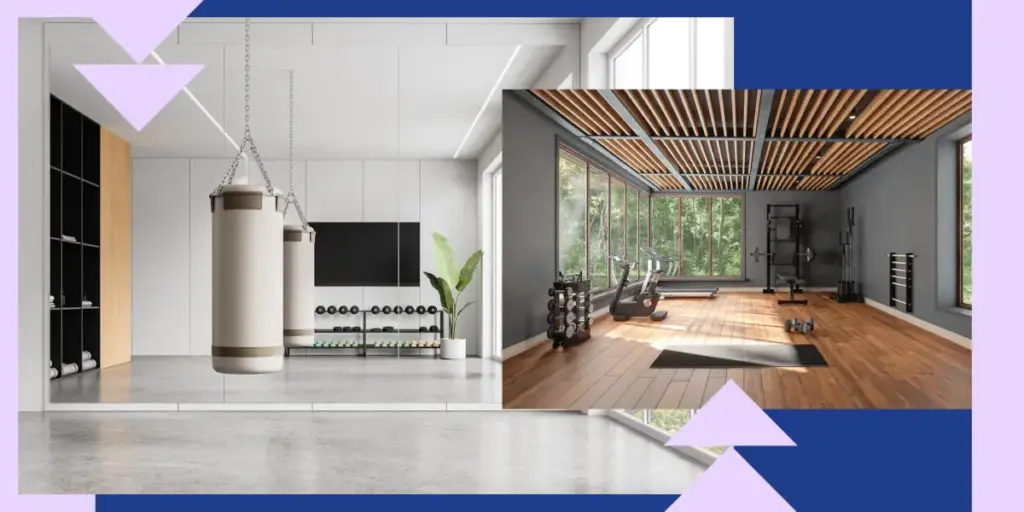
Ten years ago, Megan Hill found herself at a crossroads familiar to millions of modern exercisers. Working as a publicist in Los Angeles, she maintained a membership at a trendy boutique fitness studio specializing in Pilates. While she enjoyed the targeted classes, a growing sense of athletic limitation began to set in. She realized that relying on a single exercise modality was no longer giving her the comprehensive results she craved.
Seeking a more versatile routine, Hill made the jump to Equinox, gaining immediate access to a traditional weight room, an expansive array of cardio machines, a pool, diverse class styles, and luxury recovery amenities. Reflecting on that choice today, her sentiment is clear: "I don’t think I would go back to a boutique, just because I don’t want to be limited to their practice."
Hill is far from an outlier. Across the global health and wellness sector, seismic shifts are underway, reflecting the modern consumer’s evolving appetite for a "bundled" fitness experience. As boutique fitness studios scramble to diversify their programming—adding everything from heavy strength formats to Hyrox training—traditional big-box gyms are doubling down on square footage. They are transforming into all-encompassing wellness ecosystems outfitted with infrared saunas, cold plunges, co-working lounges, and even in-house medical and longevity clinics.
According to industry analysts, this perpetual cycle of unbundling and rebundling is a fundamental economic truth. As Jason Fiefer, editor-in-chief of Entrepreneur magazine, aptly puts it, every consumer industry goes through cycles where offerings "bundle, then unbundle, then rebundle—forever."
Executive Overview: The Pendulum of Consumer Fitness
To understand where the modern fitness market stands today, one must trace the pendulum swing between hyper-specialized boutique concepts and sprawling, multi-amenity health clubs. For decades, the fitness landscape was dominated by massive, catch-all commercial gyms—facilities that tried to be everything to everyone, often resulting in impersonal environments where members wandered aimlessly between rows of treadmills.
Then came the boutique boom of the late 1990s and 2000s, which completely upended the market by unbundling the gym experience. Consumers were suddenly willing to pay top dollar for a single, highly immersive discipline, whether it was rhythmic cycling, high-intensity interval training (HIIT), or specialized strength training.
However, as the market saturated and economic pressures mounted—accelerated by the disruptions of the COVID-19 pandemic—the industry entered a new phase of correction. Today’s exerciser is experiencing fitness fatigue. Juggling multiple boutique memberships has become financially exhausting and logistically draining. In response, both boutique brands and big-box giants are consolidating, adapting, and aggressively rebundling their services. The battle lines are drawn not just over fitness equipment, but over lifestyle integration, community, and longevity medicine.
Detailed Chronology: From Big-Box Dominance to Niche Obsession
The Early 2000s: The Unbundling Revolution
Twenty years ago, taking a boutique fitness class was considered a profound luxury. According to Dr. Natalia Mehlman Petrzela, a professor of history at The New School and author of Fit Nation: The Gains and Pains of America’s Exercise Obsession, early pioneers like Barry’s Bootcamp (founded in 1998) and SoulCycle (founded in 2006) introduced a completely novel financial and cultural tier to the market.
"When boutique fitness first came on the scene, it was at a very high price point," Petrzela explains.
Compared to the legacy gym concepts of that era—such as Bally Total Fitness and 24 Hour Fitness—these shiny, intimate studios offered what felt like an insider secret. They deliberately defied the conventional wisdom of big-box facilities. While traditional gyms offered a bit of everything with little emotional resonance, SoulCycle and Barry’s thrived on singular, high-octane concepts that cultivated intense community and brand loyalty.
As these specialized modalities skyrocketed in popularity, a wave of copycats flooded the market. Over time, this market saturation made boutique fitness more accessible, both logistically and financially. Consumers woke up to find an Orangetheory Fitness, F45, or Rumble studio nestled into nearly every suburban strip mall across America. By 2019, U.S. studio memberships hit an all-time peak of 24.9 million, according to data from the Health & Fitness Association (HFA).
The Pandemic Shockwaves and Market Correction
The meteoric rise of boutique studios, however, made them uniquely vulnerable to external shocks. When the COVID-19 pandemic swept the globe in 2020, boutique fitness bore the brunt of the devastation.
Anton Severin, vice president of research at the Health & Fitness Association, notes that in 2021, studio memberships plummeted to 15.8 million—representing the largest pandemic-era decline of any facility segment. While boutique memberships have steadily rebounded since, reaching 23.3 million by 2025, they still sit roughly 6% below pre-pandemic highs.
Conversely, full-service health clubs and traditional gyms have demonstrated significantly stronger post-pandemic momentum in both membership acquisition and facility visitation. HFA reports that in 2024, traditional fitness-only gym memberships grew by 7.6% year-over-year, compared to just 3.1% for studios. Furthermore, high-volume, lower-price operators (such as Crunch Fitness) saw average visits spike 4.2% between January and September 2025, while studio visitation crawled upward by a mere 0.8%.
Supporting Context & Metrics: The Reality of Today’s Market
Despite the cultural obsession with wellness, a surprising reality check persists: only about 25 percent of the U.S. population maintains an active fitness membership, according to Edward Hertzman, founder and CEO of Athletech News. Hertzman attributes this low penetration rate to the fact that boutique studios and commercial health clubs are locked in a fierce, direct war for the exact same wellness-conscious demographic.
Furthermore, Hertzman draws a sharp parallel between the boutique fitness sector and the restaurant or nightclub industries.
"You have successful restaurant groups that are hot for long periods of time, but the average restaurant or club has a short tenure," he notes. "It’s hot and then it’s not."
While enduring concepts like Club Pilates, F45, and [solidcore] have cemented their longevity, high-profile casualties like modelFIT and Flywheel serve as reminders of how volatile the boutique landscape can be. Franchises face intense pressure to expand rapidly before their underlying corporate and financial infrastructure is fully matured.
Moreover, business models create inherent operational challenges. Hertzman points out a fundamental financial contrast: "If you and I travel this week for work, we don’t cancel our Equinox membership." In contrast, boutique studios often rely on class-pack models where missed classes mean missed revenue. Securing reliable, recurring subscription revenue remains the gold standard for long-term facility survival.
Real estate limitations compound the issue. As Dr. Petrzela highlights, there are only so many hours in a day when people are willing to exercise. "It’s very hard to fill a 2:00 p.m. class anywhere, even if you’re the hottest business in town."
The Rise of Fitness FOMO and Expense
Perhaps the most damaging issue for the modern consumer is what Jason Fiefer terms "fitness FOMO." Because no single fitness discipline serves as a total, cure-all solution for human health, exercisers often feel pressured to cobble together a fragmented routine.
One day involves running, another day involves Pilates, and a third requires heavy lifting. Before long, consumers are managing multiple distinct memberships across various platforms, watching their monthly wellness expenditures skyrocket.
Official Statements & Expert Perspectives
Industry leaders agree that the competitive pressures between boutiques and big-box facilities are driving a new era of consolidation and reinvention.
Jason Fiefer (Entrepreneur): Emphasizes that consumer exhaustion with fragmented routines is fueling the push toward rebundling. When consumers realize that managing five different boutique apps is financially and logistically unsustainable, they naturally gravitate back toward centralized hubs.
Dr. Natalia Mehlman Petrzela (The New School): Points out that big-box gyms are actively encroaching on territory that once belonged exclusively to boutiques: community and lifestyle integration. "We’re seeing, like never before, gyms really leaning in to cultivating community as a core part of their offering," she says. Because boutiques are constrained by square footage, they simply cannot compete with the real estate footprint required to offer multi-purpose social spaces.
Edward Hertzman (Athletech News): Predicts massive structural consolidation across all categories over the next few years. Whether through private equity-backed rollups or corporate mergers, the lines separating luxury clubs, big-box spaces, and boutiques will continue to blur.
Anton Severin (Health & Fitness Association): Highlights that while boutiques remain a vital part of the ecosystem, traditional health clubs are currently winning the war on volume, convenience, and consistent day-to-day visitation.
Future Outlook: The Gym-as-Clinic and the Next Unbundling Cycle
As the fitness industry charges forward, the rebundling trend is manifesting in two distinct ways: sweeping corporate mergers and massive physical expansion within clubs.
1. Mergers, Acquisitions, and Consolidation
Private equity and major parent companies are aggressively consolidating market share. Notable past moves—such as Equinox acquiring SoulCycle, Orangetheory merging with Anytime Fitness, and partnerships between F45 and digital content providers like iFIT—signal a broader trend. Industry experts predict a wave of startup brands launching with the explicit, long-term exit strategy of being swallowed up by larger corporate parent companies within five years.
2. The Expansion of Amenities and the "Gym-as-Clinic"
To combat boutique exclusivity, traditional facilities are aggressively upgrading their offerings. Gold’s Gym is incorporating dedicated turf spaces for Hyrox-style functional training, while other brands are rolling out reformer Pilates formats within standard memberships.
Furthermore, high-end clubs are leaning heavily into recovery and longevity medicine. Life Time operates MIORA, an in-house integrative health clinic offering comprehensive blood panels and GLP-1 weight-loss prescriptions. Equinox maintains high-profile partnerships with diagnostic platforms like Function Health, and California-based longevity club Love.Life places functional medical care at the absolute center of its member experience.
This pivot makes immense clinical sense, particularly given the explosion of GLP-1 medications. As medical professionals continually stress the vital importance of building and maintaining lean muscle mass while utilizing weight-loss drugs, consumers are actively seeking integrated spaces where they can access specialized strength training, biomarker testing, and nutritional guidance under one roof.
The Inevitable Return to Unbundling
Yet, history suggests this era of massive consolidation will not last forever. Fiefer predicts that once big gyms become too bloated, homogenized, and lacking in personalization, the pendulum will swing right back.
A fresh, innovative fitness trend will emerge, capturing the public imagination. Early successes will inspire an army of copycats, sparking a brand-new unbundling cycle that will eventually exhaust itself—only to be rebundled all over again.
The Timeless Exception
Amidst this constant cycle of market disruption, some institutions remain entirely trend-proof. Dr. Petrzela points to the YMCA, founded in London in 1844, as the ultimate blueprint for sustainable community fitness.
"These continue to be really vital places and community centers decades and decades and decades later," Petrzela notes. "They keep it affordable, they keep it accessible, it’s everywhere. That’s kind of beautiful, and better than, I think, a lot of these super exclusive places, which tend to get more ink, but none of them have proven the longevity of the YMCA model."
Ultimately, the relentless dance of unbundling and rebundling has flooded the market with choices for the modern exerciser. While fitness trends, economic models, and consumer preferences will continue to ebb and flow, one fundamental truth remains: people will always seek out spaces to connect, break a sweat, and invest in a healthier future.