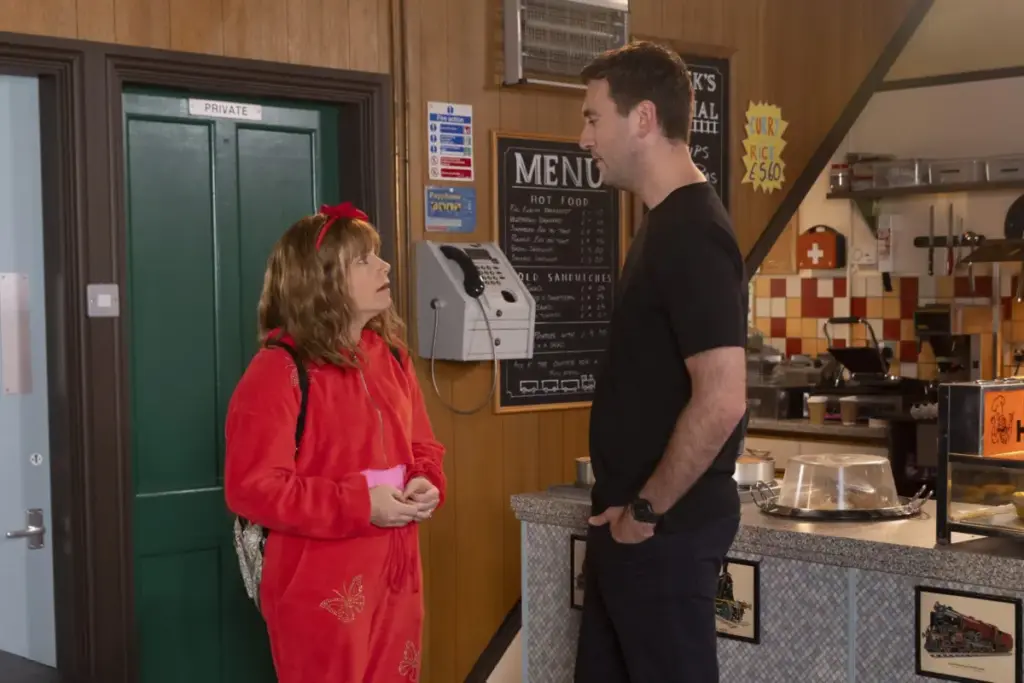
In a pioneering move to tackle a deeply hidden public health taboo, ITV’s long-running flagship soap opera Coronation Street is set to broadcast a rare and high-stakes medical storyline. The narrative will explore the harsh realities of male breast cancer through the character Kit Green, played by actor Jacob Roberts. The plot kicks off following the death of estranged Aunt Celeste, an event that alerts the family to the possibility that they may carry the hereditary BRCA gene mutation. While characters Bernie (Jane Hazlegrove) and Gemma (Dolly-Rose Campbell) navigate the anxieties of genetic testing, Kit quietly confronts his own mounting health fears—culminating in a life-changing diagnosis of stage three breast cancer.
By spotlighting a disease that affects nearly 500 men in the UK annually yet accounts for less than one per cent of all yearly breast cancer cases, Coronation Street aims to shatter prevailing social stigmas. The production team has worked closely with leading health organizations—namely Macmillan Cancer Support and Breast Cancer Now—to ensure the portrayal is medically accurate, deeply empathetic, and educational. This partnership seeks to address the dangerous combination of embarrassment, lack of awareness, and delayed diagnoses that disproportionately drive up mortality rates among men diagnosed with the condition.
Detailed Chronology of the Storyline
The unfolding narrative arc begins with a tragedy that ripples across the family dynamic: the passing of Aunt Celeste. As the family processes their grief, they are confronted with a sobering medical revelation—the potential presence of the familial BRCA gene. This hereditary mutation, typically associated with female cancers, fundamentally shifts the health landscape for multiple family members.
While viewers and familiar characters like Bernie and Gemma focus on the implications of genetic screenings, Kit Green’s storyline takes a dramatic and clandestine turn. Long before his family considers the broader hereditary risks, Kit notices anomalous physical changes and quietly seeks medical evaluation. Working in secret, he undergoes a battery of tests that yield a devastating outcome: a stage three breast cancer diagnosis.
Beginning in September, audiences will be taken on an emotional and psychological journey alongside Kit. The episodes will trace his progression from initial shock and profound denial to the grueling realities of treatment. Furthermore, the storyline will heavily examine how this life-altering health crisis strains and redefines his relationships with family members, forcing a close-knit group to confront vulnerability, mortality, and genetic legacy in real-time.
Supporting Context & Metrics: Understanding Male Breast Cancer and the BRCA Gene
The Anatomy of a Rare Diagnosis
Male breast cancer remains an exceedingly rare phenomenon, making up less than 1% of all breast cancer diagnoses in the United Kingdom. Statistically, approximately 500 men are diagnosed with the disease annually in the UK. Because public health messaging surrounding breast cancer has historically focused almost exclusively on women, many men remain entirely unaware that they possess breast tissue capable of developing malignant tumors. This widespread lack of awareness fosters environments of embarrassment, hesitation, and delayed clinical intervention—factors that frequently lead to men presenting at later, more dangerous stages of the disease.
The Role of the BRCA Mutation
At the heart of Coronation Street‘s new plotline is the genetic transmission of the BRCA (BReast CAncer gene) mutations, specifically BRCA1 and BRCA2. Normally, these genes act as tumor suppressors, responsible for repairing damaged DNA and maintaining cell growth regulation. However, inheriting a harmful, mutated variant from a parent severely impairs this protective mechanism, dramatically escalating an individual’s lifetime risk of developing specific cancers.

While female carriers face well-documented risks for breast and ovarian cancers, male carriers also face elevated lifetime risks for breast cancer, aggressive prostate cancer, and pancreatic cancer. The inclusion of the BRCA element in Kit’s storyline highlights the critical importance of cascade genetic testing within families following the identification of a hereditary cancer syndrome.
Official Statements and Industry Insights
The gravity of the storyline has drawn praise from both the cast and prominent health charities, emphasizing the cultural and educational responsibility television dramas hold.
Actor Jacob Roberts opened up about his personal reaction to discovering the plot direction, noting the necessity of authenticity in his performance:
"I genuinely didn’t know that men could get breast cancer and I felt, to make it authentic, that Kit shouldn’t know that men can get breast cancer either. Speaking to the charities and male survivors has been really insightful, lots of men don’t know they can get this and, for Kit, it’s that utter disbelief of how can this be? Not only for his age, but how can I have this as a bloke and who else in the family could be affected."
Dany Bell, Cancer Care Strategic Adviser for Macmillan Cancer Support, underscored the emotional resonance and communal support embedded within the narrative:
"The team at Coronation Street has worked tirelessly to represent breast cancer in men accurately and responsibly and Macmillan is proud to have partnered with ITV on this story. I know many people diagnosed with cancer will be able to relate with Kit’s feelings of shock and anxiety. Going through cancer can be one of the toughest challenges many people will ever face, but this storyline reminds us that no one has to go through cancer alone."
Bell added:

"Along with Kit being surrounded by caring family and friends, Macmillan is also there to support everyone affected by cancer. Talking about cancer matters and through the support of Macmillan healthcare professionals and services like our Support Line, Online Community and Buddies, we help people like Kit feel less alone."
Echoing these sentiments, Sally Kum, Associate Director of Nursing and Health Information at Breast Cancer Now, emphasized the urgent need for preventative vigilance:
"Kit’s story serves as a powerful reminder that breast cancer can happen to anyone. Male breast cancer is very rare, but raising awareness and normalising conversations around the disease is crucial, to encourage men to check their chest regularly and see their GP if they notice new or unusual changes. While most changes won’t be cancer, the earlier it’s diagnosed, the better the chances of treating it successfully."
Future Outlook and Societal Impact
Soap operas have historically served as a mirror to society, frequently using dramatic storytelling to spotlight silent killers and underrepresented health issues. By thrusting male breast cancer into prime-time living rooms, Coronation Street is positioned to achieve what public health campaigns often struggle to do: break through cultural reticence and force open dialogues in domestic spaces.
Medical professionals anticipate that the "soap effect"—a well-documented phenomenon where viewers seek medical advice or screenings after seeing a fictional character experience a health crisis—will prompt an increase in men checking their chests and consulting general practitioners about unusual changes. As Kit Green’s harrowing journey unfolds on screen throughout the autumn, the enduring legacy of this storyline may very well extend far beyond the cobbled streets of Weatherfield, saving real lives by dismantling the dangerous myth that breast cancer is exclusively a women’s disease.