

Executive Overview
For millions of adults worldwide, the daily routine concludes with a familiar, unwelcome ritual: rubbing a stiff, achy lower back. According to recent data from the Centers for Disease Control and Prevention (CDC), nearly 40 percent of adults aged 18 and over have experienced back pain. When muscles feel tight and joints feel locked up, the immediate instinct for most people is to drop to the floor and hold a deep, prolonged stretch.
However, according to Dr. Andrew Gorecki, DPT, FAFS, a physical therapist and co-founder of MovementRx, this instinctual approach may actually be counterproductive. Far from resolving the issue, traditional static stretching can trigger a protective physiological response that deepens stiffness rather than relieving it.
In this comprehensive examination, we explore the neurological science behind back "guarding," examine why active movement outperforms passive stretching, and break down three expert-recommended mobility exercises designed to safely restore spinal health.
Detailed Chronology: The Evolution of Back Pain Management
To understand why modern physical therapy favors active mobility over static stretching, it is helpful to look at how treatment paradigms have shifted over the decades.
- The Era of Absolute Rest (Late 20th Century): For decades, medical consensus dictated that individuals suffering from acute back pain should lie in bed for days or even weeks. Clinical experience eventually proved this approach disastrous, as prolonged immobility led to rapid muscle atrophy, joint stiffness, and delayed recovery.
- The Stretching and Flexibility Boom (Late 1990s–2010s): As the medical community moved away from bed rest, fitness culture embraced flexibility training. Yoga, Pilates, and deep static stretching became the universal prescription for any musculoskeletal discomfort, operating under the assumption that tight muscles simply needed to be lengthened.
- The Neuro-Muscular Paradigm Shift (Present Day): Modern clinical research increasingly focuses on the central nervous system’s role in chronic and acute musculoskeletal pain. Physical therapists now recognize that tight muscles are frequently "guarded"—meaning the nervous system is intentionally increasing muscle tension to protect a perceived vulnerability in the spine. Consequently, management strategies have evolved from forcing length into tissues to signaling safety to the brain through controlled, repetitive movement.
Supporting Context & Metrics: Understanding Spinal Guarding
When a patient complains of a stiff lumbar spine, the physical sensation is often described as a tight band of muscle or a locked joint. Dr. Gorecki explains that stretching this tissue directly conflicts with how the human nervous system evaluates safety.

"Stretching isn’t useless, but it is the tool everyone reaches for first and it’s the one least suited to a back that feels locked up," explains Dr. Gorecki. "The muscles around a stiff lumbar spine are guarded. Stretching a guarded muscle asks it to let go while you’re actively pulling on it, which is close to the opposite of how a nervous system decides something is safe."
The Neurological Guarding Response
When the spine experiences micro-trauma, fatigue, or unfamiliar postural stress—such as hours of sitting at a desk—the brain’s motor control centers may perceive instability. To prevent further injury, the nervous system increases baseline muscle tone around the lumbar vertebrae. This is known as "guarding."
When an individual attempts a heavy static stretch on a guarded muscle, the muscle spindles detect a rapid change in length and reflexively contract to prevent tearing. This creates a physiological tug-of-war between the stretcher and the nervous system, typically resulting in increased tension rather than relaxation.
Why Active Movement Works
To bypass this protective neurological defense, physical therapists utilize active, rhythmic repetitions rather than static holds.
- "What these movements all share is that they are active and repeated," Dr. Gorecki notes. "Guarding backs off when the brain watches a movement happen 15 times without anything bad following it."
By performing low-intensity movements in a safe, pain-free range, the central nervous system gradually down-regulates its protective response, allowing local circulation to improve and joints to lubricate naturally without triggering alarm signals.
Official Guidelines & Safety Precautions
Before integrating any new movement protocol into a daily routine, clinical guidelines emphasize the importance of professional medical consultation. While the exercises detailed below are designed for broad accessibility, certain clinical conditions contraindicate their use.
Contraindications and Medical Warnings
Dr. Gorecki cautions that individuals diagnosed with specific spinal pathologies should entirely avoid these mobility movements and instead collaborate with a qualified physician or physical therapist to design personalized alternatives:
- Osteoporosis or known vertebral compression fractures
- Acute disc herniation
- Spondylolisthesis
- Pars stress fractures
- Spinal stenosis
- Recent spinal surgery
For beginners and individuals unfamiliar with exercise mechanics, working alongside a certified personal trainer or physical therapist ensures proper form and minimizes the risk of compensatory movement patterns.
Step-by-Step Exercise Protocol
These exercises require minimal equipment—merely a standard chair and a comfortable yoga mat. Dr. Gorecki recommends specific frequencies for each movement to maximize neuromuscular adaptation without overloading the spine.
1. Cat/Cow
- Recommended Dosage: 10 repetitions, performed twice daily.
- How to Do It: Begin on your hands and knees in a tabletop position, ensuring your wrists are stacked beneath your shoulders and your knees beneath your hips. From a neutral spine, slowly drop your belly toward the mat while lifting your chest and tailbone (Cow). Reverse the motion by tucking your tailbone, rounding your spine toward the ceiling, and gently tucking your chin (Cat).
- Therapist Tips:
- "Start from a flat, neutral back rather than from a slump," suggests Dr. Gorecki. "Start the motion at the tailbone and let it travel up the spine one segment at a time. Most people rock the pelvis, arch the neck, and leave everything between the shoulder blades completely still. That middle section is the part that needs it."
- Incorporate breath coordination: “Exhale into the rounded cat, inhale into the arched cow. The ribcage moves better when the breath cooperates.”
- Avoid forcing the end range: “Do not chase the biggest possible arch. Extra range at the ends almost always comes from the neck and the lowest lumbar segment, the two places that already move too much.”
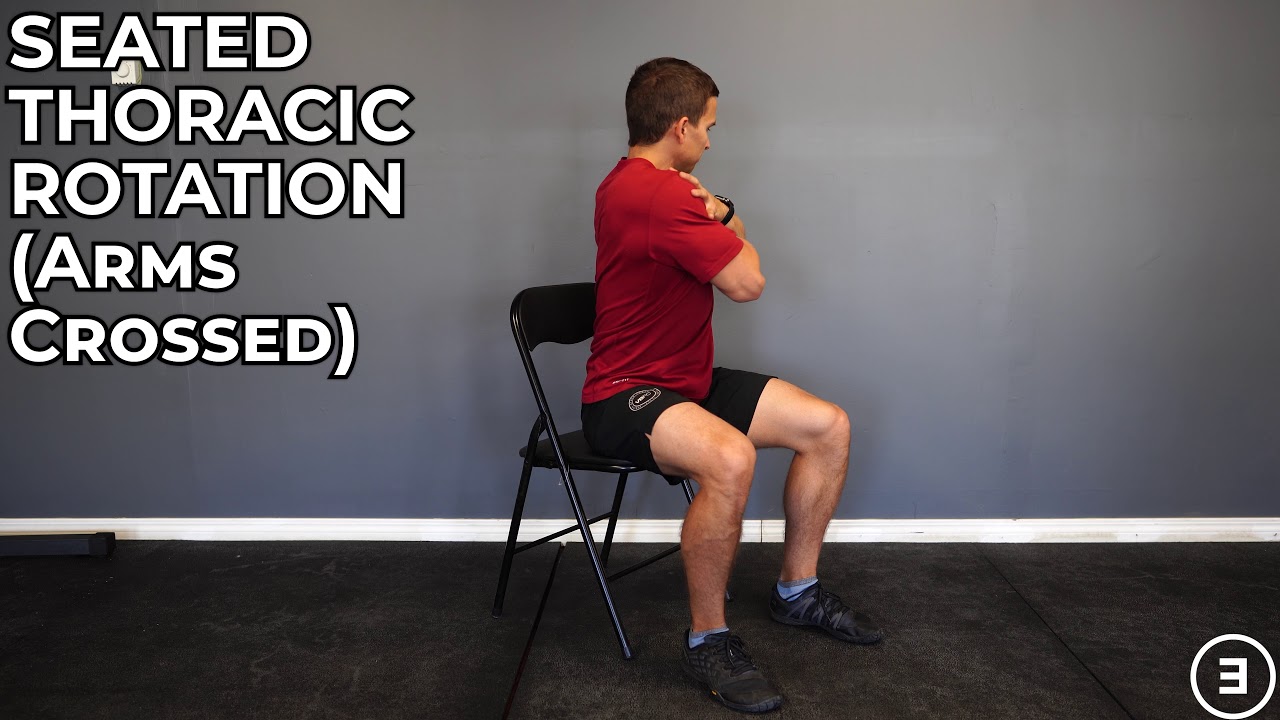
2. Seated Spinal Rotation
- Recommended Dosage: 8 to 10 repetitions per side, performed once daily.
- How to Do It: Sit upright in a sturdy chair with your feet flat on the floor and your arms crossed over your chest (or holding opposite shoulders). Keeping your hips stable, slowly rotate your upper torso to one side, pause briefly, return to center, and rotate to the opposite side.
- Therapist Tips:
- "Seated rotation is not really a low back exercise," notes Dr. Gorecki. "Almost all of the turn is happening in the thoracic spine above it. Most low backs that feel stiff are doing work the mid back and hips have stopped doing. Give that motion back to the parts built for it and the low back stops being the compensator."
- To isolate the thoracic spine: “If a hip lifts as you turn, you are rotating the pelvis instead of the spine. Squeeze a small ball or a rolled towel between the knees, or sit with the outside of the knees against a wall. Now the turn has to come from the ribcage.”
- Focus on initiation: “Lead with the sternum, not the head. Let the eyes and neck follow last. Cranking the head first gives the illusion of range without producing any.”
- Use respiration to expand your range: “Exhale as you rotate. There is another 10° or 15° available once the ribcage empties.”
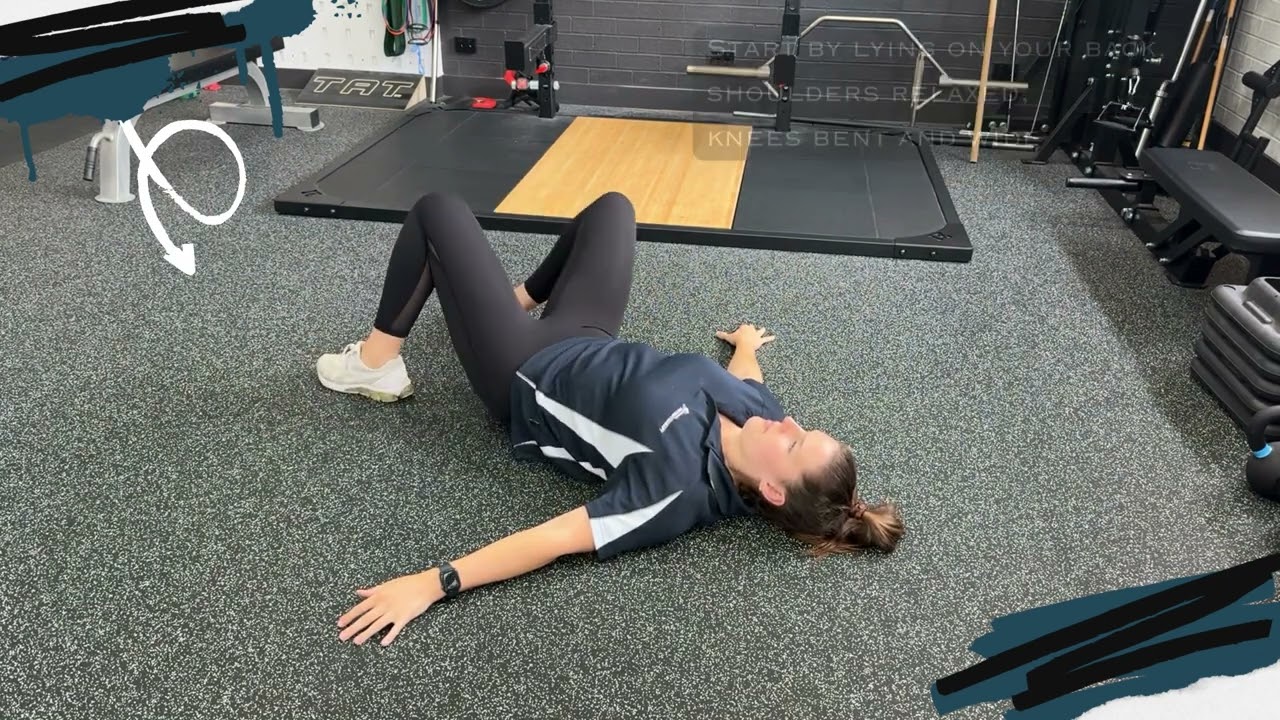
3. Lumbar Rock
- Recommended Dosage: 10 to 15 repetitions, performed twice daily (morning and evening).
- How to Do It: Lie flat on your back on a yoga mat with your knees bent and your feet flat on the floor, positioned hip-width apart. Keeping your upper back and shoulders anchored to the mat, gently roll your knees from side to side in a slow, controlled pendulum motion.
- Therapist Tips:
- "Start small," advises Dr. Gorecki. "In the first few reps, your knees should barely leave the center. Range comes from repetition, not from forcing the first rep."
- Monitor your upper body: “Keep both shoulder blades on the floor. When one peels up, you have gone past where the spine is actually moving.”
- Maintain fluid momentum: “Create a smooth arc in both directions. No dropping the legs and catching them. The catching is where people tweak themselves.”
Future Outlook: The Integration of Movement Health
As the fitness and medical wellness landscapes continue to merge, the management of back pain is shifting away from passive treatments—such as massage guns, heat packs, and static stretches—toward intelligent movement literacy.
Platforms like MovementRx and similar remote therapeutic monitoring tools represent a broader trend in healthcare: empowering patients with precise, dose-dependent movement protocols that respect neuro-muscular science. By understanding that stiffness is often a protective signal rather than a simple mechanical flaw, individuals can move away from aggressive stretching regimens and toward sustainable, nervous-system-friendly mobility practices that foster long-term spinal resilience.
About Our Expert
Dr. Andrew Gorecki, DPT, FAFS
Dr. Andrew Gorecki is a doctor of physical therapy with 15 years of clinical practice. He holds a Bachelor of Science in exercise physiology from Northern Michigan University and a Doctor of Physical Therapy (DPT) from Central Michigan University. A fellow and adjunct faculty member at the Gray Institute, Dr. Gorecki owns Superior Physical Therapy in Traverse City, Michigan, and serves as the co-founder and CEO of MovementRx, a remote therapeutic monitoring platform utilized by physical therapy clinics nationwide.