Executive Overview
In what marks one of the most seismic shifts in the modern history of British broadcasting, Sky and ITV have reached a landmark £1.6 billion agreement that will see Sky acquire ITV’s core media and streaming operations. Announced against the backdrop of a rapidly evolving global media landscape, this multi-billion-pound deal is designed to reshape the domestic entertainment market, creating a homegrown powerhouse capable of going toe-to-toe with the world’s largest streaming conglomerates.
The acquisition—which encompasses ITV’s traditional broadcast channels and its burgeoning digital streaming platform, ITVX—brings to a close months of high-stakes, behind-the-scenes negotiations. While industry insiders have spent weeks speculating on the operational fallout of such a massive corporate alignment, key leadership figures from both networks have moved swiftly to reassure the viewing public. Speaking at the Edinburgh TV Festival 2026, ITV’s Managing Director Kevin Lygo stepped up to the podium to offer definitive clarity: beloved British institutional titles, from long-running soaps to major reality franchises, are secure.
Crucially, the multibillion-pound transaction has been structured to leave ITV Studios—the broadcaster’s highly lucrative global production arm responsible for smash hits like I’m a Celebrity… Get Me Out of Here! and Love Island—untouched as a separate entity. However, the integration of ITV’s broadcast and streaming apparatus into Sky’s vast technological ecosystem signals the dawn of a unified viewing experience. As regulatory bodies prepare to scrutinize the fine print of the agreement, the television industry stands on the precipice of a new era, balancing corporate consolidation with the preservation of cultural touchstones that have defined British living rooms for decades.
Detailed Chronology
The Road to the £1.6 Billion Deal
The journey toward Sky’s acquisition of ITV’s media and streaming operations was anything but sudden. Over the past several years, traditional linear broadcasters have faced mounting economic pressures, driven by the aggressive market penetration of US-based Subscription Video on Demand (SVOD) giants such as Netflix, Amazon Prime Video, and Disney+. To survive and thrive in an increasingly fragmented market, legacy players have increasingly looked toward strategic consolidation.
Rumours of structural realignments between Sky and ITV began to circulate in financial circles months prior to the official announcement. Negotiations moved quietly between corporate boardrooms, navigating complex regulatory frameworks, employee consultations, and technical assessments of how ITVX could be seamlessly integrated into Sky’s existing infrastructure—which already includes Sky Glass, Sky Stream, and the NOW service.
By the time the deal was formally struck at a valuation of £1.6 billion, it represented a calculated move by both companies. For Sky, the acquisition provides an invaluable injection of deeply entrenched British content and a massive free-ad-supported and subscription-backed streaming user base. For ITV, divesting its media and streaming operations while retaining its premier production arm allows the company to pivot with financial agility while ensuring its intellectual property continues to find mass audiences through an expanded distribution network.
The Edinburgh TV Festival 2026 Revelations
The most immediate public fallout of the transaction occurred at the Edinburgh TV Festival 2026. As television executives, producers, and journalists gathered to discuss the future of the medium, the shadow of the Sky-ITV merger loomed large over every panel and keynote address.

Taking to the stage, ITV’s Managing Director Kevin Lygo addressed the elephant in the room head-on. Acknowledging the anxieties of creators, critics, and viewers alike, Lygo delivered an uncompromising message of continuity. He explicitly named the network’s crown jewels—Coronation Street, Emmerdale, Love Island, and I’m a Celebrity—and offered a simple, reassuring guarantee: "These shows will continue."
Lygo’s address not only put to bed persistent rumours about potential cuts or structural overhauls to ITV’s flagship schedules, but it also underscored the corporate confidence in the enduring power of linear-digital hybrid broadcasting. Far from signaling the dismantling of ITV’s identity, the leadership framed the partnership with Sky as a protective shield and an amplifier for the network’s most valuable assets.
Supporting Context & Metrics
The Power of the Grid: Decoding the ‘Power Hour’
A central pillar of Kevin Lygo’s address at Edinburgh focused on the strategic brilliance of ITV’s scheduling choices, specifically the preservation and optimization of the network’s prime-time soap block, affectionately known to industry insiders as the ‘power hour.’
For decades, Coronation Street and Emmerdale have served as the anchors of British television culture. However, in recent years, ITV boldly re-engineered its evening schedules to cluster these titans together, maximizing audience retention and creating an unassailable fortress of viewership heading into the 9 PM watershed. Lygo emphasized that this scheduling gambit has paid off spectacularly.
"They’ve embedded now, that block at 8pm is still always the highest-viewed thing of that day," Lygo told the audience. "It’s really important."
Data from various audience measurement bodies consistently back up Lygo’s claims. Despite the relentless rise of on-demand, non-linear viewing habits among younger demographics, the 8 PM soap block on ITV1—alongside its robust early-morning streaming drop on ITVX from 7 AM—continues to pull in demographic-defying numbers. By securing these titles within the new Sky operational framework, both companies are banking on the undeniable drawing power of communal, scheduled television viewing.
The Anatomy of the ‘Corriedale’ Phenomenon
Further highlighting the creative health and collaborative spirit within ITV’s stable of programmes, Lygo touched upon the monumental success of the "Corriedale" crossover event earlier in the year.

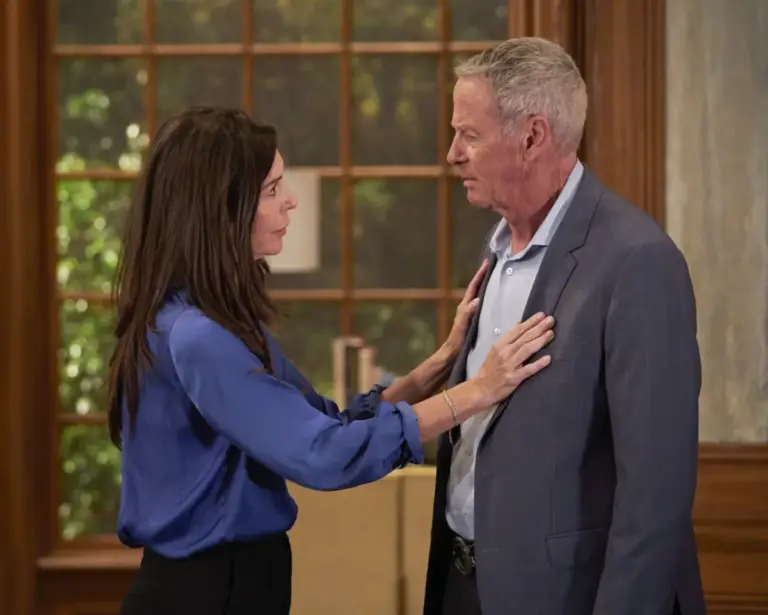
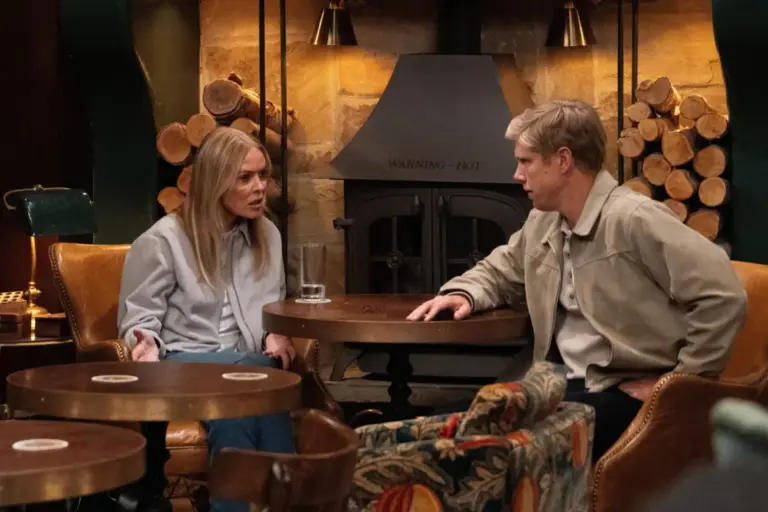
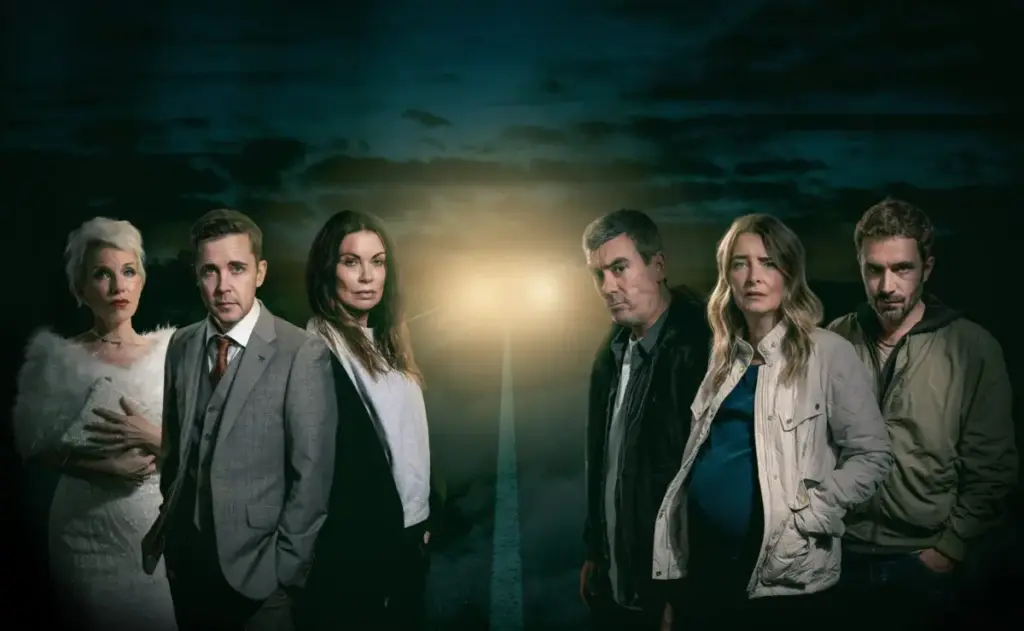
For the uninitiated, the worlds of Coronation Street and Emmerdale—two universes that traditionally existed entirely independent of one another despite airing on the same network—collided in a catastrophic, life-changing one-hour special. Featuring dramatic road accidents, high-stakes weddings, and a convergence of some of the soaps’ most iconic characters (including Debbie Webster, Todd Grimshaw, a bloodied Carla Connor, Cain Dingle, a pregnant Charity Dingle, and the brooding John Sugden), the stunt was a masterclass in event television.
When pressed by festival attendees on whether audiences could expect an annual tradition of soap crossovers following the runaway success of Corriedale, Lygo adopted a pragmatic, quality-first approach. While remaining entirely open to creative ideas, he poured cold water on the idea of routine mash-ups: "It’s not something to do on an annual basis."
The sentiment reflects a deep understanding of soap opera pacing; stunts only retain their explosive impact when they are treated as rare, momentous occasions rather than predictable seasonal gimmicks.
Official Statements
Corporate Visions for the Future
The structural realignment of two of the UK’s most influential media organizations naturally requires a unified vision from the top tier of executive leadership. Dana Strong, CEO of Sky Group, previously issued a comprehensive statement outlining the consumer-facing benefits of the multi-billion-pound acquisition. Strong sought to reassure viewers that the transition would enhance, rather than disrupt, their daily viewing habits.
"Viewers will continue to enjoy the shows they know and love, such as Coronation Street, Emmerdale, Love Island, I’m a Celebrity… Get Me Out of Here!, This Morning, Loose Women, Lorraine and News at Ten — alongside major live sporting events," Strong stated.
This exhaustive list of core programming serves as a strategic reassurance manifesto. By explicitly naming daytime staples (This Morning, Loose Women, Lorraine) and the nation’s most trusted nightly news broadcast (News at Ten), Sky is signaling that the cultural fabric of ITV—its daily rhythm—will remain entirely intact.
Furthermore, the mention of integrating these offerings alongside Sky’s existing portfolio of major live sporting events hints at the ultimate vision of the acquisition: a centralized, all-encompassing super-app and viewing ecosystem where British households can access premier sport, high-end drama, reality television, daily talk shows, and breaking news without friction.

Future Outlook
Regulatory Hurdles and the Road Ahead
Despite the palpable enthusiasm from corporate executives and the reassuring words delivered at the Edinburgh TV Festival, the £1.6 billion agreement is not yet a done deal. The transaction currently sits pending formal regulatory approval.
Given the sheer scale of the merger—combining one of the UK’s historic terrestrial broadcast networks and a premier streaming service with Sky’s massive pay-TV and telecommunications infrastructure—competition watchdogs such as the Competition and Markets Authority (CMA) are expected to subject the agreement to rigorous scrutiny. Regulators will be tasked with ensuring that the consolidation does not unfairly stifle market competition, diminish plurality in news and media production, or adversely affect the advertising market.
A New Challenger in the Global Streaming Arena
If the acquisition successfully clears regulatory hurdles, the resulting entity will fundamentally alter the competitive topography of European media. For years, domestic broadcasters have struggled to match the bottomless financial reserves and global subscriber bases of American tech giants. By pooling Sky’s technological distribution might with ITV’s unrivaled prowess in originating culturally resonant British content, the newly combined operation presents a formidable, unified front.
For the everyday viewer, the changes promise a more streamlined, feature-rich experience. Whether tuning in at 8 PM for the latest drama from the cobbles of Weatherfield or the rural heartlands of Yorkshire, catching up on the latest coupling in the Love Island villa via ITVX, or streaming blockbuster sports through Sky, the core promise remains unchanged.
As Kevin Lygo aptly summarized during his impassioned defense of the medium’s foundational pillars, pointing toward the unending appetite for shared national viewing experiences: "Long may it continue."