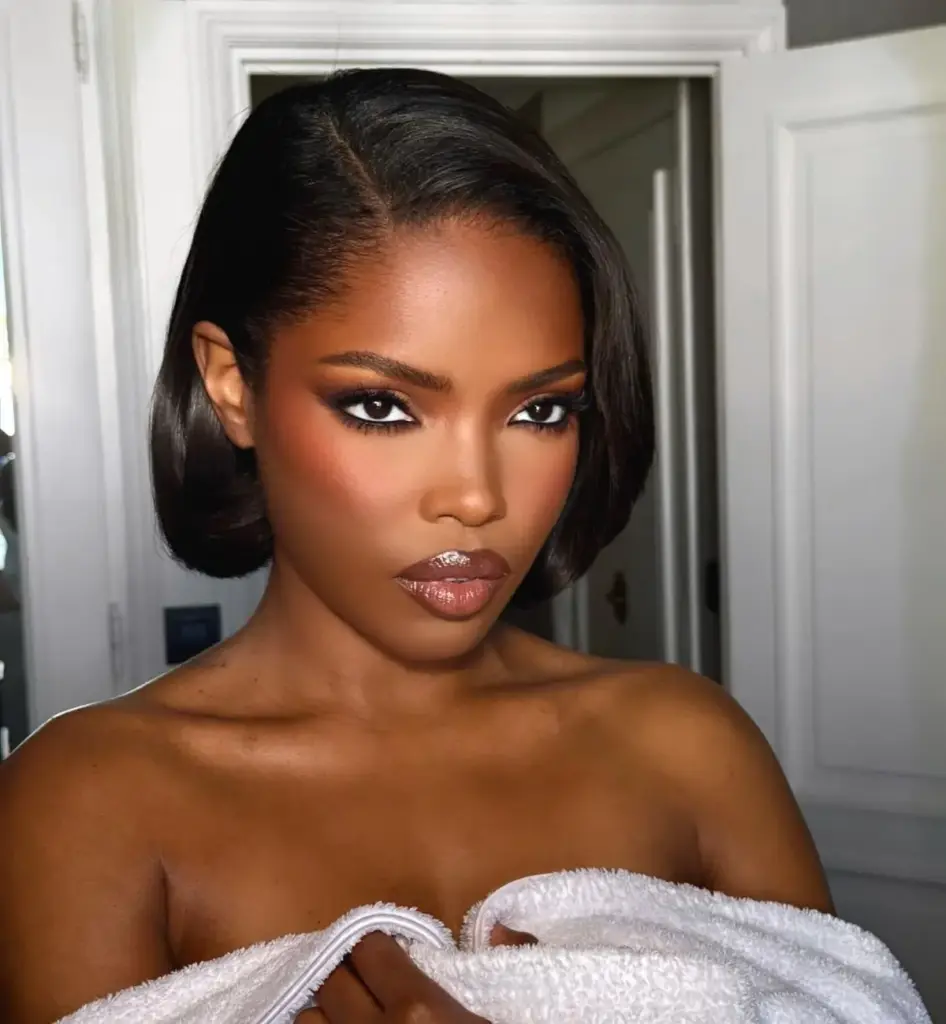
Executive Overview
For generations, the golden rule of makeup application has been repeated across countless beauty counters, YouTube tutorials, and glossy magazines: find your foundation match, and then purchase a concealer that is precisely one or two shades lighter. The logic has historically felt foolproof. A brighter under-eye area simulates eight hours of uninterrupted sleep, banishes the shadows of late nights, and introduces an instant, wide-awake radiance to the face.
However, as the beauty industry undergoes a massive shift toward hyper-realistic skin finishes, skin-first philosophies, and multi-dimensional complexion routines, elite makeup artists are challenging this long-held dogma. The question of whether a concealer should genuinely be lighter than a foundation is far more nuanced than a simple yes or no. In reality, the answer depends entirely on your objective: are you attempting to camouflage a stubborn blemish, neutralize hyperpigmentation, or strategically illuminate the high points of your face?
According to industry heavyweights like legendary makeup artist Bobbi Brown and Estée Lauder UK Makeup Artistry Partner Bernicia Boateng, treating concealer as a one-size-fits-all, universally lighter product is a recipe for makeup disaster. When used incorrectly, a light concealer can transform active acne into a glaring neon sign, cast a grey or ashy shadow over deeper skin tones, and create an unnatural, disconnected halo effect around the eyes.
This comprehensive investigative report delves into the science of shade matching, explores expert strategies for brightening versus concealing, examines the critical role of undertones and color correction, and offers a definitive roadmap to mastering your personal complexion routine.
Detailed Chronology: The Evolution of Concealer Application
To understand where modern makeup practices stand today, it is essential to trace how our approach to facial coverage has evolved over the past several decades.
The Era of Heavy Coverage and Uniformity (Late 20th Century)
In the formative decades of commercial cosmetics, makeup was largely treated as a mask designed to create a flawless, matte, and uniform canvas. Foundation was applied heavily across the entire face to erase any sign of natural texture, freckles, or variation in skin tone. Within this framework, concealer was primarily viewed as a heavy-duty spackle. The prevailing wisdom dictated that the entire face should be brightened uniformly under studio lighting, cementing the "one-shade-lighter" rule as an absolute industry standard. Little consideration was given to how these lighter shades interacted with natural daylight, active breakouts, or diverse ethnic skin tones.
The High-Definition and Baking Boom (2010s)
With the advent of high-definition digital cameras, smartphone flash photography, and social media beauty culture in the 2010s, complexion techniques shifted toward extreme contrast and sculpting. The "baking" technique popularized this era, requiring heavy applications of ultra-light, translucent powders layered over significantly lighter liquid concealers beneath the eyes, down the bridge of the nose, and across the center of the forehead. While this created striking, highly sculpted dimensional effects for camera lenses and video screens, it frequently translated to a heavy, cakey, and disconnected appearance in natural, everyday lighting.
The Skin-First Revolution (Present Day)
Today, the beauty zeitgeist has pivoted drastically toward a "skin-first" philosophy. Influenced by trends like "clean girl" aesthetics, "glass skin," and everyday wearability, modern consumers prioritize texture over opacity. Makeup is no longer expected to hide the skin entirely; instead, it is designed to enhance, correct, and celebrate natural skin variations. Within this modern context, top-tier artists are dismantling the rigid rules of the past. Makeup is now approached as an architectural play of light and shadow, where different zones of the face demand different products, different finishes, and crucially, different shades.
Supporting Context & Metrics: The Science of Light, Shadow, and Tone
Achieving a seamless, second-skin finish requires understanding the optical physics of color theory and how human skin interacts with light.
The Optics of Brightening vs. Camouflaging
At its core, makeup is a visual illusion governed by the laws of light reflection and absorption.
- Lighter shades reflect more light. When applied to sunken or shadowed areas—such as the inner corners of the eyes or the hollows beneath the tear troughs—they visually pull those features forward, creating the illusion of volume and wakefulness.
- Exact-match shades absorb and match the surrounding light reflection. When applied to raised textures, blemishes, or areas of hyperpigmentation, they blend invisibly into the skin without drawing undue attention.
- Deeper shades absorb light and create recession. They cast soft shadows that can be used strategically to contour, add structural warmth, or pre-correct stubborn areas of deep discoloration before foundation is applied.
Navigating Skin Tone and Depth Statistics
Market research across the global cosmetic industry reveals that shade-matching errors remain the number one consumer complaint when purchasing complexion products online. A staggering 60% of beauty consumers report owning at least one concealer that does not match their skin tone, largely due to the confusion surrounding whether to buy lighter, darker, or exact-match formulas.
For deeper skin tones, the margin for error when using an overly light concealer is razor-thin. If a concealer is chosen simply because it is "one shade lighter" without accounting for undertone depth, it frequently results in a stark, grayish-white cast. This phenomenon occurs because lighter pigments in conventional formulations often rely on heavy white or yellow bases that clash with rich melanin-dense skin, creating an ashy, bruised, or muddy appearance.

Expert Insights: Settling the Debate
To resolve the debate once and for all, industry leaders break down the exact rules for when to go lighter, when to stay matched, and when to break the rules entirely.
Bobbi Brown on Blemishes vs. Under-Eyes
Legendary makeup artist and founder of Jones Road, Bobbi Brown, is vocal about the dangers of using a single concealer shade for every task on the face.
"A good concealer should lighten and hide under-eye darkness, but its talents don’t stop there," Brown explains.
However, she issues a stark warning regarding active breakouts and blemishes:
"You never want to use under-eye concealer on a blemish. Since under-eye concealer is typically one shade lighter than your skin tone, applying it to a spot will only highlight what you want to hide."
When you place a light, reflective product directly on top of a raised blemish, you inadvertently draw a spotlight to its physical texture and elevation, defeating the entire purpose of concealing.
Bernicia Boateng on Dimensional Makeup
Estée Lauder UK Makeup Artistry Partner Bernicia Boateng echoes this sentiment, emphasizing that successful makeup relies on honoring the face’s natural variations.
"I don’t believe in one concealer shade doing everything," says Boateng. "If you’re concealing blemishes, pigmentation, or areas of discoloration, I’d always recommend staying as close to your foundation and natural skin tone as possible."
The ultimate goal when covering a spot or patch of hyperpigmentation is invisibility. The product should melt seamlessly into the surrounding skin rather than creating a halo effect. Conversely, when the objective shifts to creating dimension, Boateng endorses a measured step up in lightness.
"Glowing, natural-looking makeup is all just a play on light and dark," Boateng notes. "You can go a little brighter for a more glamorous, sculpted finish, but there’s a difference between brightening and simply looking too light."
Practical Application Guide: How to Find Your Perfect Match
Navigating the vast landscape of liquid, balm, stick, and cream concealers requires a strategic, step-by-step approach. Here is how beauty professionals recommend determining your ideal shades.
Step 1: Establish Your Foundation Baseline
Your foundation—assuming it is a precise match for your jawline and neck—should always serve as your primary reference point. When shopping online or swatches in-store, use your foundation shade description (including its depth and undertone classification) as your anchor.

Step 2: Categorize Your Facial Zones
Divide your face into specific functional zones rather than treating it as a blank canvas:
- The Blemish & Pigmentation Zone: Match this precisely to your foundation or natural skin tone. The texture should be opaque and long-wearing.
- The Under-Eye & Highlighting Zone: Go no more than one shade lighter than your foundation. Focus this product strictly on the inner corners and hollows where shadows naturally pool, rather than sweeping it aggressively across the entire cheekbone.
- The Contouring & Correction Zone: For specialized needs, some areas may require a slightly deeper shade or a dedicated color corrector.
Step 3: Master Your Undertones
An incorrect undertone will ruin a concealer match faster than an incorrect depth level. Skin undertones generally fall into three categories:
- Warm/Golden: Characterized by golden, olive, or yellow undertones.
- Cool: Characterized by pink, red, or bluish undertones.
- Neutral: A balanced mix of warm and cool tones.
When shopping online, Boateng advises looking closely at swatches on models who share your exact complexion and undertone profile rather than relying on product tube imagery.
Step 4: Incorporate Color Correction
For severe under-eye darkness or deep discoloration, jumping straight to a lighter concealer often backfires, resulting in that dreaded grey, muddy cast.
- The Fix: Start with a targeted color corrector. Bobbi Brown recommends utilizing a pink or peach-toned corrector to neutralize the blue and purple tones of fatigue before layering your brightening concealer on top.
Future Outlook: The Next Generation of Complexion Innovation
As the beauty industry continues to evolve, the future of face makeup is moving decisively toward intelligent, adaptive formulations and multi-use hybrid products.
Smart-Pigment Technology
The next wave of product development focuses on adaptive, self-adjusting pigments. Future formulations are being engineered to sheer out or build up dynamically, adapting slightly to the surrounding skin chemistry while maintaining skin-true undertones. This technological leap aims to bridge the gap between heavy coverage and lightweight wear, minimizing the need for consumers to purchase multiple distinct shades for different facial zones.
The Rise of Skin-Care Infused Hybrids
Consumers are increasingly demanding skincare benefits baked directly into their color cosmetics. Concealers formulated with hydrating hyaluronic acid, soothing niacinamide, and protective peptides mean that delicate areas like the under-eyes are treated while being perfected. As these formulas become lighter in texture and more breathable, the risk of cakey, over-brightened makeup diminishing skin health is dramatically reduced.
Redefining Beauty Standards
Ultimately, the most significant shift in the future outlook of makeup is psychological and cultural. The rigid, dogmatic rules of the past—such as the mandatory lighter under-eye triangle—are giving way to personalized artistry. Makeup artists and consumers alike are embracing the philosophy that skin should look like skin, complete with its natural dimensions, shadows, and unique contours.
As Bernicia Boateng aptly summarizes:
"The perfect concealer should make people notice your skin before they notice your makeup."
Whether your concealer is lighter, darker, or an exact match to your foundation, the ultimate measure of success is not adherence to an old rule, but how effortlessly it enhances your natural, authentic beauty.