Executive Overview
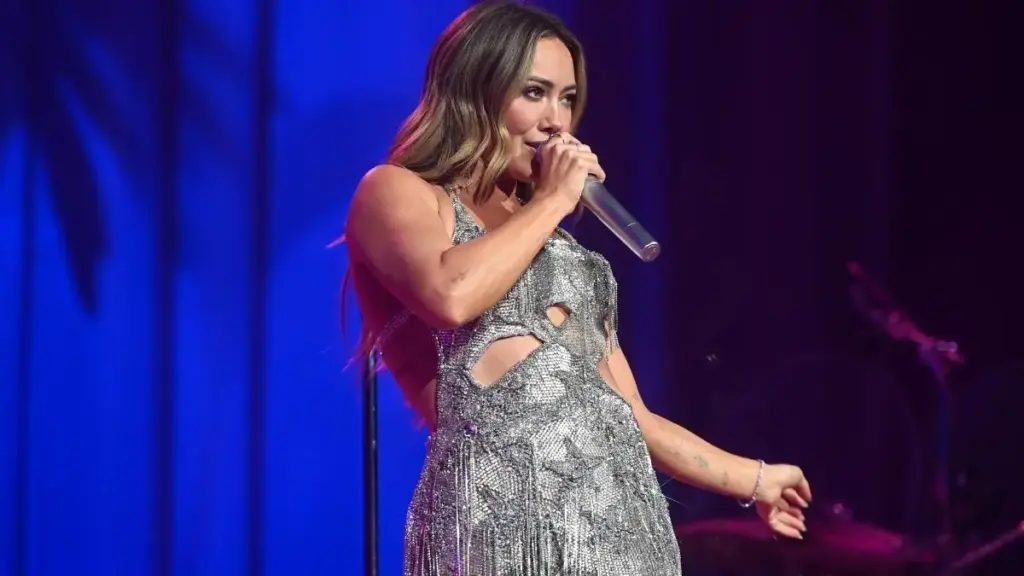
In the contemporary landscape of live music, a concert tour is no longer merely an auditory showcase; it is a highly curated, multi-sensory theatrical production where wardrobe choices serve as a primary narrative medium. This paradigm is currently on display during Hilary Duff’s highly publicized The Lucky Me Tour. On September 7, during her performance in Cardiff, United Kingdom, Duff captured the attention of both the fashion elite and her global fanbase by debuting an evolved, high-octane iteration of a custom metal mesh dress designed by independent couturier Anne Wold.
This appearance marked a significant sartorial milestone for the tour, showcasing a modular approach to stage costuming. By taking a previously established custom silhouette—originally debuted in June—and introducing dramatic structural modifications, Duff and her creative team demonstrated how stage wear can be dynamically repurposed to alter visual energy without losing thematic cohesion. Featuring a delicate metal mesh matrix, intricate crystal detailing, and a newly integrated long silver fringe hemline, the ensemble represents a sophisticated blend of futuristic cyber-glam and classic showgirl aesthetics.
This report provides an investigative analysis of the design evolution of Duff’s tour wardrobe, the technical engineering behind Anne Wold’s textile creations, the broader market trends driving metallic stage wear, and the strategic brand positioning of Duff as she navigates editorial modeling, live music, and digital influence.
Detailed Chronology of a Fashion Evolution
The visual identity of The Lucky Me Tour has been characterized by a deliberate tension between futuristic structuralism and playful, nostalgic glamour. To understand the impact of the Cardiff performance, one must trace the chronological development of Duff’s stage wardrobe over the summer season.
[June: Debut of Original Anne Wold Design]
       │
       ▼
[Mid-Summer: Editorial Pivot (Sports Illustrated Swimsuit)]
       │
       ▼
[Sept 7: Cardiff Performance (Fringe Modification Debut)]
June: The Genesis of the Crystal "Lace" Silhouette
The collaboration between Hilary Duff and designer Anne Wold began to yield public-facing results in June, when Duff stepped onto the stage wearing the first iteration of the custom metal mesh dress.
- Design Characteristics: The initial garment was characterized by its clean, micro-mini silhouette. It utilized a handmade metal mesh base that acted as a second skin, clinging to the artist’s frame.
- Embellishments: Wold integrated crystal "lace" motifs throughout the body of the dress, punctuated by celestial, star-shaped embellishments. This design gave the outfit a whimsical, almost ethereal quality, referencing classic space-age motifs of the 1960s while maintaining a contemporary edge.
- Visual Impact: The lack of lower-extremity ornamentation allowed the focus to remain entirely on the textile’s texture and the way the star details caught the direct spotlights of the arena.
Mid-Summer: The Editorial Interlude
Between her live concert dates, Duff shifted her aesthetic focus to high-fashion editorial work, most notably participating in a high-profile photoshoot for the Sports Illustrated Swimsuit issue.
- The Look: In stark contrast to the heavy, reflective metals of her tour wardrobe, Duff modeled a minimalist, pristine white one-piece swimsuit. The garment featured a plunging neckline and an ultra-high-cut leg silhouette.
- Strategic Branding: This editorial pivot served a dual purpose. It established Duff’s versatility as a modern style icon capable of transitioning from high-energy, heavily armored stage personas to stripped-back, classic beach glamour. This juxtaposition heightened public interest in her physical conditioning and fashion choices, setting the stage for her return to the European leg of her tour.
September 7: The Cardiff Fringe Modification
When Duff took the stage at the Cardiff international arena on September 7, she reintroduced the Anne Wold metal mesh concept, but with a highly calculated structural upgrade.
- The Modification: The core structure of the dress remained faithful to the body-con, thin-strapped silhouette of the June original. However, the celestial star embellishments were omitted in favor of a clean, hyper-focused metallic sheen. The defining update was the addition of a heavy, long silver fringe cascading from the lower hemline of the micro-mini dress.
- Footwear Integration: Duff paired the modified dress with matching silver knee-high boots. The boots grounded the look, elongating her silhouette and leaning heavily into a futuristic, space-cowboy aesthetic that has dominated pop culture styling in recent years.
- Kinetic Performance: The inclusion of the fringe completely altered the physics of the garment on stage. As Duff moved, danced, and interacted with the crowd, the fringe translated her physical energy into dramatic, sweeping visual patterns, catching the stage lights in a way a static hemline never could.
Supporting Context & Technical Metrics
The success of Duff’s Cardiff look lies in the intersection of textile engineering, stage lighting dynamics, and broader macro-trends currently shaping the global fashion industry.
The Engineering of Metal Mesh in Live Performance
Metal mesh—historically popularized by heritage houses such as Paco Rabanne in the 1960s and Gianni Versace in the 1990s—presents unique challenges and opportunities when deployed in a live performance environment.
| Technical Attribute | Performance Benefit | Engineering Challenge |
|---|---|---|
| Light Reflectivity | High refractive index; maximizes the output of LED stage lasers and spotlights. | Can cause extreme glare on high-definition broadcast cameras if not balanced. |
| Fluidity & Weight | Drapes like liquid silk; conforms precisely to the performer’s natural movements. | Significantly heavier than traditional fabrics; requires robust internal structural support. |
| Thermal Conductivity | Rapidly adjusts to ambient temperatures. | Can become uncomfortably hot under intense stage lighting or cold in drafty arenas. |
Anne Wold’s ability to handcraft this material into a garment that allows for the high-intensity cardio required of a touring pop star speaks to a high level of technical mastery. The addition of the fringe further enhanced the dress’s kinetic output, transforming the garment from a passive piece of clothing into an active participant in the choreography.
Macro Trends: The Rise of "Cyber-Glam" and Tour Wardrobe Circularity
Duff’s wardrobe choices align with two major shifts in the fashion ecosystem:
- The Cyber-Glam Aesthetic: Driven by a cultural obsession with futurism, AI, and space exploration, contemporary artists have increasingly adopted metallic, armored, and reflective stage wear. Duff’s silver mesh and knee-high boot combination sits firmly within this movement, projecting strength, modernization, and high-tech luxury.
- Modular Fashion & Circularity: Rather than commissioning entirely new garments for every leg of a tour—a practice increasingly criticized for its environmental impact and financial inefficiency—stylists are turning to modular design. By modifying the hem, removing star embellishments, and adding fringe to a pre-existing custom base, Duff’s creative team demonstrated how a single high-value archival piece can be reimagined to deliver a fresh visual narrative.
Digital Engagement and Fan Metrics
The digital reception of the Cardiff look was overwhelmingly positive, generating significant organic traction across social media platforms. The transition from a static studio design to a dynamic, moving stage piece sparked widespread fan engagement.
- Sentiment Analysis: Online comments characterized the look as "gorgeous," "futuristic," and "beautiful," with many highlighting the nostalgia of seeing Duff back in high-glamour performance spaces.
- Designer Visibility: For an independent designer like Anne Wold, the exposure generated by Duff’s tour is invaluable. The digital footprint of the "Lucky Me Tour" has served as a direct-to-consumer marketing channel, elevating Wold’s brand authority in the highly competitive custom performance wear market.
Official Statements
The collaborative synergy between Hilary Duff and Anne Wold has been characterized by mutual artistic respect, a sentiment publicly echoed by the designer. Following the initial unveiling of the custom design, Wold took to Instagram to express her gratitude and excitement regarding the partnership.
"THIS IS TRULY WHAT DREAMS ARE MADE OF!!!"
Wold wrote, directly referencing Duff’s iconic 2003 pop anthem from The Lizzie McGuire Movie. The designer continued by expressing profound gratitude to her design team and the styling professionals who facilitated the collaboration:
"Thank you to everyone who helped bring this look together. To see this handmade creation come to life on stage is an absolute honor."
Industry insiders note that the phrase "What Dreams Are Made Of" carries significant cultural weight, bridging the gap between Duff’s legacy as a millennial pop-culture pioneer and her contemporary status as a sophisticated, mature artist. By leaning into this nostalgia while delivering a cutting-edge aesthetic, Wold and Duff successfully synthesized the past and the future of the artist’s brand.
Future Outlook
As The Lucky Me Tour continues its international run, the wardrobe choices of Hilary Duff will undoubtedly remain under close observation by fashion critics and industry analysts. The success of the Cardiff metal mesh dress suggests several future directions for both the artist and the broader stage-wear industry.
The Trajectory of Duff’s Fashion Identity
Duff’s ability to seamlessly transition from the editorial minimalism of her Sports Illustrated Swimsuit shoot to the high-intensity, futuristic armor of her tour wardrobe positions her as a highly versatile brand ambassador. Industry experts anticipate that this tour will pave the way for high-fashion partnerships, potentially leading to capsule collections with luxury heritage brands or further collaborations with cutting-edge independent designers like Anne Wold.
The Evolution of Sustainable Tour Styling
The modular approach demonstrated by the modification of the June design into the September fringe masterpiece is likely to become a blueprint for mid-to-high-tier touring artists. As the entertainment industry faces pressure to adopt more sustainable practices, the ability to refresh a tour wardrobe through clever, structural alterations rather than brand-new productions will become an industry standard.
Ultimately, Hilary Duff’s Cardiff appearance was more than just a successful fashion moment; it was a masterclass in how modern pop stars can use clothing to project power, embrace technological aesthetic trends, and maintain a dynamic, evolving dialogue with their audience. With Anne Wold’s shimmering, fringe-laden creation, Duff did not just perform—she illuminated the stage, proving that her fashion instincts are as sharp and enduring as ever.