Executive Overview
In the ever-evolving landscape of the beauty and cosmetics industry, few product categories have enjoyed the enduring, low-maintenance popularity of lip stains and lip tints. Prized for their lightweight feel, transfer-resistant wear, and ability to impart a natural, just-bitten flush of color, these formulations have become mainstays in daily makeup bags globally. Yet, despite their ubiquity on vanity tables and social media feeds, fundamental questions persist among consumers regarding what truly differentiates a "stain" from a "tint," how to maximize their performance through strategic application, and how beauty publications objectively evaluate these products before granting their stamp of approval.
To demystify these long-wearing lip products, cosmetic chemists, professional makeup artists, and beauty editors have weighed in with authoritative insights. Industry consensus reveals a surprising truth: the distinction between a lip stain and a lip tint is largely semantic, driven primarily by marketing terminology rather than formulation science. Furthermore, achieving a flawless, long-lasting finish is less about the brand name on the tube and more about proper lip preparation, precise application techniques, and the chemical composition of the colorants used.
This comprehensive report explores the chemical reality behind lip stains and tints, outlines professional step-by-step application methodologies for various desired finishes, details the stringent testing protocols utilized by beauty critics to vet these formulations, and examines the future outlook of the lip cosmetics sector.
Detailed Chronology & Evolution of Long-Wear Lip Color
While long-wear lip color is often viewed as a modern innovation driven by the rise of "no-makeup makeup" aesthetics and K-beauty trends, the desire to stain the lips for enduring color has ancient roots.
From Ancient Roots to Modern Chemical Innovation
Centuries ago, ancient civilizations utilized crushed berries, botanical extracts, and mineral pigments to temporarily dye the lips and cheeks. These early concoctions provided the desired flush of color, but they often lacked stability, longevity, and consistency.
Fast forward to the late 20th and early 21st centuries, and the cosmetic industry witnessed a massive technological shift. The introduction of water- and gel-based delivery systems allowed formulators to suspend pigments in a lightweight medium that evaporated quickly upon application, leaving behind water-soluble dyes that bound temporarily to the outer layers of the lips.
The Rise of K-Beauty and the "Tint" Phenomenon
The modern fascination with lip tints was significantly accelerated by the K-beauty wave of the 2010s. Korean beauty brands popularized liquid- and water-gel tints that offered a gradient effect—concentrated color at the center of the lips fading outward. This shifted consumer preference away from heavy, opaque, traditional lipsticks toward lightweight, breathable alternatives.
Concurrently, Western markets adopted the term "lip stain," often packaging similar water- or alcohol-based formulas in marker-like pens or liquid tubes with doe-foot applicators. Over time, the lines between tints, stains, and even traditional glosses and balms began to blur as chemical formulation technologies advanced, allowing brands to infuse hydrating agents and heavier pigment loads into traditionally drying stain bases.
Supporting Context & Metrics: The Chemistry of Color
To truly understand how lip stains and tints function, one must look past the sleek packaging and marketing language to examine the underlying cosmetic chemistry.
Stain vs. Tint: The Chemical Reality
According to Amanda Lam, a cosmetic formulation chemist based in Warwick, Rhode Island, consumers often look for a definitive boundary between a product labeled as a "stain" and one labeled as a "tint." However, Lam clarifies that no such chemical distinction exists.
"The formulas for both are usually the same and give the same effect of long-wear staining without being opaque," Lam explains. Structurally, both stains and tints are typically water-based systems utilizing water-soluble pigments that deposit color onto the lips as the liquid vehicle evaporates.
This perspective is echoed by Kelly Dobos, a cosmetic chemist based in Cincinnati, Ohio. Dobos points out that virtually any category of lip product can possess staining capabilities depending on its specific chemical composition and the nature of its colorants.
"The color additives are the primary determinant of whether a color actually stains the lips," Dobos notes. Because of this, she explains that traditional balms, glosses, and conventional lipsticks can all act as lip stains or tints if they are formulated with a high enough concentration of substantive dyes that interact with the proteins in the stratum corneum of the lips.
Key Formulation Components
When formulators set out to create a high-performing lip stain or tint, they must balance several competing technical parameters:
- Water and Solvents: Serving as the primary base, water and volatile solvents ensure the product spreads easily and thin out upon contact.
- Dyes and Pigments: Water-soluble dyes (such as Red 27 or various acid dyes) interact with the skin’s surface proteins to create the lingering stain, while insoluble pigments add initial opacity or tone.
- Film Formers: Polymers that help lock the color in place, minimizing feathering, bleeding, and transfer onto cups or clothing.
- Humectants and Emollients: Ingredients like glycerin, hyaluronic acid, or plant oils added to counteract the potential drying effects of the fast-evaporating solvent base.
Official Statements and Professional Application Methodologies
Even the most advanced lip stain can fall flat if applied incorrectly or onto poorly prepped skin. Professional makeup artists and skincare experts emphasize that technique plays a critical role in achieving an even, long-wearing, and aesthetically pleasing finish.
Step 1: Prepping the Canvas
Lips that are dry, chapped, or flaking will unevenly absorb the water-soluble dyes found in lip stains, resulting in a patchy, over-saturated appearance where dry skin cells cling to excess pigment.
- Exfoliation: Makeup artist Claire recommends starting with a gentle lip scrub to buff away any dead skin flakes.
- Hydration Balance: Following exfoliation, applying a nourishing lip mask or a light, clear lip balm helps even out the lips’ hydration levels. "This prepares them for a more even application," Claire notes.
- The Liner Base: To maximize longevity and prevent the liquid formula from bleeding outside the natural lip line, Claire suggests using a lip liner as a foundational base.
Step 2: Strategic Application Techniques
Depending on the desired aesthetic—ranging from a soft, blurred, natural flush to a bold, saturated statement lip—application methods vary significantly.
- The Natural, Filtered Finish: For those seeking an effortless, "I woke up like this" look, Los Angeles-based makeup artist Genevieve Garner advises dispensing a small amount of product and tapping it directly onto the lips using the fingertips. The warmth of the fingers helps press the pigment into the skin for a diffused, stain-like watercolor effect.
- The Precision Gradient Look: For a structured yet contemporary application, Claire recommends a geometric approach: draw a "V" shape at the Cupid’s bow and the outer corners of the top lip, followed by a "U" shape toward the center of the bottom lip. Once these structural dots are established, simply connect them and fill in the remaining area.
- The High-Saturation Look: If an intense, opaque color payoff is desired straight out of the tube, applying the stain directly via the applicator wand without diffusing it with the fingers will yield maximum pigment density.
Future Outlook and Rigorous Product Testing Protocols
As the beauty consumer becomes increasingly discerning, clean, and educated, the expectations placed upon beauty publications and testing laboratories have reached unprecedented heights. Evaluating a cosmetic product requires a systematic, multi-faceted methodology that goes far beyond a simple surface-level review.
The Comprehensive Review Process
When leading beauty publications—such as Allure—set out to evaluate the best lip stains on the market, they employ a rigorous, structured testing framework. Before any product touches a tester’s lips, a comprehensive questionnaire is deployed to assess its broader market viability:
- Ingredient Transparency: What active and inactive ingredients make up the formula? Are they safe, effective, and compliant with modern safety standards?
- Inclusivity and Shade Range: Does the brand offer an expansive shade range that caters thoughtfully to consumers across all skin tones and undertones?
- Dermatological Safety: Is the formula safe for sensitive skin types or individuals who wear contact lenses?
- Value Proposition: Does the price point reflect the product’s quality, positioning it on the accessible, budget-friendly side or as a luxury splurge?
- Sustainability: Is the outer and inner packaging consciously designed, or does it incorporate needlessly wasteful plastics and non-recyclable components?
Real-World Testing and Diverse Panels
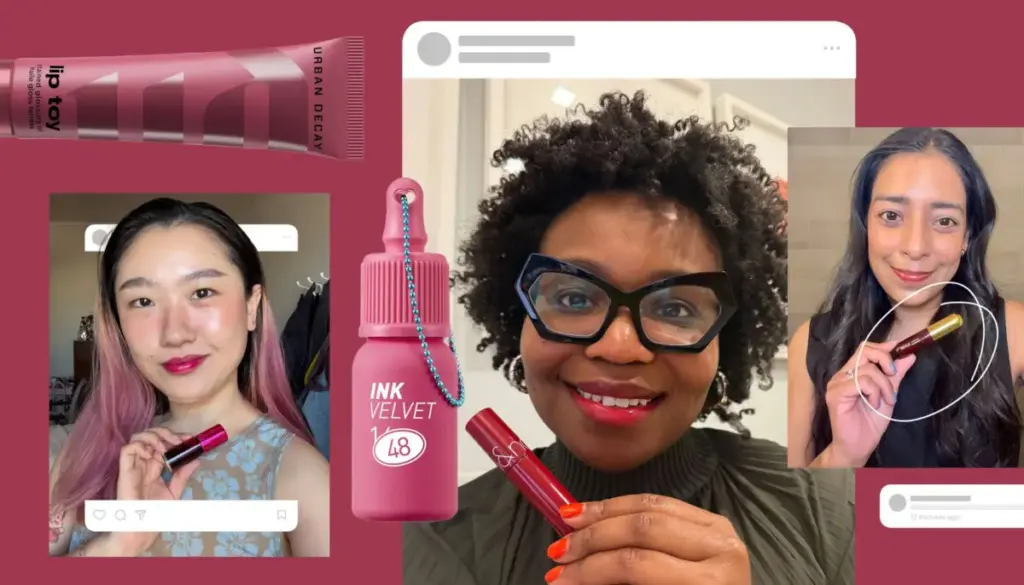
Laboratory metrics alone cannot dictate how a cosmetic performs in the real world. To bridge this gap, testing protocols enlist diverse panels of editors, writers, industry contributors, and professional makeup artists. These individuals wear the products during normal daily activities for sustained periods—typically ranging from four to eight hours—to evaluate real-world wear and tear.
To ensure objective and holistic evaluations, testing panels must span a wide spectrum of skin tones, genders, ages, and dermatological conditions. Products are then judged across four core performance pillars:
- Ingredients: Skin compatibility and formulation integrity.
- Wear and Longevity: Resistance to fading, eating, drinking, and transferring.
- Packaging: Ergonomics, leakage prevention, and aesthetic appeal.
- Shade Range: Versatility, undertone balance, and true-to-pan color payoff.
The Value of Diverse Editorial Staffs
Ultimately, the credibility of any beauty recommendation rests upon the diversity of the voices behind it. A skin-care or makeup item cannot honestly be deemed the "best" for specific demographics—such as mature skin over 50, deep complexions, or textured lips—unless it has been rigorously tested by individuals belonging to those exact groups. A diverse staff and an expansive network of outside testers ensure that every product entering the beauty closet is vetted fairly, accurately, and with deep cultural and biological nuance.
Conclusion
The fascination with lip stains and tints is unlikely to wane. As cosmetic chemists continue to innovate with hydrating polymers, vibrant water-soluble dyes, and multi-functional hybrid formulas, these products will remain essential tools for effortless, long-wear beauty. By understanding that "stains" and "tints" are cut from the same chemical cloth, mastering precise prep and application techniques, and relying on transparent, rigorous product testing, consumers can confidently navigate the crowded cosmetics market to find formulas that truly deliver on their promises.