Executive Overview
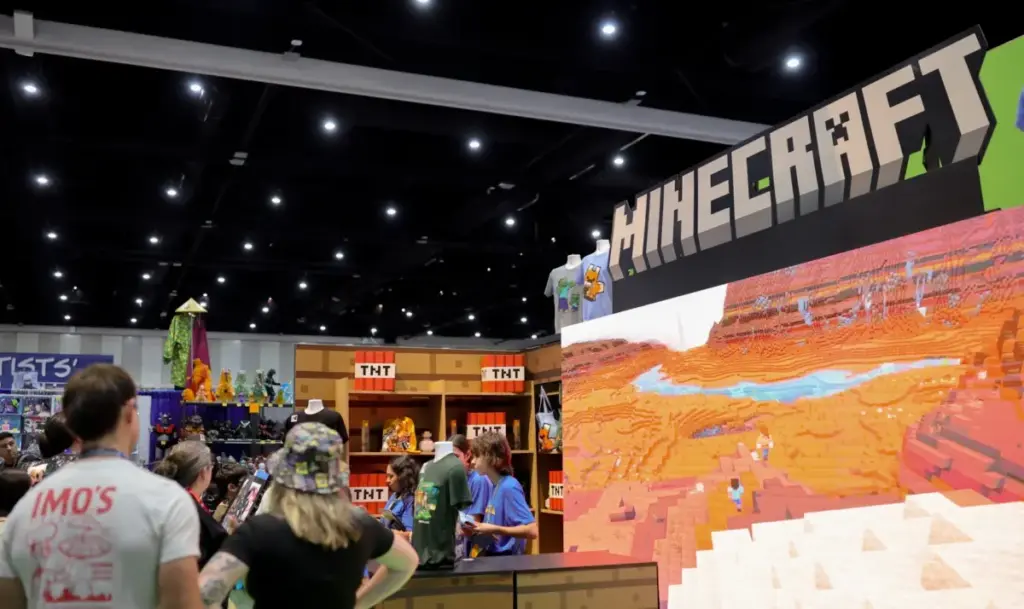
For over a decade and a half, Minecraft has occupied a peerless, foundational role in digital culture. Beyond its status as the best-selling video game of all time, the Microsoft-owned sandbox has served as a digital digital canvas, a foundational storytelling tool, a classroom, and a social hub for hundreds of millions of players worldwide. Yet, as the gaming industry transitions deeper into an era dominated by user-generated content (UGC), interactive platform ecosystems, and player-driven economies, the pioneering giant faces unprecedented competitive pressure.
Recent strategic moves by Mojang Studios signal that the developer is gearing up for a high-stakes turf war. Through a wave of high-profile job listings unearthed across major recruitment portals, Mojang is aggressively ramping up its creator-ecosystem hiring. The studio is looking to fill critical roles—ranging from principal and senior program managers within partner developer relations to a director of creator programs and ecosystems marketing, and a senior director for creator monetization.
This hiring surge is not merely a routine expansion; it is a calculated defense strategy. Mojang is explicitly aiming to counter the meteoric rise of rival platforms like Roblox, Epic Games’ Fortnite (via the Unreal Editor for Fortnite, or UEFN), and impending market entrants like Rockstar Games’ Grand Theft Auto VI. While Minecraft boasts immense cultural cachet—underlined by the box-office viability of A Minecraft Movie and a consistently massive YouTube footprint—its leadership recognizes that structural vulnerabilities must be addressed. To remain the undisputed king of interactive, creator-built experiences, Mojang must modernize its developer tooling, streamline creator monetization, and evolve Minecraft from a beloved sandbox into a world-class, globally competitive creator platform.
Detailed Chronology: The Shift Toward Platform Dominance
The Legacy of the Block: From Indie Phenomenon to Cultural Institution
To understand the gravity of Mojang’s current pivot, one must examine Minecraft’s trajectory since its public debut in 2009. Created by Markus "Notch" Persson and later developed under the stewardship of Jens "Jeb" Bergensten and the broader Mojang team, the game defied traditional gaming conventions. By offering players an infinite, procedurally generated world composed of textured blocks, it championed emergent gameplay over scripted narratives.
Over the years, the community pushed the engine to astonishing limits. Players constructed fully functioning working computers with arithmetic logic units, complex educational simulators used in classrooms across the globe, and sprawling, meticulously detailed virtual societies. Its open-ended nature naturally aligned with the explosion of online video content, making it a foundational pillar for YouTube and Twitch creators who turned gameplay chronicles into multi-million-subscriber empires.
The Rise of the Modern UGC Titans
However, the landscape of interactive entertainment has shifted dramatically. While Minecraft laid the groundwork for modern sandbox creativity, subsequent platforms engineered more robust, frictionless frameworks for monetization, asset sharing, and cross-platform multiplayer experiences.
- Roblox: Operating as a comprehensive engine and storefront, Roblox has transformed millions of young users into prolific game developers. By offering accessible development tools, instant global distribution, and multi-billion-dollar creator payouts, Roblox captured the attention—and screen time—of an entire generation.
- Fortnite and UEFN: Epic Games revolutionized the battle royale blueprint by transforming Fortnite into an ecosystem. With the introduction of the Unreal Editor for Fortnite (UEFN), Epic gave developers AAA-grade tools to build custom game modes within the Fortnite ecosystem, backed by lucrative, ten-digit creator payout pools.
- The Horizon of GTA VI: Industry heavyweights have also taken notice. Rockstar Games is actively engineering Grand Theft Auto VI to incorporate advanced creator platform dynamics, signaling that future blockbuster releases will rely heavily on sustained, player-driven economies rather than traditional, static launch models.
The Turning Point: Mojang’s Strategic Pivot
Faced with these aggressive competitors, Mojang’s leadership has pivoted decisively. The first major indicators of this internal shift began materializing in late summer, when recruiters posted a flurry of specialized openings targeting ecosystem growth, developer relations, and strategic marketing.
The most revealing details emerged from a listing for a senior-level program manager tasked with a mandate that leaves no room for ambiguity: the employee must be capable of “at the program level, defending against competing platforms (Roblox, Fortnite/UEFN, Unity, Fab) through better developer experience, tooling, and enablement at portfolio scale.”
This direct naming of rivals confirms that Mojang views the contemporary gaming market as a zero-sum battle for creative talent. Retaining the current player base is no longer enough; the studio must actively lure developers away from rival engines by offering superior enablement and lucrative incentives.
Supporting Context & Metrics: The Numbers Behind the Battle
While Minecraft commands impressive engagement metrics, a closer examination reveals the urgent need for structural modernization to keep pace with industry financial models.
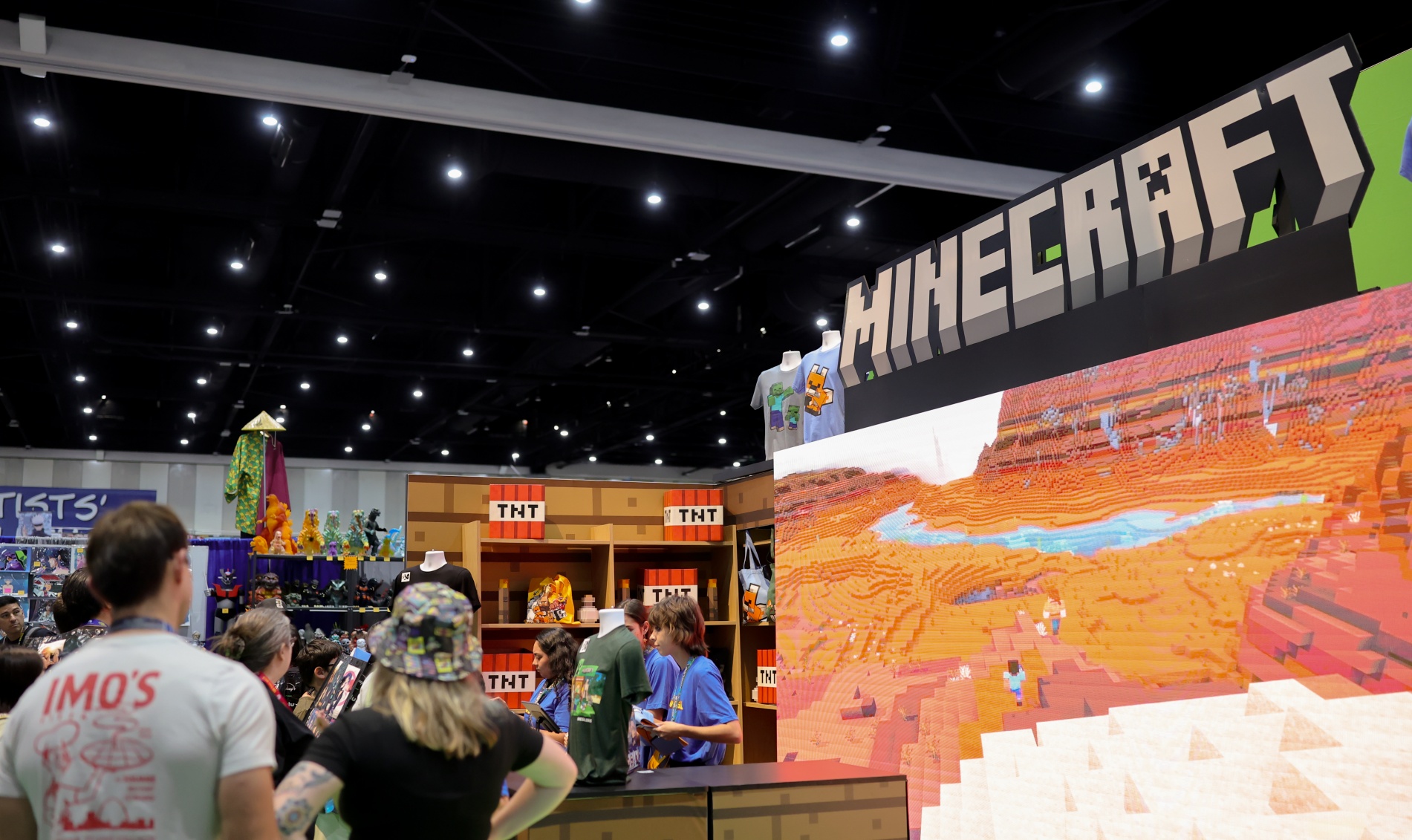
Cultural Footprint vs. Financial Realities
Minecraft continues to generate staggering cultural engagement. In mid-2026, the official Minecraft YouTube channel routinely ranked among the top 50 most-watched channels globally, accumulating billions of cumulative views. Furthermore, the commercial success of multimedia adaptations, such as A Minecraft Movie, proves that the intellectual property retains immense cross-demographic appeal.
Yet, underlying these triumphs are operational pressures. Past organizational adjustments, including periodic layoffs at Mojang headquarters under Microsoft’s broader corporate restructuring, have forced the studio to optimize its workflow. More importantly, while competitors like Roblox and Epic Games established rich, direct-to-creator monetization pipelines years ago, Minecraft has historically lagged in providing diverse, scalable earning models for its community builders.
Closing the Monetization Gap
For years, monetization within the Minecraft ecosystem was largely confined to the Minecraft Marketplace—a curated storefront where approved creators could sell skins, texture packs, and adventure maps. While successful for top-tier creators, it lacked the programmatic depth, affiliate structures, and real-time ad-revenue sharing seen in competing UGC networks.
Mojang has slowly begun addressing this deficit. A landmark partnership with Impact.com introduced the very first affiliate marketing program to the Minecraft ecosystem, allowing creators to monetize their promotional efforts more directly. Building upon this, the recent posting for a senior director of creator monetization demonstrates that Mojang is actively constructing a comprehensive financial engine designed to reward community developers on par with industry standards set by Roblox and Epic Games.
Official Statements and Industry Insights
The strategic evolution at Mojang aligns directly with Microsoft’s broader gaming directives. In internal memos and public addresses, Xbox leadership—including CEO Phil Spencer—has repeatedly emphasized the ambition to transform Minecraft into “the world’s creator platform.”
Industry analysts tracking the gaming sector note that this transition is both necessary and fraught with challenges. Unlike closed-loop games designed with rigid mechanics, Minecraft runs on a legacy codebase that must support cross-play across mobile devices, consoles, and high-end PCs. Scaling developer tools to support complex, high-performance creator assets without sacrificing accessibility requires immense engineering overhead.
Furthermore, Mojang’s unique corporate culture—famous for quirky public milestones, such as hiring real animal voice actors and "cow whisperers" to record organic ambient sounds for update patches—must now marry its whimsical charm with corporate-grade ecosystem management. The newly recruited executives and program managers will be tasked with bridging this gap, transforming a beloved sandbox into a fiercely competitive, highly optimized digital enterprise.
Future Outlook: Can Minecraft Defend Its Throne?
As the digital entertainment landscape races toward an increasingly decentralized, creator-led future, the stakes for Mojang and Microsoft have never been higher. The battle lines are drawn clearly between Minecraft, Roblox, Fortnite/UEFN, and the impending arrival of next-gen creator ecosystems like GTA VI.
Can Minecraft successfully adapt to fend off these modern juggernauts? The ingredients for victory are undoubtedly present. The IP commands a multi-generational audience, enjoys unmatched global recognition, and possesses a community whose creative ingenuity has consistently surprised even its developers.
However, cultural goodwill alone will not suffice in an economic climate where developers follow the highest payouts and the most intuitive tooling. By ramping up its hiring initiatives, modernizing creator monetization, and directly targeting the developer experience at portfolio scale, Mojang is proving that it refuses to rest on its laurels. If the studio successfully integrates these new programmatic strategies while preserving the core magic that made the game a phenomenon in the first place, Minecraft may well secure its reign as the undisputed king of interactive, creator-built experiences for another fifteen years—and beyond.