Executive Overview
The modern beauty consumer sits at the center of an unprecedented retail tug-of-war. A shopper looking to purchase a basic bottle of skincare staple The Ordinary’s Glycolic Acid 7% Exfoliating Toner faces a paradox of choice. They can acquire it via Ulta Beauty, leveraging perks like same-day in-store pickup; through Amazon, packaged as a convenient multi-bottle bundle; or on TikTok Shop, where algorithmic recommendations meet free-shipping incentives.
Alternatively, they can buy it at Sephora. But a savvy consumer might choose to wait until a specific promotional window—such as a designated multiplier event—to maximize their Beauty Insider rewards points.
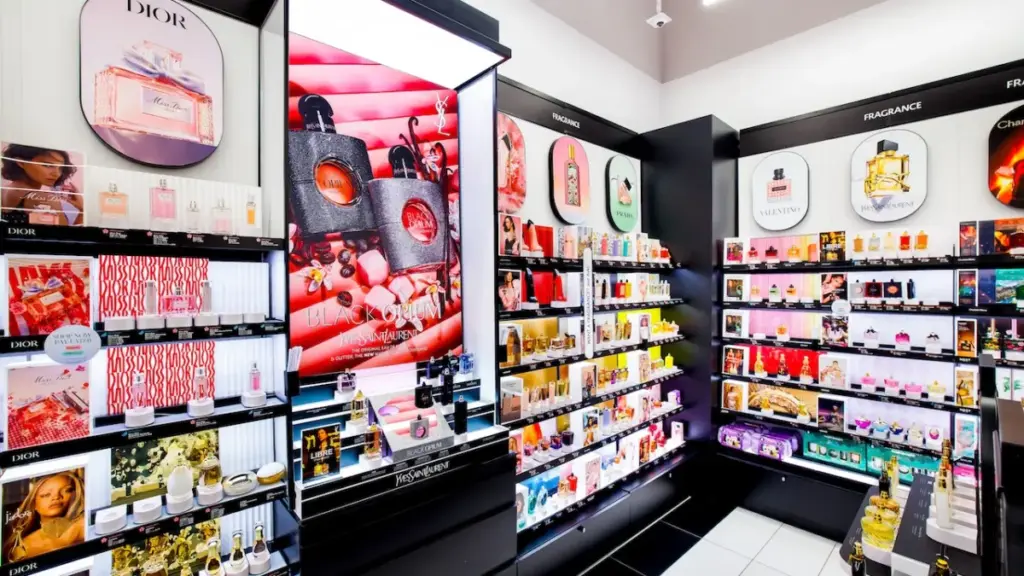
This hyper-competitive friction underscores a foundational shift in the global beauty market. In an era where an omnichannel retail strategy is non-negotiable for legacy brands and digital-native startups alike, major beauty retailers are locked in an escalating war of loyalty perks, gamified incentives, and experiential rewards. Sephora, owned by luxury conglomerate LVMH, is aggressively redefining its loyalty framework to defend its market share against formidable incursions from broad-market players like Walmart, Amazon, and long-standing rival Ulta Beauty.
With over 46 million members in its foundational rewards program, Sephora is moving far beyond traditional transactional discounting. The retailer is doubling down on experiential retail, data-driven personalization, and community-centric engagement to ensure that staying loyal to the brand remains a compelling choice in an overcrowded marketplace.
Detailed Chronology: The Evolution of Sephora’s Loyalty Strategy
1. The Foundation: Building the Beauty Insider Ecosystem
Nearly two decades ago, Sephora launched its Beauty Insider rewards program, a foundational move that would eventually amass more than 46 million members. Designed to track customer spending and foster brand affinity, the program originally established basic tiers based on annual expenditure: standard Beauty Insider, VIB (Very Important Beautybuyer), and the coveted Rouge status, achieved by spending $1,000 within a single calendar year.
For years, these tiers unlocked access to standard sample bags, seasonal savings events, and exclusive product drops. However, as the digital landscape matured and e-commerce giants began infiltrating the beauty category, Sephora realized that passive point accumulation was no longer sufficient to guarantee customer retention.
2. Gamifying the Experience: The Launch of Beauty Insider Challenges
Recognizing the shifting behavioral patterns of younger consumers—particularly Gen Z, who heavily favor immersive, interactive experiences—Sephora introduced its "Beauty Insider Challenges" program in 2023. This gamified loyalty approach rewards members with points not just for opening their wallets, but for engaging with the brand across various touchpoints.
Activities such as signing up for SMS notifications, booking in-store makeover appointments, or completing digital color-matching assessments now yield tangible rewards. According to Emmy Berlind, Senior Vice President and General Manager of Loyalty at Sephora, approximately 30% of the retailer’s active shoppers have participated in a challenge since the initiative’s inception.
This gamification serves a dual purpose: it entertains the consumer while generating deep, first-party data that allows Sephora to refine its personalization engines and target product recommendations with surgical precision.
3. Elevating Top Spenders: The Rouge Celebration Weekend
To combat churn among its most lucrative demographic—high-spending beauty enthusiasts—Sephora inaugurated the "Rouge Celebration Weekend" in 2024. Tailored specifically for members who meet the $1,000 annual spending threshold, the event offers exclusive masterclasses, private in-store shopping hours, and high-value brand collaborations.
By 2026, Sephora scaled this initiative significantly. The Rouge Celebration Weekend expanded to include masterclasses hosted by prestige brands such as Rare Beauty and Danessa Myricks. Crucially, Sephora also extended the event to its more than 1,000 "Sephora at Kohl’s" retail footprints for the first time, dramatically widening the geographic reach and accessibility of its high-tier programming.
4. Broadening the Horizon: Beauty Insider Celebration Month
Moving beyond hyper-exclusive events for top-tier spenders, Sephora restructured its late-summer calendar for 2026 into the month-long "Beauty Insider Celebration Month." Throughout August, all tiers of loyalty members gain access to foundational perks, including promotional point-redemption structures—such as exchanging 250 points for a $5 discount—alongside brand-specific point multipliers.
This democratization of rewards is designed to pull entry-level and mid-tier shoppers deeper into the ecosystem, transforming casual buyers into committed brand advocates.
Supporting Context & Metrics: The Shifting Retail Landscape
Sephora’s aggressive pivot in loyalty strategy does not exist in a vacuum. It is a direct response to a rapidly transforming beauty retail ecosystem characterized by the erosion of brand exclusivity and the aggressive rise of omnichannel mass-market competitors.
The Mass-Market Intrusion
Legacy mass retailers and tech platforms are systematically capturing market share in prestige beauty. Walmart has successfully repositioned itself as a destination for prestige and masstige beauty brands, while Amazon has systematically dismantled the notion that high-end beauty requires exclusive salon or specialty-store distribution. By offering perks like same-day delivery, Prime Day savings events, and frictionless checkout, these platforms appeal directly to the convenience-driven consumer.
The Ulta Beauty Counter-Offensive
Sephora’s primary specialty retail rival, Ulta Beauty, continues to mount parallel defensive strategies. The timing of Sephora’s Rouge Celebration Weekend historically coincides with Ulta’s annual "Diamond & Platinum Appreciation Day" every August. Ulta’s loyalty structure—which rewards members who spend $500 annually for Platinum status and $1,200 for Diamond status—features aggressive incentives, such as 10x point multipliers on select purchases. This head-to-head competition forces both beauty giants to continually up the ante, resulting in a lucrative environment for consumers willing to time their purchases strategically.
Prestige Hair Care Surge: A Key Growth Indicator
Data from market research firm Circana highlights why retailers are fighting so fiercely for consumer wallet share. In the first half of 2026, U.S. retail sales of hair serums skyrocketed by nearly 60%, signaling a massive consumer appetite for targeted, high-performance treatments. Overall, the prestige hair care category emerged as one of the fastest-growing segments in beauty, with dollar sales climbing 11% and unit sales expanding by 8%. Specialty retailers like Sephora and Ulta serve as the primary discovery engines for these high-margin categories, making customer retention paramount.
Official Statements and Industry Insights
Maintaining a customer-centric rewards program requires continuous pulse-checking on consumer sentiment. According to Sephora’s Emmy Berlind, the brand relies heavily on organic, unvarnished consumer feedback derived from digital communities.
"My team is very actively reading Reddit. We look at the comments in the social posts that our fabulous social team does across all the different platforms," said Emmy Berlind, SVP and GM of Loyalty at Sephora. "We’re definitely always doing a lot of research to make sure we’re making decisions headed in the right direction."
Berlind emphasizes that the ultimate goal of Sephora’s evolving loyalty strategy is to transcend transactional metrics and establish an emotional connection with the buyer.
"We’re trying to do more than just reward transactions and, kind of, reward their relationship with Sephora, too," Berlind noted. "[And we want to] make sure [consumers] understand how valuable we find the fact that they’ve chosen to shop with us."
Addressing the integration of gamified challenges, Berlind points directly to demographic trends as a guiding compass.
"We know generally from the research we’ve done that Gen Z loves in-person activities and also that gamification is something that’s very attractive to that group. That’s definitely an element of why we wanted to engage with our clients in this way."
By feeding consumer engagement data back into the personalization engine, Berlind describes a self-sustaining loop:
"It kind of creates this virtuous cycle of us being able to serve our clients better because we’re able to offer more unique, personalized experiences because they continue to shop with us. We’re trying to make sure that the value is definitely a two-way street for the people that are members of the program."
Future Outlook: What Lies Ahead for Beauty Retail Loyalty
As the beauty retail landscape heads toward the latter half of the decade, the rules of engagement will continue to be rewritten. Several key trends will define the future of loyalty strategies for giants like Sephora and Ulta:
- Hyper-Personalization via AI and First-Party Data: As privacy regulations tighten and third-party cookies phase out entirely, loyalty programs will serve as the primary engines for gathering zero- and first-party data. Retailers that successfully leverage AI to parse this data will be able to offer hyper-individualized product recommendations and dynamic point-multiplier offers tailored to individual shopping habits.
- The Blending of Physical and Digital (Phygital) Experiences: The expansion of events like the Rouge Celebration Weekend into Sephora at Kohl’s stores proves that consumers demand a seamless brand experience regardless of physical location. Future loyalty rewards will increasingly bridge digital gaming with physical in-store activations, such as exclusive masterclasses, customized skin diagnostics, and experiential pop-ups.
- Value-Driven Consumerism: Amid economic fluctuations, consumers are increasingly strategic about where and when they spend their beauty dollars. Retailers that offer transparent, flexible, and immediately rewarding loyalty structures—such as point-to-cash conversions and accessible free-shipping thresholds—will maintain a distinct competitive advantage over those relying solely on brand prestige.
Ultimately, the battle for the beauty consumer will not be won on product assortment alone, as omnichannel distribution ensures that popular items like The Ordinary’s glycolic acid toner are ubiquitous. Instead, the victors will be those who master the art of relationship-building, transforming routine retail transactions into deeply engaging, highly personalized brand experiences.