Executive Overview
We are firmly entrenched in a new golden era of the "It Shoe," and luxury houses are devoting unprecedented resources to resurrecting the sneakers, sandals, and clogs of yesteryear. Over the past several seasons, the fashion landscape has witnessed a seismic shift in how tastemakers interact with history. Archive-mining—once reserved almost exclusively for rare handbags like the Fendi Baguette or the Yves Saint Laurent Mombasa—has officially descended to ground level.
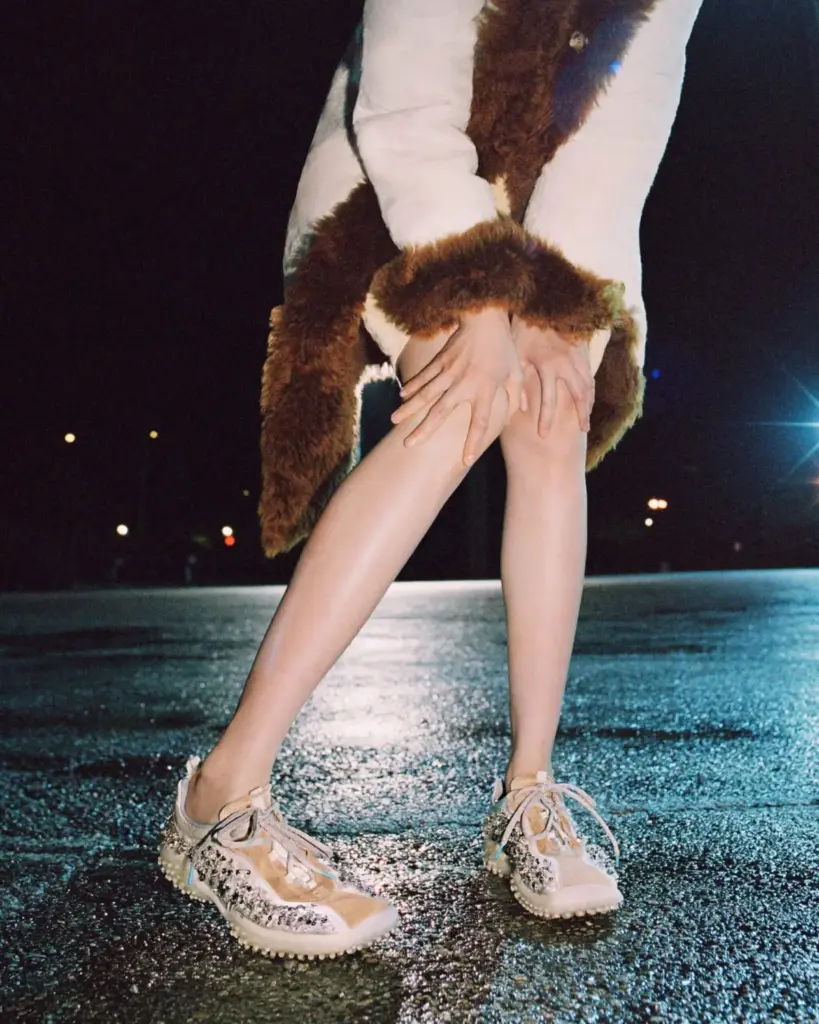
Consider Miu Miu’s high-profile rollout of the Bubble Sneaker, a design that pulls directly from the label’s fabled early-2000s archives. This silhouette cleverly merges a tech-driven, utilitarian gorpcore sole with a lush, streamlined upper punctuated by intricate crystal beadwork. Similarly, Chloé has embarked on a deeply nostalgic archival kick, spearheaded by the rerelease of the Maxime platform wedge—originally conceived by Phoebe Philo for the house in 2006—alongside the reintroduction of the quintessential Y2K staple, the Susanna studded boot.
This obsession with historical footwear is not merely a nostalgic exercise or a lazy retread of past decades. Rather, it is a revealing diagnostic of how we dress in a hyper-connected, reference-heavy modern world. As contemporary dressing becomes increasingly decentralized, shoes have emerged as the ultimate vehicle for personal expression. In 2026, footwear has effectively dethroned the designer handbag as fashion’s primary currency of individuality, offering consumers a canvas for "art shoes" that transcend the mundane realities of mass commodification.
Detailed Chronology: The Evolution of Footwear Archive-Mining
To understand how footwear usurped ready-to-wear and handbags as the focal point of modern style, we must trace the deliberate steps luxury brands took to unearth their pasts.
The Early-2000s Footwear Resurgence (2020–2023)
The foundation for today’s archive-mining mania was laid during the pandemic-era obsession with Y2K nostalgia. Initially, this manifested on digital resale platforms like Depop and Grailed, where Gen Z consumers hunted down obscure early-2000s footwear. Brands initially watched from the sidelines as vintage sneakers from Nike’s ACG archives, archival Balenciaga, and early Prada Sport lines commanded staggering resale values.
The Shift from Handbags to Footwear (2023–2025)
For decades, the luxury handbag was the undisputed "anchor" of a designer look—a status symbol easily quantifiable by its price tag and logo placement. However, market saturation changed the game. As luxury conglomerates flooded the market with derivative handbag shapes, discerning consumers began experiencing logo fatigue.
By 2024, style setters realized that a minimalist wardrobe paired with an extraordinary, unconventional shoe commanded far more attention on the street-style circuit than a standard-issue luxury tote. Brands took note. Design houses began auditing their internal museums, dusting off technical schematics from the mid-2000s, and retooling factories to reproduce archival soles and hardware that had been dormant for two decades.
The Peak of the "Referential Era" (2026)
Today, we have reached the apex of what trend forecasters call the "referential era." Miu Miu’s Fall/Winter collections encapsulate this ethos perfectly. On the runway, the newly revived Bubble sneakers were intentionally styled with suiting ripped straight from the aesthetic playbook of the 1970s, empire-waist tops and whimsical hats with a distinctly 1960s air, 90s-inspired distressed leathers, and sheer, delicate slip dresses bearing 1920s-style embellishments.

The shoes do not match a single historical period; instead, they bridge them. In an era where no single aesthetic reigns supreme, the shoe acts as the ultimate anchor, unifying disparate stylistic threads into a cohesive, highly individual narrative.
Supporting Context & Metrics: The Psychology of the "Art Shoe"
Why are consumers flocking to historical footwear reissues rather than buying entirely new, forward-looking designs? The answer lies in a combination of market fatigue, psychological aversion to used goods, and the unique cultural capital associated with footwear.
The Homogenization of Modern Retail
In a globalized retail market, shopping experiences have become eerily uniform. A consumer can walk into luxury flagships in New York, Tokyo, Milan, or London and find virtually identical racks of mass-produced merchandise. This hyper-commodification has created a profound counter-desire for uniqueness.
According to cultural analysts, consumers are actively searching for items that signal discernment rather than mere purchasing power. While a handbag is intrinsically tied to monetary storage and utility, footwear carries a different psychological weight.
The Haptic Hesitation: Why Reissues Outperform True Vintage
While thrift and vintage culture are at an all-time high, footwear presents a unique psychological barrier that apparel and handbags do not.
As prominent footwear influencer Lars Byrresen Petersen notes, buying pre-owned shoes can sometimes feel invasive. "Some people are uncomfortable buying vintage shoes," Petersen explains. "You can always feel the previous owner of a vintage shoe. It takes the shape of its original wearer, and therefore a bit of their sole—pun intended—will always be in that shoe."
This haptic hesitation has created a lucrative gap in the market. Luxury houses have recognized that consumers want the narrative depth, patina, and historical significance of vintage footwear, but with the pristine, uncompromised structural integrity of a brand-new factory release. Re-releasing archival styles satisfies this exact psychological sweet spot.
Official Statements & Expert Perspectives
To contextualize the gravity of this footwear-led shift, industry leaders and fashion historians have weighed in on the cultural mechanics driving the trend.

Valerie Steele, director and chief curator of the Museum at the Fashion Institute of Technology (FIT), offered a sharp analysis of the phenomenon in a recent interview with ELLE:
"I think that shoes have more of a sense of identity to them. We talk about ‘Walk a mile in my shoes.’ I think that ‘art shoes’ are very much a way of saying, ‘I am a special, artistic person.’ Whereas a handbag is still slightly contaminated with mercantile values. It’s really about where you carry your money around, and it’s a very expensive accessory. They want something that’s special because everything is so commodified and mass-produced that you go to stores all over the world and it’s all the same stuff. People are looking so much for something that will be special and different."
Echoing this sentiment, Lars Byrresen Petersen highlights how minimalist apparel has inadvertently thrust footwear into the spotlight as the primary vehicle for self-expression:
"More so now, shoes have become a very distinct and expressive part of an outfit because everyone is obsessed with sort of paired-down clothing. The re-release is due to two things, I believe: brands are seeing that vintage shoes are trending and that people are swooning over them on socials. But also some people are uncomfortable buying vintage shoes…"
These insights underscore a profound industry pivot: footwear is no longer just a functional necessity or a secondary accessory. It is the core narrative device of contemporary styling.
Future Outlook: Where Does the Archive-Mining Trend Go Next?
As luxury houses continue to open their vaults, the immediate future of fashion will likely see an intensification of archive-mining, though with a few critical evolutions:
- Expansion into Lesser-Known Eras: While the early 2000s and Y2K aesthetics currently dominate, brands are already beginning to mine the late 1980s and early 1990s minimalist orthopedic and conceptual footwear spaces. Expect to see obscure orthopedic-chic silhouettes and avant-garde industrial designs from defunct European houses get the reissue treatment.
- Technological Updates to Archival Silhouettes: Unlike true vintage pieces that suffer from degraded adhesives, brittle plastics, and uncomfortable footbeds, future reissues will increasingly marry archival design aesthetics with modern comfort technology. Brands are utilizing lightweight composite foams, sustainable materials, and ergonomic footbeds housed inside 20-year-old exterior molds.
- The Rise of "Footwear-First" Styling Curriculums: Stylists and creative directors are increasingly building entire seasonal collections from the ground up—literally designing the clothing line around a revived archival shoe rather than selecting the footwear as a final afterthought.
As long as the fashion consumer hungers for authenticity in a mass-produced world, the archive will remain the industry’s most valuable resource. And as long as we continue to walk through a referential landscape where past and present blur into one, the archival shoe will remain the ultimate badge of distinction. If the archival shoe fits, wear it—because for now, it is the only way forward.