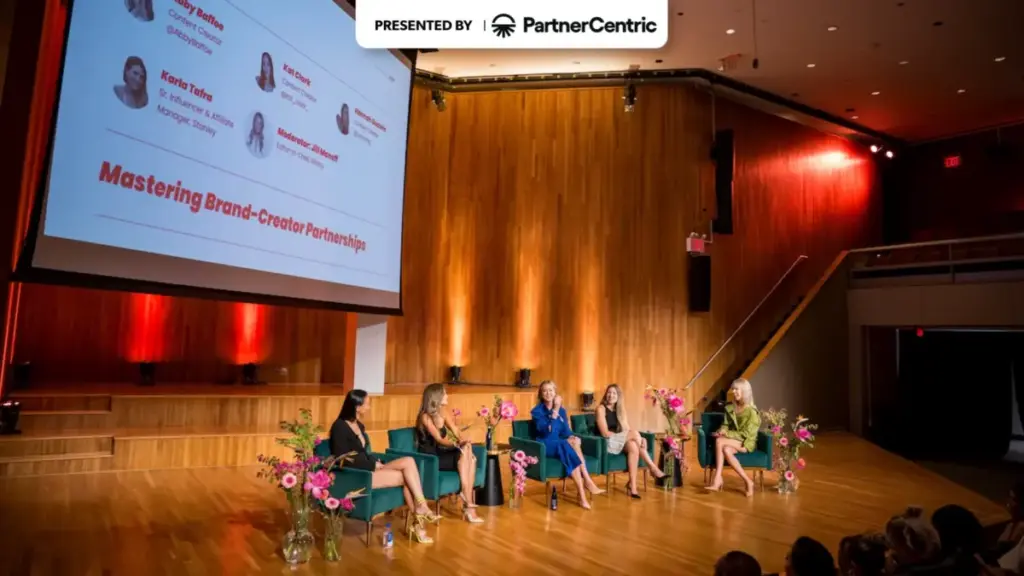
NEW YORK — As the digital marketing landscape undergoes a seismic shift, the definitions of "creator," "influencer," and "industry expert" are actively being rewritten. At the recent Glossy Pop NYC summit, top-tier fashion and beauty executives, elite content creators, and professional athletes converged to dissect the forces shaping the modern creator economy.
From the integration of artificial intelligence and advanced digital marketing strategies to the hyper-saturation of social platforms, the central question of the conference was clear: In a crowded digital ecosystem where anyone can buy a microphone and broadcast an opinion, what does it truly take to stand out, build a sustainable business, and command industry authority?
As the event made abundantly clear, the era of the passive, transactional "billboard" influencer is rapidly giving way to a more sophisticated ecosystem characterized by lifestyle diversification, athlete-led creative partnerships, and—above all—deep-seated, real-world professional expertise.
Executive Overview
The creator economy has matured past its wild-west phase. No longer defined simply by follower counts and vanity metrics, the modern landscape demands operational sophistication, cross-industry collaboration, and tangible skill sets.
Key takeaways from the Glossy Pop NYC discussions highlight an industry-wide pivot:
- The Death of the Strict Niche: Long-standing creators are breaking out of traditional content silos, moving toward broader lifestyle narratives while maintaining authentic, long-term brand equity.
- Athletes as Creators: Professional athletes are no longer content playing the role of traditional corporate endorsers; they are demanding seats at the table for product development and creative direction.
- The Luxury Constraint: While mass-market campaigns prioritize viral execution, luxury fashion houses continue to enforce rigid brand guidelines, forcing creators to balance algorithmic growth with elevated aesthetics.
- The Rise of Real-World Credibility: Industry veterans and seasoned practitioners are drawing a hard line between fleeting internet opinions and decades of hard-won domain expertise—a distinction that major retail partners increasingly demand.
Detailed Chronology: How the Creator Economy Reached This Crossroads
To understand where the industry is heading, it is vital to examine how it evolved. The journey from early social media beauty tutorials to multi-million-dollar creator-led brand acquisitions has been rapid and disruptive.
Phase One: The Rise of the Digital Native (2010–2018)
In the early days of Instagram and YouTube, the "influencer" was primarily an independent enthusiast. Creators built audiences by sharing hyper-specific tutorials—makeup applications, hair styling routines, and haul videos. Brand partnerships during this era were largely transactional: brands sent free product (PR packages), and creators posted organic or sponsored reviews. The barrier to entry was defined by early adoption of platform algorithms and aesthetic consistency.
Phase Two: Hyper-Niche Monopolization and Commercialization (2018–2022)
As venture capital flooded the direct-to-consumer (DTC) ecosystem, brands realized that micro- and macro-influencers could drive conversions far more efficiently than traditional media. Creators were advised by management agencies to stick rigidly to a single "niche" to maximize algorithmic categorization. However, this hyper-specialization eventually created creative fatigue, both for audiences and for the creators themselves.
Phase Three: The Convergence of Lifestyle, Elite Sports, and Real Skill (2023–Present)
Today, the boundaries between traditional entertainment, professional sports, digital content creation, and enterprise retail have collapsed. As discussed at Glossy Pop NYC, today’s successful creators operate like media agencies and product founders. They fluidly cross genres, refuse to be boxed into narrow algorithmic definitions, and leverage offline authority to secure high-value retail partnerships.
Supporting Context & Metrics: Navigating Saturated Markets and Shifting Expectations
The modern creator economy exists under the heavy weight of digital saturation. With billions of active users globally uploading content across TikTok, Instagram, YouTube, and emerging platforms, the competition for consumer attention has never been fierder.
The Problem of Saturation
Marketers are grappling with consumer fatigue. Audiences have become increasingly skeptical of traditional sponsored posts, forcing brands to seek out partners who offer genuine cultural resonance. According to recent digital marketing benchmarks, engagement rates for mega-influencers have steadily declined, while micro- and nano-influencers—as well as creators with demonstrable, real-world skill sets—continue to command higher trust quotients.
The Divergence of Mass Market vs. Luxury Campaigns
A critical theme explored at Glossy Pop NYC was the dichotomous nature of brand execution. Creators navigating multiple tiers of the fashion and beauty markets must adapt to entirely different rulebooks:
- Mass-Market / Lifestyle Campaigns: These campaigns prioritize reach, engagement, and algorithmic virality. Creators are often given creative freedom to stage humorous, relatable, or trend-jacking content designed to trigger the platform’s recommendation engine.
- Luxury Fashion Campaigns: Conversely, high-end legacy houses operate with hyper-curated precision. Creators working within the luxury space must sublimate their personal viral instincts to serve the overarching, decades-old visual identity of the brand.
Official Statements & Industry Insights
The panels at Glossy Pop NYC featured candid, unfiltered commentary from some of the most influential figures in fashion, beauty, and digital media. Here is what industry leaders had to say about the current state of influence.
Abby Baffoe on Breaking Free from Niche Restrictions
Creator Abby Baffoe, who launched her digital career in 2019 primarily focusing on hair tutorials, discussed the psychological and creative limits of hyper-niche content creation. Over the years, Baffoe has successfully transitioned her platform into a comprehensive lifestyle destination.
"Having a niche works for some people, but for me, it felt restricting," Baffoe told the audience.
Despite broadening her scope—incorporating travel, fashion, interior design, and daily vlogs—Baffoe has successfully retained foundational brand partnerships with legacy giants like TRESemmé and L’Oréal. Her secret? Ensuring that these legacy brands continue to fit organically into her daily lifestyle rather than feeling like forced interruptions.
Hailey Van Lith on Redefining the Athlete-Brand Partnership
The intersection of professional athletics and digital marketing was another major talking point. WNBA star Hailey Van Lith offered a scathing critique of how athletes have historically been treated by corporate sponsors—essentially relegated to human billboards.
Van Lith emphasized that modern athletes are demanding a deeply collaborative role in campaign ideation, creative direction, and product strategy.
"Some athletes love their sport so much, and the brand [partnership] side is kind of a supplement," Van Lith explained. "But for me, I like the experience of even [deciding] what the shoot is going to look like."
By shifting from passive endorsers to active creative directors, athletes like Van Lith are proving that athletic excellence and digital media fluency are mutually reinforcing.
Tessa Brooks on Navigating the Creative Chasm
With a massive combined following of over 25 million across Instagram and TikTok, creator, dancer, and actress Tessa Brooks shared her firsthand experience managing the stark contrast between mass-market campaigns and high-fashion collaborations.
"When it comes to high-fashion brands, it’s very different because they’re so specific about who they are and their image," Brooks noted, contrasting these delicate partnerships with the high-energy, viral-focused strategies required for everyday consumer goods.
Kelly Cutrone on the Erosion of the Term "Influencer"
Perhaps the most polarizing and talked-about commentary of the summit came from fashion PR veteran and industry luminary Kelly Cutrone, who pulled no punches when evaluating the modern creator landscape. Cutrone argued that the terms "influencer" and "micro-influencer" have been stripped of meaningful substance.
"For me, the word ‘influencer’ or ‘microinfluencer,’ it’s whatever," Cutrone stated bluntly.
She pointed out that the democratization of technology—while empowering—has created widespread market confusion regarding who possesses actual expertise versus who simply possesses good lighting and a microphone.
"There is a difference between an opinion and experience," Cutrone added. She stressed that building a lasting legacy in fashion and beauty requires treating the industry as an all-encompassing lifestyle and career, rather than a side hustle born of viral convenience.
Mary Phillips on the Indispensable Value of Real-World Skills
Echoing Cutrone’s emphasis on hard-earned experience, renowned makeup artist and founder of M.ph by Mary Phillips, Mary Phillips, shared how decades of technical mastery shielded her brand from the typical hurdles of retail distribution.
Rather than building an audience online first and translating it into a product line—the typical playbook for modern digital creators—Phillips leveraged her decades-long reputation behind the makeup chairs of Hollywood’s elite.
"When we pitched our idea to Sephora before having any products, they said, ‘Great, we want it,’" Phillips recalled. "They [Sephora] are a great partner because they want what you do and what you know."
Phillips’ success serves as a masterclass for aspiring creators and entrepreneurs: technical excellence and industry-specific craftsmanship remain the ultimate competitive advantages in an oversaturated market.
Future Outlook: Where Do Creators Go From Here?
As the dust settles on Glossy Pop NYC, the roadmap for the future of the creator economy comes into sharper focus. The coming years will likely separate temporary digital trends from enduring commercial enterprises.
1. The Professionalization of Talent
Creators will increasingly structure their businesses like traditional media companies. Talent management agencies will evolve into full-service incubators, helping creators transition from sponsored post-makers to equity-holding founders, media publishers, and executive producers.
2. The Premium on Domain Expertise
As Kelly Cutrone and Mary Phillips highlighted, consumer skepticism and market saturation will ultimately punish superficiality. Platforms and audiences are beginning to reward individuals who bring tangible, real-world skills—whether that is athletic mastery, decades of makeup artistry, or rigorous editorial fashion journalism.
3. Deeper Collaborative Integration
Brands will no longer look to creators simply as distribution channels. As demonstrated by Hailey Van Lith’s approach to athlete partnerships, the future belongs to brands willing to co-create products, co-author narratives, and relinquish creative control to trusted partners who intimately understand their audiences.
Ultimately, the message emerging from Glossy Pop NYC is one of evolution and maturity. The golden ticket of simply having followers is expiring. In its place, a new era has arrived—one where authenticity, real-world skill, and rigorous creative collaboration reign supreme.