Executive Overview
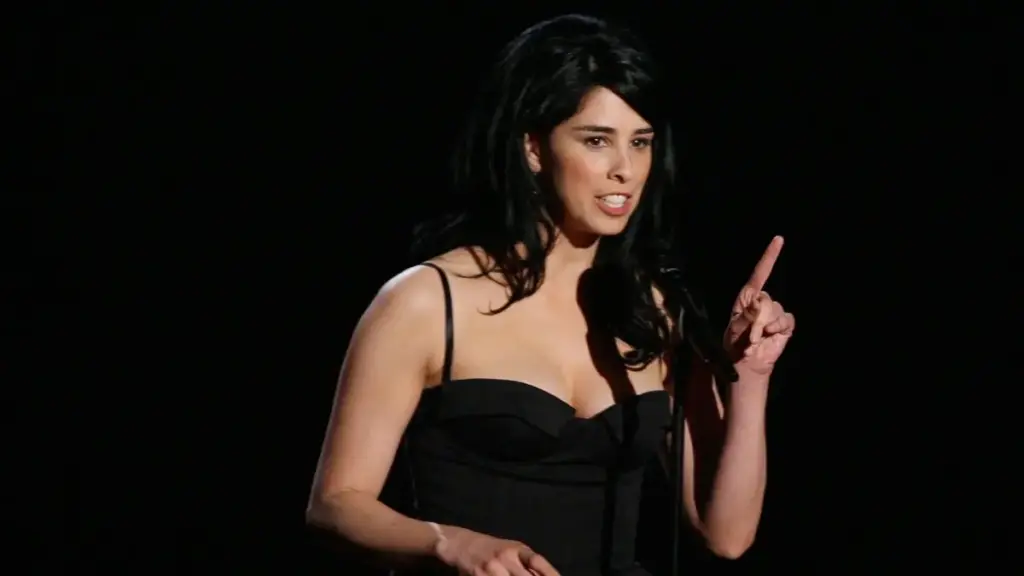
The intersection of early-2000s celebrity culture, late-night and awards-show roast comedy, and the burgeoning digital archiving of media creates a fascinating lens through which to view societal shifts. On June 3, 2007, comedian Sarah Silverman took the stage at the Universal Amphitheatre in Los Angeles to host the annual MTV Movie Awards. What followed was a standard-bearer monologue of the era’s edgy, boundary-pushing comedic style—a style that frequently relied on punching down at prominent public figures. Among her targets was socialite, reality television pioneer, and global tabloid fixture Paris Hilton, who was mere days away from beginning a jail sentence for a probation violation.
While the live audience erupted in cheers and laughter, the target of the joke sat visibly deflated, fighting back tears under the glaring lights of global television production. For years, the incident was written off as par for the course in an entertainment industry defined by the ruthless cynicism of the mid-2000s gossip machine. However, as cultural standards evolved and discussions surrounding the psychological toll of public shaming took center stage, the moment was re-evaluated.
Nearly a decade and a half later, Hilton opened up about the profound emotional distress the monologue caused her, detailing an experience she likened to sitting ringside at her own public execution. This disclosure prompted a public and private reckoning between the two women, leading to an apology from Silverman and a mutual dialogue on empathy, accountability, and the dark side of early-2000s comedy. This report provides a comprehensive examination of the event, its cultural context, the emotional fallout, the subsequent reconciliation, and the broader implications for the entertainment industry’s treatment of women in the public eye.
Detailed Chronology
To fully understand the weight of the June 3, 2007 incident, one must trace the timeline of events leading up to the MTV Movie Awards, the night itself, and the years-long aftermath that culminated in a historic reconciliation.
Spring 2007: The Legal Troubles of Paris Hilton
In September 2006, Paris Hilton was arrested for driving under the influence (DUI) in Los Angeles. She was placed on 36 months of informal probation. However, in January and February 2007, she was pulled over twice for driving with a suspended license, directly violating the terms of her probation.
By May 2007, a Los Angeles judge sentenced Hilton to 45 days in a regional detention facility. The impending incarceration became the epicenter of global media fascination. Tabloids, cable news networks, and late-night talk shows fixated on the impending jailing of the heiress, turning her legal troubles into a spectator sport. Every movement, outfit, and public appearance she made was heavily scrutinized, setting the stage for pop culture satirists to capitalize on her widespread visibility.
June 3, 2007: The MTV Movie Awards Monologue
As the host of the 2007 MTV Movie Awards, Sarah Silverman was at the height of her edgy, deadpan comedic persona—a persona built on delivering shockingly profane and politically incorrect material with an innocent, naive demeanor. During her opening monologue, Silverman took aim at a wide array of Hollywood elite, including Jack Nicholson, Lindsay Lohan, and Eva Mendes.
However, the centerpiece of her routine was directed squarely at Hilton, who was seated in the audience.
"Paris Hilton is going to jail," Silverman announced to the crowd. As the amphitheater erupted into cheers and raucous applause, the camera panned to Hilton, who sat frozen with a strained, uncomfortable smile.
"Wow, thank you," Silverman joked, feigning surprise at the intense audience reaction before delivering the punchline that would define the night:
"I heard that to make her feel, like, more comfortable in prison, the guards are gonna paint the bars to look like penises. I just worry that she’s gonna break her teeth on those things."
While stars like Jack Nicholson visibly laughed, Hilton endured what she would later describe as one of the most agonizing experiences of her life.
June 5–June 26, 2007: The Aftermath and Imprisonment
Just days after the broadcast, Hilton surrendered to the Century Regional Detention Facility in Lynwood, California, to begin her sentence. The juxtaposition of the MTV Movie Awards jokes and her immediate incarceration cemented her status as the ultimate punchline of mid-2000s media. While Hilton served her sentence—which included a brief, much-publicized stint under house arrest due to medical reasons—the cultural conversation moved on, but the psychological impact of the public humiliation remained etched in Hilton’s memory.
March 2021: The Retrospective and Public Apology
The narrative shifted significantly fourteen years later. On an episode of her podcast, This Is Paris, Hilton revisited the 2007 incident. For the first time, she detailed the profound emotional trauma she experienced while sitting in the audience.
Following the podcast episode’s release, the clip went viral on social media, prompting immediate public discourse. On March 5, 2021, Sarah Silverman addressed the backlash on her own podcast, The Sarah Silverman Podcast, offering a sincere and unfiltered public apology. Silverman admitted that she felt immediate regret upon seeing Hilton’s facial expression in the audience back in 2007, noting that she had attempted to mail a written apology to Hilton at the time—a letter that apparently never reached its intended recipient.
Hilton accepted the apology graciously, signaling a moment of closure and mutual respect between two women who had navigated vastly different corners of the fame ecosystem.
Supporting Context & Metrics
The cultural environment of 2007 was vastly different from the media landscape of the present day. To understand why Silverman’s jokes resonated so deeply with the audience—and why Hilton was left defenseless—it is essential to analyze the structural dynamics of celebrity journalism and comedy during that era.
The Peak of Tabloid Cruelty
The mid-2000s are frequently remembered as a dark age for female celebrities. Figures like Britney Spears, Lindsay Lohan, Jessica Simpson, and Paris Hilton were subjected to relentless harassment by paparazzi, gossip blogs, and mainstream media outlets. Mental health struggles, legal missteps, and personal vulnerabilities were monetized on the covers of weekly magazines like US Weekly, People, and In Touch, as well as early digital gossip empires like Perez Hilton.
In this climate, public humiliation was not merely tolerated; it was a celebrated form of entertainment. Audiences expected female pop culture icons to be flawless, and any failure—whether legal, professional, or personal—was met with collective schadenfreude. Silverman’s monologue tapped directly into this cultural vein. The joke relied on the premise that Hilton, as a wealthy socialite, was inherently deserving of degradation, regardless of the severity of her legal infraction.
The Evolution of Comedy and Empathy
In the years following the 2007 incident, the entertainment industry underwent a significant paradigm shift. The rise of social media empowered celebrities to bypass traditional media gatekeepers and speak directly to their audiences, allowing them to reclaim their narratives. Concurrently, public discourse shifted toward mental health awareness, empathy, and the condemnation of bullying and misogyny.
Comedy also evolved. While "edgy" humor remains a staple of the art form, audiences and comedians alike began to critically examine who was being targeted and why. Punching up—directing satire toward institutions, political figures, and those in power—gradually became favored over punching down at vulnerable individuals who were already enduring intense public scrutiny. Silverman’s swift and unhesitating regret reflected this broader cultural awakening, demonstrating an acknowledgment that comedic license does not exempt a performer from inflicting real emotional harm.
Official Statements
The dialogue between Paris Hilton and Sarah Silverman unfolded across multiple platforms, showcasing a rare example of accountability and grace in the public sphere. Below are the key statements made by the principals involved.
Paris Hilton’s Recollection (March 2021)
Reflecting on the 2007 event on her podcast, This Is Paris, Hilton articulated the visceral terror and humiliation she felt in real-time:
"I was trying to hold back tears so hard. I had tears welling in my eyes. I wanted to run out of the entire room, but I just was trying to be strong and sit there, and the whole audience is laughing and she would not stop. It was so painful."
She later elaborated on the experience of watching the jokes land while knowing her incarceration was imminent, describing it as being forced to sit ringside at her own public execution.
Sarah Silverman’s Apology (March 2021)
Responding on The Sarah Silverman Podcast, Silverman expressed deep remorse, detailing her immediate reaction upon seeing Hilton in the audience:
"I remember spotting Hilton in the audience and seeing the look on her face… I regretted the jokes not years later, but kind of immediately. I wrote Hilton a letter of apology at the time, which the former reality star apparently never received."
Silverman emphasized that while she had been thrilled with how the audience received the comedic material conceptually, the human cost became instantly apparent when she locked eyes with Hilton. She noted:
*"I’m thrilled that my joke did well… but [seeing her face] broke my heart. I was like, ‘Oh, f**.’ It just made me feel terrible."
Paris Hilton’s Response
Upon hearing Silverman’s retrospective apology, Hilton took to Twitter (now X) and her podcast to express her reaction:
"I respond to Sarah Silverman’s apology after opening up about my emotional experience at the 2007 MTV Movie Awards."
Hilton admitted she was "shocked" and "pleasantly surprised" by the comedian’s accountability, publicly thanking Silverman for stepping forward to make amends after fourteen years.
Future Outlook
The resolution of the 2007 MTV Movie Awards incident serves as a case study in how the entertainment industry can reconcile past transgressions with modern standards of empathy and accountability. As public figures continue to re-examine the archives of early-2000s media culture, several key takeaways emerge for the future of comedy, media production, and celebrity relations.
1. The Redefining of Comedic Boundaries
Comedians operating in the modern era navigate a landscape where audience expectations prioritize social awareness. While edgy humor retains a dedicated market, the acceptance of "punching down" has drastically diminished. Future comedic productions are increasingly likely to feature collaborative boundaries, pre-show alignments, and a conscious avoidance of targeting individuals who are already undergoing severe public crises.
2. The Power of Retroactive Accountability
The interaction between Hilton and Silverman sets a precedent for how public figures can address historical mistakes. Rather than doubling down or dismissing past behavior as "a product of its time," active ownership and unprompted apologies—such as the one delivered by Silverman—foster genuine closure. This cultural shift encourages public figures to model emotional maturity, proving that accountability does not weaken a creator’s legacy, but rather enhances it.
3. The Digital Archive and Permanent Memory
In an era where every historical broadcast is permanently etched into digital platforms like YouTube, TikTok, and streaming archives, offensive or hurtful moments from the past cannot simply be swept under the rug. As legacy media continues to be scrutinized by digital-native generations, cultural institutions and creators must proactively address historical harm rather than relying on time to erase it.
Ultimately, the journey from the harsh spotlights of the 2007 MTV Movie Awards to the mutual understanding reached in 2021 illustrates a profound evolution in pop culture. By replacing the cruelty of the past with dialogue and empathy, both Hilton and Silverman contributed to a healthier, more compassionate landscape for entertainment media moving forward.