Executive Overview
For the better part of a decade, the fashion landscape has been dominated by a sprawling, gravity-defying ethos. The reigning silhouette has been defined by volume, comfort, and an intentional rejection of restriction—manifesting primarily as the puddling wide-leg trouser, the polarizing barrel cut, and the relaxed fit-and-flare. Consumers and designers alike found solace in the oversize, a trend turbocharged by the global shift toward comfort during the COVID-19 pandemic and cemented by a generational swing toward late-1980s and 1990s counterculture aesthetics.
Yet, fashion is inherently reactionary. It thrives on the pendulum swing, pivoting toward the exact inverse the moment a trend reaches saturation.
That pivot arrived abruptly on the Spring/Summer 2027 menswear runways. Signaling a sharp, unmistakable left turn away from billowing denim and floor-sweeping trousers, the industry’s most influential houses have resurrected a ghost many thought was permanently buried: the calf-clinging, ultra-slim skinny jean.
Led by a seismic joint presentation from Miuccia Prada and Raf Simons in Milan, followed quickly by corroborating statements from Dior, Saint Laurent, and Celine in Paris, the message is clear. The era of the shrink-wrapped trouser is officially staging a high-fashion resurgence.
However, this revival is not merely a nostalgic nod to 2012 Tumblr culture or indie-sleaze nostalgia. It arrives at the intersection of cyclical trend fatigue, a massive cultural shift in body politics, and the dawning of the GLP-1 era of fashion. As the industry recalibrates its definition of the ideal physique, the return of the skinny pant raises complex questions about inclusivity, body types, and the relentless pressure of runway standards.
Detailed Chronology: From Indie Sleaze to the Puddling Era and Back
To understand how high fashion arrived at the doorstep of the skinny silhouette once more, one must trace the winding, cyclical path of denim history over the last twenty-five years.
2000–2010: The Hedi Slimane Revolution and the Indie Sleaze Boom
At the turn of the millennium, menswear was largely defined by boxy tailoring and relaxed silhouettes born of the late ’90s. That all changed when Hedi Slimane took the reins at Dior Homme in 2000. Lacking formal design training but possessing an uncompromising vision, Slimane introduced a razor-thin silhouette that shocked the traditional luxury establishment. His trousers were so narrow they required a complete structural re-evaluation of male proportions, famously prompting fashion icon Karl Lagerfeld to drop 92 pounds just to fit into them.
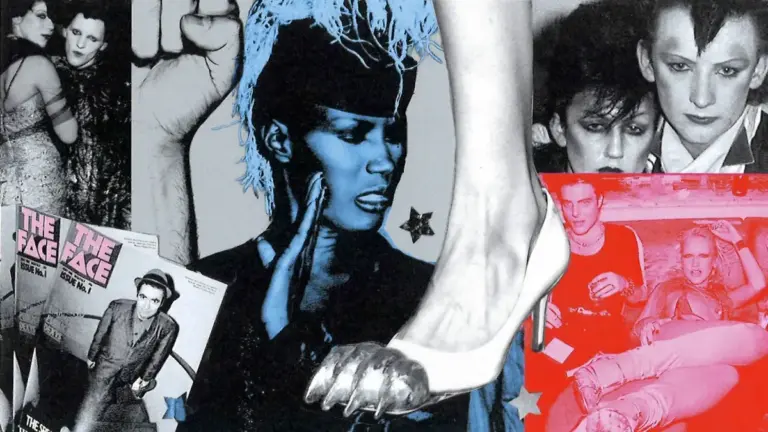
Slimane’s vision was inextricably linked to the indie-rock ethos of the era—merging Kurt Cobain-esque grunge with sharp, Rive Droite elegance. Concurrently, pop-punk and alternative culture adopted the aesthetic with evangelical zeal. Artists like Pete Wentz of Fall Out Boy and musicians from The Strokes popularized spray-on denim, black and dark indigo washes, and skin-tight cuts that quickly bled from underground music venues into the global mainstream.
[2000s: Slimane / Indie Sleaze] ---> [2010s: Peak Skinny / Tumblrcore] ---> [2020s: Pandemic Comfort / Wide-Leg] ---> [2027: The High-Fashion Skinny Revival]2010s: The Mass-Market Peak and Tumblrcore
By the early 2010s, the skinny jean was no longer an underground statement—it was the baseline uniform of an entire generation. Brands like J Brand, American Apparel, Joe’s Jeans, and Rag & Bone built empires on infinite iterations of the fit. Driven by the rise of "Tumblrcore," millennials paired their skinny denim with V-neck t-shirts, Converse All-Stars, and canvas slip-ons. It was ubiquitous, accessible, and seemingly permanent.
2020–2026: The Reign of the Oversize and Pandemic Comfort
As is the immutable law of trends, ubiquity breeds contempt. Toward the end of the 2010s, visionary designers such as Virgil Abloh (at Off-White and Louis Vuitton), Jerry Lorenzo (Fear of God), and Martine Rose began introducing straight-leg and, eventually, wide-leg silhouettes. They drew inspiration from 1980s counterculture and American prep.
When the COVID-19 pandemic forced global lockdowns in 2020, comfort transitioned from a design preference to an absolute necessity. The fashion industry accelerated its flight from restriction, embracing the "puddling" wide-leg pant, the voluminous barrel cut, and relaxed tailoring that prioritized ease of movement above all else. For nearly half a decade, skin-tight denim was relegated to the fashion history books, preserved only within specific subcultures like the punk and emo scenes, where it had never truly gone out of style.
Supporting Context & Metrics: The Anatomy of the 2027 Runway Shift
The psychological turning point for the current revival occurred in June 2026 at the Prada menswear show in Milan. Co-designers Miuccia Prada and Raf Simons sent out a collection featuring exclusively skinny, cropped trousers constructed from unconventional materials: teal and yellow leather, sheer technical nylon, and rigid white denim.
+-----------------------------------------------------------------------------------------+
|                              THE SPRING/SUMMER 2027 SHIFT                               |
+--------------------+----------------------------------+---------------------------------+
| DESIGN HOUSE       | KEY SILHOUETTE                   | NOTABLE MATERIALS               |
+--------------------+----------------------------------+---------------------------------+
| Prada              | Shrink-wrapped, cropped slim fit | Teal/yellow leather, sheer nylon|
| Dior Men           | Tailored slim-leg trousers       | Structured wools, fine cotton   |
| Saint Laurent      | Second-skin evening trousers     | Satin, patent leather, black    |
| Celine             | Varied (Slim to balloon/wide)    | Denim, classic wool slacks      |
+--------------------+----------------------------------+---------------------------------+
This presentation was not an isolated anomaly. It was the culmination of a gradual tightening across Prada’s recent seasons, where trousers had slowly crept inward until they resembled the skin-tight styles of the mid-2000s.
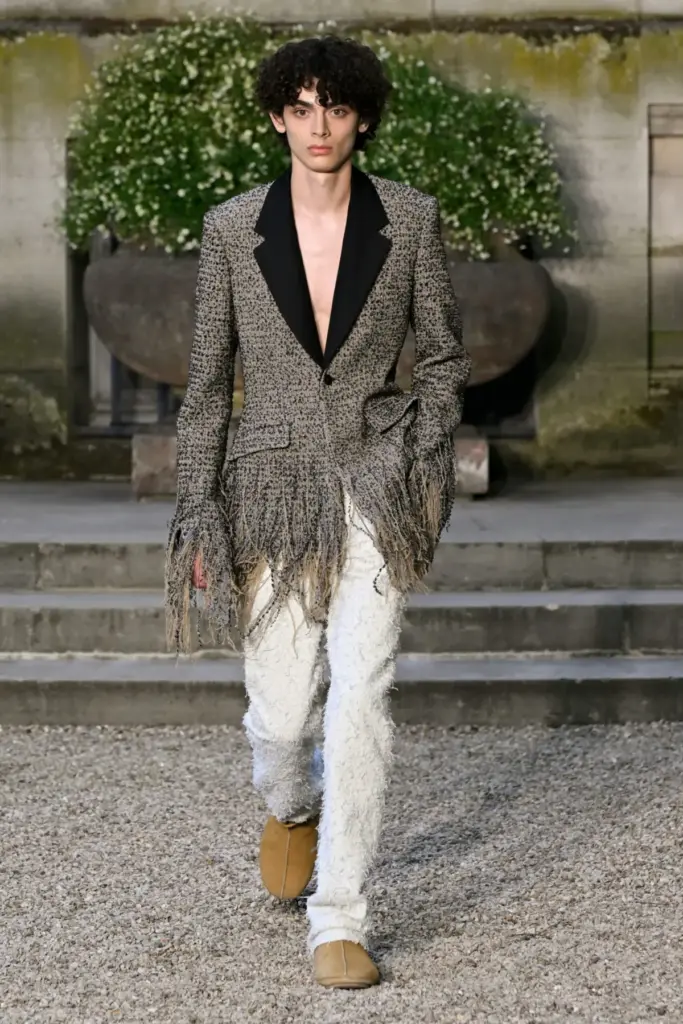
Following Milan, the fashion establishment migrated to Paris, where luxury heavyweights—including Dior, Saint Laurent, and Celine—solidified the directive. While houses like Saint Laurent leaned into a rock-and-roll decadence with second-skin evening trousers, Dior focused on razor-sharp tailoring that abandoned the slouchy proportions of previous seasons.
Yet, the industry’s embrace of this trend is not uniform. The menswear market in 2027 is bifurcated. Alongside the razor-thin offerings at Prada and Dior stood Michael Rider’s highly anticipated debut menswear collection for Celine. Rider offered a masterclass in balance, presenting a diverse lineup that included slim trousers alongside roomy balloon pants, wide-leg slacks, and classic straight-leg jeans reminiscent of the evergreen Levi’s 501 fit. This ensured that while the industry is undeniably exploring narrower cuts, absolute conformity is no longer mandatory.
Official Statements and Industry Perspectives
The rapid pivot back to slim-fitting trousers has ignited fierce debate among designers, stylists, and cultural commentators regarding the underlying drivers of the trend.
Industry analysts point to a concept known as "silhouette fatigue." After years of excessive volume, the human eye naturally begins to crave contrast. A return to slim proportions offers a cleaner, sharper line that pairs more easily with heavy outerwear and structured tailoring—elements that were often swallowed by the massive proportions of the wide-leg era.
However, the conversation extends far beyond aesthetic exhaustion. Observers have increasingly linked the return of the rail-thin silhouette to broader cultural shifts in body politics, colloquially dubbed the "GLP-1 era of fashion."
"When the average runway model appears rail-thin, it forces a critical conversation about the unrealistic physical standards being normalized on the global stage."While conversations regarding body positivity and inclusivity on women’s runways have been a central focus of industry discourse for years, the men’s market has historically been insulated from similar scrutiny. The sudden return of garments that demand a hyper-lean frame—such as spray-on leather and sheer nylon leggings—has brought male body standards under an overdue microscope.
Critics argue that while fashion should ideally serve a diverse array of body types, the commercial push toward ultra-skinny fits can alienate consumers who do not possess the natural lanky build of a runway model. Conversely, proponents of the trend maintain that fashion has always operated as an aspirational, fantastical art form, and that personal style allows consumers to interpret these silhouettes on their own terms rather than adopting them wholesale.
Future Outlook: How to Navigate the New Slim Era
As the retail market prepares for the commercial rollout of the Spring/Summer 2027 collections, consumers and buyers alike are left wondering how to translate these runway extremes into a functional, real-world wardrobe.
- Audit Your Archives: Before discarding your wardrobe in favor of new purchases, check your storage. Those vintage Ksubi, Cheap Monday, or classic APC skinny black jeans tucked away since the mid-2010s may soon find themselves back in heavy rotation.
- Prioritize Personal Taste Over Trend Dictates: As demonstrated by the diverse offerings at Celine and other foundational houses, the modern menswear market is expansive enough to accommodate multiple silhouettes simultaneously. Consumers are no longer bound by a single rigid decree; the key is selecting the proportion that best flatters individual body geometry.
- Experiment with Proportions: If you choose to re-engage with the skinny silhouette, balance is paramount. Pairing a slim trouser with a slightly more relaxed or boxy upper—such as an oversize knit or a structured coat—creates visual tension and modernizes the look, preventing it from feeling like a literal costume-party recreation of 2008.
Ultimately, the resurgence of the skinny jean proves that in fashion, nothing is ever truly dead—it is merely hibernating, waiting for the cultural pendulum to swing back in its direction.