Executive Overview
For years, cultural critics, economists, and media outlets have dissected the burgeoning “homebody economy,” publishing countless think pieces on the rising reluctance of Generation Z to venture out on weekends. Blaming inflation, soaring entertainment costs, and a general cultural pivot toward digital cocooning, conventional wisdom suggested that younger demographics had permanently retreated to the comfort of their bedrooms.
Snapchat, however, is betting against this narrative.
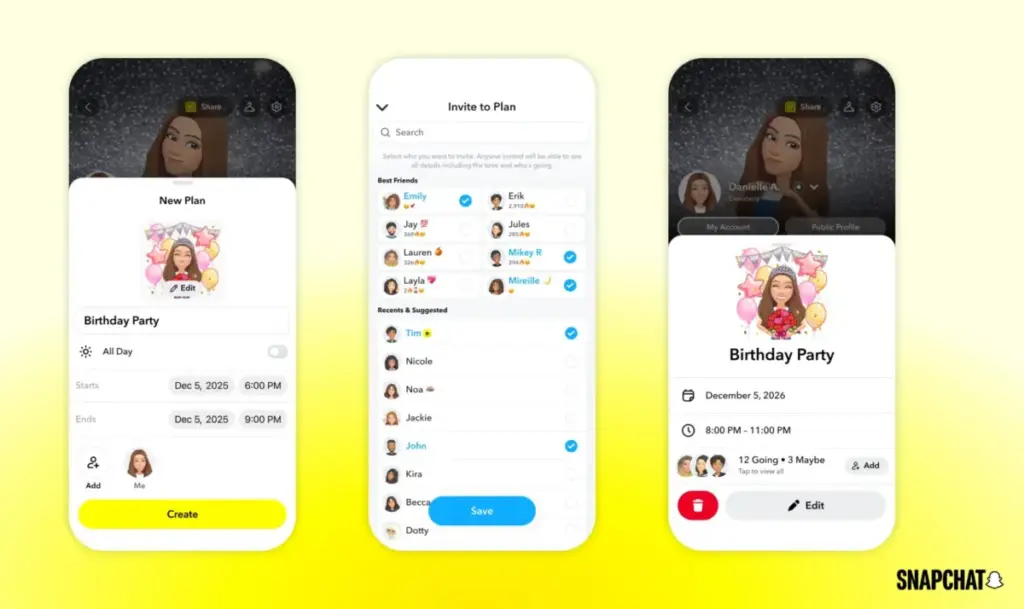
Recognizing that its core user base still possesses a robust appetite for real-world connection, the multimedia messaging giant has introduced Snapchat Plans—an ambitious, native in-app suite designed to bridge the gap between digital conversation and physical hangouts. Functioning as a hybrid of Eventbrite, Partyful, and a private scheduling hub, Snapchat Plans transforms casual chat-room banter about getting together into concrete, organized events.
In a digital ecosystem where platforms increasingly fight for isolated screen-time dominance, Snapchat’s latest feature leans into the app’s fundamental superpower: hyper-local, intimate peer communication. By capitalizing on pre-existing user behaviors—specifically, the high volume of event coordination already occurring within group chats—Snapchat is attempting to streamline the friction-heavy process of event organization.
This strategic rollout arrives at a critical juncture for social media conglomerates. As giants like Instagram double down on Direct Message (DM) ecosystems, TikTok monetizes e-commerce and live-stream features, and YouTube builds robust infrastructure for creator monetization, Snapchat is cementing its identity as the digital living room for close friends. By helping its users coordinate everything from a quick coffee run to a weekend road trip, Snapchat is putting the "social" back in social media—and actively encouraging its community to touch grass.
Detailed Chronology: The Evolution of In-App Utility
To understand the strategic significance of Snapchat Plans, one must trace the evolutionary arc of how social media platforms have transitioned from passive content consumption to active, utility-driven hubs.
Phase 1: The Ephemeral Messaging Era
When Snapchat launched over a decade ago, its core innovation was ephemerality—messages and media that disappeared after viewing. While initially famous for casual photo-sharing and disappearing stories, the app quietly cultivated some of the stickiest peer-to-peer communication channels on the internet. Group chats became the digital equivalent of a school cafeteria table or a neighborhood park bench for younger demographics.
Phase 2: Expanding the Digital Ecosystem
As competition intensified—most notably from Instagram’s aggressive feature replication, including the introduction of "Stories" in 2016—Snapchat had to expand its feature set. The platform introduced Snap Map, bridging the digital-physical divide by letting friends share their real-time geographical locations. Snap Map proved that users were eager to blend their online interactions with physical proximity, laying the conceptual groundwork for location- and event-based tools.
Phase 3: The Birth of Snapchat Plans
Recognizing that millions of users were already using its chat features to hash out itineraries, RSVP details, and logistics for gatherings, Snapchat engineers began conceptualizing a centralized native tool. Instead of forcing users to juggle external applications like Google Calendar, Apple Calendar, or text message threads that inevitably get lost in the noise, Snapchat centralized the entire lifecycle of an event.
- The Announcement: Snapchat officially unveiled Snapchat Plans, detailing a comprehensive toolkit built directly into the app interface.
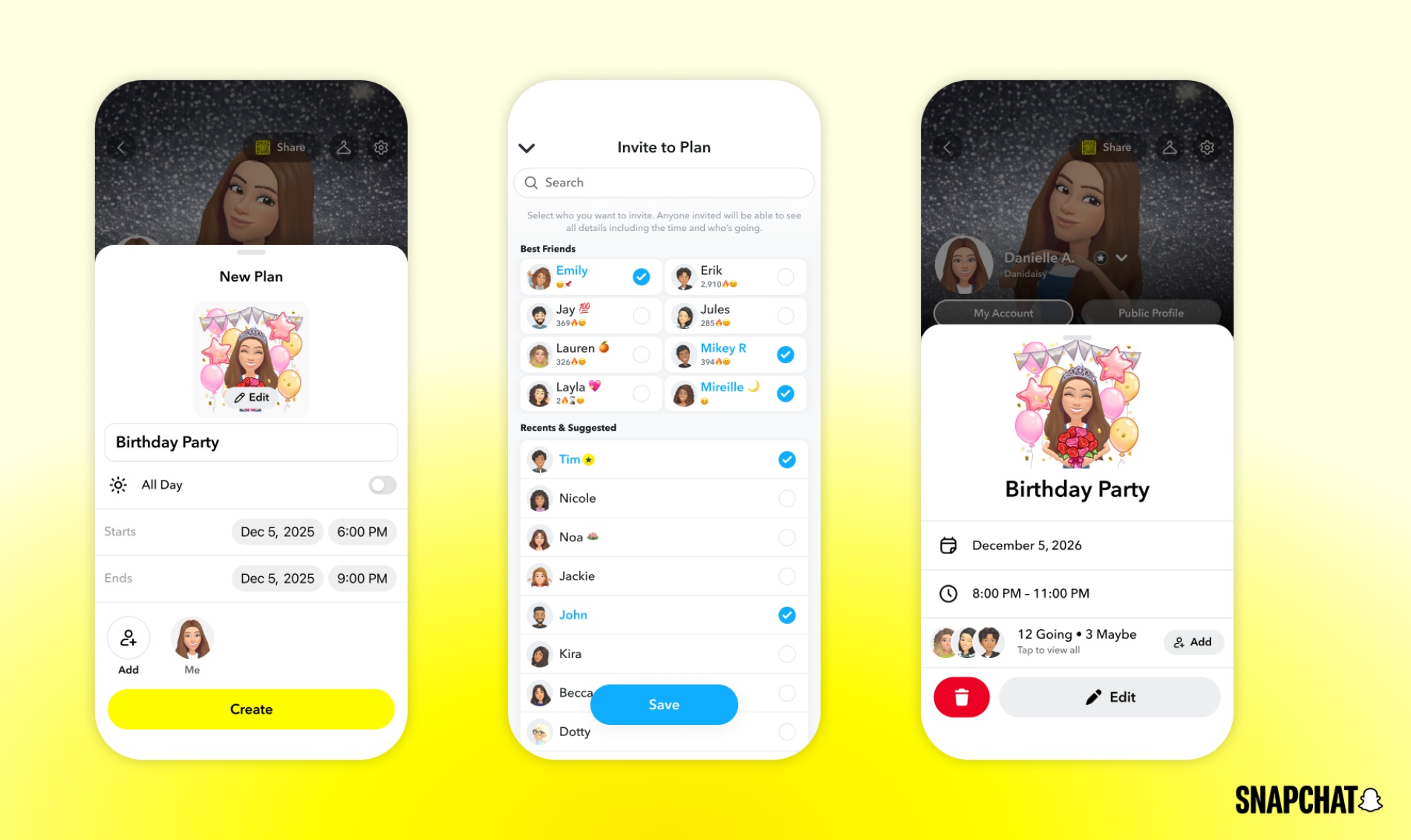
- Feature Integration: The rollout introduced digital invitations supporting up to 200 participants, built-in RSVP tracking, customized Bitmoji invite aesthetics, and dedicated profile real estate to display past, current, and upcoming itineraries.
- The Future Roadmap: In subsequent updates slated for the app’s ecosystem, Snapchat plans to allow users to initiate and manage Plans directly from within active chat windows, ensuring zero workflow interruption.
Supporting Context & Metrics: Why Gen Z Needs This Tool
The introduction of Snapchat Plans is not merely an arbitrary feature update; it is backed by compelling behavioral data regarding how teenagers and young adults interact digitally.
The Group Chat Phenomenon
According to internal platform metrics cited by Snapchat, a staggering 35% of U.S. users between the ages of 13 and 24 already rely on Snapchat group chats to make plans, coordinate logistics, and organize social events. This statistic reveals a critical insight: Gen Z does not suffer from a lack of desire to socialize; rather, they experience friction in execution.
Traditional planning methods are notoriously inefficient. Coordinating a simple dinner among five friends often requires traversing multiple text threads, polling apps, and calendar invites, resulting in buried messages, forgotten details, and ultimately, abandoned get-togethers. Snapchat’s data shows that users were already trying to use the app for event planning, making an official, streamlined function a natural evolution of user intent.
The Homebody Narrative vs. Reality
While studies from financial institutions and market researchers highlight that Gen Z stays home more frequently on weekends due to cost-of-living pressures and a preference for cozy domestic spaces, qualitative data tells a more nuanced story. Young people still crave experiential socialization, concerts, festivals, and casual hangouts. However, the threshold for leaving the house has risen. If an outing requires high administrative effort to organize, it is easily canceled. By stripping away the logistical friction of event planning, Snapchat Plans lowers the barrier to entry for real-world interactions.
Industry-Wide Shifts Toward Closed Loops
Snapchat’s strategic focus on group chats and offline coordination mirrors a broader industry trend. Tech platforms are moving away from public, algorithmic feeds and toward private, high-engagement community spaces:
- Instagram has heavily prioritized DMs, recognizing that private sharing between friends drives higher retention than public broadcasting.
- TikTok continues to innovate across high-converting formats like TikTok LIVE and TikTok Shop to capture active consumer intent.
- YouTube focuses on creator-brand infrastructure to cement its ecosystem’s financial utility.
In this competitive landscape, Snapchat’s competitive advantage lies in its deep, trusted relationships among real-life peer groups. Plans capitalizes directly on this moat.
Official Statements and Product Philosophy
Snapchat’s leadership and product teams have emphasized that privacy and intimacy are at the core of the new feature. In an official company blog post outlining the launch, the platform underscored the distinction between public social media broadcast channels and private peer coordination:
"Like conversations on Snapchat, Snapchat Plans are private and invite-only, giving friends a familiar and trusted place to coordinate the moments that matter most. No more missed get-togethers because of buried messages, lost details, or forgetting to create an invitation."
This positioning is deliberate. In an era where users experience digital fatigue from public-facing algorithms, influencer culture, and performative posting, Snapchat has consistently championed a “real friends only” ethos. By keeping Plans strictly within invite-only parameters and capping guest lists at 200 participants, the platform ensures that event coordination remains intimate, secure, and free from the anxiety of public scrutiny.
Furthermore, product strategists have noted that the integration of personalized elements—such as Bitmoji-customized invites and dedicated profile spaces—transforms mundane logistical tasks into playful, expressive interactions. It leverages the playful visual language that Snapchat users already use to communicate daily.
Future Outlook: What Snapchat Plans Means for the Creator Economy and Social Media
As Snapchat Plans rolls out globally to its massive user base, several implications emerge regarding the future of social media utility, offline coordination, and platform monetization.
1. The Blurring Lines Between Digital and Physical Spaces
Features like Snap Map already normalized sharing location data among trusted circles. Snapchat Plans takes this a step further by introducing intent. Users are no longer just broadcasting where they are; they are proactively designing where they are going to be. This positions Snapchat not just as a communication utility, but as a lifestyle infrastructure app.
2. Potential for Micro-Events and Creator Meetups
While Snapchat Plans is currently positioned as a peer-to-peer tool for friend groups, the architectural framework opens fascinating doors for the creator economy. Nano-influencers, local community organizers, and campus creators could theoretically leverage these invitation tools to coordinate grassroots meetups, study sessions, or brand-sponsored activations with their most loyal followers, all within a private, highly controlled environment.
3. Increased Platform Stickiness
In the attention economy, daily active user (DAU) retention is everything. By integrating event planning directly into the social workflow, Snapchat increases the switching costs for its users. If a user’s upcoming birthday party, weekend trip, and casual dinner itinerary are all hosted and organized inside Snapchat, that user has less incentive to migrate to competing platforms for social coordination.
Conclusion
Snapchat Plans represents a pragmatic, user-centric response to modern digital fatigue. By diagnosing the administrative pain points of youth socialization and solving them within a trusted, private ecosystem, Snapchat has created more than just a calendar app—it has built a bridge back to the physical world. Whether Gen Z’s weekend homebody tendencies can be permanently rewritten remains to be seen, but with Snapchat actively organizing the calendar, the excuse of "lost details" is officially a thing of the past.