Executive Overview
In the rapidly shifting landscape of contemporary luxury fashion, legacy houses face an existential dilemma: how to remain relevant to a digitally native, hyper-conscious generation that views traditional branding with innate skepticism. Enter Coach. The iconic New York-based fashion house has officially pulled back the curtain on its most ambitious digital and cultural undertaking to date: &Coach.
Launched on Wednesday, &Coach is not merely a marketing campaign or a seasonal product push. Instead, the brand has positioned it as a dynamic, living "platform"—a multi-dimensional space designed to mirror the fluid, participatory, and constantly evolving nature of Gen Z identity. Eschewing the heavily retouched perfection, airbrushed studio portraits, and rigid narrative arcs that have long defined the luxury sector, &Coach leans into raw, unvarnished intimacy. It captures cultural powerhouses—spanning the worlds of music, sports, activism, and cinema—in authentic moments of real-life navigation.
Of course, because this is still Coach, every candid snapshot features a carefully integrated, coveted handbag. But the underlying philosophy marks a significant departure from historical luxury playbooks. As Joon Silverstein, Chief Marketing Officer of Coach, aptly noted, the brand is no longer trying to dictate who the consumer should be. Rather, it is positioning its products as supportive companions for a generation that is aggressively writing, editing, and rewriting its own self-expression.
This in-depth report explores the anatomy of the &Coach launch, detailing the strategic pivot behind the platform, analyzing its star-studded roster of disruptors, contextualizing the broader macroeconomic and cultural shifts driving this move, and forecasting what this means for the future of luxury marketing.
Detailed Chronology: The Unveiling of &Coach
The rollout of &Coach was meticulously orchestrated to capture the attention of a demographic that consumes media at lightning speed, predominantly across short-form video platforms and decentralized social feeds.
The Nolita Fantasy and the Digital Reality
While the concept reads like the punchline to a generation-defining joke—Charli XCX, Malala Yousafzai, Paige Bueckers, Toni Breidinger, PinkPantheress, Avantika, and KiiiKiii walk into a bar in Nolita—the reality was far more expansive and global. Rather than relying on a localized physical activation, Coach deployed a digital-first blitz across its newly established dedicated channels on Instagram and TikTok (@and.coach and @andcoach).
The launch capitalized on the zeitgeist by immediately dropping a sequence of vignettes featuring these luminaries, each anchored by a specific thematic subtitle and a signature Coach accessory. The chronology of the campaign’s key reveals illustrates a masterclass in cross-industry casting:
- Avantika Vandanapu (“Owning My Style”): The rising actress was captured at the high-stakes premiere of her Hulu television series, Not Suitable for Work. Eschewing standard red-carpet stiffness, the campaign highlights her vibrant, multi-colored sequined dress effortlessly paired with a structured Tabby bag bearing the classic Coach monogram. The narrative here centers on stepping into the spotlight on one’s own terms.
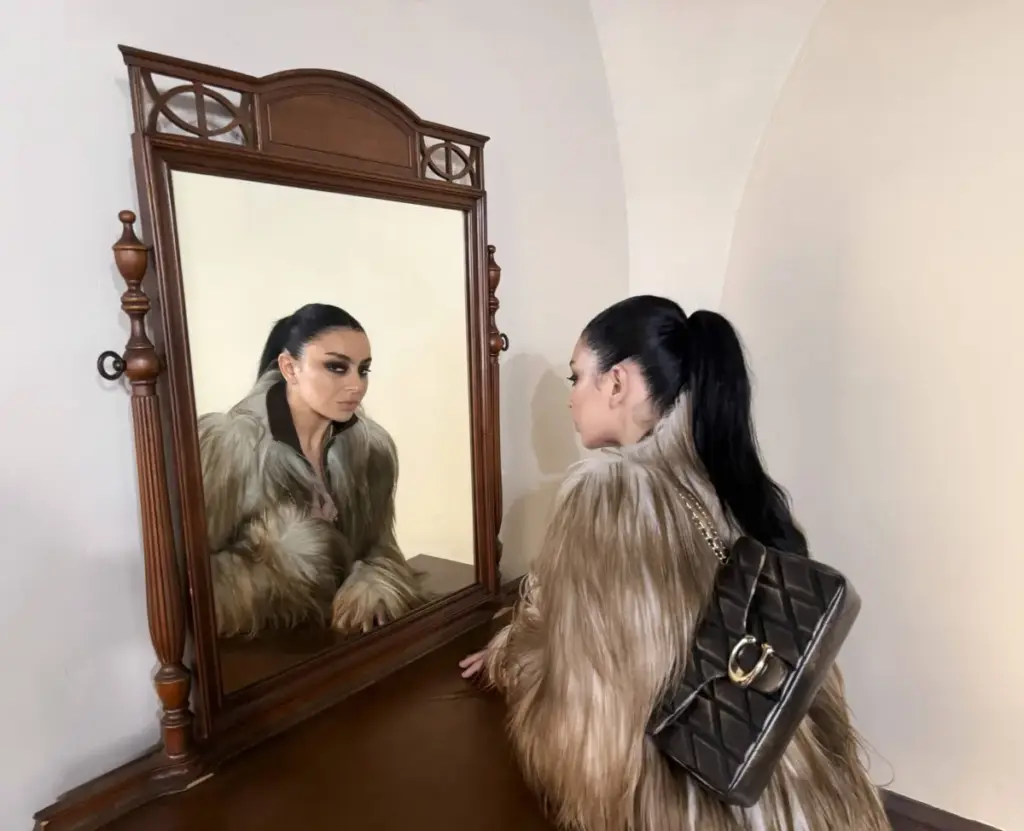
- Charli XCX (“On to the Next Chapter”): Fresh off a monumental year of cultural dominance, the avant-pop icon is captured in a moodier, high-fashion context. Clad in a statement fur coat accessorized with a sleek Tabby bag, Charli embodies the relentless forward momentum that defines modern artistic evolution.
- Inga Świątek / Paige Bueckers / Sports Luminaries (“Earned It”): Shifting from entertainment to elite athletics, the platform highlights the sweat equity of modern sports stars. Tennis powerhouse Inga Świątek is captured against the high-pressure backdrop of the French Open, anchoring her athletic dedication with a versatile, understated Chelsea bag.
- Malala Yousafzai (“Just Being Girls”): Perhaps the most culturally resonant vignette features Nobel laureate and activist Malala Yousafzai walking alongside friends from the Pakistan women’s national football team. Carrying a sophisticated Tabby chain clutch, the imagery strips away the formal gravitas usually assigned to global icons, choosing instead to celebrate the simple, powerful joy of female camaraderie and youth.
According to brand insiders, this carefully curated yet diverse sequence of events was designed to roll out in waves, ensuring that &Coach remains a continuous conversation rather than a fleeting moment in the news cycle.
Supporting Context & Metrics: The Anatomy of Gen Z Luxury Consumption
To understand why Coach invested heavily in &Coach, one must examine the shifting economics and psychology of the modern luxury consumer. For decades, the luxury playbook was straightforward: project an aura of unattainable perfection, establish strict hierarchical desirability, and sell an aspirational lifestyle down to the masses.
The Death of Aspirational Perfection
Gen Z and younger millennial cohorts, however, have largely rejected the glossy, unattainable aesthetic of late-20th and early-21st-century luxury. Having grown up online amidst curated feeds, deepfakes, and algorithmic saturation, this demographic possesses an acute radar for inauthenticity. They value transparency, vulnerability, and agency.
According to recent retail and luxury market analyses:
- Identity as a Fluid Construct: Unlike previous generations who often subscribed to fixed lifestyle categories (e.g., corporate climber, bohemian, preppy), Gen Z views identity as modular and continuously under construction. A person might listen to hyperpop one day, study classical philosophy the next, and play competitive sports on the weekend.
- The Demand for Participatory Branding: Modern consumers no longer wish to be passive recipients of a brand’s top-down message. They want brands to act as platforms that facilitate their own storytelling. &Coach directly addresses this by building a narrative structure that is inherently open-ended.
- The Rise of "Intimate Luxury": Market metrics indicate that luxury goods sales are increasingly driven by functional emotional value—items that serve as daily armor, comfort items, or tactile anchors during periods of high stress and rapid societal change.
By capturing its muses in transit—at film premieres, athletic tournaments, casual strolls with teammates, and backstage moments—Coach is shifting its value proposition. The Coach bag is no longer presented as a badge of elite socioeconomic status that elevates the wearer; instead, it is reframed as a supportive, reliable tool that accompanies the wearer through the messy, beautiful work of self-actualization.
Official Statements: Inside the Mind of Coach’s Leadership
The philosophical underpinnings of &Coach were articulated by the brand’s executive team during the launch window, shedding light on the rigorous strategic planning required to pull off such a departure from traditional fashion marketing.
Joon Silverstein, Chief Marketing Officer of Coach, provided a manifesto-like breakdown of the brand’s intentions in interviews accompanying the rollout:
"For this generation, self-expression is personal and constantly evolving. A Coach bag doesn’t define identity, it supports people through the moments that shape it."
This quote cuts to the core of the &Coach positioning. By reversing the traditional power dynamic—where the designer accessory defines the worth of the individual—Coach is empowering the consumer. The bag is demoted from a status symbol to a supportive sidekick.
Silverstein further elaborated on the architectural design of the platform itself, emphasizing its departure from static marketing campaigns:
"Rather than centering a fixed campaign narrative, &Coach is designed to evolve over time through new voices, perspectives and culturally relevant moments that reflect the participatory, ever-evolving ways Gen Z navigates identity."
This structural choice is critical. Traditional fashion campaigns are shot months in advance, launched with massive ad spends, and retired at the end of a season. &Coach, by contrast, is built to be a living organism. Because it is anchored by dedicated digital handles on Instagram and TikTok (@and.coach and @andcoach), the platform has the agility to pivot in real-time, integrating emerging creators, responding to micro-trends, and reflecting the hyper-fast pace of internet culture without needing to reinvent its foundational identity every quarter.
Creative Director Stuart Vevers, whose decade-long tenure at Coach has successfully infused American heritage with downtown New York cool, has similarly championed this collaborative, inclusive ethos. Under Vevers, Coach has consistently looked to unexpected cultural intersections—collaborating with everyone from Basquiat’s estate to Lil Nas X and Jennifer Lopez—making &Coach a natural evolution of his long-term democratization of the brand.
Future Outlook: Where Goes &Coach, Goes the Industry?
As the dust settles on the initial launch week of &Coach, industry watchers are asking a fundamental question: Is this platform a sustainable long-term model, or is it simply a clever, well-executed marketing stunt tailored for the current social media algorithm?
1. Setting a New Precedent for Cultural Platforms
The trajectory of &Coach suggests that it will likely serve as a blueprint for other heritage brands attempting to bridge the generational divide. As traditional print media loses its grip on youth culture and paid digital banner ads suffer from severe banner blindness, brands must transform into media entities and cultural curators. By creating a dedicated, branded ecosystem (&Coach) that spotlights external talent across sports, activism, and underground music, Coach has effectively turned its marketing department into a cultural tastemaker.
2. The Challenge of Sustaining Authenticity
The primary risk for any legacy brand attempting to capture "authenticity" is the trap of corporate co-optation. Gen Z is notoriously unforgiving of brands that try too hard to look cool or that attempt to commodify grassroots movements. For &Coach to maintain its credibility over the long haul, the platform must genuinely cede control. It cannot merely use these diverse, powerful figures as glossy props; it must allow these voices to genuinely shape the visual and narrative output of the channel. The inclusion of activists like Malala Yousafzai alongside pop stars like Charli XCX sets a high bar for intersectional relevance, but maintaining that intellectual and cultural depth will require continuous vigilance.
3. Product Integration and Commercial Viability
Ultimately, &Coach is a commercial venture designed to sell luxury goods. The ultimate test of the platform will be its ability to translate digital engagement, cultural cachet, and social media likes into tangible sell-through rates for core product lines like the Tabby and Chelsea bags. Early indicators suggest strong organic buzz, particularly given the high-intent search volumes surrounding the diverse cast of creators involved. By tying the bags not to an idealized fantasy lifestyle, but to real-world achievements—winning a tennis match, walking with friends, premiering a television show—Coach has created a deeply relatable purchase justification for consumers who demand utility alongside aesthetics.
Conclusion
With the introduction of &Coach, the historic leather goods house has demonstrated that survival in the modern luxury market requires more than just resting on heritage or churning out seasonal handbags. It requires a willingness to listen, to adapt, and to surrender top-down control in favor of a messy, participatory, and beautifully human dialogue with the next generation. As the platform scales across TikTok, Instagram, and physical culture spaces in the months and years to come, &Coach may very well redefine what it means to be a luxury brand in the 21st century.