Executive Overview
Since Adobe officially stepped into the generative artificial intelligence arena in 2023 with the launch of Firefly, the software giant has systematically transformed its ecosystem from a pioneering image-generation tool into a comprehensive, multi-modal creative powerhouse. Originally designed to assist Photoshop users with safe, ethically trained image-synthesis models, Firefly has steadily evolved. Today, it functions as an all-in-one creative AI studio capable of generating, editing, and enhancing images, video, and audio.
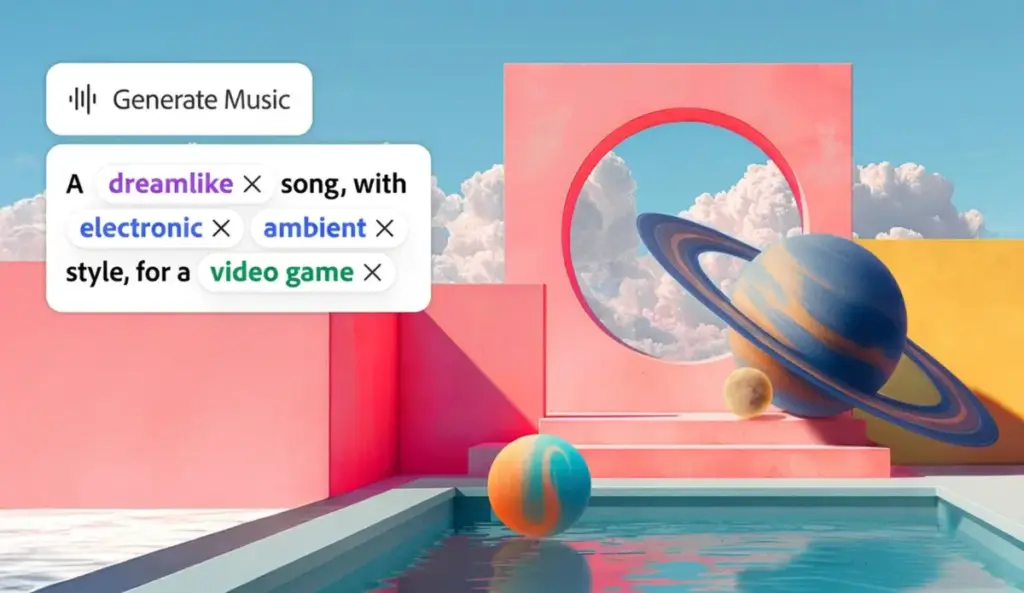
In its latest and most ambitious expansion, Adobe is pushing Firefly’s audio capabilities to new heights. By rolling out a sophisticated suite of dedicated audio tools—including original music generation, advanced voiceovers, and dynamic sound effects—Adobe is directly tackling one of the most persistent bottlenecks in modern digital production: copyright compliance and music licensing. Furthermore, the company has integrated third-party foundational models from industry leaders such as Google, OpenAI, Runway, and Kling AI, cementing Firefly’s status as an open, interoperable ecosystem.
Simultaneously, Adobe is democratizing access to its workflow orchestration layer by introducing a free tier for the Firefly AI Assistant. This conversational, prompt-based agent acts as an interactive co-pilot, guiding creators from initial ideation to finished asset. Together, these updates represent a strategic push to eliminate the friction of "tool-jumping" and tab-switching, offering creators a unified platform designed to mitigate burnout and streamline professional-grade content production.
Detailed Chronology: From Static Image Generator to Multi-Modal Ecosystem
To understand the weight of Adobe’s latest announcements, it is necessary to trace the rapid evolution of the Firefly platform over the past few years:
- Early 2023: Adobe debuts Firefly as a web application and integrated Photoshop feature. Distinguished by its commitment to copyright safety—trained exclusively on stock imagery, openly licensed content, and public domain material—it reassures enterprise users and professional designers wary of copyright litigation.
- Late 2023 to 2024: Firefly rapidly expands beyond simple text-to-image prompts. Adobe introduces vector generation, generative fill, and text-to-video capabilities, embedding AI natively across Creative Cloud applications like Illustrator, Premiere Pro, and After Effects.
- 2025: The platform pivots toward an ecosystem model. Rather than relying solely on proprietary models, Adobe opens Firefly to third-party integrations, allowing users to leverage models from OpenAI, Google, Runway, Luma AI, and Kling AI directly within the unified Adobe interface.
- Mid-2026: Adobe introduces the Firefly AI Assistant, a text-prompt-based creative partner designed to handle heavy lifting such as storyboarding and brand kit management.
- August 2026: Adobe unveils its comprehensive audio generation suite within Firefly, bridging the final gap in multi-modal media creation by allowing users to generate commercial-grade music, voiceovers, and sound effects in a single workspace.
This chronological expansion highlights a deliberate strategy: Adobe is positioning Firefly not merely as a collection of feature-specific plugins, but as an expansive, operating-system-level environment for digital artists, video editors, and enterprise marketers.
Supporting Context & Metrics: The Crisis of Content Saturation and Licensing
The timing of Adobe’s audio and AI assistant rollout is far from accidental. Modern content creators operate in an environment characterized by unprecedented demands for output volume across an exploding array of digital platforms.
The Burden of Multi-Platform Production
Today’s creators are expected to maintain an active presence across TikTok, Instagram Reels, YouTube Shorts, traditional long-form video platforms, and specialized enterprise channels. Producing native content for each medium requires a staggering variety of visual and auditory assets. As Meg Donovan, Adobe’s Senior Director of Product Marketing for Generative AI & Creators, notes, the primary hurdle for creators is rarely coming up with ideas; rather, it is everything that gets in the way of finishing them.
"Creators constantly tell us that the hardest part of their work isn’t coming up with ideas, it’s everything that gets in the way of finishing them: the tab-switching, tool-jumping, model-switching and all those other little moments when momentum slips away," Donovan explains.
The Licensing Minefield
For video producers, audio has long been an administrative nightmare. The aphorism that "sound is often the last thing you add and the first thing people notice" underscores the emotional weight of a well-chosen soundtrack. However, matching visuals to legally compliant audio is notoriously fraught with danger.
Independent creators and digital agencies frequently face Content ID claims, demonetization, and accidental copyright infringements when utilizing royalty-free libraries that turn out to have murky ownership histories. For commercial projects and branded sponsorships, the stakes are exponentially higher. Using unlicensed or improperly cleared music can result in costly legal liabilities, damaged client relationships, and compromised professional reputations.
By integrating text-to-music generation directly into the Firefly suite, Adobe offers a turnkey solution. Creators can generate bespoke, original soundtracks tailored to the exact emotional arc, tempo, and duration of their videos, backed by Adobe’s ironclad commercial safety guarantees.
Official Statements and Creator Perspectives
The real-world implications of Adobe’s new audio suite are best illustrated through the experiences of working creators who have tested the features within their active production pipelines.
Esther Rehema on Overcoming Burnout
Esther Rehema, a fashion, beauty, and lifestyle influencer known online as @soestherr, juggles the demanding schedule of a university student with a fast-paced content creation career. She notes that the constant pressure to maintain output can easily lead to creative exhaustion.
"Being able to find music that is safe for commercial use and fits my content is such a game changer," Rehema shares. "What used to take me hours and hours of searching for the right song can now take seconds."
For creators operating without large production teams, hours saved searching through external audio libraries translate directly into sustainable workflows and reduced burnout.
Madeline Salazar on Brand Deals and Accountability
For VFX and Photoshop-focused creator Madeline Salazar (@immadsal), the challenges of audio licensing are magnified when executing deliverables for corporate brand partners.
"When I am making content for a brand, there is always the complication of licensing background music," Salazar explains. "Using Firefly’s Generate Music feature, I am able to create a soundtrack that is unique to the video I’m making, and it gives me peace of mind because I know the music is safe for commercial use."
Salazar emphasizes that professional accountability requires absolute confidence in the provenance of every asset handed over to a client. Because she puts her personal name behind every project, having verifiable, custom-generated audio eliminates a major point of vulnerability.
Meg Donovan on the Philosophy of Frictionless Creativity
According to Meg Donovan, these creator testimonials validate Adobe’s broader design philosophy. The modern digital economy demands that creators produce more content across more formats than ever before, all while the bar for aesthetic and technical excellence continually rises.
"The right music can transform a piece of content, bringing the story to life and creating the emotional connection that makes it resonate with an audience," Donovan tells Tubefilter. "One of our newest features in Firefly now available to all, Generate Music, is designed for exactly those moments, when a creator needs original music tailored to a specific piece of content, with the control to shape that track into exactly what they’re picturing in their imagination, and the confidence that it’s licensed for use."
The Role of the Firefly AI Assistant
Beyond media generation, Adobe is addressing workflow inefficiencies through the Firefly AI Assistant. Rolled out earlier this year and now expanding with free-tier access, this conversational partner acts as an interactive project manager inside the Firefly ecosystem.
Data from Adobe indicates that two of the assistant’s most heavily utilized capabilities are Create Storyboard and Create Brand Kit.
- Create Storyboard: Allows users to feed a text prompt or script into the assistant, which automatically generates a sequential visual roadmap, saving hours of manual sketching and layout planning.
- Create Brand Kit: Automatically translates raw product assets into cohesive, branded mockups and marketing campaigns that strictly adhere to established corporate identity guidelines.
Pricing and Accessibility
To ensure widespread adoption, Adobe has structured the Firefly AI Assistant with a zero-barrier entry point. The free tier provides users with a limited daily allocation of generations. For professional creators and enterprise teams requiring high-volume output, paid subscription tiers start at $9.99 per month, unlocking upwards of 2,000 generative credits per month alongside priority processing speeds.
Future Outlook: The Unified Horizon of Creative AI
Adobe’s latest updates signal a definitive maturation phase for generative artificial intelligence in professional workflows. The era of isolated, single-trick AI novelties—where creators had to hop between third-party web apps, download raw assets, convert file formats, and manually stitch them together in traditional editing suites—is rapidly drawing to a close.
By consolidating image, video, voice, sound effects, and original music generation into a single, commercially safe workspace augmented by third-party model interoperability, Adobe is setting a new industry standard. The integration of the Firefly AI Assistant further bridges the gap between raw ideation and finished execution, shifting the creator’s role from manual laborer to high-level director.
As legal scrutiny surrounding AI training data and copyright infringement intensifies globally, Adobe’s steadfast adherence to "commercially safe" pipelines provides a vital safety net for professional creators and major brands alike. Moving forward, platforms that successfully eliminate workflow friction while guaranteeing intellectual property compliance will undoubtedly capture the loyalty of the creator economy. With Firefly’s expansion into audio, Adobe has once again proven its capacity to anticipate the deepest pain points of digital artists and deliver holistic, future-proof solutions.