In the sprawling, interconnected landscape of modern digital entertainment, few names carry the pioneering weight of Felicia Day. Over a decade after cementing her legacy as a trailblazer of independent web content with her seminal series The Guild and the revolutionary YouTube multi-channel network Geek & Sundry, Day is once again reshaping the paradigm of independent digital media.
In a major development for fans of tabletop gaming and internet culture alike, Day is reteaming with her longtime collaborator, actor and author Wil Wheaton, for a brand-new television series titled Conludo—derived from the Latin word meaning "to play together."
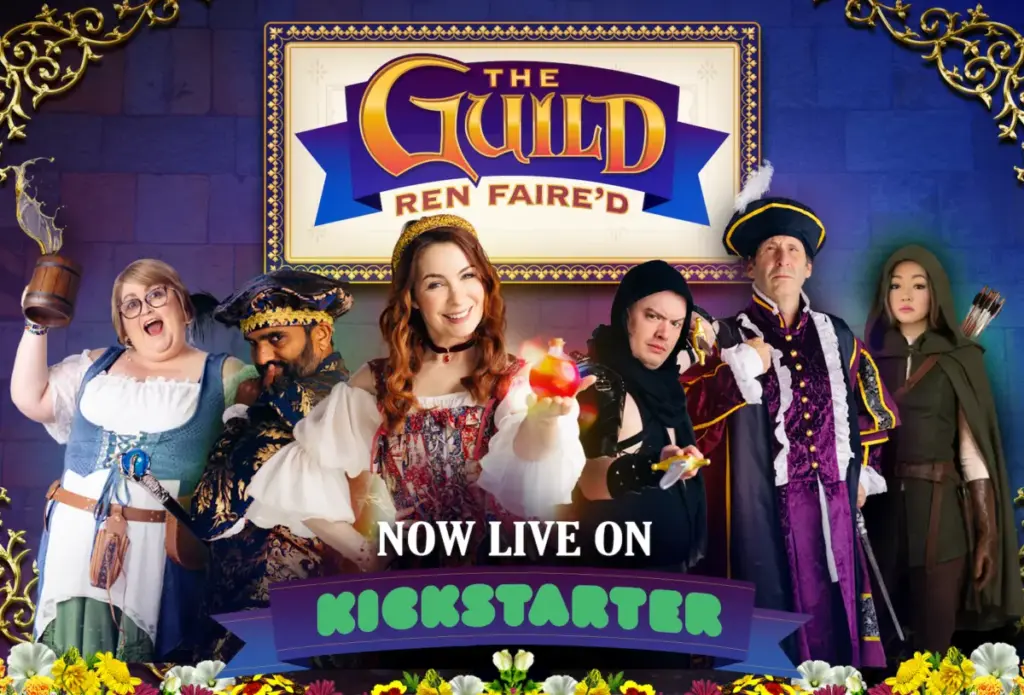
This 10-episode board game television series is not arriving in a vacuum. It is being unlocked as a special fan reward tied to the overwhelmingly successful Kickstarter campaign for The Guild: Ren Faire’d, a feature-length narrative reunion movie that brings back the original cast for the first time since the web series concluded in 2013. The crowdfunding campaign has shattered expectations, drawing an astonishing $5.26 million (and climbing) against an initial modest goal of $1.5 million.
Yet, beneath the glossy surface of nostalgic reunions and multi-million-dollar crowdfunding milestones lies a complex narrative about the state of independent entertainment. While Day and Wheaton prepare to capture lightning in a bottle once more—channeling the spirit of their beloved, bygone web series TableTop—they are simultaneously navigating the steep hurdles of modern independent filmmaking.
From being denied a crucial California state tax credit to grappling with the archaic financial mechanics of Hollywood’s incentive structures, Day’s latest crusade highlights both the immense power of direct-to-consumer digital communities and the systemic barriers facing independent creators working within the traditional studio epicenters of Los Angeles.
Detailed Chronology: From The Guild Origins to the Conludo Genesis
To fully understand the significance of Conludo and The Guild: Ren Faire’d, one must retrace the historical timeline of digital video production. When Felicia Day first launched The Guild in 2007, the concept of scripted narrative fiction living exclusively on the nascent internet was met with widespread skepticism.
"I was told that people wouldn’t want to be watching people play board games," Day reflects, recalling the early days of carving out a digital space for geek culture. "I was told that the web was not a place for narrative fiction. I was told that streaming D&D was a waste of money."
Undeterred, Day pressed forward, effectively inventing blueprints that modern actual-play giants and digital creators now take for granted. Following The Guild’s successful six-season run, Day launched Geek & Sundry in 2012, which quickly became a nexus for tabletop gaming culture. Among its crown jewels was TableTop, a web series co-created and hosted by Wil Wheaton that ran for four critically acclaimed seasons from 2012 to 2017. TableTop did not merely entertain; it single-handedly stimulated the tabletop gaming economy, regularly causing board games featured on the show to sell out nationwide within hours of airing.
When Geek & Sundry was eventually acquired and its original decentralized ethos faded into corporate restructuring, fans experienced a profound sense of "FOMO" (fear of missing out)—a sentiment shared acutely by Day and Wheaton themselves.
The genesis of Conludo emerged organically from discussions surrounding The Guild’s tenth-anniversary aspirations and the desire to reconnect with old friends and new-generation content creators.
The Kickstarter Catalyst: As part of the multi-tiered reward ecosystem for The Guild: Ren Faire’d Kickstarter campaign, Day and Wheaton designed Conludo as a stretch-goal style, fan-unlocked piece of exclusive content.
Production Scope: The initial order consists of 10 episodes. Each installment begins with Day and Wheaton engaged in a focused conversation regarding a specific topical theme. From there, they select a board game that mirrors or challenges the topic, inviting a rotating roster of celebrity guests to join them at the table.
The Cast Lineup: Exclusive confirmations reveal that the inaugural guest star roster includes industry heavyweights such as Todd Stashwick, Anjali Bhimani, Grace Helbig, Mamrie Hart, and John Ross Bowie.
Supporting Context & Metrics: The Mechanics of Conludo vs. TableTop
While comparisons to TableTop are inevitable, Day and Wheaton have been careful to emphasize that Conludo is designed with a fundamentally different philosophical and mechanical framework.
With TableTop, the primary objective was consumer guidance and accessibility. Wheaton and his producers meticulously coordinated with publishers to ensure that every game featured on the show was actively in-print and readily available for purchase. The show’s massive cultural footprint meant that distributors had to radically scale up their manufacturing inventory just to keep pace with the "TableTop Effect."
Conludo, conversely, shifts the aperture away from the mechanics of the rulebook and onto the intangible chemistry of the human beings gathered around the felt.
"If TableTop was about what’s happening on the table," Wheaton explains, "Conludo is about what’s happening around the table while we’re playing the game together. The game is obviously important and fun and joyful, but it’s about the experience that you have when you’re hanging out. We can play games that there are 40 copies of in the world."
This stylistic pivot frees the production from commercial distribution constraints, allowing Day and Wheaton to explore rare, indie, or experimental board games that serve purely as catalysts for unfiltered, humorous, and deeply personal dialogue.
Furthermore, the financial metrics underpinning this new venture reflect a deliberate pivot away from corporate media conglomerates. Day has made it explicitly clear that she has no ambitions to replicate the massive corporate machinery of her Geek & Sundry days.
"I’ve highlighted a lot of other people as performers in the past, and now I’m all about just doing things for me and with my friends," Day states. The ultimate goal for Conludo is long-term sustainability achieved through radical accessibility.
Wheaton echoes this sentiment regarding distribution models:
"It’s really important to both of us that it’s not difficult for someone to watch—and difficult can mean a lot of different things. It can mean reaching into their pockets for more money. It can mean downloading some app they would rather not have. Felicia has talked extensively about doing this in a nice, flat, democratic way that gets it out to absolutely everybody."
Whether Conludo finds its permanent home on a dedicated independent YouTube channel or via a free-to-stream platform after fulfilling its obligations to Kickstarter backers, the creators are determined to bypass the paywalls and walled gardens that currently dominate the streaming landscape.
Official Statements and Industry Insights
The runaway success of The Guild: Ren Faire’d Kickstarter campaign—which crossed the $5.26 million mark and stands on the precipice of dethroning the Veronica Mars movie ($5.7 million in 2013) as the most heavily crowdfunded independent film in history—is a testament to the enduring loyalty of fandoms cultivated over decades.
Yet, this triumph has been tempered by a stark realization of the economic hostilities facing independent productions operating within California. Despite mounting an unprecedented grassroots fundraising campaign, Day revealed that the production was formally denied a California state tax credit during the initial review round.
+-------------------------------------------------------------------------+
|                  CALIFORNIA FILM & TV TAX CREDIT POOL                   |
+-------------------------------------------------------------------------+
| Total Allotted Funds                                                    |
|                                                                         |
| [=====================================================================] |
+-------------------------------------------------------------------------+
| Earmarked for Independent Projects Under $10 Million: ONLY 5%           |
| [===]                                                                   |
+-------------------------------------------------------------------------+
According to data from the California Film Commission, a mere 5% (approximately $37.5 million) of total allotted film and television tax credit funds is earmarked for independent projects budgeted under $10 million.
"We didn’t make it past the first round," Day notes. Pointing to the hyper-competitive nature of this narrow 5% bracket, she highlights that even projects featuring A-list stars and veteran showrunners are routinely boxed out.
Day’s critique cuts directly to the structural flaws of modern state incentive programs:
The Relocation Pressure: Day notes that if the production simply shifted its primary photography to states like Georgia, securing tax credits and instantly liquidating them through major corporate buyers would be an effortless transaction. However, moving operations away from Los Angeles is antithetical to Day’s personal and professional roots.
The Timing Trap: Unlike immediate tax credit programs in competing regions, California’s rebate system distributes funds far downstream (e.g., projected payouts as late as March 2028 for productions shooting years prior). This lag forces independent creators to secure high-interest bridge loans, surrendering 20% to 40% of their capital just to stay afloat.
The Studio Monopoly: "That is the way you revitalize this industry, not hoarding all the money for a couple $500 million projects where A-list stars are benefiting… and then indies just don’t have a chance to stay in L.A.," Day asserts.
Despite these systemic roadblocks, Day is pushing forward. The physical media rewards—specifically a high-demand Blu-ray edition featuring exclusive bonus material that pushed the campaign past its tipping point—demonstrate that physical media and fan-direct models remain viable lifeboats for independent creators.
Future Outlook: Looking Toward 2027 and Beyond
As The Guild: Ren Faire’d Kickstarter campaign races toward its final hours, the operational roadmap for Felicia Day and Wil Wheaton is locked in.
Phase One: Backer Fulfillment (2025–2026): The primary imperative remains absolute accountability to the Kickstarter backers. All physical and digital goods, including the newly unlocked 10-episode run of Conludo, will be delivered to supporters in the precise formats promised.
Phase Two: Theatrical and Digital Rollout (2027):The Guild: Ren Faire’d is slated for a 2027 release. Day and her team are actively exploring traditional theatrical distribution windows for the reunion film before branching out into broader digital distribution ecosystems.
Phase Three: Expanding Conludo: Following its initial deployment to backers, Conludo will evaluate long-term distribution partners. Whether housed on an independent platform or a democratized free-to-stream service, the series is positioned to become a cornerstone of modern tabletop discussion programming—proving once again that when creators refuse to compromise with industry norms, the audience will follow them anywhere.
In an era where streaming services routinely purge libraries, cancel beloved programs after single seasons, and lock content behind escalating subscription tiers, the resurgence of Felicia Day and Wil Wheaton serves as a vital reminder of the internet’s original promise: a direct, unmediated connection between creators, their friends, and an audience eager to sit down at the table and play together.