Executive Overview
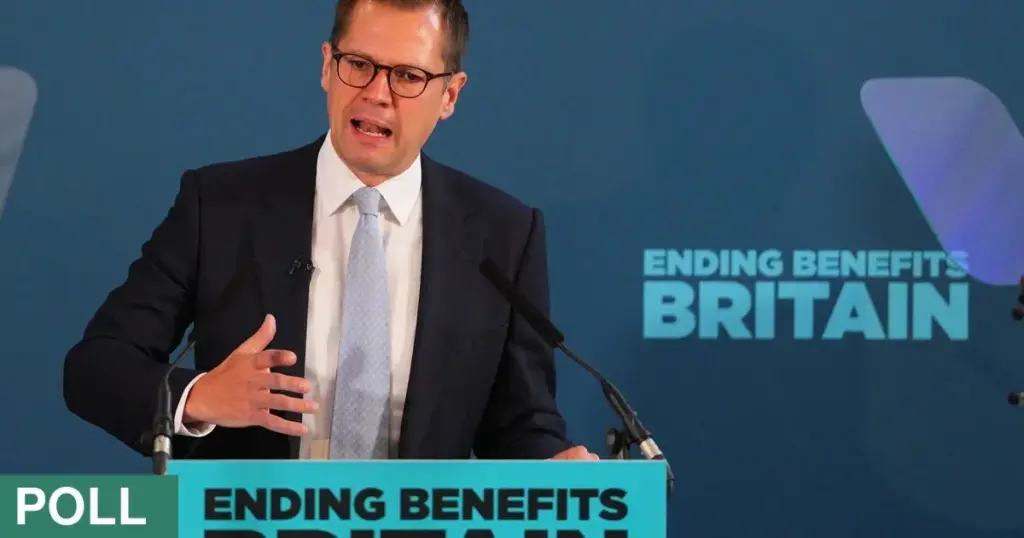
In a seismic policy announcement that has immediately drawn sharp divisions across the British political landscape, Reform UK has unveiled a sweeping, hardline welfare reform package aimed at slashing over £50 billion a year from the nation’s ballooning social security budget. Unveiled during a high-stakes press conference on Monday, August 17, 2026, by the party’s Treasury spokesman Robert Jenrick, the proposals center on an unprecedented measure: stripping foreign nationals of their entitlement to nearly all state welfare benefits in the United Kingdom.
Under the banner of ending what Jenrick termed a "foreign welfare rip-off," a future Reform UK government would restrict benefit access exclusively to British citizens. The party projects that this single policy intervention would yield annual savings of approximately £21 billion by the fifth year of implementation.
However, the ambition of the plan extends far beyond domestic welfare restructuring. Because the proposed ban would explicitly capture European Union nationals living in the UK under the post-Brexit settled status scheme, it would necessitate a fundamental renegotiation of the UK-EU Withdrawal Agreement. Critics warn this could spark a protracted diplomatic standoff with Brussels and potentially jeopardize the reciprocal rights of British expatriates living across the continent.
Mainstream political opponents have been quick to condemn the package. The Conservative Party dismissed the proposals as "cobbled together," while the ruling Labour Party warned that the measures would plunge the country back into toxic Brexit battles while stripping vital support from millions of lawful, tax-paying residents. As the debate intensifies, Reform UK is inviting the British public to weigh in on whether state handouts should be entirely cordoned off from non-citizens.
Detailed Chronology of the Announcement
The rollout of Reform UK’s welfare overhaul began in the capital on Monday morning, meticulously orchestrated to capture the media cycle ahead of the parliamentary recess.
- 10:50 AM (BST), Monday, August 17, 2026: Initial reports emerged from Westminster as Reform UK published the core tenets of its multi-billion-pound fiscal rescue package. Led by party figureheads including Nigel Farage and Treasury spokesman Robert Jenrick, the party positioned the welfare state as financially unsustainable under current frameworks.
- 11:00 AM (BST): Robert Jenrick took to the podium at the central London press conference. Flanked by charts detailing the spiraling costs of working-age welfare, Jenrick formally introduced the policy platform, centering his remarks on national sovereignty, taxpayer fairness, and fiscal austerity.
- 11:53 AM (BST): Digital editions across national media updated to reflect the full scale of the proposal. It became immediately apparent that the policy was not merely targeted at new arrivals, but would fundamentally upend the established rights of settled EU nationals and other foreign residents.
- Afternoon, August 17, 2026: Political reactions rolled in at a blistering pace. Conservative Shadow Work and Pensions Secretary Helen Whately released a statement condemning the feasibility of the plan, followed swiftly by a robust critique from a Downing Street Labour spokesperson highlighting the potential threat to the UK’s international treaties.
Supporting Context & Metrics: The Anatomy of the Welfare Debate
To understand the weight of Reform UK’s proposals, one must examine the current state of Britain’s public finances and welfare expenditure.
The Expanding Welfare Bill
For years, successive Westminster governments have grappled with an escalating welfare budget, driven heavily by post-pandemic spikes in economic inactivity, rising chronic health conditions, and an aging population. Welfare spending represents one of the largest single expenditures in the UK national budget, regularly surpassing £250 billion annually when combining pensions, disability support, and working-age benefits.
Reform UK’s package targets this fiscal pressure point head-on. Alongside the blanket ban on foreign nationals claiming state support, the party’s broader £50 billion savings plan includes the abolition of Personal Independence Payments (PIP) for working-age adults, as well as the complete removal of the health element associated with Universal Credit.
The Scale of Foreign Benefit Claimants
According to Department for Work and Pensions (DWP) data, hundreds of thousands of non-UK nationals currently receive various forms of state assistance, ranging from housing benefits and child tax credits to Universal Credit and disability payments. Many of these individuals hold settled or pre-settled status granted under the EU Settlement Scheme following the United Kingdom’s departure from the European Union.
Under the current legal framework, foreign nationals who have legal residency and have contributed to the UK tax system retain access to the welfare safety net under specific residency and habitual residence tests. Reform UK’s policy would entirely sever this link, introducing a strict citizenship test for welfare eligibility.
Jenrick acknowledged during his address that there would be "limited exceptions," though the party has yet to publish a comprehensive list detailing which humanitarian or emergency situations might bypass the citizenship rule. "The welfare state is there for Britain—no British citizenship, no entitlement, that’s fair," Jenrick stated unequivocally.
The Brexit Settlement Collision
Perhaps the most legally complex aspect of Reform UK’s proposal is its intersection with international law. The Withdrawal Agreement signed between the UK and the European Union guaranteed reciprocal rights for EU citizens living in Britain and British citizens living in the EU.
By targeting EU nationals with settled status, Reform UK’s policy would directly breach the terms of this treaty. Analysts note that implementing such a ban would require tearing up the existing Brexit settlement, inviting retaliatory measures from Brussels that could strip British citizens residing in Spain, France, and other EU nations of their local healthcare and pension uprating rights.

Official Statements and Political Fallout
The audacity of the Reform UK platform has triggered an immediate and polarized reaction across the political spectrum, setting the stage for what promises to be a fierce ideological battle over citizenship, rights, and the welfare state.
Reform UK’s Defense
Defending the proposals, Robert Jenrick doubled down on the principle of civic nationalism, arguing that social security must be intrinsically tied to national allegiance and long-term tax contributions that culminate in citizenship.
"We will begin by ending the foreign welfare rip-off," Jenrick told journalists. "Under a Reform government, only British citizens will be entitled to benefits… It is a matter of basic fairness to the British taxpayers who fund this system year after year."
Party leader Nigel Farage, who has long campaigned against mass immigration and what he terms the "open-door" policies of successive Conservative and Labour administrations, backed the measures as a vital shock therapy required to rescue public services from collapse.
The Conservative Response
The official opposition was quick to distance itself from Reform UK’s strategy, framing the policy as reckless, unworkable, and economically dangerous.
Helen Whately, the Conservative Shadow Work and Pensions Secretary, did not mince words. She dismissed the plans as "cobbled together" proposals designed for headlines rather than serious governance.
"These ideas will drag Britain back into exhausting, destructive Brexit battles with absolutely no certainty of success," Whately warned. "You cannot simply rip up international treaties and expect zero economic or diplomatic consequences for British citizens abroad."
The Labour Government’s Position
Downing Street and the ruling Labour Party launched a scathing attack on the proposals, focusing heavily on the human cost and the administrative chaos of renegotiating international agreements.
A Labour spokesperson issued a formal critique:
"These plans would mean ripping up the UK’s withdrawal agreement with the EU, plunging the UK back into years of Brexit renegotiations and stripping support from potentially millions of people who have lawfully lived, worked and paid taxes in Britain for years, and in many cases decades. That includes people with settled status who are part of our communities, raising families, working and contributing to our economy."
Labour officials emphasized that millions of foreign-born workers fill crucial gaps in the UK economy—particularly within the National Health Service (NHS), social care, and agriculture—and warned that treating legal taxpayers as second-class residents would severely damage Britain’s international reputation as a stable place to do business.
Future Outlook: What Lies Ahead for the Welfare Debate?
As the political dust settles on Robert Jenrick’s Monday morning press conference, the long-term implications of Reform UK’s welfare proposals remain uncertain, yet profoundly impactful on the national conversation.
- Shifting the Overton Window: Whether or not Reform UK ever holds the reins of government to implement these policies, their continuous pressure on the immigration and welfare nexus forces mainstream parties—both Labour and the Conservatives—to continually justify and defend their own border and social security policies.
- Public Opinion and Voter Engagement: By launching a nationwide public consultation and poll on the issue, Reform UK is banking on populist appeal. The debate over whether non-citizens should enjoy access to the British safety net is a potent emotional touchstone for voters concerned about public spending, NHS backlogs, and the cost of living.
- Legal and Diplomatic Minefields: Should a future administration attempt to enact a citizenship-only welfare system, it would face unprecedented legal challenges in domestic courts and face fierce retaliation from international trade and political partners, proving that unwinding post-Brexit legal architectures is far more complex than political rhetoric suggests.
For now, the battle lines are drawn. As voters register their opinions and politicians trade blows across the airwaves, the question of who truly belongs within the British welfare social contract has rocketed back to the very top of the national agenda.