Executive Overview
In a milestone moment for Southeast Asian cinema, the record-breaking Vietnamese found-footage horror phenomenon ‘Lâu Chú Hoá: The Deadliest Mansion’ is officially crossing the Pacific. The film is slated to open in North American theaters on September 4, thanks to a strategic distribution rollout spearheaded by Mockingbird Pictures. The release will secure major footprints across premier exhibition circuits, including AMC, Regal, and Cinemark.
Directed by acclaimed filmmaker Hồng Trấn, ‘Lâu Chú Hoá: The Deadliest Mansion’ carved its name into film history earlier this summer by becoming Vietnam’s very first theatrical found-footage horror release. What began as a bold cinematic experiment quickly transformed into an unprecedented breakout hit. Domestically, the film dominated the box office, surpassing one million admissions and crossing a staggering cumulative gross of VND78 billion (approx. $3 million USD).
The film’s international expansion is more than just a routine cross-border distribution deal; it represents a historic convergence of regional talents. Produced by Runup Vietnam in collaboration with South Korea’s powerhouse Hive Media Corp—marking the prominent studio’s inaugural production investment outside its domestic market—the project bridges the creative energies of two thriving Asian film hubs.
As Mockingbird Pictures positions the title for Western audiences, industry insiders are watching closely. The move signals a broader paradigm shift in international distribution, where Southeast Asian commercial cinema is increasingly viewed not as a niche novelty, but as a globally viable, high-impact commercial commodity.
Detailed Chronology: From Local Legend to International Screen
The genesis of ‘Lâu Chú Hoá: The Deadliest Mansion’ is deeply rooted in Vietnamese folklore, specifically drawing from one of the nation’s most spine-chilling and well-known urban legends: the eerie, century-old tale of the “Ghost of the Hỏa Family.”
The Premise and Production
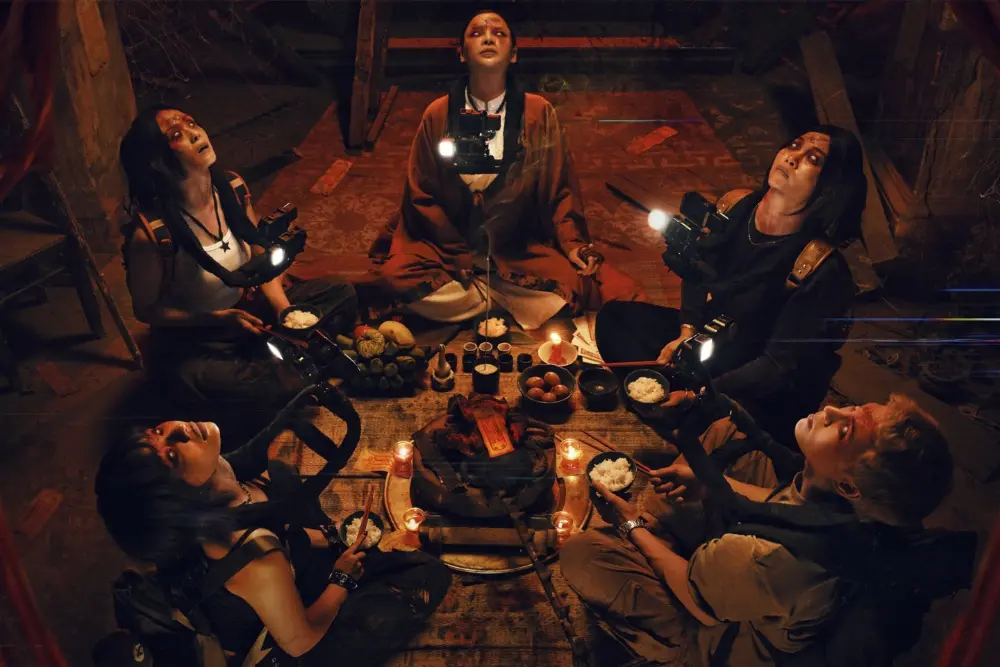
The narrative follows a reckless band of young digital content creators and live-streamers who, in a desperate bid for viral fame, algorithmic relevance, and financial gain, illegally force their way into the notoriously haunted Hỏa family estate. Believed to be abandoned and steeped in dark history, the mansion immediately exerts a suffocating psychological grip on the intruders.
Rather than securing the viral clout they craved, their live broadcast inadvertently awakens a dormant, malevolent supernatural force. As the boundary between the digital recording equipment and the spirit realm collapses, the streamers find themselves violently pulled into the horrifying, century-old legacy of the Hỏa family.
To heighten the terror and maximize the visceral, claustrophobic dread, director Hồng Trấn chose to shoot the entire feature in an authentic found-footage style. This stylistic choice places the viewer directly behind the lens, transforming passive spectatorship into active participation in the characters’ survival.
The Domestic Triumph
Upon its theatrical debut in June, ‘Lâu Chú Hoá: The Deadliest Mansion’ defied the conventional wisdom of the Vietnamese box office. Historically, domestic horror in Vietnam has often contended with strict censorship hurdles or limited production budgets that restricted them to derivative tropes. However, Hồng Trấn’s meticulous craftsmanship, combined with clever grassroots digital marketing that mirrored the film’s streamer-centric plot, struck an immediate chord with local audiences.
Word-of-mouth spread rapidly across social media platforms like TikTok and Facebook, driving repeat viewings and unprecedented demographic turnout. Within weeks, the film smashed box-office milestones:
- Firsts: Vietnam’s pioneering theatrical found-footage horror film.
- Admissions: Surpassed 1 million ticket sales domestically—a rare feat for an indigenous horror title.
- Gross Revenue: Crossed the VND78 billion ($3 million USD) threshold, firmly cementing its status as a commercial juggernaut.
The Cross-Border Partnership
Behind the scenes, the film’s financial and creative backbone represents an unprecedented international alliance. ‘Lâu Chú Hoá: The Deadliest Mansion’ was brought to life through a co-production between Runup Vietnam and South Korea’s Hive Media Corp.
For Hive Media Corp, this project marks a critical milestone: its very first production investment outside of South Korea. Hive is no stranger to critical and commercial acclaim, having backed some of the most influential and successful Korean blockbusters of recent years. Their impressive catalogue includes prestige dramas and thrillers such as:
- 12.12: The Day
- Inside Men
- The Man Standing Next
- Harbin
Crucially, Hive Media Corp also brings vital genre expertise to the table, having previously backed the smash-hit found-footage horror film ‘Gonjiam: Haunted Asylum’, which drew more than 2.6 million admissions in South Korea. This pedigree ensures that ‘The Deadliest Mansion’ benefits from world-class genre pacing, sound design, and narrative tension, elevating it far above standard indie horror fare.
Supporting Context & Metrics: The Rise of Southeast Asian Cinema
The North American theatrical release of ‘Lâu Chú Hoá: The Deadliest Mansion’ arrives at a pivotal juncture for global film distribution. For decades, Western theatrical circuits allocated minimal screen space to Southeast Asian cinema, frequently relegating titles to specialized film festivals or direct-to-streaming obscurity. However, shifting consumer habits, driven by global streaming platforms and an increasingly diverse diaspora audience, have fundamentally altered the landscape.
The Mockingbird Pictures Footprint
At the forefront of this distribution revolution is Mockingbird Pictures. With a massive operational footprint that encompasses more than 60 new theatrical releases annually in Vietnam and upwards of 100 titles distributed across post-theatrical platforms, the company has become a premier conduit for Asian content entering Western markets.
By securing screen placements across industry-giant circuits—AMC, Regal, and Cinemark—Mockingbird Pictures is signaling that ‘The Deadliest Mansion’ is not merely being targeted at niche ethnic enclaves, but is being positioned for mainstream horror enthusiasts across the United States and Canada.
The Global Appeal of Found-Footage Horror
The found-footage subgenre holds a unique place in cinematic history. Ever since the watershed success of The Blair Witch Project in 1999 and the subsequent global phenomenon of the Paranormal Activity franchise, audiences worldwide have demonstrated a voracious appetite for the raw, unpolished, and intensely intimate terror that faux-documentary filmmaking provides.
By filtering this universally understood cinematic grammar through the lens of Vietnamese folklore, the filmmakers have created a product that easily transcends linguistic and cultural barriers. Horror, by its very nature, relies on primal emotions—fear of the unknown, claustrophobia, and the dread of isolation. When executed with high production values and culturally rich backdrops, these stories possess unmatched travel capital.
Official Statements and Industry Insights
The strategic importance of this international rollout has been underscored by key stakeholders from both production and distribution camps, highlighting the collaborative vision required to bring the Hỏa family nightmare to Western screens.
Producer Lee Jin Sung emphasized the psychological potency of the medium and the deliberate choice to honor Vietnamese mythology through a sophisticated cinematic lens:
"Found footage has the power to make audiences feel as though they are experiencing the horror themselves," stated Lee. "Working with Hive Media Corp allowed us to bring that experience to a uniquely Vietnamese legend while preserving the identity and atmosphere that make the story distinctive."
Echoing these sentiments, Phong Duong, business director of Mockingbird Pictures and an executive producer at sister company Bluebells Studios, underscored the cross-cultural potential of the feature:
"’Lâu Chú Hoá: The Deadliest Mansion’ delivers one of the most intense Vietnamese horror experiences in recent years," said Duong. "We believe this is a film that can travel, and we want audiences around the world to experience that fear for themselves."
Industry analysts point out that these statements reflect a broader maturation within the Vietnamese film industry. No longer content with catering exclusively to domestic tastes, Vietnamese studios are actively designing projects from inception with international co-financing, universal genre hooks, and export-ready production standards in mind.
Future Outlook: A New Era for Regional Horror
As September 4 approaches, anticipation is building across horror fandom communities. The box-office performance of ‘Lâu Chú Hoá: The Deadliest Mansion’ in North American theaters will likely serve as a bellwether for future cross-border collaborations between Southeast Asian creators and international distributors.
If the film performs strongly across AMC, Regal, and Cinemark screens, it will validate a new economic model for regional Asian cinema—one where local folklore, elevated by international co-productions like Hive Media Corp and distributed by aggressive global players like Mockingbird Pictures, can successfully capture the imaginations of global audiences.
For horror aficionados, the arrival of ‘The Deadliest Mansion’ offers a rare opportunity to witness the birth of a new international horror franchise on the big screen. As the digital cameras roll, the doors of the Hỏa family estate are about to swing open for North America—and once inside, there is no turning back.