Executive Overview
Amid an era of profound technological disruption, Hollywood is currently wrestling with its identity, caught in a high-stakes tug-of-war between the boundless possibilities of artificial intelligence and the enduring appeal of human craftsmanship. Few figures possess the industry-wide influence or the personal skin-in-the-game to weigh in on this debate quite like Tom Cruise.
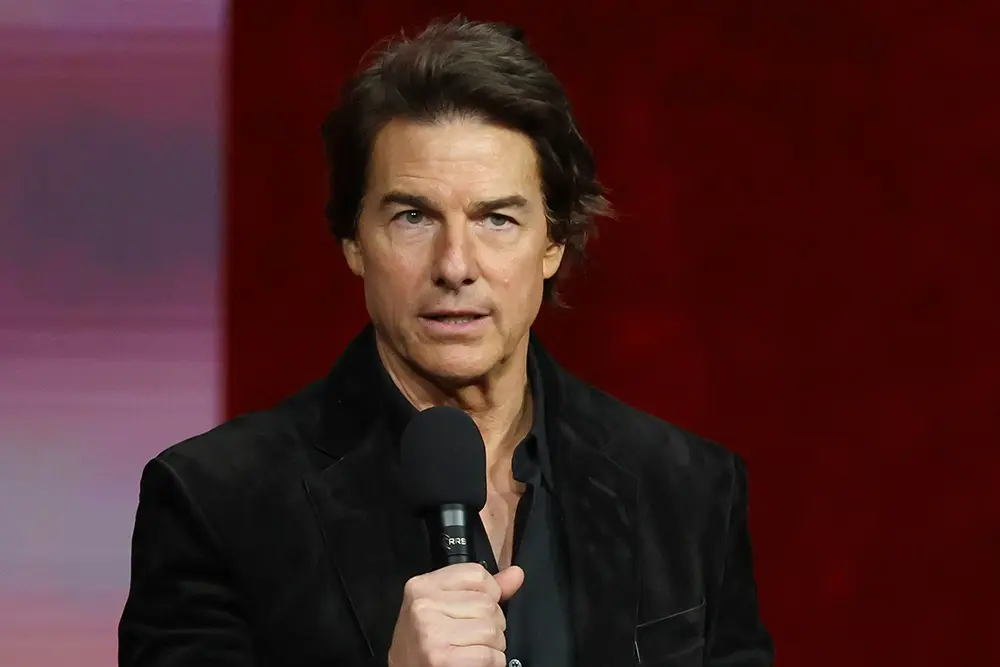
Speaking candidly during an intimate BAFTA “Life in Pictures” retrospective in London on Monday night, the legendary actor and producer delivered a resolute defense of the human element in filmmaking. Addressing a packed house of cinephiles, industry insiders, and critics, Cruise reflected on his illustrious four-decade career—spanning defining blockbusters and critically acclaimed dramas alike—while looking unflinchingly toward the future.
The conversation, deftly moderated by broadcaster Edith Bowman, touched on the rapid proliferation of artificial intelligence in entertainment. It is a timely theme: Cruise’s own iconic Mission: Impossible franchise has consistently pushed the boundaries of practical stunts while directly confronting the threat of rogue machine intelligence in its upcoming 2025 installment, The Final Reckoning. Yet, despite the looming shadow of generative AI and algorithmic production tools, Cruise’s message was unequivocally optimistic. He argued that audiences possess an innate, unshakeable hunger for authenticity, shared community, and genuine human experience on the silver screen.
Beyond his philosophical take on the industry’s digital evolution, Cruise offered tantalizing details regarding his next major cinematic venture: Digger, directed by Academy Award-winner Alejandro G. Iñárritu. Featuring a nearly unrecognizable Cruise as a wealthy oil tycoon via extensive prosthetics and a fat suit, the Warner Bros. release—slated for theaters on October 2—promises to be one of the most daring artistic gambles of his career. As the box office experiences historic highs and studios grapple with technological disruption, Cruise’s remarks serve as both a rallying cry for creatives and a powerful reminder of why the theatrical experience remains irreplaceable.
Detailed Chronology: An Intimate Evening at BAFTA
The atmosphere inside the London venue on Monday night was electric. For decades, the BAFTA “Life in Pictures” series has provided a platform for cinema’s most visionary talents to dissect their craft, but few sessions have carried the cultural weight of Tom Cruise’s appearance.
The evening began with a comprehensive retrospective of Cruise’s extraordinary trajectory in Hollywood. Bowman guided the audience through a career built on high-octane stunts, uncompromising dedication, and deep character work. Attendees were treated to visual highlights and behind-the-scenes anecdotes from monumental milestones across four decades. The conversation traversed his breakout performances in the 1980s, his emotionally resonant work in 1990s classics like Jerry Maguire and Paul Thomas Anderson’s Magnolia, his definitive star turns in Top Gun and its record-shattering legacy sequel, and the death-defying set pieces of the Mission: Impossible franchise.
As the discussion shifted toward the modern era, the dialogue naturally gravitated toward the intersection of cinema and emerging technology. The Mission: Impossible films have long served as a bellwether for cinematic engineering, utilizing practical effects, cutting-edge cameras, and death-defying physical stunts to captivate audiences. Ironically, the franchise’s upcoming chapter, The Final Reckoning, directly confronts the existential dread of artificial intelligence by casting a rogue algorithm as its primary antagonist.
Seizing on this thematic overlap, Bowman pressed Cruise on how he views the broader industry-wide encroachment of AI. Rather than succumbing to dystopian panic, Cruise grounded his answer in the fundamental psychology of storytelling.
"Here’s the thing: There is nothing like human," Cruise began, setting the tone for a thoughtful discourse on the collective nature of moviegoing. He elaborated on why he has remained one of the most vocal, unwavering champions of the theatrical window during a period when streaming platforms have fundamentally altered consumer habits.
"I have nothing against streaming or anything like that," Cruise clarified, acknowledging the convenience and reach of digital platforms. However, he drew a sharp, definitive line between home viewing and the cinema, insisting that seeing a film on the big screen is simply "a different art form."
The chronology of the evening neatly bridged Cruise’s storied past with his aggressive pursuit of fresh, avant-garde storytelling. This transition culminated in the exclusive unveiling and discussion of Digger. Shifting away from the high-flying, aerodynamic action heroics of Top Gun and Mission: Impossible, Cruise dove deep into the grueling physical and psychological preparation required for Iñárritu’s film. Describing the process of sitting through a transformation that initially demanded six hours of daily prosthetic application, Cruise illuminated his continuous drive to reinvent himself as an artist, even after forty years at the absolute apex of global stardom.
Supporting Context & Metrics: The Resilience of the Box Office
Cruise’s bullish stance on the theatrical experience is far from mere romanticism; it is strongly backed by recent empirical evidence from the global box office. For years, doomsayers have predicted the gradual obsolescence of movie theaters, pointing to the proliferation of subscription video-on-demand services, the disruptions of the COVID-19 pandemic, and the rising costs of theatrical distribution. Yet, the numbers tell a dramatically different story—one that aligns precisely with Cruise’s worldview.
The industry recently witnessed a watershed moment when the summer box office shattered all-time records, pulling in a staggering $4.76 billion globally between May 1 and Labor Day. This monumental financial recovery was driven not by homogenized, algorithmically generated content, but by bold, distinct directorial visions, massive scale, and deeply human storytelling that compelled audiences to leave their homes and gather in the dark of a theater.
Cruise pointed directly to this historic box office performance as irrefutable proof of the public’s enduring desire for communal art. "People want that experience. They’re going to movie theaters," Cruise emphasized to the BAFTA audience. "I always believe in humanity."
This resilience poses a direct challenge to the narrative that audiences are indifferent to how their entertainment is made. While generative AI models and synthetic media continue to mature, offering production companies the allure of reduced budgets and accelerated timelines, the theatrical marketplace continues to reward tangible craftsmanship, human vulnerability, and the sweat equity of real artists. When audiences purchase a ticket, they are buying into a shared emotional contract with the human beings on and behind the screen—a dynamic that lines of code cannot replicate.
Official Statements and Industry Philosophy
Cruise’s reflections at BAFTA extended beyond a simple defense of movie theaters; they amounted to a philosophical manifesto for creative workers navigating an uncertain future. As artificial intelligence systems gain the capacity to generate synthetic dialogue, mimic human voices, synthesize visual effects, and even draft screenplays, creatives across the globe are facing an existential crisis regarding the value of human labor.
Cruise’s response to this paradigm shift is rooted in pragmatism combined with unshakeable artistic faith. He acknowledged the inevitability of the technology’s arrival without ceding ground to despair.
"You know, it is coming and it’s going to happen," Cruise stated bluntly, recognizing that technological progress cannot simply be legislated or wished away. However, he immediately pivoted to the core differentiator that protects human art: consumer desire. "But people want to see real things."
His directive to fellow creatives was simple yet profound: "Keep creating."
This philosophy has defined Cruise’s career as both an actor and a pioneering producer. Whether he is hanging off the side of an ascending Airbus A400M, piloting an F/A-18 Hornet, or spending months mastering precision driving for a chase sequence, Cruise has consistently rejected shortcuts in favor of visceral authenticity. His insistence that audiences can intuitively sense the difference between a synthetic spectacle and a genuine human endeavor strikes at the heart of the current debate.
By framing the issue around what audiences want rather than what technology can do, Cruise reframes the conversation. AI may be able to simulate reality, but it lacks the lived experience, the emotional scars, and the physical risk that give cinematic performances their enduring power.
Future Outlook: The Anticipated Arrival of ‘Digger’
If Cruise’s philosophical statements outline the theoretical future of cinema, his upcoming project, Digger, serves as the practical application of his artistic ethos. Scheduled for release on October 2 via Warner Bros., the film represents a radical departure from the familiar blockbuster formulas that have dominated much of his recent career.
Directed by Alejandro G. Iñárritu—the visionary auteur behind cinematic masterworks such as Birdman, The Revenant, and Babel—Digger pairs one of Hollywood’s most bankable movie stars with one of international cinema’s most uncompromising directors. The result is a project shrouded in high anticipation and marked by extreme transformation.
In Digger, Cruise steps far outside his traditional leading-man aesthetic to portray a wealthy oil tycoon. The role required a staggering physical transformation, featuring a fat suit and heavy prosthetics that, during early test phases, required a grueling six hours to apply. For an actor renowned for his kinetic energy and physical dynamism, submerging his familiar visage beneath layers of prosthetic makeup is a bold statement of artistic intent.
Cruise’s enthusiasm for the project was palpable during the BAFTA conversation. "I’ve never read a movie like this," Cruise marveled. "It’s the most original film and one of the most moving films I’ve ever seen."
The collaboration between Cruise and Iñárritu underscores a vital truth about the modern film landscape. While studios increasingly lean toward intellectual property, recognizable franchises, and digital efficiencies, the true vanguard of cinema continues to thrive where fearless artists take massive creative risks. As Digger prepares to hit theaters this fall, it stands as a testament to Cruise’s ongoing mission: to push the boundaries of his own capabilities, challenge audience expectations, and prove that regardless of how advanced technology becomes, the human heart of cinema will always reign supreme.