Executive Overview
For decades, the name Anthropologie conjured immediate mental images of bohemian-chic dresses, artfully scented candles, delicate lace blouses, and eccentric home decor. It was a haven for whimsical aesthetics, targeting a demographic of modern, creative women seeking style with a distinct narrative. Shoes, when offered at all, were historically an afterthought—an incidental accessory tucked away in a corner of select brick-and-mortar storefronts, rarely commanding the attention of the brand’s core merchandising strategies.
Today, that narrative has undergone a radical transformation. Sneakers and footwear have quietly, yet aggressively, emerged as one of the most potent growth engines for the URBN-owned retailer. According to Jessica Irick Peek, General Merchandise Manager (GMM) of footwear and accessories for Anthropologie, the brand has witnessed an extraordinary surge over the past year. The volume of distinct customers specifically seeking out sneakers has jumped by nearly 30%, while the total number of footwear-buying customers has climbed by 15%.
This is not merely a localized retail anomaly; it is the calculated result of a multi-year brand evolution. Anthropologie is capitalizing on this momentum with high-profile, heavyweight investments. Chief among these strategic plays is the introduction of Nike—the undisputed titan of the global footwear industry—to Anthropologie’s carefully curated shelves and digital storefronts. This partnership, alongside a robust expansion of exclusive collaborations with elite brands like New Balance, Puma, and Brooks, underscores a fundamental shift in retail positioning.
Footwear is no longer a passive add-on at Anthropologie; it is a primary acquisition channel and a foundational pillar of the company’s merchandising blueprint. Data reveals that one in five apparel buyers now pairs their clothing purchases with shoes, and one in ten new shoppers buy footwear within their very first year with the brand. As parent company URBN continues to anchor its multi-billion-dollar success on Anthropologie’s strong performance, this footwear renaissance proves that lifestyle brands can successfully conquer technical categories without sacrificing their signature aesthetic.
Detailed Chronology: From Peripheral Afterthought to Omnichannel Omnipotence
To understand how Anthropologie became a destination for coveted sneaker releases, one must examine the operational and geographical scaling of the last half-decade.
The Humble Beginnings: Footwear in the Shadows
Five years ago, when Jessica Irick Peek first stepped into her role at Anthropologie, the brand’s footwear offering was remarkably constrained. Shoes were treated as a peripheral luxury, physically available in a mere eight out of the brand’s sprawling portfolio of stores. The assortment was heavily skewed toward occasional wear, dressy sandals, and specific boots that matched seasonal apparel drops, with little emphasis on comfort, athletic wear, or everyday street style. Digital inventory was similarly limited, and the concept of Anthropologie as a premier footwear destination was practically non-existent in the minds of mainstream consumers.
The Brick-and-Mortar and Digital Scale-Up
Recognizing an untapped market demand, leadership initiated a quiet, systematic expansion of the footwear footprint. Rather than keeping shoes restricted to flagship stores, the merchandising team pushed for integration across the fleet. Over the course of several years, footwear availability exploded from 8 stores to an impressive 200 out of approximately 250 total retail locations.
This physical expansion was coupled with a nuanced digital strategy. Anthropologie realized that while brick-and-mortar stores provided sensory touchpoints—allowing customers to feel leathers, evaluate colors, and try on silhouettes—the digital landscape offered unlimited shelf space for deeper category exploration. The retailer began curating brands that bridged the gap between everyday comfort and elevated fashion, preparing the ground for major brand partnerships.
The Nike Landmark Partnership
The culmination of this multi-year scaling strategy arrived with the announcement and rollout of Nike. Bringing the world’s largest sneaker brand into the Anthropologie ecosystem represents a watershed moment for the retailer.
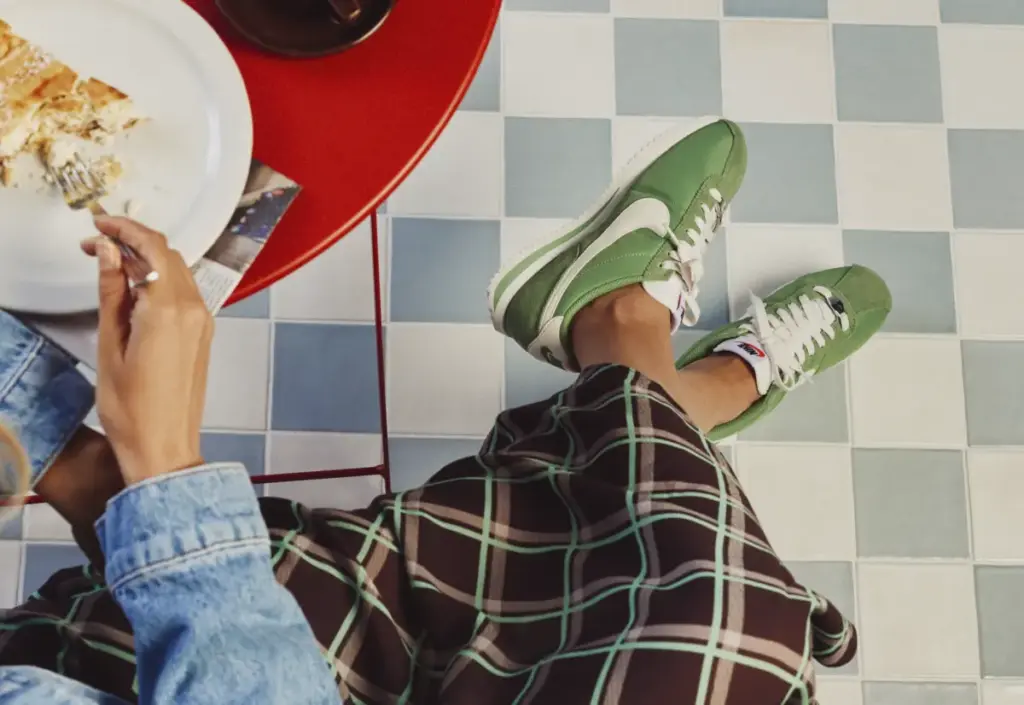
The launch plan was engineered to maximize digital and physical engagement. Rolling out across nine distinct styles, the collection began hitting shelves on a Monday, with the final styles completing the rollout by September 21. To accompany the drop, Anthropologie designed a comprehensive, full-scale digital campaign. This was not a passive inventory addition; it was treated as a major seasonal fashion event, complete with integrated marketing that positioned Nike footwear not merely as athletic gear, but as an essential element of the modern Anthropologie outfit.
Simultaneously, the brand announced forthcoming campaigns for September that will heavily feature heritage-inspired footwear, such as Tecovas boots, demonstrating that the retailer’s footwear ambitions extend far beyond athletic wear into the heart of classic lifestyle categories.
Supporting Context & Metrics: The Numbers Driving the Renaissance
Retail strategies are ultimately judged by their financial and quantitative impacts. For Anthropologie, the metrics surrounding the footwear category validate every aggressive investment made over the past five years.
The Power of the Sneaker Boom
Anthropologie’s internal growth metrics align seamlessly with broader macroeconomic trends identified across the fashion and retail sectors. Recent data released by market research firm Circana highlights that sneakers and performance footwear continue to serve as a powerful growth engine for fashion retailers. While overall footwear sales in the United States limped along with a modest 1% increase in the first half of the year, sales within the sneaker and performance shoe category surged by a remarkable 6%.
Anthropologie positioned itself perfectly to capture this consumer shift. By recognizing that modern consumers—particularly women who form the core of Anthropologie’s demographic—increasingly prioritize versatile, comfortable footwear that transitions seamlessly from day to night, the brand caught a massive wave of consumer preference.
The Value of the Footwear Customer
Internally, the data reveals profound insights into shopper behavior. Anthropologie has tracked a 15% year-over-year increase in the sheer volume of footwear-buying customers. More importantly, cross-category purchasing data underscores the stickiness of the footwear shopper:
- One in five Anthropologie customers who purchase apparel also purchase shoes.
- One in ten new customers make a footwear purchase within their very first year of shopping with the brand.
These statistics illuminated a vital truth for the merchandising team: footwear acts as a powerful acquisition and conversion funnel. New shoppers drawn to a trendy pair of sneakers or boots frequently cross-shop into apparel, home goods, and accessories.
"An important takeaway from this is that the shoe customer is our most valuable customer," states Jessica Irick Peek. "If they are purchasing shoes, they are in our most valuable cohort, and that customer has become a big priority for us."
Owned Brands and Exclusive Collaborations
While securing heavy-hitter external brands like Nike, New Balance, Puma, and Brooks is a major coup, Anthropologie’s proprietary, owned brands are pulling their own weight.
Customer acquisition for Anthropologie’s owned-brand footwear rose by 23% over the past year. Particular standout performance came from Maeve, Anthropologie’s recently spun-off brand, which recorded an impressive 32% increase in shoe customers.
While parent company URBN does not break out exact revenue figures by individual segment for Anthropologie, owned brands collectively account for roughly 70% of Anthropologie’s total revenue. This high margin of owned-brand dominance, paired with the strong financial health of URBN—whose annual revenue for Anthropologie alone sits comfortably above $2 billion—provides the financial runway necessary to fund these ambitious inventory expansions.
Furthermore, Anthropologie leveraged its market cachet to secure exclusive product lines. Roughly 40% of Anthropologie’s total sneaker investment is entirely exclusive to the U.S. market, featuring custom colorways, materials, and silhouettes designed in collaboration with brands like Puma, New Balance, Nike, and Brooks. This exclusivity prevents price-matching erosion and gives fashion-conscious consumers a compelling reason to purchase through Anthropologie rather than traditional athletic retailers.
Official Statements & Merchandising Philosophy
Behind the logistics and the spreadsheets lies a distinct creative philosophy. Anthropologie’s success in footwear is not merely a product of stocking popular brands; it is the result of a disciplined, outfit-first merchandising strategy.
The "Outfit-First" Merchandising Model
Many traditional retailers merchandise footwear in isolation, grouping shoes by brand, size, or athletic utility in dedicated shoe departments. Anthropologie has systematically dismantled this traditional siloed approach.
According to Jessica Irick Peek, the secret to the brand’s high conversion rates lies in how shoes are contextualized for the consumer. "We tend to have the most success with footwear when we’re tying it back to apparel," Irick Peek explains.
In both physical stores and digital lookbooks, Anthropologie deliberately styles sneakers and boots alongside skirts, tailored trousers, knitwear, and dresses. By presenting shoes as an indispensable component of an overarching lifestyle aesthetic, the retailer removes the cognitive friction for the shopper. A customer browsing a floral midi dress does not have to wonder what shoes would complete the look; the styling choices on the rack or screen present the entire, cohesive outfit.
Targeting the Modern Lifestyle
This philosophy reflects a broader cultural shift in how women dress. The rigid boundaries separating athletic wear from corporate attire, and casual weekend wear from formal evening wear, have largely dissolved. Consumers demand versatility. A pair of collaborative New Balance sneakers worn with a pleated skirt, or Nike kicks paired with a casual blazer, represents the uniform of the modern professional and creative class—precisely the demographic that forms the bedrock of Anthropologie’s customer base.
By aligning its product selection with this cultural reality, Anthropologie has transformed its stores into destinations where customers can curate an entire wardrobe under one roof.
Future Outlook: Sustaining Momentum in a Competitive Landscape
As Anthropologie looks toward the horizon, the strategic imperative is clear: sustain the momentum, deepen brand partnerships, and continue refining the digital and physical customer journey.
Scaling the Footwear Footprint
Having successfully rolled out footwear to roughly 200 of its 250 stores, the immediate future is less about physical expansion and more about inventory optimization, regional assortment planning, and fine-tuning the balance between owned-brand margins and marquee national brands like Nike and Tecovas.
The exclusive U.S. partnership strategy will likely expand. As sportswear and fashion brands increasingly seek out lifestyle retail partners to reach demographic cohorts that traditional athletic stores miss, Anthropologie stands as an exceptionally attractive collaborator. The retailer’s ability to command brand loyalty and present product within a high-end, editorial environment makes it a coveted home for limited-edition drops and exclusive capsules.
The Ongoing Challenge of Retention
While acquiring footwear-buying customers at a 15% year-over-year clip is an impressive achievement, the long-term challenge will be retention. The footwear customer, acknowledged by leadership as the brand’s most valuable cohort, expects continuous innovation. They demand fresh colorways, seamless omnichannel inventory visibility, and effortless checkout experiences.
Furthermore, as economic pressures fluctuate, maintaining the strong spend-per-customer metrics—where one in five apparel buyers adds shoes to their cart—will require nimble inventory forecasting and agile supply chain management.
Conclusion: A Blueprint for Lifestyle Retail
Anthropologie’s footwear transformation offers a masterclass in modern retail strategy. By identifying an underserved category, scaling operational access across both digital and physical channels, securing high-profile external partnerships, and executing an outfit-first merchandising philosophy, the brand has successfully redefined its market identity.
No longer just a boutique for dresses and home accents, Anthropologie has cemented its status as a comprehensive lifestyle destination where the right pair of shoes ties the entire brand experience together. As the sneaker boom continues to reshape the fashion landscape, Anthropologie is well-positioned to walk comfortably into its next billion-dollar chapter.