Executive Overview
For decades, the name Dyson has been synonymous with high-velocity airflow engineering, translating aerodynamic breakthroughs into category-defining household appliances, from bagless vacuums and bladeless fans to air-multiplying hair dryers and stylers. Today, the British technology conglomerate is officially venturing into an entirely new consumer landscape: oral hygiene.
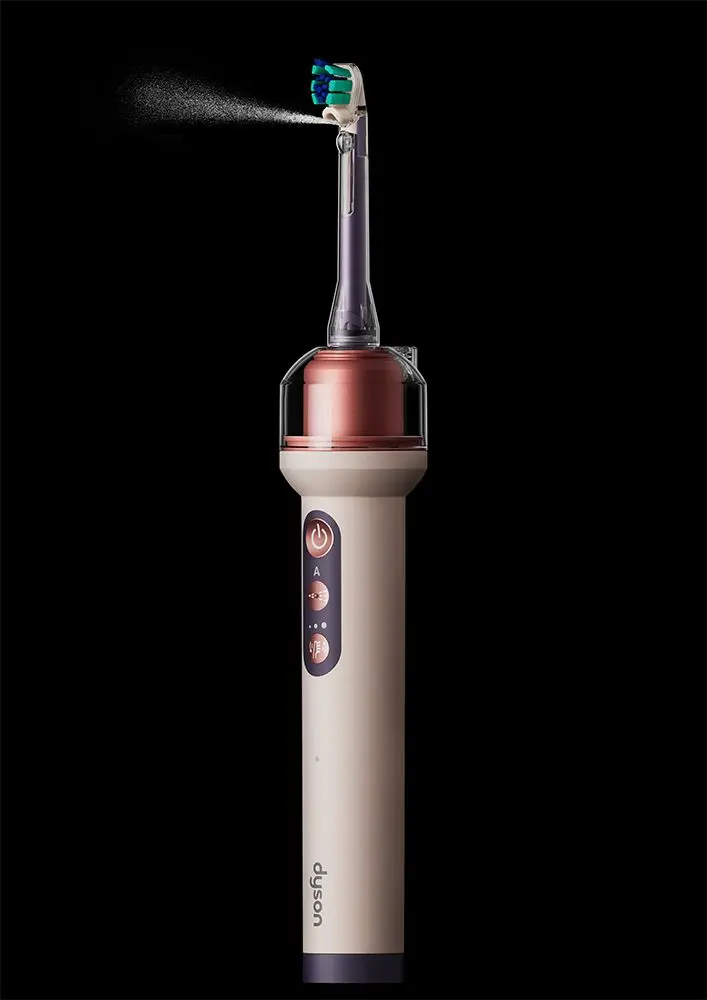
Unveiled in Paris by founder and chief engineer Sir James Dyson, the company’s debut oral-care product—the Dyson CameraJet Electric Toothbrush—carries a $500 price tag and promises to disrupt the stagnant electric toothbrush and flossing market. Utilizing a patented microscopic optical system and precision fluid dynamics, the CameraJet is engineered to solve what Dyson identifies as the most overlooked failure in daily hygiene routines: the neglected spaces between teeth.
Featuring "Gap Optical Targeting," an integrated live-view camera, variable sonic oscillation, and an automated mouthwash-jetting system, the device seeks to bridge the gap—literally and figuratively—between manual brushing, traditional flossing, and high-pressure water irrigation. As consumers increasingly demand medical-grade precision from personal care gadgets, the CameraJet arrives as a bold, albeit premium-priced, testament to the future of smart health technology.
Detailed Chronology: The Journey to the CameraJet
The development of the CameraJet was neither a hasty pivot nor a marketing-driven afterthought. According to Dyson’s engineering teams, the product is the culmination of more than a decade of quiet research into human oral-care regimens, plaque accumulation physics, and fluid mechanics.
Phase 1: Identifying the Flossing Dilemma (2012–2018)
Dyson engineers began studying personal hygiene habits, operating on the premise that traditional cleaning methods suffer from low user compliance. Clinical studies consistently show that while the vast majority of adults understand the necessity of daily flossing, fewer than 30 percent actually execute the habit with necessary frequency and technique. Flossing is widely perceived as awkward, messy, and time-consuming.
Over a six-year R&D period, Dyson’s laboratories analyzed how oral pathogens and plaque build up in human dentition. Their findings confirmed an obvious yet stubborn reality: while manual and electric toothbrushes adequately clear flat tooth surfaces, they consistently fail to penetrate interdental gaps where periodontal disease and tooth decay originate.
Phase 2: Applying Aerodynamic and Optical Expertise (2018–2023)
Leveraging the company’s core competencies in digital motor technology, fluid dynamics, and optical sensor engineering, Dyson sought to merge mechanical brushing with targeted liquid delivery. Early prototypes attempted high-pressure water streams akin to traditional countertop water flossers, but testing revealed that narrow, high-velocity streams could irritate sensitive gums, damage enamel if misdirected, and cause excessive splashing.
To solve this, engineers pivoted to a proprietary conical-shaped jet capable of sweeping across interdental spaces with wider coverage while maintaining a gentle touch on soft tissues. Concurrently, optical engineers integrated a micro-camera module capable of real-time spatial recognition, giving birth to Gap Optical Targeting technology.
Phase 3: The Paris Debut and Commercial Launch
Unveiled to international media and industry insiders in Paris, the CameraJet was introduced in two sophisticated finishes—Ceramic Ultra Blue and Ceramic Pink. Retailing at $500, the device positions itself at the absolute apex of the luxury beauty-tech and personal-care market, competing directly with high-end offerings from Philips Sonicare, Oral-B, and specialized smart flossers like Flaus.
Anatomy of the Innovation: How the CameraJet Works
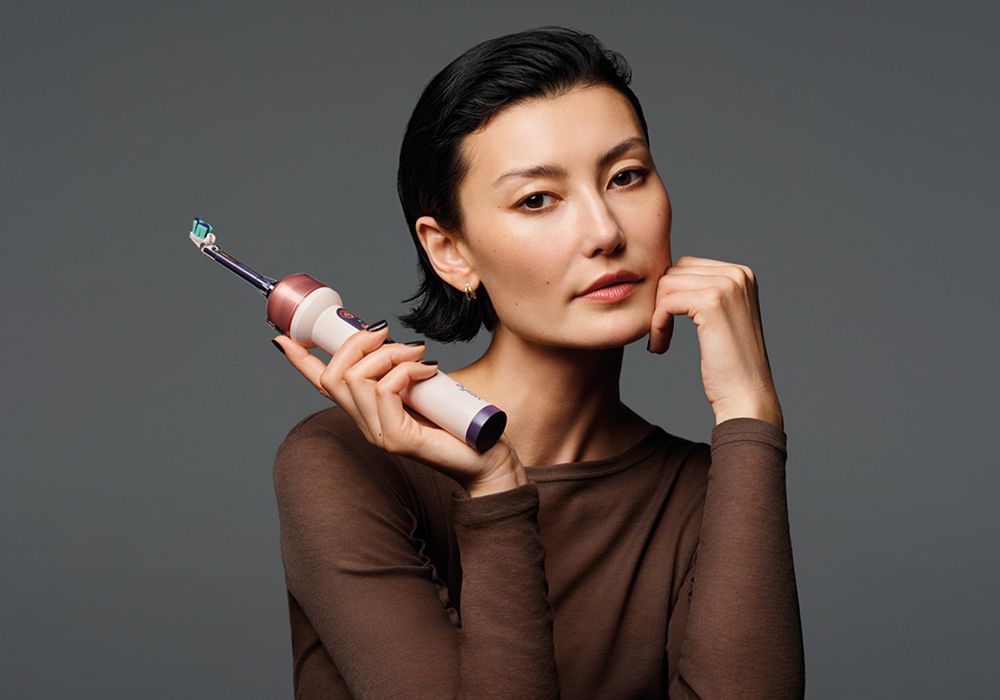
The Dyson CameraJet is not merely a toothbrush with a camera strapped to it; it is an integrated ecosystem of optics, dual-action mechanics, and fluid management.
1. Gap Optical Targeting and the Live-View Camera
At the heart of the CameraJet’s innovation is its embedded optical sensor. Positioned just behind the brush head, the camera uses advanced machine-learning algorithms to scan and map the user’s mouth in real-time.
When the camera identifies an interdental gap characterized by plaque buildup or potential decay risks, it commands the internal fluid delivery system to fire a precise, calculated burst of mouthwash directly into the target zone. Unlike standard water flossers that run continuously, the CameraJet’s jetting is intelligent and localized, conserving liquid and maximizing efficiency.
2. Dual-Action Sonic Oscillation and Brush Head Design
The brushing mechanism utilizes variable sonic oscillation, driving the bristles through rapid, micro-vibrations designed to dislodge surface biofilms. The brush head itself features a meticulously engineered dual-bristle architecture:
- Inner Bristles: Slightly firmer textures engineered specifically for surface-stain removal and polishing.
- Outer Bristles: Softer, more flexible filaments designed to massage and clean along the delicate gumline without causing recession or bleeding.
3. The Charging Dock, Refilling Station, and Hygiene Management
The device operates on an intelligent charging base that doubles as a hygienic storage unit and a mouthwash refilling station. With a simple push of a button, the base automatically replenishes the toothbrush’s internal reservoir with mouthwash in just three seconds. Furthermore, the dock utilizes UV-assisted or streamlined hygienic protocols to keep the apparatus sanitary between uses. For travelers, Dyson includes a compact, premium travel case designed to maintain consistent hygiene routines on the road.
Supporting Context & Metrics: The Science of Oral Health and Smart Tech
To understand the valuation and ambition of a $500 toothbrush, one must examine the macroeconomic and clinical realities of modern dental hygiene.
The True Cost of Neglected Interdental Spaces
According to global health data from organizations like the World Health Organization (WHO) and the American Dental Association (ADA), oral diseases—predominantly dental caries (cavities) and severe periodontal (gum) disease—affect nearly 3.5 billion people worldwide.
- The Interdental Deficit: Clinical surveys indicate that individuals who rely solely on toothbrushes remove approximately 60 percent of dental plaque, leaving the remaining 40 percent trapped between teeth.
- Compliance Statistics: Market research within the personal care industry demonstrates that consumers who use traditional string floss do so an average of only 1.4 times per week, falling far short of the professional recommendation of daily cleaning.
App Connectivity and Data Privacy
The CameraJet pairs with the proprietary MyDyson app, a digital companion that transforms the toothbrush into an interactive health monitor. Key software features include:
- Live-View Brushing: Users can view a live feed of their teeth as they brush, ensuring no quadrant is overlooked.
- Coverage Mapping: The app tracks brushing patterns over time, offering diagnostic feedback and highlighting chronically missed zones.
- Guided Routines: Customized cleaning programs cater to sensitive teeth, orthodontic wearers, or whitening goals.
- Smart Maintenance Alerts: The app monitors brush head wear and alerts the user precisely when it is time for a replacement.
Addressing Privacy Concerns
In an era where consumer data privacy is paramount, connected bathroom devices naturally raise eyebrows. Dyson has proactively addressed these concerns by confirming that no images or video feeds are recorded or stored—neither locally on the device nor within cloud servers. The camera operates strictly as a live-feed optical sensor for immediate targeting and viewing, shutting down automatically when brushing sessions conclude.
Official Statements and Industry Insights
The rollout of the CameraJet marks a pivotal diversification for Dyson, signaling to the market that the company’s engineering prowess is not bound to home environmental controls or hair care.
“Flossing is an awkward and time-consuming chore,” remarked Sir James Dyson, founder and chief engineer, during the global unveiling in Paris. “Few of us do it even though we know we should. Dyson engineers and scientists have spent well over a decade understanding oral-care regimens and how nasties build up in the mouth. Our research has shown that people consistently miss the areas where plaque forms: the gaps between teeth. We wanted to solve three fundamental problems: how to see those gaps, remove plaque, and how to improve cleaning performance while brushing.”
Industry analysts note that while a $500 price tag places the CameraJet in an ultra-exclusive tier, Dyson has repeatedly proven its ability to command premium pricing through tangible design innovation. Much like the Dyson Supersonic hair dryer transformed the beauty tool category from a commoditized appliance market into a luxury tech sector, the CameraJet aims to redefine oral care as a high-tech wellness ritual.
Future Outlook: Beyond the CameraJet
Dyson’s entry into oral care is only the beginning of a broader strategic roadmap. The company has already confirmed plans to expand its smile-care portfolio to complement the CameraJet’s advanced optical targeting system.
SLS-Free Toothpaste and Low-Foaming Mouthwash
To ensure the camera’s optical path remains entirely unobstructed during use, Dyson is currently developing a proprietary SLS-free (Sodium Lauryl Sulfate-free) toothpaste. Traditional toothpastes create heavy, opaque foaming that would obscure the camera’s view; the new formulation is engineered to maintain a clear visual field while delivering active cleaning agents.
Additionally, a companion low-foaming mouthwash is in the final stages of development, specifically formulated for optimal fluid dynamics within the CameraJet’s precision jetting system.
Market Implications and Competitor Response
As preventative health and beauty-tech converge, the launch of the CameraJet is expected to trigger a wave of innovation across the oral hygiene sector. Competitors in the premium electric toothbrush space will likely face increased pressure to incorporate smart optical sensors, AI-driven coverage mapping, and integrated fluid systems.
For consumers willing to make the investment, the Dyson CameraJet represents a paradigm shift: moving oral hygiene from an unmonitored, manual chore to a precision-engineered, data-supported medical routine housed right on the bathroom counter.