Executive Overview
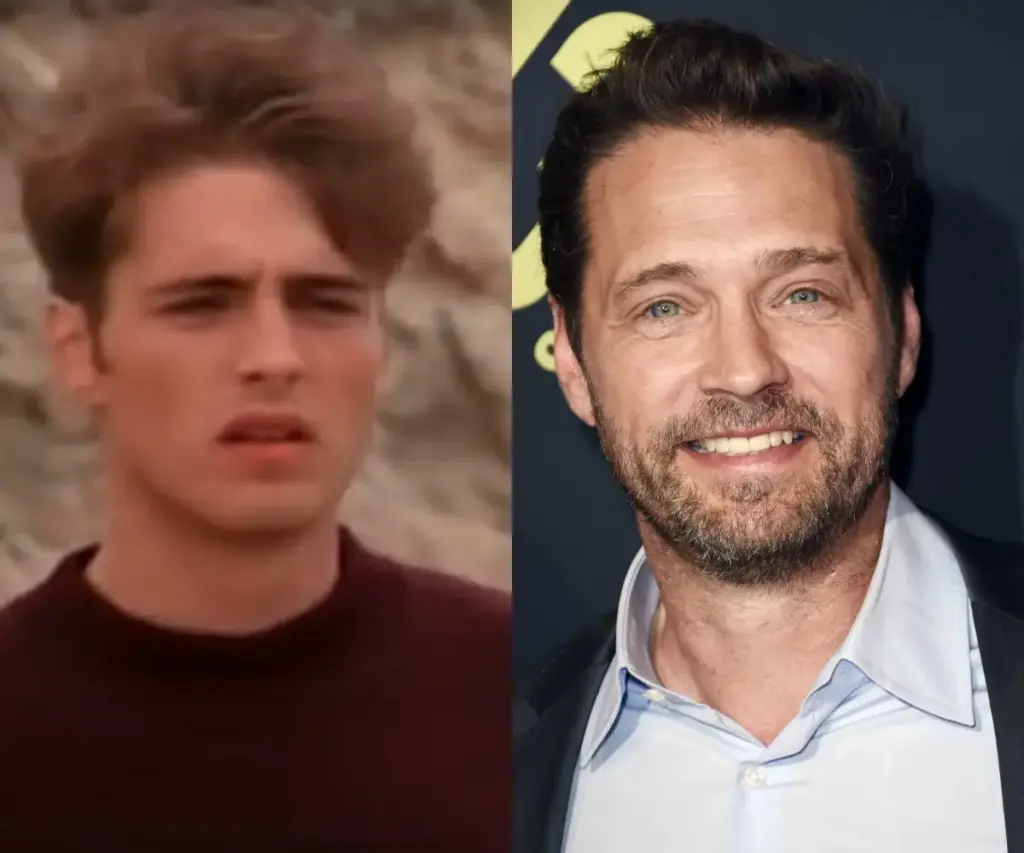
In the landscape of 1990s American pop culture, few television properties commanded the cultural zeitgeist quite like Fox’s teen drama Beverly Hills, 90210. At the center of this iconic show sat Jason Priestley, whose portrayal of the virtuous, Minnesota-bred Brandon Walsh provided the narrative anchor and moral compass for ten seasons of prime-time television. However, at the height of his fame, Priestley made the pivotal decision to walk away from the show in its ninth season—a choice that drastically altered the trajectory of the series and accelerated its eventual end.
Years after stepping out of the spotlight of West Beverly High, Priestley offered a candid reassessment of his departure during an interview with HELLO! Canada. Reflecting on his decision, the actor revealed that his exit was driven by creative exhaustion and a desire for career diversification, despite the persistent entreaties of legendary executive producer Aaron Spelling to keep the show running indefinitely.
"I couldn’t see a light at the end of the tunnel. Aaron [Spelling] kept saying, ‘We’re never ending this show. We’re going to do this show until I’m in the ground.’ He loved [90210] and he loved all of us, and he wanted to keep going forever. I was 29 and wanted to have the opportunity to do different things, so I just decided to walk away. In retrospect, knowing how quickly the show ended after I left, I would have just stayed."
— Jason Priestley
Priestley’s retrospective regret underscores a broader phenomenon within network television: the precarious balance between actor autonomy and the structural integrity of ensemble drama franchises. This investigative analysis examines the historical timeline of Priestley’s tenure, the network television mechanics of the 1990s, the economic impact of major cast departures, and the lasting legacy of the 90210 franchise.
Detailed Chronology: The Rise, Peak, and Dissolution of an Iconic Franchise
+-----------------------------------------------------------------------------------+
| CHRONOLOGY OF BEVERLY HILLS, 90210 & JASON PRIESTLEY'S TENURE                     |
+-----------------------------------------------------------------------------------+
| 1990 | Premieres on Fox; initial low ratings shift during summer broadcast strategy. |
| 1992 | Reaches peak cultural influence, drawing over 20M viewers per episode.     |
| 1994 | Shannen Doherty (Brenda Walsh) departs after Season 4 amidst cast tension. |
| 1995 | Luke Perry (Dylan McKay) departs in Season 6; show pivots to adult themes. |
| 1998 | Priestley leaves in Season 9 (Ep 5); ratings begin steep decline.          |
| 2000 | Fox cancels the series after Season 10; original run finishes May 2000.    |
| 2019 | Meta-revival 'BH90210' premieres, reuniting original cast members.         |
+-----------------------------------------------------------------------------------+
1990–1993: Conceptualization and Cultural Dominance
Created by Darren Star and executive produced by Aaron Spelling, Beverly Hills, 90210 debuted on October 4, 1990. Initially met with lukewarm ratings, Fox made a unprecedented programming decision to air a special "summer season" in 1991 while other networks broadcast reruns.
This strategy paid off massively. The show tapped into a youth market previously underrepresented in prime-time network scheduling, propelling Priestley and co-stars Luke Perry, Shannen Doherty, Jennie Garth, and Tori Spelling to global stardom. Priestley’s Brandon Walsh served as the relatable surrogate for audience values, balancing high-school dilemmas with weightier societal issues.
1994–1997: Internal Fractures and Creative Pivots
As the series matured, so did its cast. By Season 4, behind-the-scenes friction led to the departure of Shannen Doherty, who played Brandon’s twin sister, Brenda Walsh. Despite this loss, the show maintained strong ratings by leaning into serialized soap-opera storytelling and introducing new talent like Tiffani Thiessen (Valerie Malone).
During this period, Priestley broadened his industry footprint within the show’s operational framework. He stepped behind the camera to direct 15 episodes and assumed producer responsibilities starting in Season 5. However, the relentless production schedule—which frequently demanded 30 to 32 episodes per season—began to take its toll.
1998: The Exit of Brandon Walsh
By 1998, Priestley had reached his late twenties and felt creatively constrained by the character that had defined his decade. During Season 9, after completing just four episodes, Priestley made the fateful decision to step away. In Episode 5, titled "Brandon Leaves," his character accepted a journalism post in Washington, D.C., marking the end of the original twin-narrative anchor that launched the franchise.
1998–2000: The Downward Spiral and Final Cancellation
Without Brandon Walsh as its moral center, Beverly Hills, 90210 struggled to maintain narrative cohesion. Despite the return of Luke Perry in late Season 9, ratings dropped significantly. Networks and advertisers recognized that the show’s identity had fundamentally shifted. Just two seasons after Priestley’s exit, Fox officially canceled the series, airing its finale on May 17, 2000.
Supporting Context & Metrics: The Industrial Reality of 1990s Prime-Time TV
To fully grasp why Priestley left—and why his departure proved fatal to the show—it is necessary to evaluate the structural and economic conditions of 1990s broadcast television.
1. Massive Episode Orders and Cast Burnout
Unlike modern streaming platforms that operate on concise 8-to-13-episode seasonal orders, network television in the 1990s was built on volume to fuel lucrative domestic and international syndication markets.
| Metric | 1990s Network Standard (Beverly Hills, 90210) | Modern Streaming Standard (Euphoria, Stranger Things) |
|---|---|---|
| Episodes Per Season | 28 to 32 episodes | 8 to 10 episodes |
| Shooting Days Per Episode | 7 to 8 days | 12 to 20+ days |
| Annual Production Schedule | 10 to 11 months continuously | 3 to 6 months intermittently |
| Syndication Revenue Focus | High (Target: 100 episodes) | Low to Non-Existent |
For Priestley, who was acting, producing, and directing simultaneously, the schedule represented an unrelenting workload. The pressure contributed heavily to his feeling that there was "no light at the end of the tunnel."
AVERAGE ANNUAL PRODUCTION WORKLOAD (HOURS)
==================================================
1990s Network Lead (30 eps/yr): [████████████████████] ~2,400 hrs
Modern Streaming Lead (8 eps/yr): [████████] ~960 hrs
==================================================
2. Ratings Erosion Following Key Cast Exits
The departure of key lead actors during a network television run historically correlates with severe viewership drops. Beverly Hills, 90210 was no exception.
VIEWERSHIP DECLINE POST-SEASON 8 (Nielsen Ratings)
--------------------------------------------------
Season 8 (1997–1998) | ████████████████ 11.4M Viewers (With Priestley)
Season 9 (1998–1999) | ████████████ 8.1M Viewers (Priestley Exits)
Season 10 (1999–2000)| █████████ 6.9M Viewers (Final Season)
--------------------------------------------------
The loss of Priestley followed the earlier departures of Shannen Doherty (Season 4) and Luke Perry (Season 6, though he later returned). This cumulative loss broke the original core ensemble, diminishing audience investment and hastening the show’s end.
Official Statements & Industry Analysis
Deconstructing the Priestley-Spelling Dynamic
The relationship between Jason Priestley and Aaron Spelling reflects a classic Hollywood power dynamic between a studio head committed to an endless franchise engine and a lead actor seeking artistic evolution.
Aaron Spelling, who holds the Guinness World Record for the most prolific television producer in history, viewed television through an industrial lens. Shows like Dynasty, The Love Boat, and Charlie’s Angels taught Spelling that successful formulas should be maintained as long as the network remained willing to air them.
Priestley’s account confirms Spelling’s devotion to the property:
"Aaron kept saying, ‘We’re never ending this show. We’re going to do this show until I’m in the ground.’ He loved [90210] and he loved all of us…"
However, for Priestley, who turned 29 during Season 9, remaining tied to a teen drama posed significant risks for his long-term career. In the late 1990s, actors faced steep hurdles transitioning from long-running network roles into film or serious dramatic projects. His decision to leave was driven by a desire to avoid permanent typecasting.
The Retrospective Realization
Priestley’s admission that he "would have just stayed" had he known the show would end so quickly highlights the complex emotions surrounding television departures:
- Impact Assessment: Priestley did not anticipate that his departure would be the tipping point that accelerated the show’s cancellation within two years.
- Legacy Preservation: Remaining for the final two seasons would have provided a more cohesive, complete arc for his character, offering fans a satisfying conclusion to the twin-narrative built in the pilot episode.
- Industry Evolution: As network television entered the 2000s, ensemble actors began negotiating flexible schedules, limited episode orders, and hiatus allowances—luxuries that were largely unavailable to Priestley in 1998.
Future Outlook & Lasting Legacy
The story of Jason Priestley’s exit from Beverly Hills, 90210 remains an insightful case study in television production, star economics, and franchise management.
The Evolution of the Teen Drama
Beverly Hills, 90210 laid the framework for subsequent youth-oriented dramas, including Dawson’s Creek, The O.C., Gossip Girl, and modern streaming hits like Euphoria. However, contemporary productions have adopted significantly different production models:
- Shorter Commitments: Modern actors are rarely locked into restrictive 22-to-30-episode annual orders, reducing burnout and prolonging show longevity.
- Higher Production Values: Reduced episode counts allow for cinematic production quality, higher budgets per episode, and greater artistic flexibility for cast members.
The Franchising and Reboot Era
Despite its premature end in May 2000, the 90210 brand has proven remarkably resilient:
- CW’s 90210 (2008–2013): A spin-off series that reintroduced original characters, including Jennie Garth, Shannen Doherty, and Tori Spelling, while introducing a new generation of Beverly Hills teenagers.
- BH90210 (2019): A meta-revival broadcast by Fox, in which the original cast—including Priestley—played heightened versions of themselves attempting to pitch a reboot of their iconic show.
THE '90210' FRANCHISE TIMELINE
==========================================================================
[1990-2000] Beverly Hills, 90210 (Original Series - 293 Episodes)
    |---> [1992-1999] Melrose Place (Direct Spin-off)
    |---> [2008-2013] 90210 (CW Reboot Series - 114 Episodes)
    |---> [2019] BH90210 (Fox Meta-Revival - 6 Episodes)
==========================================================================
Final Conclusion
Jason Priestley’s reflection on his exit from Beverly Hills, 90210 provides a rare glimpse into the personal cost of television success. While his departure contributed to the end of a cultural milestone, Priestley’s legacy as Brandon Walsh remains a foundational pillar of modern television history. His journey serves as a enduring reminder of the fine line between personal career ambition and the delicate creative balance of network television.