Executive Overview
In the modern landscape of the beauty and cosmetics industry, the quest for a second-skin finish has evolved from a matter of product formulation to a sophisticated exercise in tool mechanics. While consumers once spent hours agonizing over liquid versus powder foundations, contemporary beauty science dictates that the delivery mechanism—the brush—is just as critical as the pigment itself. Recent insights from leading global makeup artists, top-tier cosmetic chemists, and beauty editors have brought renewed focus to the engineering of foundation brushes, illuminating how bristle density, cut, shape, and fiber composition dictate everything from coverage levels to longevity.
At the center of this dialogue is a fundamental paradigm shift: consumers are no longer looking for heavy, mask-like coverage. Instead, they demand airbrushed, undetectable skin paired with high-performance, travel-friendly utility. This is exemplified by breakthrough releases like the Glossier Stretch Blending and Buffing Face Brush, alongside expert-backed staples from heritage luxury houses like Dolce & Gabbana and accessible innovators like Morphe.
This comprehensive report examines the shifting landscape of complexion application tools. Drawing on expert testimony from industry leaders—including Dolce & Gabbana Global Beauty Expert Naoko Scintu, Morphe Education Manager Amber Jones, and Justmylook makeup artist Hayley Walker—we break down the anatomical requirements of brushes designed for liquid, cream, and stick foundations. Furthermore, we explore the structural physics of stippling versus buffing, the rise of vegan and cruelty-free synthetic fibers, and what the future holds for the multi-billion-dollar cosmetic tool market.
Detailed Chronology: The Evolution of the Complexion Brush
To understand where the beauty tool market stands today, it is necessary to examine how application techniques and hardware have transformed over the past two decades.
[Early 2000s] ──> [2010s] ──> [Late 2010s] ──> [Present Day]
Paddle Brushes     Beauty Sponges    Dense Kabukis     Multifunctional &
(The Standard)     (The Wet Era)     (Airbrush Focus)  Travel-Engineered Tools
The Paddle Era (Early 2000s)
For decades, the standard tool for liquid foundation was the flat, synthetic paddle brush—often modeled after traditional watercolor painting brushes. While these tools allowed for precise placement of product, they notoriously left streaks behind. Users were forced to spend valuable minutes using fingers or sponges to buff out the harsh lines left in the wake of the flat bristle sweep.
The Sponge Revolution (2010s)
The introduction of hydrophilic foam blending sponges disrupted the market entirely. Consumers abandoned brushes en masse in favor of damp, egg-shaped sponges that sheared out coverage and delivered a dewy, skin-like finish. However, sponges presented their own drawbacks: they absorbed significant amounts of expensive product, required rigorous daily cleaning to prevent bacterial growth, and lacked structural precision around facial contours.
The Dense Buffing Renaissance (Late 2010s)
As full-coverage matte trends gave way to buffed-out, polished skin, the beauty industry experienced a renaissance in dense, rounded synthetic brushes. Kabuki-style tools and domed buffers emerged as the gold standard. By utilizing millions of ultra-fine, tapered synthetic fibers, these brushes could work liquid and cream formulas directly into the pores of the skin rather than sitting merely on the surface.
The On-The-Go Engineering Era (Present Day)
Today, the focus has shifted toward hyper-functional, multi-tasking design. With consumers living increasingly mobile lives—touching up makeup on trains, in cars, or between meetings—brands are engineering compact solutions that do not sacrifice performance. The modern foundation brush must be vegan, travel-safe, ergonomic, and capable of working seamlessly across multiple product formats, from liquid tints to solid stick foundations.
Supporting Context & Metrics: The Anatomy of Modern Application
When evaluating a foundation brush, consumers and professionals alike must look beyond marketing claims and analyze the physical properties of the tool. Industry data indicates that the global cosmetic brush market continues to expand rapidly, driven largely by consumer education regarding hygiene, synthetic fiber performance, and professional-grade results at home.
Key Anatomical Components of a High-Performance Brush
-
Fiber Density and Material:
The days of natural animal hair dominance are virtually over. Modern high-end brushes utilize advanced synthetic micro-fibers (often PBT or customized polyester blends) that mimic or exceed the softness of natural hair while offering superior durability. Synthetic fibers do not absorb liquid products, ensuring minimal product waste. Furthermore, densely packed bristles are essential for eliminating streaks; the tighter the fibers are clustered, the more evenly they can distribute viscous liquids and creams. -
Ferrule and Handle Ergonomics:
The connection between the bristle head and the handle—the ferrule—plays a vital role in weight distribution and pressure control. Ergonomically angled handles allow the brush head to sit naturally against the complex topography of the human face, reducing wrist strain during prolonged application. -
Protective Innovation (Swivel Covers & Caps):
Portability has become a primary design metric. Brushes featuring retractable mechanisms, magnetic caps, or built-in swivel covers (such as those found on travel-forward innovations) solve the age-old problem of makeup-stained handbags and compromised bristle integrity.
Official Statements & Expert Insights: Choosing the Right Tool for the Formula
Navigating the vast array of available brushes can be overwhelming. To provide authoritative guidance, leading industry experts weigh in on the ideal tools for specific foundation types and desired finishes.
The Case for Spherical and Domed Brushes
Achieving an "airbrushed" finish requires a specific type of friction and product distribution. According to Naoko Scintu, Dolce & Gabbana Global Beauty Expert, the shape of the brush dictates the final interaction between pigment and epidermis:
"I love a spherical rounded foundation brush with densely packed hairs, which allows you to get an immaculate buffed-out blend. I want skin to look as natural as possible, so with this type of brush you can keep blending to get the skin glowing."
Echoing this sentiment regarding liquid and cream formulations, Amber Jones, Education Manager at Morphe, notes that tailoring the brush to the formula yields the most professional results:
"We designed our new range at Morphe to cover all bases. For example, our M104 Domed Foundation Brush is fantastic for achieving a natural, airbrushed look with liquid or cream foundations, as the dome shape design buffs product seamlessly into the skin."
However, when a user requires heavier, more intentional coverage, Jones suggests altering the tool geometry entirely:
"If you prefer a more full-coverage finish, the M107 Paddle Cream & Liquid Foundation Brush is your go-to. This classic design allows precision and control when laying product in areas where you wish to achieve fuller coverage."
Mastering Stick Foundations
Stick foundations present a unique challenge due to their waxy, high-pigment, and heavy-emollient bases. Applying them incorrectly can result in a cakey or patchy appearance. Hayley Walker, makeup artist at Justmylook, offers precise instructions for this formulation:
"I recommend using a flat, dense brush, such as the kabuki brush. Its design is ideal for applying stick foundation, blending with light and stippling motions for precision. An angled foundation brush also works well for applying product into hard-to-reach areas for even coverage."
Amber Jones adds structural validation for stick formulas:
"The Morphe M106 Flat-Topped Foundation Brush is excellent for stick foundations. Its dense bristles pick up and blend the product evenly without dragging or pulling on the skin."
Achieving Flawless Full Coverage Without the Weight
The paradox of full coverage is that consumers want high opacity without the visual weight of heavy makeup. Achieving this requires a two-step layering technique, as outlined by Naoko Scintu:
"I like to use a flat brush to apply a full coverage foundation, before buffing it into the skin with the new Dolce & Gabbana Foundation Beauty Brush. I love this brush to finish off the edges and to give the skin a once over before completing the makeup look."
Hayley Walker expands on the mechanical technique required for this level of perfection:
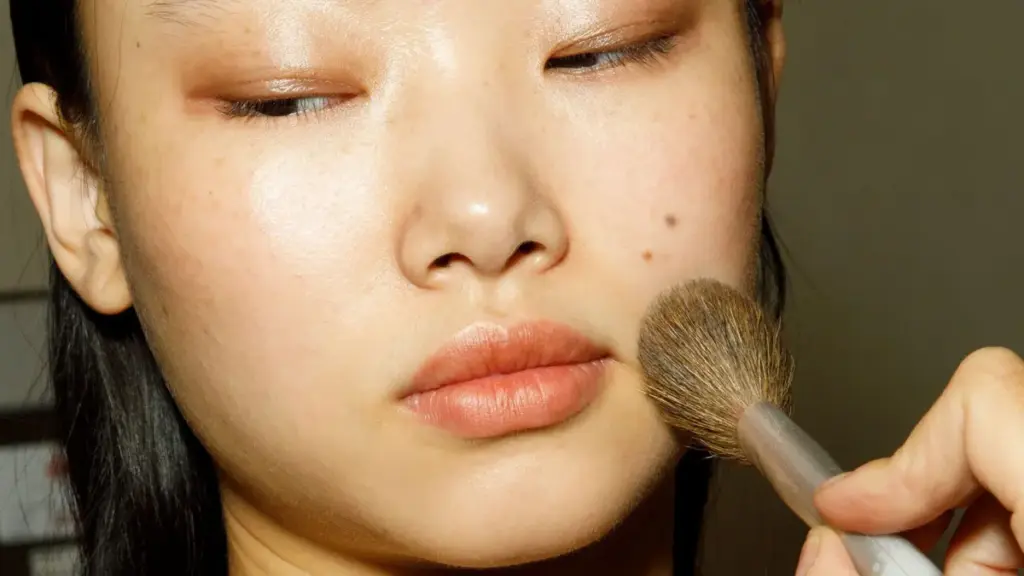
"A flat-top brush works well for full, even coverage and helps liquid or cream foundation apply flawlessly on the skin for an airbrushed finish. A dense buffing brush provides seamless application and helps blend the foundation smoothly while achieving high coverage. For best results and maximum coverage, avoid dragging the brush across the skin and instead opt for light, stippling or buffing motions."
Comparative Matrix: Foundation Brushes by Application Type
| Foundation Formula | Recommended Brush Type | Ideal Motion | Key Benefit |
|---|---|---|---|
| Liquid (Natural Finish) | Domed/Spherical Buffer (e.g., Morphe M104) | Circular buffing & swirling | Diffuses pigment for an ethereal, glowing, skin-like finish. |
| Liquid/Cream (Full Coverage) | Paddle or Flat-Top Kabuki (e.g., Morphe M107) | Pressing, sweeping, & stippling | Delivers maximum pigment deposit and precise edge control. |
| Stick Foundation | Flat-Topped Dense Kabuki (e.g., Morphe M106) | Light tapping, stippling, & short buffs | Picks up waxy formulas without dragging or clinging to dry patches. |
| On-The-Go / Touch-Ups | Compact, Short-Bristled Swivel Brush (e.g., Glossier Stretch) | Targeted buffing | Travel-safe casing prevents messes while delivering precise blending. |
Future Outlook: What Lies Ahead for Cosmetic Tool Technology?
As we look toward the future of the beauty industry, several macro-trends are set to redefine how brushes are manufactured, marketed, and utilized:
-
Biodegradable and Sustainable Materials:
With environmental scrutiny increasing across all consumer goods sectors, the next frontier in brush manufacturing involves biodegradable plant-based plastics for handles, recycled aluminum ferrules, and sustainably sourced synthetic fibers that break down organically at the end of their lifecycle. -
Smart-Clean Technology:
Innovations in antimicrobial fiber treatments are on the horizon. Manufacturers are experimenting with silver-ion infused synthetic bristles that actively inhibit bacterial growth between washes, addressing long-standing hygiene concerns for daily makeup users. -
Multi-Functional Modular Systems:
As consumer preferences lean toward minimalism and streamlined travel bags, modular brush systems—where a single ergonomic handle can interchange multiple magnetic heads (foundation, concealer, contour, and powder)—are projected to capture significant market share.
Conclusion
The evolution of the foundation brush underscores a profound truth in cosmetic artistry: the tool is just as vital as the medium. Whether utilizing a specialized compact brush for an on-the-go commute or employing a professional dome buffer to melt a full-coverage cream into the skin, understanding the mechanics of bristles, shapes, and application motions elevates makeup application from a routine chore into a refined science. By investing in the right high-performance tool tailored to your preferred foundation formula, achieving a seamless, airbrushed, and natural complexion is no longer a professional secret—it is an accessible reality.