Executive Overview
As the crisp air of early September signals the seasonal transition, the beauty industry undergoes its annual metamorphosis. While the cultural zeitgeist often jokes that a sudden, impulsive fringe is the default psychological defense mechanism against a breakup, A-list celebrities often utilize hair transformations to mark far more deliberate calendar milestones. For Jennifer Lawrence, the arrival of autumn is officially heralded not by the first falling leaf, but by a strategic, highly publicized reimagining of her signature hairstyle.
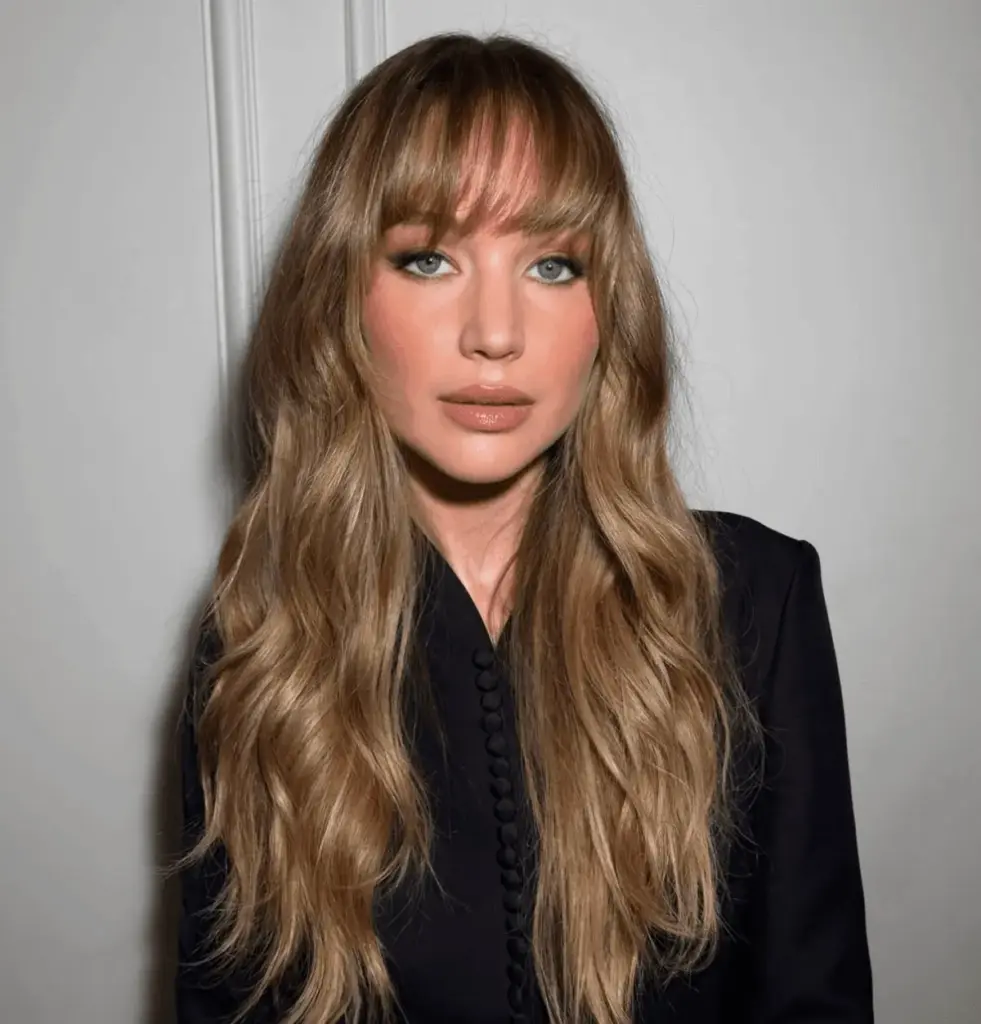
In Paris this September, the Oscar-winning actress once again captured the global fashion spotlight by debuting her latest hair evolution: the "butterfly fringe." Crafted by acclaimed celebrity hairstylist Chris Appleton, this fresh iteration of facial framing marks a sharp, yet effortless, departure from the blunt "Birkin bangs" Lawrence famously debuted last September. Perfectly bridging the stylistic gap between the breezy, face-framing nature of curtain bangs and the dense, structured elegance of a traditional French fringe, butterfly bangs have quickly emerged as the defining hair trend of the autumn season.
This comprehensive report examines the anatomy of the butterfly fringe, exploring the technical mechanics of the cut, its versatility across diverse hair textures and face shapes, and expert styling protocols. Drawing insights from industry leaders, we analyze how this specific style captures the broader return of 1990s blowout culture and why it is rapidly becoming the most requested salon service of the season.
Detailed Chronology: The Evolution of Lawrence’s Signature Fringe
To understand the cultural and aesthetic weight of Jennifer Lawrence’s latest look, one must trace the timeline of her recent hair transformations, which have consistently served as a weather vane for broader hair trends.
The Autumn 2023 Prelude: The Birkin Bangs Era
In September 2023, Lawrence walked into the fall season with a definitive statement: a blunt set of Birkin bangs, named after the legendary French-British style icon Jane Birkin. This cut was characterized by its straight-across, eyebrow-skimming weight, which offered an immediate dose of Parisian chic. For the better part of a year, Lawrence demonstrated the immense versatility of this cut, styling it sleek and polished for red-carpet appearances or tousled and lived-in for casual street-style outings.
However, fashion is inherently transient. As the calendar turned to September 2024, the mood in Paris shifted, calling for a style that felt less heavy, more dimensional, and uniquely adapted to the movement of modern autumn wardrobes.
The September 4 Reveal in Paris
On September 4, celebrated hairstylist Chris Appleton took to social media to share the first official look at his newest A-list creation. Unveiling the transformation on Jennifer Lawrence in Paris, Appleton introduced the world to the "butterfly bang."
Unlike the heavy, linear structure of the previous year’s Birkin bangs, the butterfly cut introduced an airy, featherlight dimension. Photographed against the backdrop of the French capital, Lawrence’s dimensional "bronde" (brown-blonde) hair color provided the ideal canvas for the cut. The fringe immediately struck a chord with beauty editors and fans alike, generating instant viral engagement and establishing a new benchmark for fall beauty trends.
Anatomical Breakdown: What Are Butterfly Bangs?
To the untrained eye, bangs may simply look like hair cut shorter across the forehead. In the hands of master stylists, however, fringe geometry is an exact science designed to manipulate facial proportions, catch light, and enhance bone structure.
Defining the Butterfly Cut
According to Chris Appleton, butterfly bangs occupy a unique sweet spot in hair design. They can be conceptualized as a hybrid between Sabrina Carpenter’s signature sweeping curtain bangs and the denser, brow-covering fringe popularized by television icons like Jessica Day.
In a statement detailing the architectural structure of the cut, Appleton explained:
"The bangs get their name from taking the shape of butterfly wings. They are shorter and airy in the center, winging out at the cheekbones for lift and movement rather than a traditional heavy fringe."
Expanding further in interviews with beauty publications, Appleton noted that butterfly bangs fan out deliberately to frame the face. Unlike micro-bangs or classic curtain bangs, they rely on lighter, wispy internal layers that generate exceptional vertical volume. The layers are cut progressively: shorter near the crown of the head, blending seamlessly into longer, cascading tiers as the eye moves down toward the jawline.
The Optical Illusion of Light and Movement
One of the primary reasons butterfly bangs are capturing such widespread attention is their interaction with lighting. Traditional heavy bangs can sometimes cast shadows across the face, subduing natural skin luminosity. Butterfly bangs, conversely, are engineered to catch and reflect light.
By winging outward at the cheekbones, the strands create dynamic highlights and lowlights throughout the hair shaft. For individuals with darker autumn and winter hair palettes—ranging from deep chestnuts to rich espressos—this outward movement accentuates color depth, preventing darker shades from appearing flat or heavy during the colder months.
Supporting Context & Metrics: The Return of the ’90s Blowout
The rise of the butterfly fringe does not exist in a vacuum. It is part of a broader, systemic revival of 1990s high-glam aesthetics that has dominated runways, social media feeds, and consumer purchasing habits over the last twenty-four months.
The Macro Trend: ’90s Supermodel Volume
The minimalist aesthetic of the early 2010s has officially given way to a maximalist appreciation for bounce, volume, and structured movement. Search metrics across major beauty platforms indicate a triple-digit percentage increase in queries related to "voluminous blowouts," "layered fringes," and "face-framing cuts" heading into the fourth quarter.
Chris Appleton explicitly ties the butterfly bang trend to this cultural resurgence:
"The ’90s blowout is back with a vengeance—and butterfly bangs are their perfect companion. Pairing these two together will give you the perfect face-framing volume."
Consumer Product Adaptation and Market Demand
The shift toward airy, voluminous fringe styling has directly impacted the beauty retail market. Consumers are moving away from heavy styling waxes and stiff hairsprays in favor of lightweight volumizers, heat-activation sprays, and multi-functional styling tools.
Key products experiencing surges in demand include:
- Weightless Volumizing Sprays: Formulations designed to lift hair directly from the root without leaving a sticky residue, such as the Color Wow Xtra Large Bombshell Volumizer.
- Glossing and Anti-Frizz Treatments: Products like the Color Wow Dream Coat Supernatural Spray, which provide a glass-like finish to highlight the dimensional layers of a butterfly cut.
- Multi-Styler Blowout Brushes: Tools such as the CHI Volumizer 4-in-1 Blowout Brush, which enable consumers to replicate salon-quality round-brush tension at home.
Expert Insights and Official Styling Protocols
Achieving the effortless, lived-in luxury of Jennifer Lawrence’s butterfly bangs requires precision both in the salon chair and during daily styling routines. Industry leaders have outlined clear protocols for both hairdressers and clients.
What to Tell Your Stylist
Replicating the look requires clear communication and specific technical execution. Clients walking into the salon should avoid simply asking for "layers" and instead request a structured face-framing system.
Chris Appleton advises:
"To achieve the perfect butterfly bangs, ask your stylist for soft face-framing layers that blend seamlessly into the rest of your hair."
For professional stylists executing the cut, Appleton recommends utilizing overdirection and point-cutting techniques. Overdirection ensures that the hair retains maximum length and bounce when it falls naturally, while point-cutting softens the ends, preventing the blunt, heavy lines characteristic of traditional bangs and allowing for that signature outward flip.
Customization Across Face Shapes
While butterfly bangs are remarkably versatile, their success depends on structural customization. Hair density must be tailored to individual facial geometries:
- Angular and Sharp Features: Lighter, wispier butterfly bangs help soften strong jawlines and prominent cheekbones by diffusing hard geometric angles.
- Round and Oval Faces: Fuller, more voluminous interpretations of the fringe help elongate the face, drawing the visual axis upward and outward toward the temples rather than compressing the forehead.
Step-by-Step Home Styling Guide
Maintaining the butterfly effect outside of the salon requires mastering basic blowout techniques. Because the cut relies entirely on movement and lift, air-drying is generally discouraged for this specific style.
- Prep with Damp-Hair Volumizer: Apply a lightweight volumizing mousse or spray (such as Color Wow Xtra Large Bombshell Volumizer) to damp roots, focusing specifically on the crown and the center of the fringe.
- Rough Dry to 80%: Using a blowdryer, rough dry the hair while lifting upward at the roots to establish initial volume.
- The Round-Brush Roll: Using a medium-sized round brush or an automated blowout tool (like the CHI Volumizer 4-in-1), pull the central section of the fringe forward and upward, rolling it backward away from the face.
- Wing Out the Sides: For the side pieces that frame the cheekbones, direct the brush outward and backward toward the ears to create the characteristic "butterfly wing" sweep.
- Seal with Shine: Finish the look with a humidity-blocking, high-gloss spray to ensure the layers catch the light without frizz interference.
Future Outlook: The Longevity of the Butterfly Fringe
As autumn transitions into winter, beauty forecasts predict that the butterfly fringe will evolve from a red-carpet trend into a staple mainstream hairstyle. Unlike high-maintenance micro-bangs that require bi-weekly trims, the cascading, layered nature of the butterfly cut offers a more forgiving grow-out phase. This structural advantage makes it an attractive, low-commitment option for consumers hesitant to take the plunge into a permanent, high-upkeep fringe.
Furthermore, as fashion weeks across New York, London, Milan, and Paris continue to champion ’90s-inspired textures, hair stylists anticipate that face-framing layers will remain dominant well into the upcoming spring and summer seasons. By proving that bangs can be simultaneously airy, voluminous, and structurally dynamic, Jennifer Lawrence and Chris Appleton have redefined the modern fringe, ensuring that the butterfly cut will rule hair salons for months to come.