Heartbreak is rarely categorized as a distinct medical emergency, yet anyone who has weathered the catastrophic dissolution of a relationship recognizes its profound, systemic toll. The symptoms are familiar to the point of cliché: an acute inability to ingest food, catastrophic sleep disruption, an invasive loop of self-interrogation, and an overarching, debilitating sense of uselessness. For most, the prescription for emotional recovery involves time, talk therapy, distraction, and the eventual dulling of raw nerve endings.
However, emerging modalities at the intersection of Traditional Chinese Medicine (TCM) and modern somatic healing suggest that emotional trauma is not merely a cognitive phenomenon—it is a physiological reality deeply embedded in the body.
This investigation explores the intersection of emotional loss and physical somatic therapy through the lens of Five Element acupuncture. Seeking treatment from renowned acupuncturist Ross J. Barr—whose clientele includes high-profile figures such as Meghan Markle, Prince Harry, and Alexa Chung—this piece documents an unexpected journey through grief, the somatic manifestation of shock, and the clinical insights of psychological experts on why our brains cling so desperately to unfinished emotional business. Ultimately, this report examines whether ancient medical frameworks can help us untangle modern heartbreak, changing not necessarily who we remember, but how the memory lives within us.
Detailed Chronology: From First Love to the Pulse Diagnosis
The Anatomy of First Disruption
My introduction to heartbreak occurred at age seventeen, following the textbook script of post-first-love devastation. I was, by all practical metrics, entirely non-functional. Across the ensuing years, a recurring behavioral pattern emerged: I found myself holding onto relationships long past their expiration date, struggling to sever emotional ties until an external distraction redirected my attention. I was chronically prone to recursive questioning: Why didn’t it work? Why wasn’t I chosen? What did I do wrong? Why can’t I just move on like a normal person?
Despite this familiarity with emotional distress, my initial consultation with Ross J. Barr began far away from matters of the heart. Approaching the appointment, I considered myself relatively well-adjusted. Sure, I was experiencing garden-variety fatigue, lingering brain fog, and occasional procrastination driven by looming professional deadlines. Otherwise? Fine. I maintained a healthy diet, slept soundly through the night, and possessed the ability to completely decompress with a good book. When asked about my stress levels, I described myself as exceptionally chilled out.
The Diagnostic Revelation
Barr listened quietly before asking me to lie down on the treatment table. He reached for my wrist, gently pressing his fingers against various positions to take my pulse.
"You have a bit of a flicker in your heartbeat," he noted, his voice calm and measured. "Have you been through a break-up recently?"
The question bypassed my intellectual defenses entirely, instantly generating a hot, stinging wave of emotion. It was that specific, destabilizing sensation that surfaces when someone asks with genuine sincerity if you are actually okay. Technically speaking, the answer was a resounding no. My most recent relationship had ended months prior—though, in reality, it had only spanned a brief six-month courtship. Yet, sitting there on the table, it became painfully obvious that an active, unresolved fragment of my psyche was still desperately holding on.
Supporting Context & Metrics: The Mechanics of Five Element Acupuncture
The Philosophy of Traditional Chinese Medicine
Five Element acupuncture operates as a specialized branch of Traditional Chinese Medicine (TCM), championing a deeply holistic paradigm where the physical and emotional dimensions of human existence are inextricably linked.
At the philosophical core of this practice is the conviction that human vitality is constantly shaped by five foundational elements:
Wood
Fire
Earth
Metal
Water
Each element corresponds to a distinct set of physical, psychological, and energetic attributes. When an individual is thriving in health and vitality, these five elements exist in a state of dynamic equilibrium. Conversely, when disruptions occur—whether precipitated by acute illness, environmental stress, physical shock, or sudden emotional upheaval—one or more elements are knocked out of balance. In TCM, this imbalance registers simultaneously across physical and mental planes.
Rather than isolating a single symptom for targeted intervention, Five Element practitioners adopt a macro-level diagnostic approach. Barr evaluated my wrist pulses not merely for heart rate, but for subtle nuances in rhythm, depth, strength, and textural quality.
"There are hundreds of different pulse qualities," Barr explains, noting that these distinct variations can telegraph internal states ranging from acute anxiety and suppressed anger to deep-seated emotional shock.
The Treatment Protocol
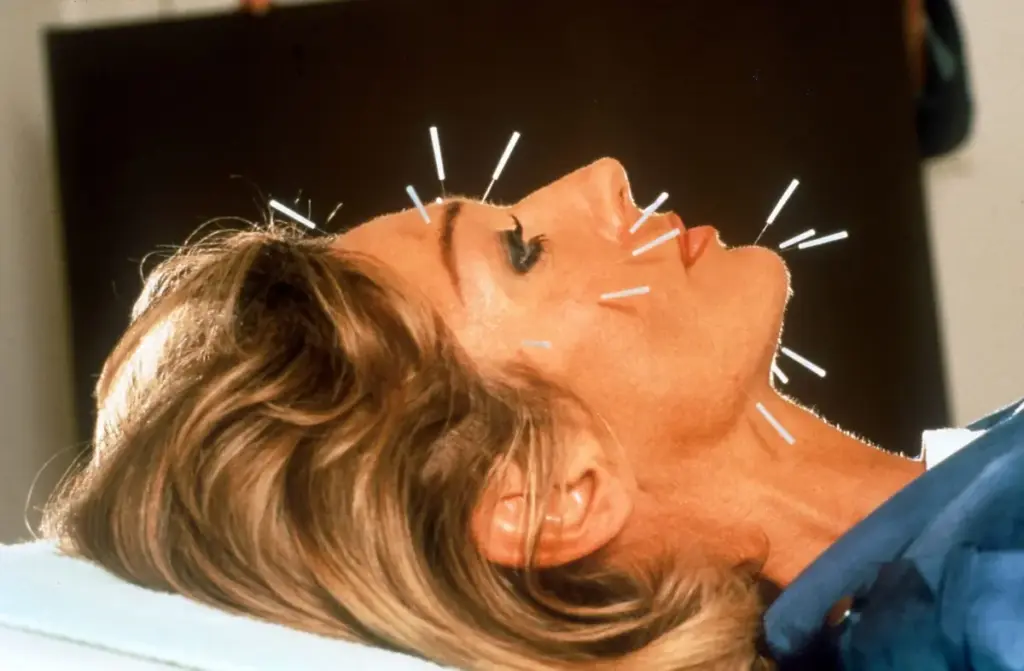
The physical intervention itself relies on the insertion of hair-thin, sterile needles into precise acupuncture points distributed across the body. During my sessions, these points were concentrated primarily in the hands and feet, occasionally extending to the arms and scalp.
The sensation is remarkably gentle—devoid of sharp pain, punctuated only by an occasional dull, heavy ache when the practitioner expertly adjusts a needle. Within Chinese medical theory, these points align along invisible energetic pathways known as meridians, through which qi (vital energy) flows. The specific selection of points is entirely bespoke, mapped dynamically to the patient’s presentation during the consultation.
"The points we use are tailor-made to the individual," Barr elucidates. "You wouldn’t necessarily treat every person going through heartbreak or grief in exactly the same way."
This level of customization appealed to my skepticism regarding universal wellness solutions. If there existed a singular, standardized needle placement capable of exorcising an emotionally complicated romantic prospect from the human brain, the algorithm-driven wellness industry would have monetized it long ago.
Official Statements & Expert Insights: Can Heartbreak Manifest in the Body?
The Fight-or-Flight Response of Abandonment
According to Barr, the most neurologically disruptive component of heartbreak is not merely the pervasive sadness, but the element of shock.
"If a break-up happens suddenly or out of the blue, you can experience that same fight-or-flight response you might have after another sudden shock," Barr states.
Anyone who has endured authentic heartbreak will instantly recognize its undeniable somatic footprint: the sudden-onset nausea, the complete evaporation of appetite, the 4:00 AM tossing and turning, and an obsessive cognitive lock where the mind refuses to focus on anything save for the person you are desperately trying to forget.
TCM offers a complementary, evocative interpretation of this trauma: sudden emotional shocks can temporarily jar the spirit (or Shen) out of the body, inducing an unsettling sense of detachment—as though you are watching your own mundane life unfold from a strange, detached distance. For anyone who has spent weeks forcing themselves to show up to the office, reply to texts, and socialize with friends while privately experiencing a slow-motion internal apocalypse, this description rings with absolute truth.
The Persistence of Rumination and Grief
Heartbreak, of course, does not exist in a vacuum. Human lives accumulate layers of loss, ranging from professional rejection and familial grief to casual social disappointments. Some traumas arrive with explosive force, while others settle quietly into the background noise of daily life for years. Barr notes that these emotional imprints require distinct therapeutic strategies.
Weeks after my initial assessment, while continuing treatment, I experienced a minor secondary blow: a man I had been dating—someone I genuinely enjoyed and felt excited about—abruptly ghosted me.
While not a grand, earth-shattering heartbreak, it triggered a wave of self-recrimination. Why had I allowed myself to feel hopeful? Instead of prescribing a generic "heartbreak" protocol, Barr asked a simple question: What do you need today?
My response was candid: I wanted to feel self-assured and resilient enough to stop interpreting another person’s poor behavior as concrete evidence of my own inherent flaws.
Following targeted adjustments to points on my hands, arms, and feet, an immediate physical shift occurred. I felt physically lighter, steadier, and grounded. This proved to be the most consistent hallmark of the acupuncture sessions. I never experienced cinematic sobbing sessions on the table, nor did I undergo massive epiphanies regarding my childhood attachment styles. Instead, I simply walked out into the London afternoon feeling remarkably calm and emotionally stabilized. Considering that my transit home routinely routed me through Euston Station—arguably one of the most high-stress transit hubs in the United Kingdom—this baseline steadiness was an invaluable metric of success.
The Psychological Perspective: Why We Pick at Scabs
The ultimate question remained: Can acupuncture genuinely help an individual let go of someone?
My previous relationship had ended for reasons that were frustratingly mundane: I wanted commitment; he did not. There was no infidelity, no grand betrayal, and no explosive screaming match. Annoyingly, we genuinely liked each other, which made closure exceptionally difficult to manufacture. On paper, the data was complete. Yet, a persistent, irrational sub-routine in my brain insisted on keeping the case file open.
"I wish I could just lobotomize that whole situation," I confessed to Barr during a mid-treatment session.
Weighing in on this psychological phenomenon, clinical psychologist Dr. Katie Overbury explains that this compulsive desire to pick at an emotional scab is a completely normal evolutionary response.
"Our brains naturally want to make sense of experiences that have felt painful, confusing, or unfinished," Dr. Overbury notes. "However, when our mind begins repeatedly trying to understand, analyse, or resolve what happened, this is when we can get stuck in thought loops and rumination."
Over the course of several months of treatment, however, a subtle shift occurred. The memory of my ex still surfaced, but the internal questions ceased demanding absolute urgency. A memory could drift across my consciousness without automatically triggering a full psychological deep-dive or a frantic social media surveillance session.
Barr challenged the cultural assumption that remembering someone equates to a failure to let go. My daily life was progressing: I wasn’t reaching out to my ex, my career was flourishing, I was dating anew, and my personal sphere was expanding. The lingering thoughts were simply the natural, fading echoes of a positive connection that required time to recede as new experiences filled the void.
Dr. Overbury echoes this sentiment:
"The aim isn’t to erase a person or memory, or to never think about them again. The memory and person can remain, but we want to feel less emotionally charged and less activated when we think of them. Grief is a normal response to loss, and relationships are losses too. Still feeling grief doesn’t necessarily mean you’re not ‘over it.’ It might just mean you’re still processing something that mattered."
Future Outlook: Redefining "Moving On"
Ultimately, this investigative journey dismantled my rigid definition of "moving on." Culturally, we tend to treat emotional recovery as a hard destination—a mythical coordinate where an individual simply stops thinking about an ex entirely, treating anything short of total indifference as proof of unresolved pathology.
Perhaps true healing is less about executing a surgical mental lobotomy, and more about altering our physiological reactivity when those memories inevitably bubble to the surface.
Four sessions of Five Element acupuncture did not wipe my break-up from my cognitive hard drive, nor did they eliminate my personality’s native tendency to over-analyze old wounds. However, what the treatment accomplished—reliably and measurably—was a reduction in the "stickiness" of those thoughts. Memories now pass through my mental landscape rather than snagging on every insecurity I possess.
In the landscape of modern wellness, where quick fixes and technological workarounds are continuously peddled to soothe human distress, ancient practices like Five Element acupuncture offer a different path. They do not rewrite our personal histories, but they provide the somatic foundation required to carry our grief with grace, equilibrium, and calm.