Executive Overview
With an unprecedented production budget estimated at roughly ₩70 billion ($51 million USD) spanning two seasons, Made in Korea has firmly established itself as one of the most ambitious and expensive Korean dramas (K-dramas) ever brought to the screen. As global streaming platforms continue to dismantle traditional broadcasting models in South Korea, this cinematic tour de force reaches its explosive conclusion. Season 2, a tightly wound, six-episode arc, premieres on Hulu and Disney+ on September 9, hurtling viewers directly into the heart of 1979—a pivotal year when the foundations of modern Korean politics splintered during ten weeks of unprecedented national turmoil.
Helmed by acclaimed director Woo Min-ho (Harbin, The Man Standing Next), the series trades the sprawling, episodic anthology feel of its freshman run for a singular, relentless narrative momentum. Season 2 picks up nine years after the events of Season 1, bridging the divide between the clandestine machinations of the Korean Central Intelligence Agency (KCIA) anti-communist apparatus and the chaotic fallout of a presidential assassination, rapid-fire military coups, and a state apparatus changing hands in a dizzying political vacuum.
Featuring an all-star cast led by Hyun Bin, Woo Do-hwan, and Jung Woo-sung, Made in Korea is more than a historical thriller; it is a masterclass in prestige television. By blending neo-noir aesthetics with deeply researched geopolitical history, the series examines the corrosive nature of ambition, where vengeance masquerades as justice and state-sponsored greed hides behind the lofty rhetoric of patriotism. As Disney+ and its competitors pivot toward shorter, film-adjacent prestige runs, Made in Korea stands as a watershed moment for Asian content production on the global stage.
Detailed Chronology: From the 1970s Propaganda Machine to the Chaos of 1979
Season 1: The Foundations of Ambition and State Control
The inaugural season of Made in Korea immersed audiences in the claustrophobic corridors of power during the height of the 1970s. The narrative operated on a dual track: exposing the inner workings of the KCIA’s ruthless anti-communist propaganda machine while simultaneously charting the shadowy, explosive expansion of Baek Ki-tae’s illicit drug empire.
Season 1 was characterized by its ambitious structural design. Each episode functioned almost as a standalone feature film, examining distinct events, disparate character studies, and localized conflicts. This episodic compartmentalization allowed viewers to absorb the sweeping institutional corruption of the era grain by grain. Yet, it left the overarching geopolitical landscape simmering just beneath the surface—a pressure cooker waiting for a spark.
The Nine-Year Leap: The Tumultuous Reality of 1979
For Season 2, director Woo Min-ho made a deliberate and radical structural choice: leaping forward nine years to 1979. This was no arbitrary time jump. In modern Korean history, 1979 represents a catastrophic fracture point—a volatile ten-week window defined by a presidential assassination, systemic military coups, and a revolving door of unstable leadership that radically altered the nation’s trajectory.
"It was one of the most chaotic and tumultuous times in modern Korean history," reflects director Woo Min-ho. "Nine years seemed like an appropriate number of years, and it’s a long period of time that can change people significantly. This period felt like the natural endpoint for our characters’ ambitions."
Woo is no stranger to this specific historical precipice. His critically acclaimed 2020 feature film The Man Standing Next brilliantly dramatized the final forty days leading up to the assassination of South Korea’s president. With Made in Korea, Woo expands his historical canvas, utilizing the noir-soaked aesthetics of the era to highlight how personal ambitions intertwine with systemic political collapse.
Supporting Context & Metrics: The Financial and Structural Revolution of K-Dramas
The ₩70 Billion Investment and the Death of the 16-Episode Standard
To understand the cultural footprint of Made in Korea, one must examine the economic and industrial shifts currently reshaping the South Korean entertainment landscape. Traditionally, the domestic television market was governed by the rigid broadcast standard of a single, continuous 16-episode season—a format that Hyun Bin, who built his early career on 2000s melodramas, knows intimately.
However, the aggressive market entry and expansion of global streaming giants—including Disney+, Netflix, Coupang Play, Wavve, Watcha, and Tving—have fundamentally rewritten the rules of engagement. These platforms are increasingly investing massive capital to recruit elite film directors and cinematic crews, trading bloated television episode counts for compact, high-budget prestige miniseries.
At an astronomical ₩70 billion across two seasons, Made in Korea represents the pinnacle of this industrial evolution. This financial backing allows for meticulous period reconstruction, uncompromising action choreography, and a cinematic visual palette that rivals major Hollywood theatrical releases.
A Tighter, Faster Narrative Engine
This shift in economic scale directly influences narrative pacing. Reflecting on the structural differences between the two outings, director Woo notes the distinct stylistic evolution:
- Season 1: Characterized by standalone storytelling, disparate narrative threads, and an anthology-like pacing where individual episodes explored distinct events and characters.
- Season 2: Compressed into six high-octane episodes that progress as a continuous, unbroken cinematic experience. The narrative is notably tighter, faster-paced, and engineered to keep audiences off-balance as the historical timeline accelerates toward national crisis.
Official Statements & Character Arcs: The Evolution of Power
The passage of nine years has not been kind to the souls inhabiting the world of Made in Korea. The primary draw of Season 2 lies not merely in its explosive historical backdrop, but in the profound psychological erosion and transformation of its central figures.
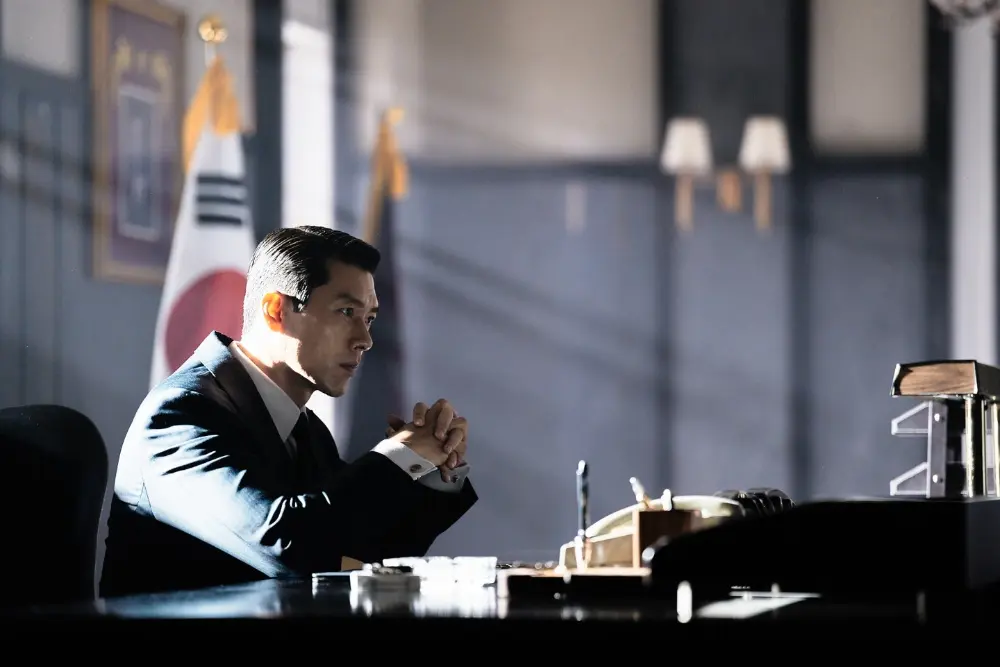
Baek Ki-tae (Hyun Bin): The Shadow of the Presidency
Baek Ki-tae has ascended through the ranks to become the second-in-command at the KCIA, placing him closer to the apex of state power than ever before. Yet, this proximity has come at an exorbitant moral cost.
"While rising through the ranks, he has met and dealt with many people and his methods have changed," explains star Hyun Bin.
The accumulation of staggering wealth and elevated social status has fundamentally warped Ki-tae’s interpersonal dynamics. The man who once operated in the criminal underworld must now navigate the treacherous, blood-soaked corridors of statecraft, where former allies are easily discarded and ruthlessness is disguised as duty. For Hyun Bin, returning to the role offered a rare acting privilege:
"Being able to experience an era of our own country that I couldn’t experience in real life is something I can only do thanks to this job of being an actor."
Baek Ki-hyun (Woo Do-hwan): The Rise of a Rival Brother
The emotional epicenter of Season 2’s personal conflict is the widening ideological and physical chasm between Ki-tae and his younger brother, Baek Ki-hyun. Once a timid military recruit, Ki-hyun has systematically climbed the ranks of the armed forces, gaining institutional power and a dangerous degree of autonomy.
"His social position has changed and he has gained some power of his own, allowing him to talk back to his brother more," notes Woo Do-hwan. "His beliefs have become stronger."
This fraternal friction serves as a microcosm for the broader civil fracturing of South Korea in 1979. As both brothers find themselves weaponized by rival factions within the military and intelligence apparatus, their familial bond becomes the ultimate casualty of state ambition.
Jang Geon-young (Jung Woo-sung): The Return of the Relentless Prosecutor
While the fate of Jang Geon-young—the dogged prosecutor who drove much of the investigative tension in Season 1—remains shrouded in initial mystery, fans should expect a dramatic and calculated return.
"He will ride the tide of an emerging power, to return with the goal of exacting his revenge," teases Jung Woo-sung.
In the universe of Made in Korea, justice is a malleable concept. Geon-young’s pursuit of retribution perfectly mirrors the noir ethos of the series: a world where righteous indignation is routinely weaponized to settle personal scores, and where institutional oversight is merely another tool for political elimination.
Future Outlook: Beyond 1979 and the Expansion of the Prestige Universe
All good things must come to an end, and Made in Korea will definitively close its narrative chapter with the conclusion of Season 2. However, the creative engine driving the project shows no signs of slowing down.
Co-writer Park Eun-gyo is already looking past the turbulent conclusion of the 1970s and stepping directly into the next decade. Upcoming on Hulu and Disney+ next year is The Koreans, a highly anticipated Korean adaptation and reimagining of FX’s award-winning espionage drama The Americans. Set in the 1990s—yet another era defined by volatile geopolitical shifts and high-stakes political intrigue—The Koreans promises to carry forward the searing psychological depth, cinematic ambition, and unflinching historical critique pioneered by Made in Korea.
As Disney+ and its industry peers continue to bank on high-end, director-driven Korean content, Made in Korea will be remembered not just as a financial milestone, but as the project that proved streaming platforms could successfully translate the complexity of modern national history into global prestige television.