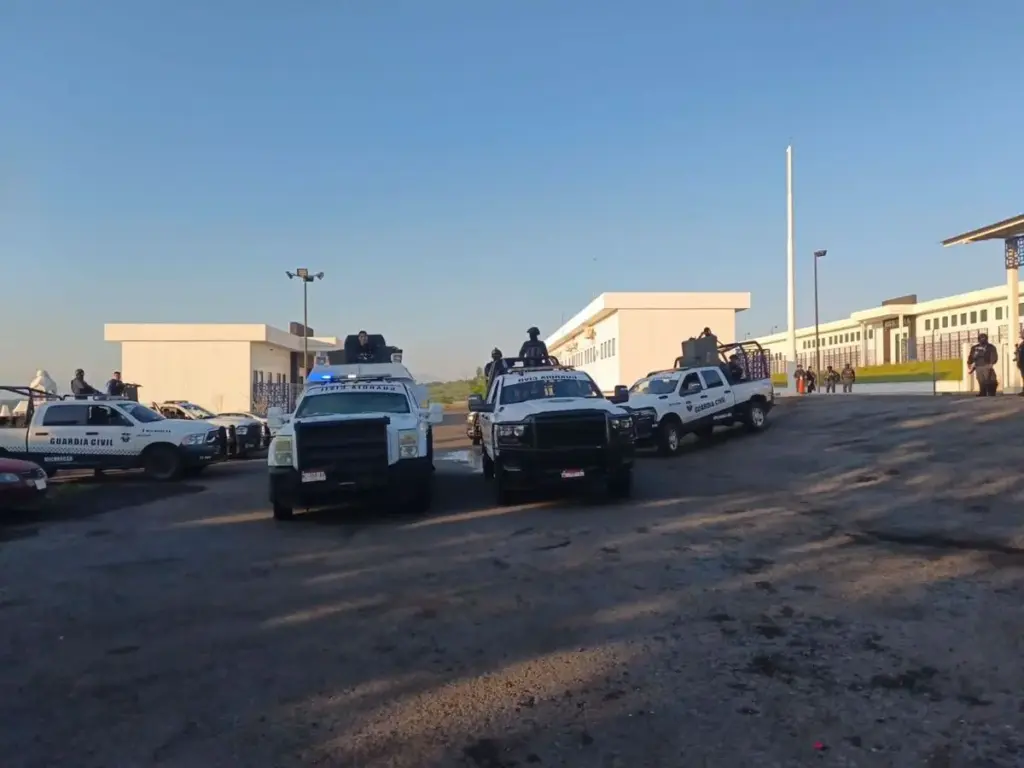
The security landscape in western Mexico has entered a volatile new phase following a series of high-precision military and law enforcement operations targeting the upper echelons of the Jalisco New Generation Cartel (CJNG). In coordinated pre-dawn raids across the municipalities of Tanhuato and Ecuandureo in Michoacán state, Mexican federal forces successfully apprehended nine suspected high-ranking cartel operatives, including two women closely linked to regional kingpin Heraclio Guerrero Martínez, widely known by his alias "El Tío Lako."
The targeted sweep—which yielded a massive arsenal of military-grade weaponry, armored vehicles, and improvised explosive devices—underscores the federal government’s aggressive posture in dismantling the CJNG’s regional command structure. This tactical escalation follows the historic elimination earlier this year of the cartel’s supreme leader, Nemesio Oseguera Cervantes, alias "El Mencho."
The arrests triggered an immediate and ferocious backlash from cartel loyalists, who employed classic urban guerrilla tactics: torching buildings and blockading major transport arteries with burning vehicles to stall military reinforcements. Despite the violent retaliation, the high-value detainees were swiftly extracted via a Mexican Air Force helicopter and transported under heavy guard to the Attorney General’s Office (FGR) in Mexico City.
As President Claudia Sheinbaum’s administration doubles down on its strategy to neutralize high-profile cartel targets, the ongoing power struggles and localized rebellions highlight the immense challenges facing Mexican and international security forces as they attempt to pacify territories long held hostage by organized crime.
Detailed Chronology: The Raid, the Arsenal, and the Backlash
The operation, executed by a joint task force comprising elements of the Mexican military, the National Guard, and federal intelligence units, unfolded across multiple strategic coordinates in the borderlands of Michoacán and Jalisco.
The Target Zones: Tinaja de Vargas and Colesio
Federal planners zeroed in on rural safehouses and logistical hubs located in the towns of Tinaja de Vargas (municipality of Tanhuato) and Colesio (municipality of Ecuandureo). Intelligence reports indicated that these locations served as operational nodes for El Tío Lako’s personal security detail and logistics network.
During the simultaneous, co-ordinated raids, special forces detained nine individuals. Among them were Marisol ‘N’ and Lourdes ‘N’, identified by the Ministry of National Defense (SEDENA) as the daughter and romantic partner, respectively, of Heraclio Guerrero Martínez. The inclusion of core family members within the detained cohort highlights how deeply kinship ties are integrated into the command-and-control architectures of contemporary Mexican cartels.
The Seized Arsenal
The tactical sweep yielded an unprecedented cache of military-grade hardware, reflecting the paramilitary capabilities wielded by regional CJNG cells. According to official reports from the Security Cabinet of the Government of Mexico, the following assets were confiscated at the raid sites:
Vehicles: 64 motor vehicles in total, including one heavily armored transport vehicle designed to withstand high-caliber small arms fire.
Heavy Ordnance: A .50 caliber heavy machine gun, capable of piercing light armor and aircraft skin; and four 5.56mm caliber Minimi light machine guns.
Firearms: Nine long-range rifles, one handgun, and two specialized grenade launcher attachments.
Ordnance and Technology: Eight active improvised explosive devices (IEDs), quantities of assorted narcotics, seven motorcycles utilized for rapid scouting, and an aerial surveillance drone.
The Retaliatory Backlash
The arrest of El Tío Lako’s inner circle triggered an immediate, textbook cartel counter-offensive. Seeking to paralyze local transit and buy time for fleeing commanders, CJNG cells activated pre-arranged contingency plans across the region.
Gunmen set fire to local commercial buildings and constructed flaming barricades by hijacking and torching civilian and commercial vehicles on key regional highways. This tactic, locally known as a bloqueo, is designed to overwhelm local police responses, generate mass panic, and prevent the military from safely transporting detainees or bringing in reinforcements.
Anticipating these disruptions, security forces in the area had deployed pre-emptive blocking measures and air cavalry support. Following the containment of the urban disturbances, the nine detainees were immediately loaded onto a Mexican Air Force helicopter. They were airlifted directly to Mexico City, where they were placed at the disposal of the Special Prosecutor’s Office for Organized Crime (SEIDO) within the Attorney General’s Office (FGR).
Supporting Context & Metrics: The Post-El Mencho Power Vacuum
To fully understand the gravity of the Michoacán raids, one must examine the tectonic shifts currently destabilizing the CJNG following the death of its founding patriarch, Nemesio Oseguera Cervantes ("El Mencho"), earlier this year.
The Fall of El Mencho
For over a decade, El Mencho commanded the CJNG with ruthless efficiency, transforming it from a regional splinter group into a trans-national criminal empire rivaling the Sinaloa Cartel. His death in a major military operation in February marked a monumental watershed moment in Mexico’s modern security history.
El Mencho’s elusiveness was legendary; the United States Department of State had previously maintained a standing reward of up to $15 million for information leading to his capture or conviction. His elimination left a massive power vacuum at the helm of the CJNG, triggering internal friction, regional jockeying for control, and a decentralization of authority down to regional lieutenants like Heraclio Guerrero Martínez (El Tío Lako).
The Rise of El Tío Lako and Retributive Violence
With El Mencho gone, regional bosses have stepped into the void, attempting to consolidate local fiefdoms. El Tío Lako established firm control over the lucrative drug-trafficking corridors and extortion rackets spanning the volatile border region between Michoacán and Jalisco.
Intelligence assessments reveal that in the wake of El Mencho’s death, Guerrero Martínez ordered a wave of targeted revenge attacks against members of the Mexican National Guard and military personnel. These assaults were designed not only as retribution for the fallen kingpin but also as a warning shot to deter federal incursions into CJNG-dominated territories.
The Geopolitical Dimension: US Pressure and Foreign Terrorist Designation
The crackdown on the CJNG is not purely an internal domestic initiative by Mexico; it occurs under intense international scrutiny, particularly from Washington. Earlier this year, the administration of US President Donald Trump officially designated the CJNG as a Foreign Terrorist Organization (FTO).
This historic policy shift authorized sweeping financial sanctions, enhanced intelligence-sharing, and broader legal authorities for US agencies targeting the cartel’s supply chains, money laundering networks, and leadership structure. Consequently, the Mexican government faces mounting pressure to deliver high-profile operational successes, neutralizing cartel leadership before these groups can institutionalize further cross-border trafficking threats.
Official Statements and Government Response
At a high-level press briefing following the operations, Mexican President Claudia Sheinbaum addressed the nation, emphasizing the methodical nature of the state’s security strategy.
"There is an operation underway to apprehend one or more high-profile targets," President Sheinbaum stated. "The Security Cabinet will release more information later, which is why some locations were secured. The Ministry of Defense is already on site, along with all necessary support personnel."
The President’s remarks underscored a deliberate shift toward transparency combined with overwhelming force. Rather than engaging in fragmented skirmishes, the federal government is employing integrated inter-agency task forces—combining intelligence from the National Intelligence Center (CNI), tactical planning from the Ministry of National Defense (SEDENA), and logistical execution via the National Guard and Air Force.
A spokesperson for the Ministry of National Defense elaborated on the identities of those detained during the Michoacán raids:
"Among those arrested are Marisol ‘N’ and Lourdes ‘N’, identified as the daughter [editor’s note: conflicting initial reports cite wife/partner] and romantic partner of Heraclio ‘N’, aka Tío Lako, the regional head of this criminal organization in the states of Michoacán and Jalisco. These detentions severely degrade the operational continuity and domestic support networks of the regional leadership."
Federal prosecutors have indicated that the seized IEDs, heavy machine gear, and ballistic protection will undergo comprehensive forensic analysis by military ballistics experts to trace supply chains and identify international arms-smuggling conduits feeding the cartel’s war chest.
Future Outlook: What Lies Ahead for Michoacán and the CJNG?
The arrest of El Tío Lako’s inner circle and the confiscation of a massive paramilitary arsenal represent a significant tactical victory for the Mexican state. However, security analysts warn that decapitation strategies often yield unpredictable and violent short-term repercussions.
1. Fragmentation and Internal Warfare
When a powerful regional leader like El Tío Lako is pressured—or if federal forces eventually succeed in capturing him directly—the organization under his command is prone to splintering. Lower-level lieutenants often break away to form autonomous, hyper-violent cell factions, frequently engaging in bloody turf wars over local extortion rackets, kidnapping rings, and drug distribution networks.
2. Heightened Risk of Asymmetric Retaliation
As demonstrated by the immediate torching of vehicles and buildings following the raids, the CJNG remains capable of mobilizing rapid urban disruptions. Security forces anticipate that as federal pressure mounts, the cartel may increasingly resort to asymmetric tactics, including targeted assassinations of local law enforcement officials, attacks on government infrastructure, and the expanded use of improvised explosive devices (IEDs) and weaponized drones in rural areas of Michoacán.
3. Institutional Resilience and Judicial Challenges
The ultimate test of this operation will lie within the judicial system. Past high-profile arrests have occasionally been undermined by procedural flaws, corruption, or insufficient evidence, leading to the release of dangerous operatives. By transferring the detainees directly via military air transport to the FGR in Mexico City, the government has signaled its intent to insulate the prosecution from localized cartel intimidation.
Ultimately, while the dismantling of El Tío Lako’s domestic inner circle deals a severe psychological and logistical blow to the CJNG, achieving long-term stability in Michoacán will require sustained socio-economic intervention, judicial reform, and the systematic dismantling of the cartel’s financial and laundering architectures both within Mexico and abroad.