Executive Overview
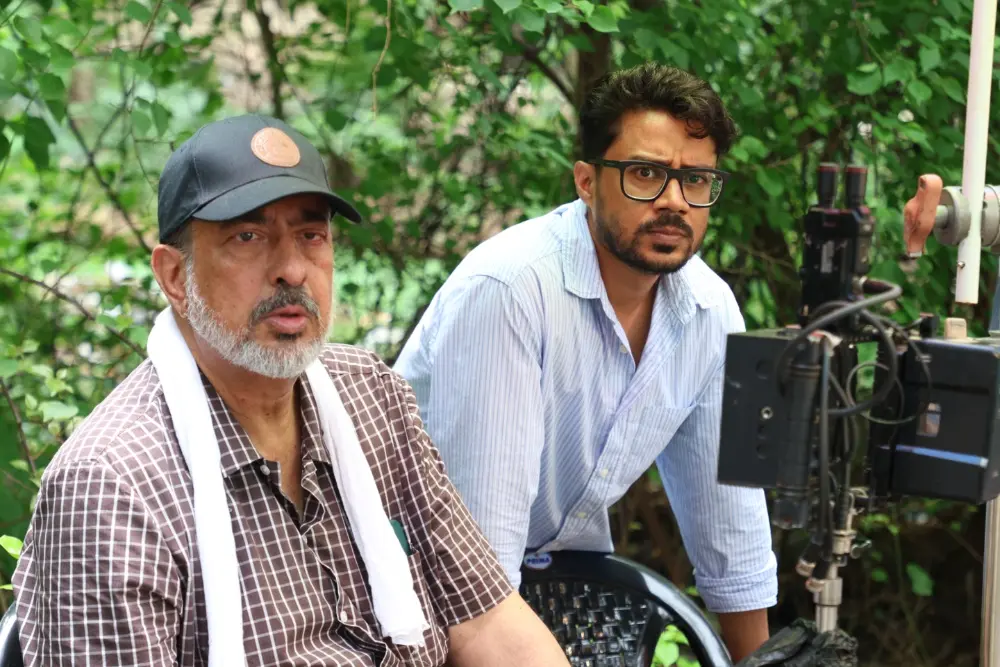
In an era dominated by the algorithmic standardization of cinema, the acceleration of narrative pacing, and the relentless creep of artificial intelligence into the creative arts, veteran filmmaker Anup Singh is choosing a path of radical resistance. Known for his visually arresting, deeply contemplative features Qissa (2013) and The Song of Scorpions (2017), Singh has officially commenced production on a new short film, Lasya: The Gentle Dance. Shot against the gritty, unforgiving backdrop of Mumbai’s streets, the project is a poignant meditation on marginalization, resilience, and the enduring power of human imagination.
Produced by the Mumbai-based banner Pretty Pictures—helmed by producers Zeeshan Ahmad and Pretty Aggarwal—Lasya chronicles a single day in the lives of an impoverished father and son eking out a living as roadside beggars. As relentless monsoon rains wash away their makeshift shelter and the sprawling metropolis offers little more than casual cruelty and indifference, the narrative pivots toward the transcendent. Through the father’s vivid recollections of the boy’s late mother—a woman whose defiant playfulness and bold spirit illuminated even the harshest realities—the young boy learns to look beyond his victimhood. Inspired by her legacy, he finds the courage to “dance among the ruins” and reclaim his agency.
Beyond its immediate artistic merits, this short film serves as a conceptual and spiritual bridge to a much larger cinematic venture. Following the completion of Lasya, Pretty Pictures and Singh will transition directly into pre-production on a major feature film slated to begin early next year. This upcoming feature holds immense emotional and cultural significance: it marks the realization of a project originally developed for the late, legendary Indian actor Irrfan Khan, serving as a deeply felt homage to the iconic star more than six years after his untimely passing in April 2020.
Detailed Chronology: From Mumbai’s Pavements to the Cinematic Horizon
The genesis of Lasya: The Gentle Dance emerged from a shared creative philosophy between Anup Singh and the leadership at Pretty Pictures. For Singh, the project represents a deliberate antidote to contemporary cinematic trends.
The Conceptual Spark
While scouting and conceptualizing stories that reflect the subterranean currents of contemporary urban India, Singh found himself drawn to the vulnerability and quiet dignity of those surviving on the absolute peripheries of Mumbai. The city—a hyper-accelerated engine of commerce, ambition, and stark inequality—provided the thematic canvas.
Over a continuous, grueling 24-hour narrative timeline, Lasya follows a father and son navigating the elemental fury of the Mumbai monsoon. The rains act not merely as a meteorological backdrop, but as a hostile antagonist that repeatedly strips them of their physical security. Yet, the physical devastation wrought by the weather is juxtaposed against an internal, psychological landscape rich with memory and myth-making.
Narrative Arc of Lasya
The emotional core of the short film rests upon the stories told by the father. As they shiver under plastic sheets and dodge indifferent pedestrians, the father invokes the spirit of his deceased wife. She is painted not as a tragic victim of urban poverty, but as an indomitable force of nature—a woman who moved through the city’s margins with an unquenchable playfulness, treating the natural world and the urban jungle as a stage for her fierce autonomy.
These stories act as a psychological catalyst for the young boy. Instead of internalizing the systemic degradation meted out by the city, he internalizes his mother’s defiance. The climax of the film—metaphorical rather than literal—sees the boy discovering a space within himself to dance amidst the debris of their washed-away shelter. It is a cinematic assertion that even when survival is reduced to its barest components, the human capacity for art, play, and self-definition cannot be easily extinguished.
Supporting Context & Metrics: Anup Singh’s Aesthetic and the Independent Landscape
To fully understand the weight of Lasya: The Gentle Dance, one must examine Anup Singh’s distinctive place within international and South Asian cinema. Singh has consistently utilized his art to interrogate trauma, gender, migration, and memory, positioning himself as a vital voice in parallel cinema.
A Legacy of Marginalized Narratives
Singh’s breakout feature, Qissa: The Tale of a Lonely Ghost, premiered to critical acclaim at the 2013 Toronto International Film Festival (TIFF). Set against the apocalyptic backdrop of the 1947 Partition of India, the film explored identity, gender fluidity, and patriarchal violence through the haunting journey of a Sikh father desperate for a male heir. Driven by a powerhouse performance by Irrfan Khan, Qissa established Singh’s signature aesthetic: a hypnotic blend of stark realism, poetic lyricism, and magical realism.
Four years later, Singh reunited with Khan for The Song of Scorpions, which premiered at the Locarno Film Festival in 2017. Set in the searing expanses of the Thar Desert, the film wove folklore, healing arts, and patriarchal brutality into a lush visual tapestry. Khan played a camel trader caught in a complex web of love and betrayal alongside Iranian-Golshifteh Farahani.
The Counter-Cultural Push Against AI and Fast Cinema
With Lasya, Singh is consciously positioning his work in opposition to current industry trajectories. In an era where streaming algorithms dictate pacing, multi-million-dollar blockbusters rely on computer-generated spectacles, and generative artificial intelligence threatens to homogenize scriptwriting and visual production, Singh views his short film as a tactical intervention.
Industry analysts note a growing fatigue among cinephiles exhausted by hyper-fast editing, sensory overload, and formulaic franchises. Singh’s return to a minimalist, street-level narrative is a declaration of faith in the medium’s foundational strengths: empathy, physical presence, and the delicate emotional resonance of the human face and movement. By returning to the streets of Mumbai with a lightweight, independent crew, Singh is stripping away cinematic artifice to reconnect with the pure, unmediated pulse of human experience.
Official Statements: Directors, Producers, and Artistic Visions
The collaborative synergy between Anup Singh and Pretty Pictures founders Zeeshan Ahmad and Pretty Aggarwal has provided a stable, creatively liberating environment for these ambitious projects.
Anup Singh on the Philosophy of Lasya
Articulating his motivations behind the project, director Anup Singh offered a profound critique of modern storytelling and digital saturation:
"This will be a short film," Singh remarked during early production discussions. "It is for me an attempt, call it a desperate attempt, to see if in this time of AI, quick and violent action, and celebration of various demagogues in storytelling, whether there is still a way to reaffirm cinema’s gentle ways of reaching us."
Singh’s words underscore a lifelong commitment to humanist filmmaking. For him, the camera is not an instrument of surveillance or rapid consumption, but an empathetic witness designed to restore dignity to those whom society routinely renders invisible.
Zeeshan Ahmad on Championing Dignity Over Despair
Speaking on behalf of Pretty Pictures, producer Zeeshan Ahmad elaborated on why the banner was eager to back Singh’s vision, emphasizing the ethical dimensions of their cinematic partnership:
"Anup Singh’s work has always been about people on the margins," Ahmad stated. "His cinema has consistently insisted that their life not be documented only for the pain, but that the joys and the beauty of their life also be affirmed. We would like to support that vision in our work together."
Ahmad’s perspective highlights a critical ethical distinction in contemporary social-realist cinema: the refusal to exploit poverty or suffering for purely voyeuristic or melodramatic impact. Instead, Singh and Pretty Pictures aim to elevate their subjects, capturing moments of grace, aesthetic beauty, and emotional triumph amid systemic neglect.
Future Outlook: The Anticipated Return and the Irrfan Khan Homage
While Lasya: The Gentle Dance stands firmly on its own artistic merits, it also acts as a vital transition point for an even larger cultural event on the horizon: the realization of Singh’s long-delayed feature film project, conceived in close collaboration with the late, universally revered actor Irrfan Khan.
The Unfinished Chapter with Irrfan Khan
The untimely passing of Irrfan Khan on April 29, 2020, left an irreparable void in global cinema. Known for his extraordinary ability to bridge parallel and commercial cinema—with standout performances in The Namesake, Slumdog Millionaire, Life of Pi, Piku, and Singh’s own Qissa and The Song of Scorpions—Khan was more than an actor; he was an intellectual presence who elevated every frame he inhabited.
Before his illness and subsequent passing, Khan and Singh had been actively preparing for a third feature film together. The project, deeply anticipated by cinephiles worldwide, was put on indefinite hiatus as the film community mourned the loss of one of its finest practitioners.
Moving Forward: Early Next Year Production
Now, six years after Khan’s death, the landscape is shifting toward healing and commemoration. Zeeshan Ahmad confirmed that Pretty Pictures will officially commence pre-production on this landmark feature alongside Singh early next year.
"After this short, we are ready to start working with Anup Singh on his next feature film early next year," Ahmad shared with palpable enthusiasm. "Anup Singh is finally ready to return to the film. We are very excited to make this film in homage to Irrfan Khan."
While plot details and casting for the upcoming feature are currently being kept under wraps, industry insiders anticipate that the film will channel the philosophical depth, emotional resonance, and quiet intensity that characterized the legendary artistic partnership between Singh and Khan.
Conclusion
As Lasya: The Gentle Dance takes shape on the chaotic, rain-slicked streets of Mumbai, it represents much more than a routine addition to the festival circuit. It is a manifesto for a gentler, more deeply felt cinema—a bridge connecting the urgent realities of the present day with the enduring artistic legacy of a master actor. Through the collaborative stewardship of Pretty Pictures and the unyielding vision of Anup Singh, this double-header of projects promises to remind global audiences why cinema matters, how stories can heal, and why art remains our most enduring defiance against oblivion.