Executive Overview
In the volatile landscape of modern consumer goods, few metrics are as coveted—or as fleeting—as TikTok virality. For most direct-to-consumer (DTC) brands, capturing lightning in a bottle on social media serves as a temporary sales spike, a momentary surge in web traffic that eventually plateaus as ad acquisition costs climb. However, body-care brand Cakes Body is attempting to rewrite that playbook.
By launching an in-house entertainment company dubbed Cakes Media, the viral sensation is institutionalizing its organic momentum. Rather than relying solely on ad-hoc short-form clips or outsourcing its brand storytelling to traditional creative agencies, Cakes Body is betting that long-form, owned media is the future of customer acquisition.
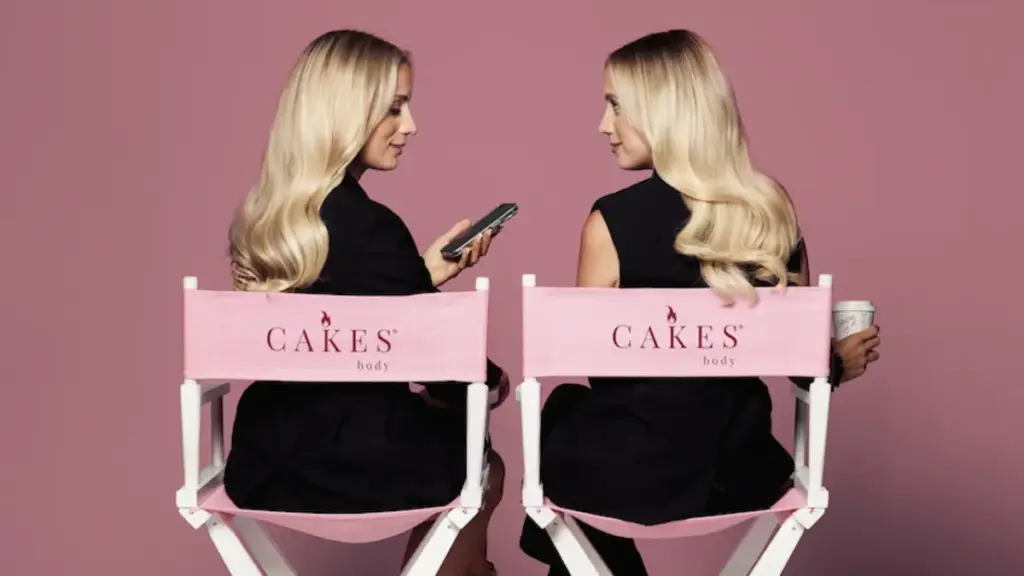
Founded in 2022 by twin sisters Taylor Capuano and Casey Sarai, Cakes Body famously vaulted into public consciousness through founder-led storytelling, a high-profile appearance on Shark Tank, and an uncanny knack for organic TikTok content. In just three years, the company crossed the milestone of $100 million in gross sales. Now, as the brand looks to scale past its initial hyper-growth phase, it is turning the cameras inward. By producing long-form video content—such as a recent 57-minute YouTube documentary that pulled in over 371,000 views in its first week—Cakes Media is mining top-of-funnel entertainment to feed its short-form distribution channels, combat rising digital ad costs, and establish an unshakeable brand moat.
This move places Cakes Body at the bleeding edge of a broader paradigm shift in marketing: the transition from traditional interruptive advertising to integrated brand-as-publisher models. As consumer skepticism toward hard-sell tactics deepens and customer acquisition costs (CAC) soar, entertainment has officially become the new price of admission for modern retail brands.
Detailed Chronology: The Rise, Scale, and Pivot of Cakes Body
To understand the strategic necessity of Cakes Media, one must trace the meteoric trajectory of Cakes Body since its inception.
2022–2023: The Foundation of Founder-Led Growth
Cakes Body burst onto the scene in 2022, engineered by co-founders and twin sisters Taylor Capuano and Casey Sarai. Eschewing the conventional DTC playbook of heavy upfront venture capital investment poured directly into Meta and Google paid media, the founders adopted a bootstrap-inspired, organic-first strategy.
Leveraging their own likenesses, the sisters championed raw, authentic storytelling on TikTok. They demystified the product development process, discussed the realities of female entrepreneurship, and leaned heavily into unscripted, community-first engagement. This organic momentum was supercharged by an appearance on ABC’s Shark Tank, exposing the brand to a massive mainstream audience.
Unlike many product categories that struggle to build emotional resonance, Cakes Body tapped into a visceral cultural conversation regarding comfort, body positivity, and everyday apparel solutions. The resulting word-of-mouth-style virality positioned the brand alongside contemporary social media phenomena like Bogg Bag and Stanley, where community-generated content acts as the primary engine for consumer conversion.
Late 2023–2024: Scaling Pains and the Search for Efficiency
As the brand scaled toward its eventual $100 million gross sales milestone, Capuano and Sarai encountered a familiar economic headwind: the compounding cost of digital customer acquisition. As privacy changes, iOS updates, and crowded digital ad exchanges drove up the price of performance marketing, relying purely on bottom-of-funnel search and paid social became increasingly margin-dilutive.
The leadership team realized that winning in the long term required a structural shift in how they captured consumer attention. Rather than continuing to rent audiences through increasingly expensive programmatic ads, Cakes needed to build an owned-media ecosystem capable of generating continuous top-of-funnel awareness organically.
Late 2024–Early 2025: The Birth of Cakes Media
The conceptualization phase culminated last week with the formal launch of Cakes Media. To helm this ambitious internal studio, the company made a strategic leadership hire: former Red Bull executive Caley Wildermuth stepped in as head of content.
Cakes Media immediately dropped its inaugural piece of content on YouTube—a feature-length, 57-minute documentary exploring themes aligned with the brand’s ethos. Within days of its release, the video crossed 371,600 views. True to the studio’s modern, cross-platform distribution strategy, this long-form anchor asset is currently being mined, edited, and repurposed into dozens of high-impact short-form clips tailored for TikTok, Instagram Reels, and YouTube Shorts.
Supporting Context & Metrics: The Economics of Brand-As-Publisher
The launch of Cakes Media does not happen in a vacuum. It is a calculated response to shifting macroeconomic realities within digital marketing.
The Cost-Per-Acquisition Crisis
For the past decade, digital-first brands could reliably scale by leaning on performance marketing. However, rising digital ad spend has transformed customer acquisition into a high-stakes, low-margin game. Olamma Nzeribe-Williams, social activation manager at Media by Mother, summarized the limitation of legacy strategies, noting:
"You can’t just sit at the bottom of search and catch people."
As bottom-of-funnel conversion tactics saturate, brands are forced to look upstream. They must build broad cultural resonance, brand trust, and emotional equity long before a consumer actively searches for a product. This requires a rebalancing of marketing budgets—allocating more capital toward top-of-funnel brand building that entertains rather than sells.
The Halo Effect of Virality
Taylor Capuano frequently refers to the compounding benefits of organic reach as the "halo effect." When a brand successfully captures cultural attention without looking like an ad, it experiences a dramatic lift in media efficiency.
- Brand Awareness: Consumers encounter the brand naturally in their feeds, free from ad-fatigue bias.
- Brand Consideration: Long-form and documentary-style programming humanizes the founders and the mission, building deep psychological trust.
- Profitability: Because the content is distributed organically and cross-mined across channels, blended customer acquisition costs drop, directly boosting bottom-line profitability.
The Corporate Media Studio Movement
Cakes Body is joining a growing roster of forward-thinking enterprises that have internalized production capabilities. Pioneered decades ago by beverage giant Red Bull—whose Red Bull Media House essentially transformed an energy drink company into a global media and action-sports empire—more consumer brands are building internal studios.
Whether rolling out full-scale television series, feature films, or microdramas designed for mobile consumption, brands are realizing that audiences do not want to watch commercials; they want to consume entertainment. As Daryl Giannantonio, chief strategy officer at VML, emphasized in a statement to Digiday:
"Entertainment has become the new price of admission. Brands must earn attention by offering entertaining content."
Official Statements & Industry Perspectives
The decision to bypass traditional creative agencies in favor of an in-house media team is rooted in a desire for creative authenticity and speed.
Discussing why Cakes Body chose to keep its entertainment arm internal rather than outsourcing to external agency partners, Taylor Capuano highlighted the irreplaceable nature of genuine brand voice:
"To have that humanness and personality come through, it’s hard to outsource that [organic social content] to an agency."
While Cakes Body maintains external agency partnerships for specialized, commoditized tasks like media buying, the creative soul of the brand remains strictly internal. This ensures that the distinct personality of the founders and the ethos of the company are never diluted by committee-driven agency pitches.
Capuano acknowledged that Cakes Media is currently being funded through the brand’s top-of-funnel and brand-marketing budgets, though she declined to disclose specific figures regarding the production cost of the inaugural documentary.
Industry analysts view this test-and-learn phase as a critical Bellwether for the DTC sector. As digital ad markets continue to fracture, brands that successfully transition into content publishers will insulate themselves against platform volatility.
Future Outlook: What’s Next for Cakes Media?
As Cakes Media enters its operational infancy, the immediate horizon is focused on data collection, audience expansion, and format experimentation.
1. The Test-and-Learn Phase
Management is currently analyzing audience engagement metrics across the initial 57-minute YouTube release and its subsequent short-form spin-offs. The goal is to isolate which narrative structures, themes, and pacing strategies command the highest viewer retention rates.
2. Season Two and Creator-Led Programming
Looking further ahead, Cakes has already initiated development on a second season of original programming. This upcoming slate will deliberately expand beyond founder-led narratives by incorporating creator-led programming. By partnering with external digital creators who align with the brand’s core values, Cakes Media aims to transform from a single-brand studio into a broader cultural umbrella.
3. Institutionalizing Virality
Ultimately, the grand experiment of Cakes Media is designed to answer a singular question: Can organic virality be systematically engineered?
By treating content creation not as a series of random marketing campaigns, but as an ongoing, industrialized media pipeline, Cakes Body is setting a new benchmark for modern retail. If successful, the brand will have successfully decoupled its revenue growth from the punishing treadmill of rising digital ad costs—proving that when you build an entertainment company disguised as a product brand, the audience follows, and profitability naturally trails behind.