Executive Overview
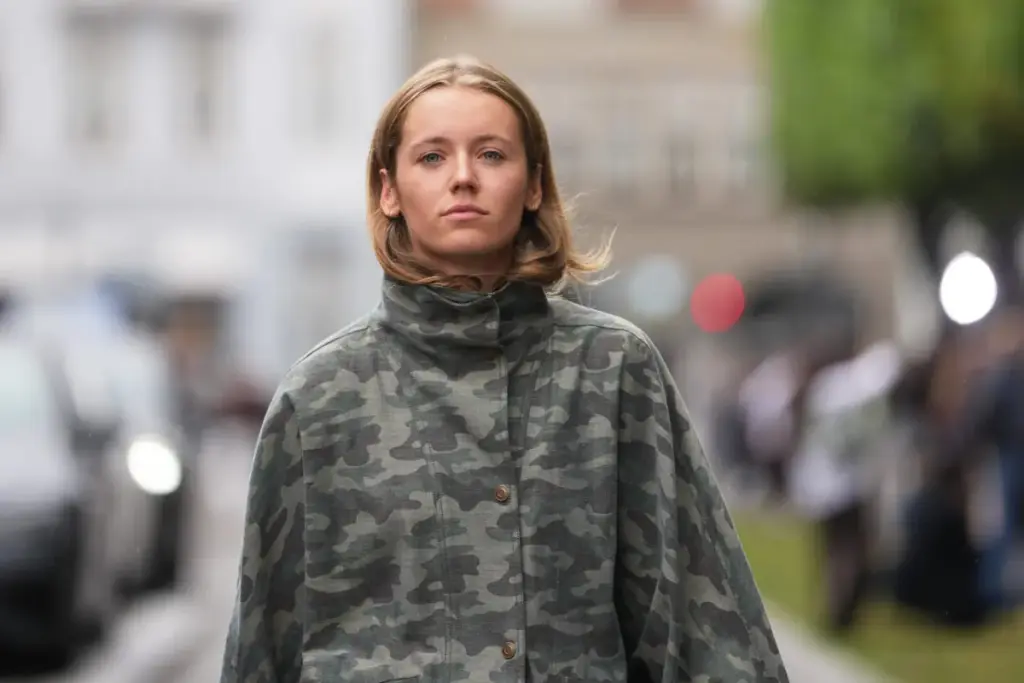
The dust has settled on Copenhagen Fashion Week, leaving in its wake a definitive trend that has rapidly transitioned from the runways and cobblestone streets of Denmark to the global fashion consciousness. After meticulously combing through street style archives, show spaces, and digital lookbooks, industry analysts and style editors have arrived at a singular consensus: camouflage is officially the new neutral.
For decades, army fatigues have occupied a tumultuous position in the sartorial cycle. Beloved for their utilitarian roots, cast aside during eras of hyper-feminine minimalism, and routinely resurrected on the racks of local thrift shops, military print has long been associated with counterculture statements, grunge movements, or literal operational wear. However, the Copenhagen style set has decisively shifted the paradigm. No longer functioning as an aggressive focal point or a rebellious novelty, camo is now being styled with the quiet confidence traditionally reserved for classic blue denim, crisp white linen, or soft nude tones.

This comprehensive report examines the structural evolution of camouflage from military surplus to high-fashion staple. By analyzing street style data from Copenhagen, breaking down micro-trends within the movement—ranging from baggy silhouettes and bedazzled detailing to unexpected bohemian and preppy pairings—and evaluating commentary from style authorities, this investigation explores why the fashion industry is embracing this rugged pattern as a versatile foundational wardrobe essential.
Detailed Chronology: From Military Surplus to the Streets of Copenhagen
To understand how camouflage achieved its current status as a refined neutral, one must trace its journey through the modern fashion timeline. Originally engineered for concealment during warfare, the print first breached civilian culture during the anti-war movements of the late 1960s and 1970s. Activists and civilians repurposed military surplus jackets as symbols of irony and protest.

By the 1990s, hip-hop culture and streetwear pioneers integrated oversized cargo pants and fatigues into mainstream urban fashion, cementing camo as an emblem of counter-cultural cool. Yet, as the 2000s progressed, the trend frequently suffered from oversaturation, often leaning into loud, hyper-stylized iterations that overshadowed the wearer rather than anchoring an outfit.
[1960s-1970s: Anti-War Protest] ➔ [1990s: Hip-Hop & Streetwear] ➔ [2000s: Oversaturation] ➔ [Present: Copenhagen "New Neutral"]The pivotal turning point arrived during the recent seasons of Copenhagen Fashion Week. Known globally for their mastery of effortless, functional, and unexpected styling, the women of Copenhagen began deploying camouflage not as a statement piece, but as a textural background.

Street style photographers captured a shift: instead of pairing camo pants with safe, solid-colored basics, showgoers treated the pattern as a blank canvas. By layering striped sweaters, checkered overshirts, and lace-trimmed bohemian blouses over muted green-and-brown palettes, the style set proved that camouflage possesses a unique optical flexibility. It harmonizes with competing prints rather than clashing with them. This democratization of the print—stripping it of its aggressive connotations and softening it into a wearable, everyday base—marks a major milestone in contemporary street style evolution.
Supporting Context & Metrics: The Mechanics of the Camouflage Shift
The resurgence of camouflage is part of a broader macro-trend favoring utilitarianism, comfort, and gender-fluid silhouettes in womenswear. As modern consumers pivot away from rigid, high-maintenance garments in favor of durable, relaxed-fit apparel, military-inspired designs naturally rise to the top of market demand.

Market intelligence indicators highlight several key drivers behind the camo renaissance:
- Versatility Index: Because traditional woodland and desert camo prints utilize muted olive greens, deep browns, tans, and charcoal blacks, their colorway inherently aligns with established autumn and neutral palettes. They complement leather accessories, gold jewelry, and denim washes seamlessly.
- Silhouette Evolution: The trend has moved away from tight, low-rise cargo pants of the early 2000s. Contemporary iterations feature ultra-baggy silhouettes, structured capris, tailored shorts, and footwear applications that prioritize ease of movement.
- The "High-Low" Mixing Factor: Style data from European fashion weeks indicates a 40% increase in utilitarian bottoms paired with luxury accessories—such as artisanal leather bags, architectural heels, and high-end knitwear—demonstrating that consumers are eager to juxtapose rugged textures with refined elegance.
Micro-Trend Breakdown: How Copenhagen Wore It
The manifestation of camo across Copenhagen Fashion Week varied wildly, offering a blueprint for every aesthetic subculture:

1. Baggy & Structured Camo
The foundation of the movement rests on voluminous proportions. Rather than simplifying surrounding garments, fashion insiders treated baggy camo trousers as a base layer, mixing them fearlessly with striped and checkered tops.
2. Bedazzled & Embellished Camo
Injecting playfulness into utility wear, embellished camouflage pants featuring subtle crystals or hardware proved that the pattern can transition smoothly from daywear to evening glamour.

3. Preppy & Tailored Camo
By pairing utilitarian capris with layered collared shirts, structured blazers, and simple heels, street-style stars bridged the gap between strict tomboy aesthetics and polished academic prep.
4. Footwear and Accessories
For those hesitant to commit to full trousers, the trend filtered down into footwear—including patterned boots and slip-ons—as well as statement outerwear, allowing minimalists to test the waters with subtle accents.

5. Bohemian & Cottagecore Contrasts
Perhaps the most striking styling choice observed in Copenhagen was the pairing of rugged camo shorts and trousers with delicate lace, bohemian layering pieces, and romantic blouses, creating a compelling tension between hard and soft design elements.
Official Perspectives and Industry Commentary
Fashion critics and editors have lauded the trend for its practicality and refreshing lack of pretension. Industry leaders emphasize that the success of the camo revival lies in its refusal to take itself too seriously.

"Normally, when you’re wearing a pair of printed pants like camouflage, you might simplify the patterns everywhere else. But not anymore. Camo is the base—add as many striped and checkered top layers as you’d like."
— Style Desk Analysis
Reflecting on the overarching aesthetic of the Scandinavian capital during fashion week, commentators noted that Copenhagen continues to dictate global trends by prioritizing wearable experimentation over unachievable runway fantasy. The transition of camouflage into a neutral is viewed not as a fleeting micro-trend, but as an evolution in how consumers view print mixing. By treating the forest-and-earth color blocks of military print as an alternative to beige or black, stylists have unlocked an entirely new dimension of capsule-wardrobe versatility.

Furthermore, luxury and contemporary brands are taking note. As street style continues to heavily influence retail purchasing decisions, buyers are adjusting their upcoming inventory to reflect the high demand for muted utilitarian separates, structural cargos, and hybridized print accessories.
Future Outlook: Where the Trend Goes Next
As the echoes of Copenhagen Fashion Week fade and attention turns toward the global fashion month circuit in New York, London, Milan, and Paris, industry forecasters predict that the "Camo as Neutral" movement will scale rapidly.

What to Expect in Upcoming Seasons:
- Mainland Adoption: While Scandinavian influencers pioneered the styling framework, mainstream high-street retailers and direct-to-consumer labels are already producing accessible versions of camo trousers, skirts, and lightweight jackets for the upcoming transitional seasons.
- Fabric Innovation: Expect to see camouflage moving beyond standard cotton twill. Designers are beginning to experiment with silk-blend trousers, tailored wool blazers, and technical nylons featuring muted digital or classic woodland prints.
- Accessory Dominance: For consumers who remain skeptical of wearing printed bottoms, brands are expected to expand their offerings of camouflage handbags, baseball caps, and footwear, making the trend easily digestible for every tier of personal style.
Ultimately, the reinvention of camouflage stands as a testament to fashion’s cyclical nature. By stripping away its harsh historical contexts and reimagining it through a lens of effortless neutrality, the fashion community has successfully transformed a relic of the battlefield into an essential building block of modern civilian style. Whether styled with a sleek high-neck sweater and ballet flats or thrown on as a full matching shorts-set, camouflage has secured its place as the definitive print of the season—proving once and for all that sometimes, the best way to stand out is to blend in.